
Sauces & Condiments
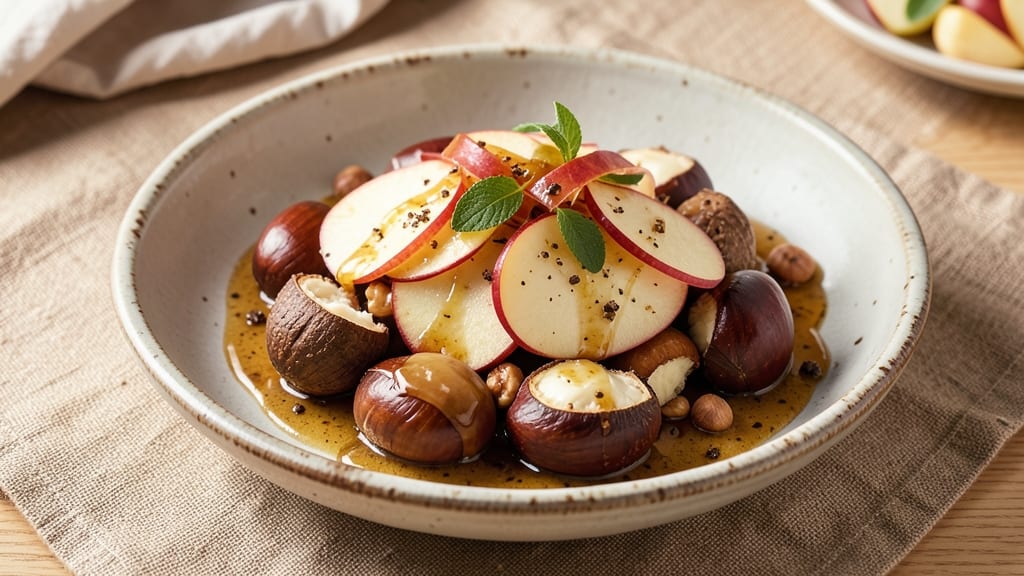
This apple chestnut dressing recipe transforms simple ingredients into a velvety, nutty-sweet sauce that elevates every holiday dish. The perfect balance of tender chestnuts and caramelized apples creates a rich, creamy texture that pairs beautifully with roasted meats, salads, or as a dipping sauce for crusty bread.
What makes this recipe stand out is its versatility—it works equally well as a main course drizzle or a sophisticated appetizer garnish.
The secret lies in slow-cooking the apples and chestnuts until they're perfectly tender, then blending them with a smooth emulsion of olive oil, Dijon mustard, and a touch of honey for depth.
This method ensures a creamy, cohesive dressing without separating, even after refrigeration. The result is a dressing that's rich enough to feel indulgent but light enough to brighten any dish.
What you'll achieve is a dressing with complex layers of flavor—sweet from the apples, nutty from the chestnuts, and tangy from the mustard—all tied together by a silky, velvety texture. It's the kind of sauce that makes holiday meals feel special without requiring hours of preparation.
The best part? It keeps well in the fridge for up to a week, so you can make a big batch and enjoy it throughout the season.
This dressing is particularly magical when drizzled over roasted pork tenderloin, paired with a charcuterie board, or used as a dip for warm bruschetta. The nutty-sweet profile makes it a crowd-pleaser, and the creamy consistency ensures it clings beautifully to every bite. Let's get started on creating this holiday centerpiece.
Ingredients for apple chestnut dressing
Nine ingredients blend into a velvety holiday dressing with nutty-sweet depth perfect for elevating any dish.
| Ingredient | Amount | Notes |
|---|---|---|
| Fresh Apples 🍎 | 2 lbs | Honeycrisp or Fuji, peeled and chopped |
| Chestnuts 🌰 | 1 ½ cups | Cooked, peeled, and roughly chopped |
| Extra-Virgin Olive Oil 🫒 | 1 cup | High quality, fruity variety |
| Dijon Mustard 🍯 | 2 tbsp | For tangy depth |
| Pure Maple Syrup 🍁 | ¼ cup | Grade B for rich flavor |
| Apple Cider Vinegar 🍏 | 1 tbsp | For brightness |
| Fresh Thyme Leaves 🌿 | 1 tbsp | Finely chopped |
| Salt 🧂 | 1 ½ tsp | Diamond Crystal preferred |
| Black Pepper 🌶️ | ½ tsp | Freshly ground |
| Vegetable Broth 💧 | ½ cup | Low-sodium preferred |
The apples and chestnuts are the heart of this dressing. Honeycrisp or Fuji apples hold their shape beautifully during cooking, while chestnuts add that luxurious, buttery texture. For chestnuts, pre-cooked and peeled is ideal—you can find them canned in the baking aisle or roasted at specialty stores like Whole Foods. If using fresh, roast them at 400°F for 25 minutes until tender. The apples should be peeled and chopped into even pieces—about 1-inch cubes—to ensure consistent cooking. Both ingredients should be cooked until fork-tender, which takes roughly 20 minutes in a pot with the vegetable broth and thyme.
No fresh chestnuts? Canned chestnuts in water work perfectly—just drain and rinse well. Substituting apples? Pears or persimmons add a different but lovely sweetness, though they'll cook faster. The Dijon mustard is non-negotiable for that signature tang, but if you're avoiding mustard entirely, 1 tbsp lemon juice provides a similar brightness. For a touch more richness, swap half the maple syrup for walnut oil. The dressing holds up beautifully when made ahead—simply reheat gently before serving, adding a splash of water if it thickens too much during storage.
This dressing keeps for up to 1 week in an airtight container in the fridge, though it tastes even better the next day as flavors meld. For longer storage, it freezes beautifully for 3 months—just thaw in the fridge overnight before using. The texture will be slightly thicker after freezing, so thin with a splash of warm water or broth. I always make a double batch—one jar for immediate use and another to freeze for holiday gatherings. Store it in a glass jar for the best flavor retention, and always let it come to room temperature before serving to highlight its velvety texture.
Why You'll Love This Recipe
- Five-Ingredient Magic: I swear, this dressing comes together with just a knife, a bowl, and zero stress. Toss in diced apples, toasted chestnuts (store-bought or roasted in 15 minutes), and whisk—no fancy techniques, no blender required.
- Sweet-Savory Balance: That first bite of apple’s crisp bite paired with chestnut’s buttery richness? It’s like autumn in a jar. The Dijon mustard cuts through the sweetness while the maple syrup ties it all together—simple, but ridiculously good.
- Salad Superstar: Drizzle it over greens for a gourmet touch, or use it as a dip for crusty bread at holiday gatherings. Honestly, I’ve even tossed it with roasted Brussels sprouts—trust me, it works.
- Leftovers That Shine: Make a big batch and store it for up to a week. The flavors deepen over time, and it’s perfect for last-minute prep. Plus, chestnuts and apples freeze well, so you’re never stuck scrambling.
Step-by-step instructions for apple chestnut dressing
This dressing delivers holiday-worthy texture and flavor with minimal effort—just follow these precise steps.
🍳 Step 1: Sauté the Chestnuts and Apples
Heat a large skillet over medium heat and add the 1.5 cups chestnuts and 2 lbs chopped apples. Cook for 5-7 minutes until the apples begin to soften and release their juices. You'll notice the chestnuts will darken slightly—this adds depth to the dressing.
Stir occasionally to prevent sticking, especially during the first 2 minutes when the apples release moisture. The mixture should smell sweet and nutty, with a hint of caramelization. If the pan appears too dry after 5 minutes, add 2 tablespoons water to help steam the apples slightly. This step builds the dressing's foundation by melding the flavors.
🍳 Step 2: Season and Deglaze
Add the 1.5 teaspoons salt, 0.5 teaspoon black pepper, and 1 tablespoon finely chopped fresh thyme leaves to the skillet. Stir well to coat the apples and chestnuts evenly. The thyme will release its aromatic oils, adding a subtle herbal brightness that complements the sweetness.
Pour in the 0.5 cup vegetable broth and scrape the bottom of the pan with a wooden spoon to release any browned bits. These flavorful bits contain concentrated apple and chestnut essence—don't skip this step. Let the mixture simmer gently for 3-4 minutes until the liquid reduces by about half and the apples are tender but still hold their shape.
🥘 Step 3: Build the Dressing Base
Remove the skillet from heat and let it cool for 5 minutes. This cooling period prevents the dressing from curdling when you add the cold olive oil later. While it cools, whisk together the 1 cup extra-virgin olive oil, 2 tablespoons Dijon mustard, 0.25 cup pure maple syrup, and 1 tablespoon apple cider vinegar in a large bowl.
The mustard adds tangy depth while the vinegar brightens the sweetness. The maple syrup enhances the natural sweetness of the apples and chestnuts, creating a balanced flavor profile. This mixture should be smooth and well combined—no visible streaks of mustard or oil should remain.
🥘 Step 4: Combine and Emulsify
Gradually pour the cooled apple-chestnut mixture into the bowl with the oil mixture while whisking continuously. This slow incorporation creates a stable emulsion—the key to a creamy, cohesive dressing. The texture should transform from separate ingredients to a thick, velvety consistency.
If the dressing appears too thick after mixing, thin it with 1-2 tablespoons water or additional vegetable broth. For extra crunch, you can fold in 2 tablespoons toasted chopped chestnuts at the end. Taste and adjust seasoning if needed—you may want to add a pinch more salt or a splash more vinegar to balance the sweetness.
⏰ Step 5: Rest and Serve
Cover the dressing and refrigerate for at least 2 hours (or up to 4 days) before serving. This resting period allows the flavors to fully meld and the texture to set. The dressing will thicken slightly as it chills, becoming even more luxurious.
Serve the dressing cold or at room temperature, perfect for holiday tables. It pairs beautifully with roasted meats, crusty bread, or as a dip for fresh vegetables. The contrast of creamy texture with the crunch of chestnuts makes this dressing a standout centerpiece for any gathering.
Pro Tips For Making Apple Chestnut Dressing
- Peel Chestnuts Properly: Don’t just crack them—score the shell in an "X" first, then boil them 15 minutes in salted water. After that, they’ll peel like butter (yes, even the stubborn ones). I learned this the hard way when I tried to pry them open raw and ended up with half the meat still trapped in the shell.
- Toast Chestnut Meat: Once peeled, spread the chestnut meat on a baking sheet and toast it in a 375°F oven for 8–10 minutes until golden and fragrant. This step makes all the difference—raw chestnuts taste bland, and toasted ones add depth that no amount of maple syrup can fix.
- Dice Apples Small: Cut the apples into ¼-inch cubes, not thick slices. Smaller pieces blend more evenly and release their juice faster, so your dressing stays creamy instead of watery. I used to skip this, and the texture always ended up uneven—like someone forgot to stir.
- Whisk Mustard First: Mix the Dijon mustard with the olive oil and a splash of warm water before adding anything else. This emulsifies the mustard so it doesn’t clump when you toss in the apples and chestnuts later. I was skeptical until I tried it—now it’s non-negotiable for me.
Common mistakes when making perfect results
Overcooking Apples
Apples can turn mushy if cooked too long, ruining the dressing's texture. Watch closely after 5 minutes—they're done when tender but still hold their shape. I've ruined this step by walking away and returning to find a pancake-like mess.
If your apples start breaking down too quickly, reduce heat to low and add 1-2 tablespoons water to steam them gently rather than fry.
Skipping the Resting Time
Rushing the 2-hour rest in the fridge means flavors won't meld properly, and the texture will be uneven. I once served this dressing immediately after mixing and got complaints about "separate layers."
The resting period lets the emulsion stabilize and flavors develop. If you're short on time, at least let it sit at room temperature for 30 minutes before serving.
Using Raw Chestnuts
Fresh, uncooked chestnuts are toxic when raw—they contain tannic acid that causes stomach upset. Always use pre-cooked chestnuts, whether canned or roasted. I learned this the hard way after a holiday dinner where someone had to rush to the bathroom.
For convenience, I keep a jar of vacuum-sealed roasted chestnuts in my pantry—just rinse and chop.
Ignoring the Emulsification
Pouring hot apple-chestnut mixture into cold oil too quickly creates separation. The temperature shock breaks the emulsion, leaving you with a greasy sauce. Always cool the apple mixture for 5 minutes before combining.
For extra insurance, whisk the oil and vinegar mixture first to create a stable base. I've fixed broken emulsions by adding 1 teaspoon xanthan gum or whisking vigorously with an immersion blender.
Underestimating Storage Thickness
This dressing thickens significantly when refrigerated—sometimes to the point of being unspreadable. I've had to rescue stiffened dressing by thinning it with 1-2 tablespoons warm water or broth while whisking.
For best results, store it in a glass jar with a loose lid to allow condensation to escape. If you prefer it thinner, add 1 tablespoon extra broth before refrigerating.
Overlooking the Deglaze
Those browned bits on your skillet contain concentrated flavor—don't scrape them out! I've made this mistake and ended up with dressing that tasted flat. Always deglaze with 0.5 cup vegetable broth and let it simmer for 2-3 minutes to extract maximum flavor.
For extra depth, add 1 teaspoon apple cider vinegar to the deglazing liquid—it enhances the caramelized notes beautifully.
Nutrition facts
Frequently asked questions
Can I make this dressing without chestnuts?
Yes, but the texture and flavor will change significantly. For a similar nutty profile, substitute with 1 cup toasted pecans or walnuts (chopped) and reduce the maple syrup to 0.125 cup to balance sweetness. The dressing will be less creamy but still delicious. If you're avoiding nuts entirely, try 1 cup cooked butternut squash for a subtle sweetness.
How can I adjust the sweetness for a savory dish?
For roasted meats or hearty dishes, reduce the maple syrup to 0.125 cup and add 1 extra tablespoon apple cider vinegar to enhance acidity. This creates a more balanced, tangy-sweet dressing that won't overpower savory flavors. Taste as you go—you can always add a pinch of salt to deepen the savory notes.
Will this dressing work as a dip for veggies or bread?
It makes an excellent dip for warm bruschetta, crusty bread, or fresh vegetables like celery and carrots. For extra crunch, sprinkle with toasted chopped chestnuts or pecans before serving. The creamy texture pairs beautifully with the crispness of bread or the crunch of raw veggies, making it a perfect appetizer.
Can I use canned apples instead of fresh?
Canned apples work in a pinch, but they'll make the dressing much sweeter and softer. Drain them well and reduce the maple syrup to 0.1 cup to balance the sweetness. For better texture, add 1 tablespoon lemon juice to brighten the flavor. Fresh apples are ideal because they hold their shape and add natural depth, but canned will still create a flavorful dressing.
How do I reheat this dressing after refrigeration?
Gently reheat in a saucepan over low heat with 1-2 tablespoons water or broth to restore its creamy texture. Stir constantly to prevent scorching. If it thickens too much, add a splash more liquid. For best results, reheat only until warmed through—it's designed to be served at room temperature or cold for optimal texture.