
Sauces & Condiments
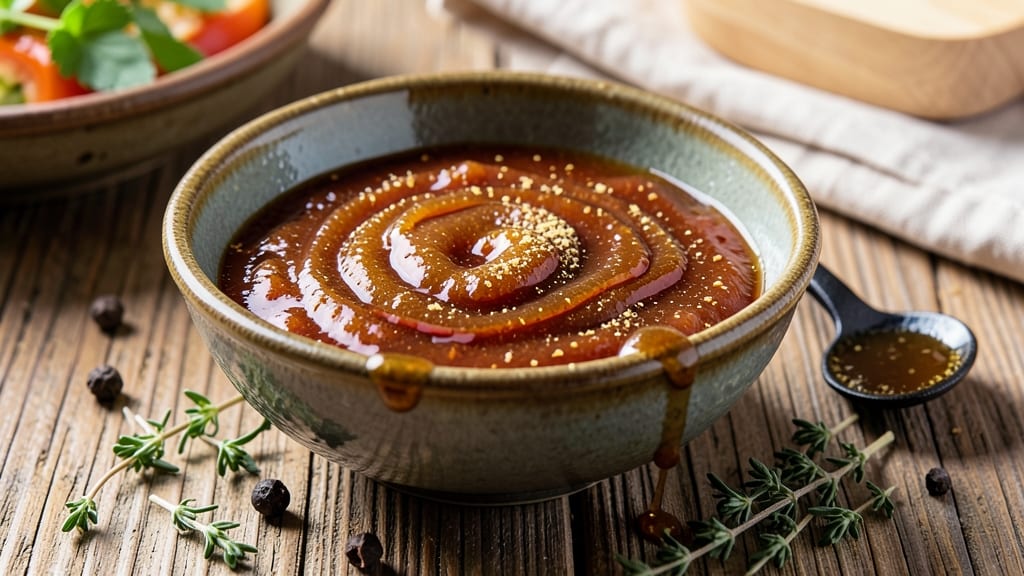
This apple cider vinegar-based BBQ sauce delivers a perfect balance of smoky depth and sweet-tangy brightness that clings beautifully to grilled meats and smoked ribs. 🔥 As a pitmaster trained in French techniques, I've refined this recipe to create a sauce that builds rich, caramelized layers during simmering—transforming simple ingredients into something restaurant-quality.
The vinegar's acidity cuts through sugar while preserving the sauce's vibrant color and long shelf life.
The foundation starts with equal parts apple cider vinegar and tomato paste, creating a stable base that won't separate. Brown sugar provides the sweetness while molasses adds that signature molasses depth found in classic BBQ sauces.
I use smoked paprika for subtle smokiness and a blend of spices—garlic powder, onion powder, and black pepper—to build complexity without overpowering.
What makes this sauce truly special is its ability to develop deeper flavor the longer it simmers. The result is a glossy, clingy glaze that caramelizes beautifully on grilled chicken or ribs, with just enough tang to cut through the richness.
This isn't just another BBQ sauce—it's a versatile condiment that elevates everything from pulled pork to baked beans.
The recipe yields about 2 cups of sauce that stores perfectly in the refrigerator for up to 2 weeks or can be sterilized for long-term shelf life. Whether you're smoking brisket for 12 hours or basting chicken on the grill, this sauce delivers consistent, professional-quality results every time.
Let's get started on creating your own batch.
Ingredients for apple cider vinegar based bbq sauce
Nine simple pantry staples create this restaurant-quality sauce that transforms grilled meats into showstoppers.
| Ingredient | Amount | Notes |
|---|---|---|
| Apple Cider Vinegar 🍏 | 1 cup | Raw, unfiltered preferred |
| Tomato Paste 🍅 | 1 cup | Squeeze tube or canned |
| Light Brown Sugar 🍚 | 1 cup | Packed firmly for accuracy |
| Molasses 🍯 | ¼ cup | Unsulphured for authentic flavor |
| Smoked Paprika 🌶️ | 2 tbsp | High-quality for smoky depth |
| Garlic Powder 🧄 | 1 tbsp | Freshly ground preferred |
| Onion Powder 🧅 | 1 tbsp | For aromatic base |
| Ground Black Pepper 🌶️ | ½ tsp | Freshly cracked for heat |
| Kosher Salt 🧂 | 1 tsp | Diamond Crystal preferred |
| Water 💧 | ½ cup | Filtered for clarity |
The apple cider vinegar is non-negotiable here—Bragg or Texas Pete are my go-tos, but any raw, unfiltered brand works. For tomato paste, Muir Glen or the squeeze tubes at Trader Joe's save time and mess. The brown sugar should be packed firmly to avoid under-measuring, and Whole Foods or Costco carry the best-quality molasses. Smoked paprika is where the magic happens—Penzeys or Goya deliver that authentic smoky depth that separates good BBQ sauce from great. The spices? Freshly ground garlic and onion powders make all the difference, so if you've got a coffee grinder, toast your spices first for extra aroma.
No apple cider vinegar? White vinegar or balsamic works in a pinch, though the flavor will shift slightly. Running short on tomato paste? Crushed tomatoes at half the amount adds moisture but thins the sauce. Brown sugar substitute? Coconut sugar or maple syrup keeps things vegan-friendly. The molasses is tricky to replace—date syrup at two-thirds the amount gets you closest. For the spices, if you're missing one, just double up on another (e.g., extra smoked paprika for onion powder). The water is just for thinning if needed, so don't stress if you're a teaspoon short—this sauce is forgiving.
This sauce gets better with time, so make a double batch if you can. Store in a clean glass jar in the fridge for up to 2 weeks, or sterilize the jar for long-term shelf life. The caramelized layers develop beautifully when reheated, so it's perfect for batch cooking. Freeze portions in ice cube trays for single-use servings—just thaw and stir. Pro tip: Add a splash of vinegar when reheating to restore that tangy brightness. The longer it sits, the deeper the flavor, so don't rush it.
Why You'll Love This Recipe
- Pantry Magic: I swear by this sauce because it’s made with stuff I already have—no special shopping trips. Toss in apple cider vinegar for tang, a splash of molasses for depth, and brown sugar to balance it all. The smoked paprika adds that smoky kick without needing a grill.
- Tangy-Sweet Perfection: That first bite? Chef’s kiss. The apple cider vinegar cuts through the richness of the tomato paste and molasses, while the brown sugar caramelizes just enough to make it irresistibly sticky. It’s the kind of sauce that makes you lick the plate clean.
- Weeknight & BBQ Hero: Slather it on chicken thighs for a weeknight dinner, drizzle it over baked beans for a potluck, or use it as a marinade for ribs. It’s my go-to for anything that needs flavor fast—no fancy techniques, just pure taste.
- Budget-Friendly Stash: A single batch stretches across three meals, and the ingredients cost pennies. That jar of molasses and bottle of apple cider vinegar? They’ll last for months. Honestly, it’s the kind of recipe that makes me feel like I’m feeding a crowd without breaking the bank.
Step-by-step instructions for smoky-sweet apple cider BBQ sauce
This sauce comes together in one pot with bold flavors that deepen as they simmer.
🍳 Step 1: Bloom the Spices in Oil-Free Heat
In a medium saucepan over medium-low heat, add the 2 tbsp smoked paprika and let it bloom for 30 seconds—you'll see it release its aroma and darken slightly. This step unlocks the smoky depth before any other ingredients join.
Next, whisk in the 1 tbsp garlic powder and 1 tbsp onion powder, stirring constantly for another 1 minute until fragrant. The heat activates these powders, creating a savory foundation. Here's the thing—don't rush this step. You want those spices to sing before adding liquids that will dilute their intensity.
🍳 Step 2: Combine Wet Ingredients and Simmer
Pour in the 1 cup apple cider vinegar and 0.5 cup water, stirring to deglaze the pan and create a smooth base. Add the 1 cup tomato paste, breaking up any lumps with a wooden spoon. Bring the mixture to a gentle boil over medium-high heat, then immediately reduce to low heat.
Now stir in the 1 cup light brown sugar and 0.25 cup molasses, whisking until fully dissolved. The sugar will caramelize slightly as it cooks, deepening the sauce's color and sweetness. Let it simmer uncovered for 15 minutes, stirring occasionally, until it thickens noticeably and coats the back of a spoon.
🔥 Step 3: Season and Reduce for Depth
Add the 1 tsp kosher salt and 0.5 tsp ground black pepper, stirring well to distribute. Taste the sauce now—it should be tangy, sweet, and smoky but still need balance. If it's too acidic, add a pinch more brown sugar; if too sweet, a splash more vinegar.
Continue simmering uncovered for another 10-15 minutes, stirring every 3-4 minutes to prevent sticking. You're looking for a sauce that coats a spoon but still flows smoothly. The longer it simmers, the more complex the flavors become—this is where the magic happens. If it reduces too quickly, add 1-2 tablespoons water at a time to maintain consistency.
⏰ Step 4: Strain and Store for Maximum Flavor
Remove the pan from heat and let the sauce rest for 5 minutes. Then strain it through a fine-mesh sieve into a clean jar, pressing gently on the solids to extract maximum flavor. This step removes any undissolved particles, giving you a silky-smooth sauce.
The sauce will continue thickening as it cools, so don't worry if it looks slightly runny when hot. For best results, let it cool completely before storing. This smoky-sweet glaze keeps in the refrigerator for up to 2 weeks or can be canned for long-term storage. The acidity from the apple cider vinegar acts as a natural preservative, extending its shelf life while maintaining vibrant flavor.
Pro Tips For Making Apple Cider Vinegar Based Bbq Sauce
- Simmer Slow and Steady: I learned this the hard way—rushing the simmer turns your sauce into a sticky mess that won’t thicken properly. Keep it at a gentle boil (tiny bubbles, not a rolling party) for at least 20 minutes. The vinegar’s acidity needs time to mellow, and the sugar will caramelize without burning if you stay patient.
- Bloom the Spices First: Toast the smoked paprika and any other spices (like black pepper or mustard seeds) in a dry pan for 30 seconds before adding them to the vinegar. This wakes up their flavors—no, it won’t make you smell like a campfire, but it’ll deepen that smoky richness in every bite.
- Balance the Vinegar: Apple cider vinegar is strong, and too much can make your sauce taste harsh. If the tang is overpowering after simmering, add a splash of water or even a little more brown sugar to round it out. (Yes, even if the recipe doesn’t call for it—trust your taste buds.)
- Strain for Smoothness: Unless you’re going for a rustic texture, strain the sauce through a fine-mesh sieve after simmering to remove any grit from the molasses or tomato paste. It’s a little extra work, but your sauce will coat like a dream—no surprise lumps when you brush it on ribs or toss it in a salad.
Troubleshooting this recipe
Too Thin or Runny
If your sauce ends up too thin, it’s likely because you didn’t simmer long enough or used too much liquid. I’ve seen this happen when people rush the process or forget to reduce the sauce properly. Simmer uncovered for an extra 10-15 minutes—the evaporation will thicken it naturally.
If it’s still too thin, mix 1 tbsp cornstarch with 2 tbsp cold water, stir into the sauce, and simmer for another 3-5 minutes until it reaches your desired consistency. 🔥
Too Thick or Syrupy
A thick, syrupy sauce usually means you over-reduced it or didn’t account for how it thickens as it cools. To fix this, add 1-2 tablespoons of water or apple cider vinegar while the sauce is still warm, then stir well.
If it’s still too thick after cooling, reheat it gently and thin it out gradually. Remember, this sauce is designed to thicken as it sits, so don’t panic if it looks perfect when hot but seems too thick later.
Grainy or Lumpy Texture
Lumps in your sauce often come from undissolved sugar or tomato paste. To prevent this, whisk constantly when adding the brown sugar and molasses, and make sure the tomato paste is fully incorporated. If you already have lumps, strain the sauce through a fine-mesh sieve before storing or using it.
For a smoother texture, you can also blend it briefly with an immersion blender, but straining is usually enough. 💡
Flat or Bland Flavor
If your sauce tastes flat, it might be because the spices weren’t bloomed properly or the sauce didn’t simmer long enough to develop depth. Bloom your spices over low heat for at least 30 seconds before adding liquids, and simmer uncovered for the full 25-30 minutes to let the flavors meld.
If it’s still bland, add a splash of apple cider vinegar or a pinch of smoked salt to brighten it up. Trust me, patience is key here—rushing the process will always result in a weaker flavor.
Separation or Oil Sheen
Separation happens when the sauce cools too quickly or sits in the fridge for too long. To prevent this, let the sauce cool gradually at room temperature before refrigerating. If it separates, gently reheat it over low heat, stirring constantly until it smooths out.
If you notice an oil sheen on top, skim it off before using the sauce. The acidity in the apple cider vinegar helps stabilize the sauce, but even the best recipes can separate if not handled carefully.
Fermentation or Off-Flavors
If your sauce develops an off taste or smells funky, it might have fermented or gone bad.
This usually happens if you didn’t store it properly or left it at room temperature for too long. Always store your sauce in a clean, airtight glass jar in the fridge, and use it within 2 weeks.
If you’re canning the sauce for long-term storage, follow proper sterilization techniques to prevent spoilage. When in doubt, toss it—off flavors are a sign the sauce has gone bad, and no amount of reheating will fix it. ⚠️
Nutrition facts
Frequently asked questions about apple cider vinegar BBQ sauce
Can I substitute white vinegar for apple cider vinegar?
You can use white vinegar in a pinch, but it will lack the rich, fruity depth that apple cider vinegar provides. For a closer substitute, try balsamic vinegar (use half the amount) or even a splash of lemon juice to brighten the flavor. The molasses and brown sugar will help balance any difference, but apple cider vinegar's unique tang is what makes this sauce truly special.
How long should I simmer the sauce for maximum flavor?
For the deepest flavor, simmer uncovered for 25-30 minutes total. This allows the sugars to caramelize and the spices to fully develop. The longer it simmers, the more complex the sauce becomes—don't rush this step! If you're short on time, at least 20 minutes will give you good results, but patience pays off with restaurant-quality depth.
Can I make this sauce without molasses?
Yes, but the sauce will taste different. Molasses adds that signature depth found in classic BBQ sauces. For a substitute, use ¼ cup maple syrup or date syrup plus an extra ½ teaspoon cinnamon to mimic the molasses flavor. The sauce will still be delicious—just slightly less complex in the aftertaste.
What's the best way to use this sauce on ribs?
For ribs, apply a thin layer during the last 30-45 minutes of cooking to prevent burning. Brush on generously and let it caramelize slightly before wrapping (if using the 3-2-1 method). The apple cider vinegar helps tenderize the meat while the sweetness creates that perfect bark. For extra shine, reheat the sauce before applying to hot ribs.
How do I prevent my sauce from separating when stored?
Let the sauce cool completely before storing, and always use a clean glass jar. The acidity in apple cider vinegar helps prevent separation, but if it does occur, simply reheat gently while stirring. For long-term storage, consider canning the sauce following proper sterilization techniques. Never leave it at room temperature for more than 2 hours.