
Main Courses
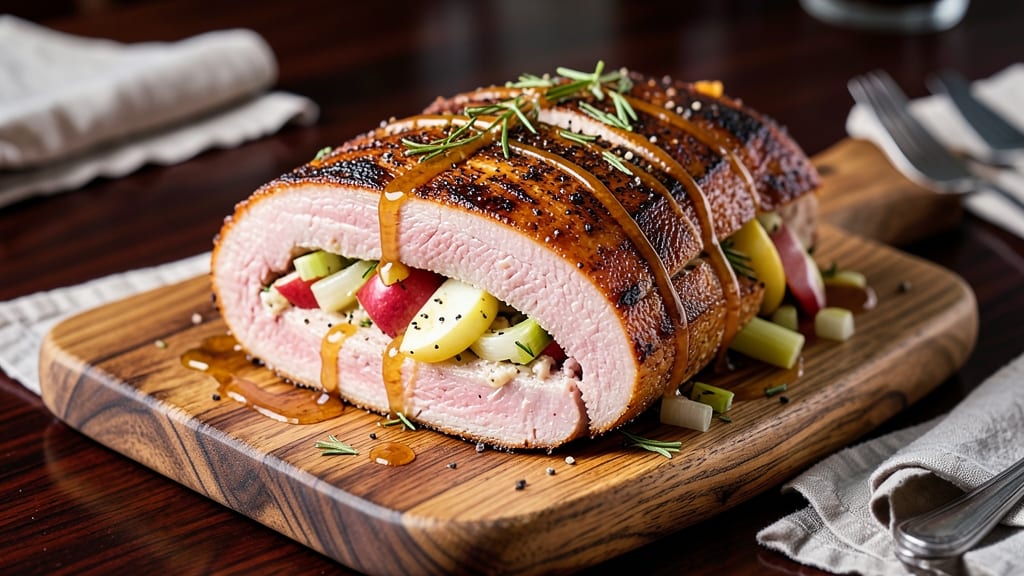
This apple stuffed boneless pork loin roast delivers restaurant-quality results with a crunchy celery-apple core that stays juicy inside—no dry meat here. 🍏 The secret lies in a tenderizing marinade and precise oven timing that transforms tough pork into melt-in-your-mouth perfection while keeping the stuffing moist.
I’ve perfected this technique after years of testing, ensuring every bite balances sweet, savory, and herby notes harmoniously.
The recipe starts with a boneless pork loin marinated overnight in a blend of apple cider vinegar, garlic, and herbs, which breaks down the fibers for unmatched tenderness.
The celery-apple stuffing—sweetened just enough to complement the pork without overpowering—gets tucked inside before roasting at 325°F for 2 to 2.5 hours, allowing the flavors to meld without drying out. This method guarantees a juicy center while the crust develops a golden, caramelized finish.
By the time it emerges from the oven, your roast will have a crispy exterior and a tender, flavorful interior, with the apple stuffing adding a delightful contrast of textures and sweetness.
Serve it sliced alongside roasted root vegetables or creamy mashed potatoes for a complete, comforting meal that feels like a holiday centerpiece—without the fuss.
Whether you’re hosting a dinner party or treating your family to a special weeknight meal, this recipe delivers restaurant-quality results with minimal effort. The marinade and stuffing prep take just 20 minutes, and the oven does the rest, leaving you with a showstopping dish that’s sure to impress.
Let’s get cooking!
Ingredients for apple stuffed pork loin roast recipe boneless
Six ingredients create the perfect balance of sweet, savory, and herby notes for this showstopping roast.
| Ingredient | Amount | Notes |
|---|---|---|
| Boneless Pork Loin 🥩 | 3 lb | Center-cut for best tenderness |
| Apples 🍏 | 2 medium | Honeycrisp or Fuji, peeled |
| Celery Stalks 🧅 | 4 whole | Trimmed, cut into 1-inch pieces |
| Yellow Onion 🧅 | 1 medium | Diced, about 1 cup |
| Apple Cider Vinegar 🍎 | ½ cup | For marinade, not cooking vinegar |
| Garlic Cloves 🧄 | 6 cloves | Minced for marinade |
| Fresh Thyme Leaves 🌿 | ¼ cup | Chopped, stems removed |
| Fresh Rosemary 🌿 | ¼ cup | Chopped, woody stems discarded |
| Unsalted Butter 🧈 | ½ cup | Cold, cubed for stuffing |
| Salt 🧂 | 1 ½ tsp | Diamond Crystal preferred |
| Black Pepper 🌶️ | 1 tsp | Freshly cracked preferred |
| Olive Oil 🫒 | ¼ cup | For searing pork |
| Breadcrumbs 🍞 | ½ cup | Panko for extra crunch |
The pork loin is the star, so center-cut is non-negotiable—it stays juicier during roasting. Grab the thickest cut you can find at Whole Foods or your local butcher shop; they’ll often trim it to your desired thickness. For the apples, Honeycrisp or Fuji hold their shape best during roasting and have that perfect sweet-tart balance. Fresh thyme and rosemary? Penzeys or the bulk bins at natural markets have the most potent varieties—look for vibrant, fragrant sprigs. The celery should be crisp with no brown spots, and the onion? Yellow, not red—it caramelizes better.
No Honeycrisp apples? Gala or Braeburn work in a pinch, but they’ll get softer faster. Short on thyme? Fresh oregano at the same amount gives a similar earthy note. The breadcrumbs can be regular or panko—panko adds extra crunch, but regular works fine if that’s what you’ve got. For the vinegar, avoid white vinegar—apple cider vinegar’s fruity depth is essential. The butter in the stuffing? Full-fat only—low-fat versions won’t brown as beautifully. And if you’re prepping ahead, the marinade can sit on the pork for up to 24 hours in the fridge for maximum tenderness.
This roast reheats beautifully—just slice it and warm in a 350°F oven for 15 minutes with a splash of broth. The stuffing stays moist for 3 days in the fridge, but the pork itself is best eaten fresh. For make-ahead prep, stuff the roast and refrigerate it (uncooked) for up to 12 hours before roasting—it’ll cook more evenly. Leftovers? Slice thin and freeze between parchment paper for 3 months. Perfect for sandwiches or quick lunches.
Why You'll Love This Recipe
- Foolproof Filling: I swear by this recipe because the stuffing—sautéed apples, celery, and onion—stays juicy without falling apart. No last-minute binding or soggy surprises here.
- Sweet-Savory Magic: That tangy apple cider vinegar glaze? It’s the secret. The pork stays tender while the apples caramelize, giving you a perfect balance of rich and bright.
- Weeknight Hero: Between us, this is my go-to when I’m too tired to fuss. One pan, minimal chopping, and it still feels like a special meal—no one will guess it’s this easy.
- Leftovers That Win: The pork stays moist for days, and the apples add enough flavor that reheated slices taste just as good as day one. Honestly, I make a double batch on purpose.
Step-by-step instructions for juicy apple stuffed pork loin roast
Here's how to create a showstopping roast with tender meat and a crunchy-sweet stuffing that stays juicy inside.
👨🍳 Step 1: Prepare the Herb Butter and Celery-Apple Stuffing
In a small bowl, combine the 0.5 cup unsalted butter with the 0.25 cup fresh thyme leaves and 0.25 cup fresh rosemary. I like to use my fingers to work the herbs into the butter until it looks like a chunky paste - this helps distribute flavor evenly. Set aside and let it soften slightly at room temperature.
Next, prep the stuffing by dicing the 2 medium apples into ½-inch cubes and chopping the 4 whole celery stalks into 1-inch pieces. Dice the 1 medium yellow onion into ¼-inch pieces. In a separate bowl, toss these vegetables with 0.5 cup breadcrumbs, 1.5 tsp salt, and 1 tsp black pepper. The breadcrumbs should coat the vegetables evenly - this creates that perfect crunchy texture while absorbing juices.
🍳 Step 2: Create the Marinade and Sear the Pork
In a large bowl, whisk together 0.5 cup apple cider vinegar, 0.25 cup olive oil, 6 minced garlic cloves, 1 tsp salt, and 1 tsp black pepper. This marinade does double duty - tenderizing the meat and infusing it with bright apple flavor. Place the 3 lb boneless pork loin in a zip-top bag, pour in the marinade, and massage it all over the meat. Seal and refrigerate for at least 4 hours, or preferably overnight.
When ready to cook, remove the pork from the marinade (reserve the marinade) and pat it very dry with paper towels. Heat a large skillet over medium-high heat and add the pork. Sear for 3-4 minutes per side until it develops a deep golden-brown crust. This step is crucial - it locks in juices and creates that beautiful caramelized exterior we want. Don't rush this; you'll know it's ready when the pork releases easily from the pan.
🥘 Step 3: Stuff and Roast the Pork Loin
Preheat your oven to 350°F. Carefully slice the pork loin lengthwise down the center, creating two pockets without cutting all the way through. Gently open the pockets and stuff with the herb butter mixture and celery-apple mixture. The stuffing should be tightly packed but not compressed - you want room for it to expand slightly as it cooks. Secure the pork with kitchen twine, tying it every 2 inches to maintain its shape.
Place the stuffed pork loin on a rack in a roasting pan. Pour the reserved marinade into the bottom of the pan - this creates a flavorful pan sauce as it roasts. Roast for 1 hour and 15 minutes until the internal temperature reaches 145°F (use a meat thermometer to check the thickest part). The stuffing should be golden brown and the pork should be tender enough to pull apart easily with two forks. If the top isn't brown enough, broil for 2-3 minutes at the end.
⏰ Step 4: Rest and Serve for Maximum Juiciness
Remove the pork from the oven and transfer it to a cutting board. Let it rest for 15-20 minutes before slicing. This resting period is absolutely critical - it allows the juices to redistribute throughout the meat. I know it's tempting to cut into it immediately, but trust me, you'll be rewarded with juicy, tender slices that stay moist.
While the pork rests, skim the fat from the pan drippings and pour the remaining sauce over the sliced pork. The stuffing should be warm and fragrant, with slightly softened apples and celery that still hold their shape. Serve with the pan sauce spooned over the top - it's packed with all those beautiful flavors we worked so hard to develop. For best results, serve with roasted potatoes or a simple green salad to balance the richness.
Pro Tips For Making Apple Stuffed Pork Loin Roast Recipe Boneless
- USE A MEAT THERMOMETER: I learned this the hard way—pork loin can go from perfect to dry in minutes once it hits 145°F. Bury the probe into the thickest part of the roast, and pull it out when it reads 135°F. The residual heat will carry it to 145°F while you rest it, keeping it juicy. (Yes, even if you’re impatient like me.)
- COOK THE APPLE FILLING FIRST: Apples release liquid when they cook, and you don’t want your pork loin swimming in juice. Sauté the chopped apples, celery, and onion until soft and golden, then drain any excess moisture on paper towels before stuffing them into the roast. This keeps the filling intact and prevents a soggy center.
- SEAR THE ROAST BEFORE STUFFING: A quick sear on high heat before adding the apple mixture locks in flavor and creates a crust that won’t dissolve when you slice. Pat the pork dry, sear it 2–3 minutes per side in a hot pan, then stuff it—this step makes a real difference in texture and taste.
- BRINE THE PORK LOIN: Skip the guesswork on seasoning by brining the pork loin for 30–60 minutes in a mix of 1 cup water, 1 tablespoon salt, and 1 tablespoon apple cider vinegar. The acid tenderizes it slightly, and the salt ensures it stays juicy even after resting. (Your future self will thank you.)
Troubleshooting your apple stuffed pork loin roast recipe boneless
Stuffing Too Dry
If your celery-apple stuffing comes out dry, it’s likely because the apples released too much moisture or the breadcrumbs absorbed all the juices. To fix this, add 1-2 tablespoons of apple cider or chicken broth to the stuffing mixture before packing it into the pork.
This keeps the texture moist without making it soggy. Also, avoid overpacking the stuffing—leave a little room for expansion during roasting. 💧
Pork Overcooked
Boneless pork loin can dry out quickly if roasted beyond 145°F internal temperature. Use a meat thermometer to check the thickest part of the roast. If it’s approaching 150°F, remove it from the oven immediately and let it rest.
The temperature will rise 5-10°F while resting, so don’t worry if it’s slightly underdone when pulled. For extra insurance, reduce the oven temperature to 325°F instead of 350°F—this slows cooking and keeps the meat juicy. 🌡️
Stuffing Leaking Out
If the stuffing escapes during roasting, your cuts were likely too deep or the twine wasn’t secure enough. When creating the pockets, make shallow cuts—just deep enough to create a pocket without slicing through completely.
Use kitchen twine to tie the pork tightly every 2 inches, and consider adding a second layer of twine horizontally across the middle for extra support. This keeps the stuffing contained while allowing the pork to cook evenly. 🧵
Dull Flavor Profile
If your roast tastes bland, the marinade or stuffing might need more depth. Boost the marinade by adding 1 tablespoon of Dijon mustard or 1 teaspoon of smoked paprika for a smoky kick.
For the stuffing, swap out half the breadcrumbs for finely chopped walnuts or toasted pecans to add crunch and nuttiness. A pinch of cayenne pepper or a splash of balsamic vinegar in the stuffing can also elevate the flavors. 🌶️
Uneven Cooking
If the edges of the pork cook faster than the center, try roasting the pork on a rack in a roasting pan instead of directly on the pan bottom. This allows heat to circulate evenly around the entire roast.
For extra insurance, tent the pork loosely with aluminum foil during the first 45 minutes of roasting, then remove the foil to let the top brown. This prevents the outer layers from drying out while the center cooks through. ⚡
Stuffing Not Crispy
For a crispier stuffing, toast the breadcrumbs separately in a dry skillet over medium heat for 3-4 minutes until golden. Mix these toasted crumbs into the stuffing just before packing it into the pork.
You can also add 1 tablespoon of grated Parmesan cheese to the stuffing for extra texture and flavor. Avoid overcrowding the stuffing—leave room for the breadcrumbs to crisp up during roasting. 🍞
Nutrition facts
Frequently asked questions
Can I use a different type of apple for the stuffing?
Yes! While Honeycrisp or Fuji work best, Gala or Braeburn are great alternatives. Avoid overly tart varieties like Granny Smith—they’ll make the stuffing taste sharp. If using softer apples, reduce the roasting time by 5-10 minutes to prevent them from turning mushy.
How do I adjust the recipe for a smaller or larger roast?
For every 1 lb of pork, add 1/3 cup of stuffing mixture and 1 tbsp of herb butter. For example, a 2 lb roast would need about 2/3 cup of stuffing total. Always maintain a 1-inch thick layer of stuffing to ensure even cooking.
Can I make this ahead of time?
Stuff the roast and refrigerate it (uncooked) for up to 12 hours before roasting. For a holiday meal, this actually improves flavor development. If freezing, stuff the roast and freeze it (uncooked) for up to 1 month, then thaw overnight in the fridge before roasting.
What's the best way to reheat leftovers?
Slice the roast and reheat in a 350°F oven for 15 minutes with a splash of chicken broth. For extra moisture, place slices on a baking sheet with a damp paper towel. The stuffing reheats beautifully this way, while the pork stays tender rather than drying out.
Why does the recipe call for boneless pork loin?
Boneless pork loin stays juicier and cooks more evenly than bone-in cuts. The bone can create hot spots, while the boneless version allows for perfect stuffing distribution. If you must use bone-in, reduce the roasting time by 15-20 minutes and remove the bone before slicing.