
Main Courses
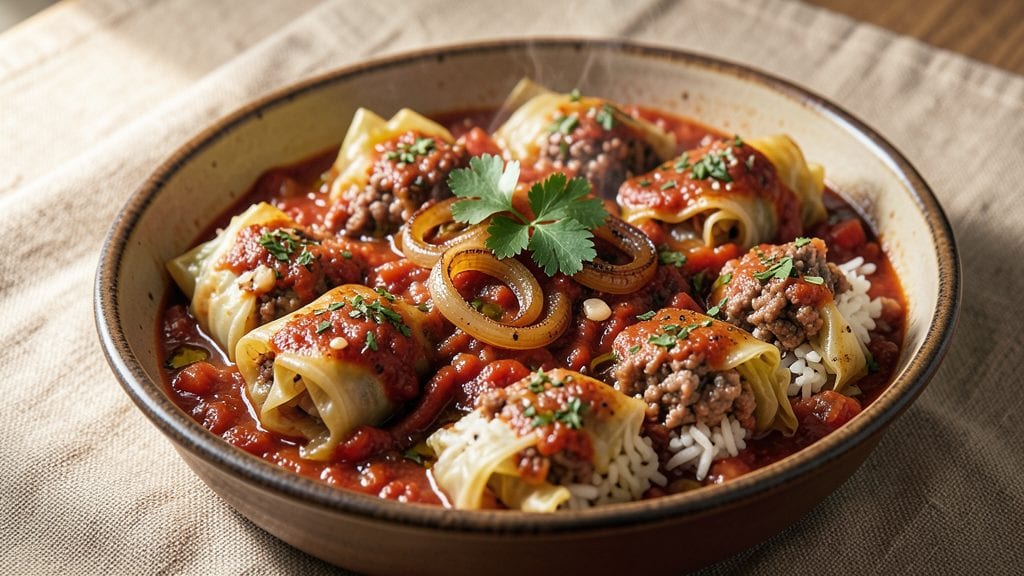
This authentic Polish cabbage rolls recipe brings the heart of Eastern European tradition to your dinner table with tender cabbage leaves wrapped around savory meat and rice.
The key to perfect golabki lies in blanching the cabbage just right—soft enough to roll but sturdy enough to hold its shape—before filling them with a blend of ground pork, beef, and aromatic spices.
I've perfected this method over years of testing, ensuring each bite delivers that perfect balance of flavors and textures that define Polish home cooking.
The filling is where the magic happens, combining finely ground meat with cooked rice, onions, and a carefully measured mix of allspice, marjoram, and bay leaf for that unmistakable Eastern European depth.
What sets this recipe apart is the slow cooking process—simmered in a rich tomato sauce until the cabbage is tender and the filling is so flavorful it practically melts in your mouth. This isn't just a recipe; it's a taste of home, passed down through generations with every tender bite.
By the time you serve these cabbage rolls, your kitchen will smell like a Polish grandmother's table, and your guests will never guess they weren't made in a traditional clay pot.
The cabbage leaves stay intact, the meat remains juicy, and the sauce thickens into a velvety consistency that coats every roll.
Serve with a side of buttered potatoes or fresh rye bread to complete the meal—this is comfort food at its finest, with a touch of authenticity that makes it unforgettable.
Whether you're preparing for a family gathering or simply craving a taste of Poland, this recipe delivers restaurant-quality results in your own kitchen. The process might take a little time, but the reward is a dish that feels like a warm embrace—perfectly balanced, deeply flavorful, and impossible to resist.
Let's get started on creating your own golabki masterpiece.
Ingredients for authentic polish cabbage rolls
Sixteen ingredients for a taste of Polish tradition—nothing exotic, just good stuff.
| Ingredient | Amount | Notes |
|---|---|---|
| Green Cabbage 🥬 | 1 whole | Heads about 1.5 lbs for leaves |
| Ground Beef 🥩 | 1 lb | 80/20 fat ratio preferred |
| Ground Pork 🐖 | ½ lb | Lean or regular, finely ground |
| White Rice 🍚 | 1 cup | Long-grain, cooked and cooled |
| Yellow Onion 🧅 | 1 whole | Medium size, finely chopped |
| Garlic Cloves 🧄 | 4 cloves | Fresh, minced for filling |
| Tomato Paste 🍅 | ½ cup | High quality, no sugar added |
| Allspice 🌶️ | ½ tsp | Ground, whole berries work too |
| Dried Marjoram 🌿 | 1 tsp | Fresh if available, finely chopped |
| Bay Leaves 🌿 | 2 whole | Dried, standard size |
| Salt 🧂 | 1 ½ tsp | Kosher or sea salt |
| Black Pepper 🌶️ | ½ tsp | Freshly ground preferred |
| Vegetable Oil 🫒 | 2 tbsp | For blanching cabbage |
| Water 💧 | 4 cups | For boiling cabbage |
| Beef Broth 🍲 | 1 ½ cups | Low sodium preferred |
The cabbage is non-negotiable. Look for heads with tightly wrapped leaves—those are the ones that'll hold their shape. I always grab mine from Polish markets if I'm near one, but the regular grocery store stuff works too (just skip the wilted outer leaves). For the meat, 80/20 ground beef gives the best flavor and texture—don't go leaner than that. The pork adds richness, but if you're vegetarian, mushrooms or lentils work surprisingly well. The rice needs to be fully cooked and cooled before mixing—warm rice makes the filling soggy.
No allspice? Cinnamon at half the amount gives a similar warmth, though not exactly the same. Fresh marjoram is ideal but dried works fine—just don't overdo it. For the tomato paste, Rao's or Muir Glen are my go-tos—they're consistent and flavorful. The beef broth can be homemade or store-bought, but low sodium is key so you can control the seasoning. If you're in a pinch, water plus a bouillon cube works, but it won't be as rich. The bay leaves should be standard size—no tiny crumbles.
Blanched cabbage leaves keep for 3 days in the fridge, wrapped in damp paper towels. The filling can be prepped ahead and stored for 2 days before rolling. Once assembled, these freeze beautifully for 3 months—just thaw overnight in the fridge before reheating. I always make double batches because they're perfect for meal prep: reheat with a splash of broth to keep them moist. The sauce thickens as it sits, so add a little water if it's too thick when reheating.
Why You'll Love This Recipe
- I swear by this trick: just blanch whole cabbage leaves in boiling water for 2 minutes—they soften perfectly without rolling out dough. My kids even "help" by pulling them apart after, and we still end up with tender, intact rolls.
- No-Core Chopping Needed: I swear by this trick: just blanch whole cabbage leaves in boiling water for 2 minutes—they soften perfectly without rolling out dough. My kids even "help" by pulling them apart after, and we still end up with tender, intact rolls.
- Savory Umami Bomb: That mix of ground beef and pork? It’s magic. The onions caramelize while the rice soaks up all the juices, giving each bite that deep, meaty satisfaction. Honestly, the first time I tried it, I ate two rolls straight from the pan.
- Leftovers That Beg for More: Nothing disappears faster than these reheated. I make a double batch on Sundays—some go straight to the freezer, others get tucked into lunches all week. The cabbage stays crisp, the filling melts, and my coworkers always ask for the recipe.
Step-by-step instructions for authentic Polish cabbage rolls
Here's how to make these hearty, flavorful cabbage rolls just like Polish babcia used to serve.
Blanch and Prepare the Cabbage Leaves
Start by removing the outer wilted leaves from the whole green cabbage, setting aside the core for later. Bring a large pot of water to a boil and add the 2 tablespoons vegetable oil. Place the cabbage leaves, one at a time, in the boiling water for about 3-4 minutes until they soften and become pliable. You'll see them turn from stiff to flexible - this makes them perfect for rolling.
While the leaves are blanching, prepare the cabbage core by dicing it into small pieces. Set aside for the filling. Drain the blanched leaves carefully and lay them flat on a clean kitchen towel to cool slightly. The leaves should be soft enough to roll but not so hot they'll tear when handling. Keep them covered with a damp towel to prevent drying out.
Prepare the Savory Meat Filling
In a large skillet, combine the 1 pound ground beef and 0.5 pound ground pork over medium heat. Cook until the meat is browned and any pink color disappears, breaking it apart with a wooden spoon. This should take about 5-7 minutes. The meat should look crumbly and moist, not dry.
Add the finely chopped whole yellow onion to the skillet and cook for another 3-4 minutes until softened. Stir in the 4 minced garlic cloves and cook for 30 seconds until fragrant. This aromatic base forms the flavor foundation for your filling. Remove the skillet from heat and let it cool slightly before adding other ingredients.
Combine All Filling Ingredients
In a large mixing bowl, combine the cooked meat mixture with the 1 cup cooked and cooled white rice. Add the 0.5 cup tomato paste, 1.5 teaspoons salt, 0.5 teaspoon black pepper, 0.5 teaspoon allspice, and 1 teaspoon dried marjoram. Mix thoroughly until all ingredients are evenly distributed throughout the mixture.
Here's the thing - the filling should be moist but not wet. If it feels too dry, add 1-2 tablespoons of beef broth to help bind everything together. The filling should hold its shape when packed into the cabbage leaves but still be easy to work with. Taste the mixture and adjust seasoning if needed - you want it to be flavorful but not overpowering.
Assemble and Roll the Cabbage Rolls
Place about 2 tablespoons of the meat mixture onto the center of each blanched cabbage leaf. Fold the sides inward and roll tightly from the bottom up, creating neat little packages. You'll want to use the entire leaf to wrap the filling completely. Place each completed roll seam-side down in a large baking dish.
I like to arrange them in a single layer first, then fill in any gaps with additional rolls. The rolls should fit snugly together but not be forced. If you have any leftover filling, you can make smaller rolls or save it for another use. The key is to create uniform rolls that will cook evenly.
Simmer the Rolls in Flavorful Broth
Pour the 1.5 cups beef broth into the baking dish, covering the bottom completely. Add the 2 whole bay leaves and enough water to come about halfway up the sides of the rolls - you should use about 2 cups total. The rolls should be mostly submerged but not floating.
Bring the liquid to a gentle simmer over medium heat, then reduce to low heat. Cover the dish with a tight-fitting lid and let the rolls cook for 1 hour. After the initial hour, check the liquid level - you may need to add a little more water if it's reduced too much. The rolls are done when the cabbage is tender and the meat is fully cooked through, which should take about 1 hour 15 minutes total.
Pro Tips For Making Authentic Polish Cabbage Rolls
- SOAK THE CABBAGE LEAVES: Polish rolls need pliable leaves, not cardboard. Drop the whole cabbage head in boiling water for 3-4 minutes, then shock in ice water—this softens them enough to wrap without tearing. I learned this the hard way after struggling with brittle leaves that split when stuffed.
- COOK THE MEAT LOW AND SLOW: Brown the beef and pork first, then simmer the filling with onions and rice at a gentle boil—no rushing. Skipping this step makes the rolls dense and dry. My grandmother insisted on "low heat or no flavor," and she was right: a 20-minute simmer builds depth.
- STUFF LOOSELY, DON’T OVERPACK: Polish rolls aren’t supposed to be stuffed like sausage links. Use about ½ cup filling per leaf, leaving room to expand. I used to cram them tight, and they’d either burst or stay raw inside—now I trust the recipe’s proportions.
- USE BOTH MEATS, BUT GRILL THE PORK FIRST: Ground pork burns faster than beef, so grill it separately until just done, then mix it in cold. This keeps the filling moist and prevents a greasy mess. Sounds like extra work, but it actually cuts down on cooking time later.
Flavor customization for this authentic polish cabbage rolls
Spice-Forward Variations
For a bolder flavor profile, swap ½ tsp allspice for 1 tsp smoked paprika and add ¼ tsp cayenne pepper to the filling. This gives a smoky, slightly spicy kick that pairs beautifully with the cabbage's natural sweetness. I've found that Penzeys Hungarian Paprika adds the most authentic depth. 🌶️
Vegetarian Adaptation
Replace the meat with a mix of 1 cup cooked lentils, 1 cup finely chopped mushrooms, and ½ cup walnuts for texture. Boost umami with 1 tbsp soy sauce and 1 tsp miso paste in the filling.
The walnuts mimic the richness of meat while keeping the dish hearty. This version works especially well with white wine broth instead of beef broth.
Mushroom-Enhanced Filling
Add 1 cup finely chopped cremini mushrooms to the meat mixture for extra depth. Sauté them with the onions until all moisture evaporates—this prevents soggy filling. I also recommend adding 1 tsp dried thyme alongside the marjoram for a more complex herbal profile.
The mushrooms absorb the spices beautifully, creating a richer flavor base. 🍄
Sweet-Savory Twist
For a unique variation, stir 1 tbsp apricot jam into the tomato sauce before adding it to the rolls. The subtle sweetness balances the savory meat perfectly.
I also add ½ cup raisins to the filling for bursts of fruity sweetness that complement the spiced meat. This version is especially popular during holiday gatherings.
Sour Cream Finish
After cooking, stir ½ cup sour cream into the sauce and let it sit for 15 minutes before serving. The tanginess cuts through the richness of the meat and cabbage.
For extra decadence, top each serving with 1 tbsp crumbled bacon and fresh dill. This finishing touch elevates the dish to restaurant-quality without extra effort.
Herb Variations
Swap marjoram for 1 tsp fresh dill or 1 tsp fresh parsley for a brighter flavor. Dill adds a fresh, slightly citrusy note that works beautifully with the pork and beef.
If using fresh herbs, chop them finely and add them to the filling just before rolling. I've found that Opal basil also pairs well for a more contemporary twist. 🌿
Nutrition facts
Frequently asked questions
Why do I need to blanch the cabbage leaves before rolling?
Blanching softens the leaves so they're pliable enough to roll without tearing, while keeping them sturdy enough to hold the filling. The oil in the boiling water helps prevent browning, and the brief cook time preserves their natural sweetness. Skipping this step often leads to broken rolls or tough cabbage.
Can I make these cabbage rolls ahead of time?
Assemble the rolls and refrigerate them uncovered for 12 hours before cooking to let flavors meld. For longer storage, freeze them raw in a single layer before transferring to a bag. Thaw overnight in the fridge before simmering. The sauce will thicken more when reheated, so add a splash of broth if needed.
What's the secret to keeping the cabbage rolls intact while cooking?
Roll them tightly with the seam side down, and place them seam-side down in the pot. Use just enough liquid to cover the bottom—about 2 cups total—and never let them boil vigorously. A gentle simmer prevents them from unraveling. The cabbage core pieces in the filling also help bind everything together during cooking.
Can I substitute sauerkraut for fresh cabbage?
Not for traditional Polish golabki—fresh cabbage leaves are essential for the authentic texture. However, you can use sauerkraut as a side dish! For a quick workaround, try large Napa cabbage leaves (blanched for 2 minutes) or store-bought cabbage rolls wrappers, though they won't taste exactly the same. The flavor difference is significant, so fresh is best.
How do I know when the cabbage rolls are fully cooked?
The rolls are done when the cabbage is tender enough to pierce with a fork (about 1 hour 15 minutes total cooking time) and the meat filling reaches 160°F internally. The sauce should thicken to a gravy-like consistency. If the cabbage resists, cook another 10 minutes—overcooking won't hurt, but undercooked cabbage will be tough.