
Main Courses
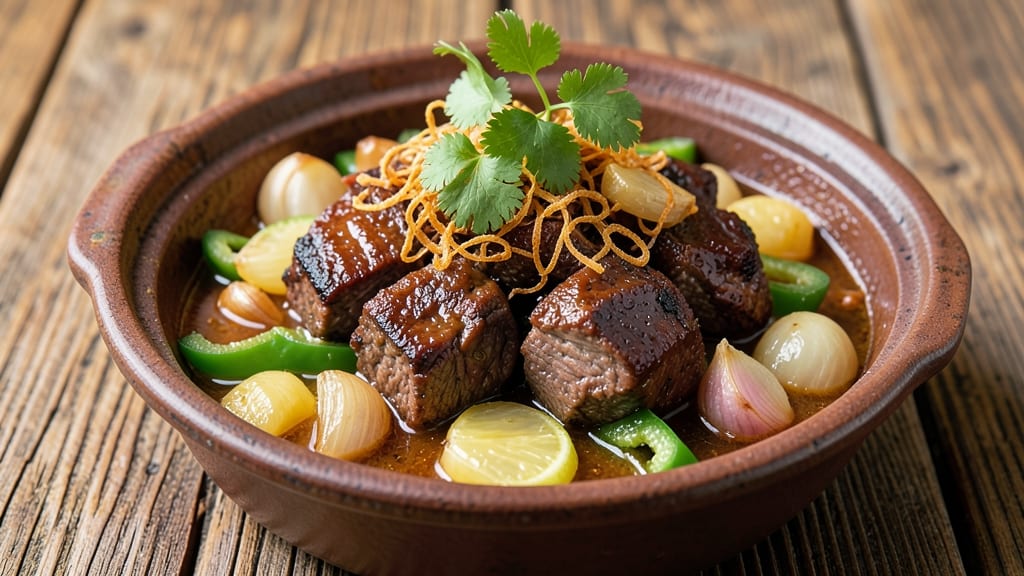
This beef caldereta recipe with pineapple juice transforms a simple stew into a symphony of slow-simmered richness and tropical brightness. 🌟 The secret lies in the balance—tender beef, crisp vegetables, and the tangy sweetness of pineapple juice that tenderizes the meat while adding a vibrant zing.
I first discovered this technique while researching Filipino comfort food, and it became an instant family favorite. The magic happens in the slow simmer, where beef and vegetables meld into a deeply flavorful broth infused with garlic, ginger, and a touch of soy sauce.
The pineapple juice isn’t just a sweetener; it breaks down the beef’s tough fibers, resulting in melt-in-your-mouth tenderness. This dish is hearty enough for a weeknight dinner but elegant enough for company.
By the time you’re done, you’ll have a steaming pot of restaurant-quality caldereta—golden-brown beef, vibrant green bell peppers, and earthy potatoes all swimming in a glossy sauce. The aroma alone will have everyone gathering at the table, eager for a taste of this tropical-inspired comfort food.
Serve it with steamed rice to soak up every last drop of that luscious sauce. Here’s how to make it—step by step, just like my abuela taught me. Let’s get cooking!
Ingredients for beef caldereta recipe with pineapple juice
Pantry staples meet tropical flavors in this hearty Filipino stew. Nothing exotic—just good ingredients coming together.
| Ingredient | Amount | Notes |
|---|---|---|
| Chuck Roast 🥩 | 2 lb | Cut into 1-inch cubes |
| Pineapple Juice 🍍 | 1 cup | Freshly squeezed preferred |
| Yellow Onion 🧅 | 1 whole | Medium, sliced into wedges |
| Garlic Cloves 🧄 | 6 cloves | Minced for depth of flavor |
| Fresh Ginger 🌿 | ½ cup | Finely grated, about 2 inches |
| Green Bell Pepper 🌶️ | 1 whole | Medium, sliced into strips |
| Russet Potatoes 🥔 | 2 lb | Medium, peeled and chunked |
| Tomato Sauce 🍅 | 1 cup | Canned, crushed tomatoes |
| Soy Sauce 🍶 | 2 tbsp | For umami depth |
| Calamansi Juice 🍋 | ¼ cup | Or substitute lime juice |
| Olive Oil 🫒 | 2 tbsp | For sautéing |
| Salt 🧂 | 1 ½ tsp | Adjust to taste |
| Black Pepper 🌶️ | ½ tsp | Freshly ground |
| Bay Leaves 🌿 | 2 whole | For aromatic depth |
| White Wine 🍷 | ½ cup | Dry variety preferred |
The chuck roast is non-negotiable here—it's what gives you that melt-in-your-mouth texture. Look for well-marbled cuts at the butcher counter, or grab pre-cubed from the grocery store meat section. I always check the Costco bulk section when I'm making a big batch, but the regular supermarket stuff works perfectly fine. For the ginger, peel it first—the skin can be bitter. Fresh is best, but if you're in a pinch, powdered ginger at half the amount works too. The calamansi juice might be tricky to find outside Filipino markets, but lime juice works just as well—just use a bit more since it's less tart.
No white wine? Chicken broth with a splash of vinegar gets you close. The tomato sauce can be jarred (I use Muir Glen crushed tomatoes for consistency), but fresh is ideal if you're feeling fancy. For the potatoes, Russets are best—they hold up better to long cooking. If you've got baby potatoes, use twice as many since they're smaller. The bell pepper can be any color, but green has that classic Filipino touch. For the soy sauce, Kikkoman is reliable, but any good-quality brand works. And if you're worried about the pineapple juice being too sweet, just add a bit more calamansi or lime to balance it out.
This stew tastes even better the next day—trust me, the flavors meld together beautifully. Keeps in the fridge for 4-5 days, and freezes for 3 months if you portion it out. I like to make a double batch because it's perfect for leftovers. The sauce thickens as it cools, so just add a splash of water or broth when reheating. And if you're serving a crowd, double the recipe—it's that good.
Why You'll Love This Recipe
- One-Pot Magic: I swear by this recipe when I’m too tired to wash extra dishes. Chuck roast and pineapple juice simmer together until the meat falls apart—no skillets, no strainers, just one pot that does all the work.
- Sweet-Savory Balance: That ginger and garlic? They’re the secret weapons. The pineapple juice cuts through the richness while the onions caramelize into something deep and satisfying—like a hug in a bowl.
- Weeknight Crowd Pleaser: Between us, this is my go-to for family dinners or when friends drop by unannounced. It’s hearty enough for a main but light enough that no one feels stuffed—plus, the leftovers taste even better the next day.
- Budget-Friendly Feast: Chuck roast is cheap, and a little goes a long way. I’ve made this stretch for four meals with minimal effort, and the pineapple juice adds brightness without breaking the bank. (Yes, even on a Tuesday night.)
Step-by-step instructions for beef caldereta with pineapple juice
Here's how to create this Filipino comfort classic—where tender beef meets sweet-tart tropical flavors.
🔥 Step 1: Sear the Chuck Roast for Deep Flavor
Heat the 2 tbsp olive oil in a large Dutch oven over medium-high heat until shimmering. Add the 2 lb chuck roast cut into 1-inch cubes and sear undisturbed for 3-4 minutes per side until deep golden brown. This step builds the rich foundation of your stew.
I press down gently on the beef cubes during the first minute—this prevents them from curling and ensures even contact with the pan. Once browned, transfer the beef to a plate. Real talk: don't skip this searing. It develops the Maillard reaction that gives caldereta its signature depth of flavor. If you're worried about overcrowding, work in batches if needed.
👨🍳 Step 2: Build the Aromatic Base
In the same Dutch oven, add the sliced 1 whole yellow onion and sliced 1 whole green bell pepper. Cook for 5-6 minutes until softened and just beginning to caramelize. Add the 6 cloves minced garlic cloves and 0.5 cup finely grated fresh ginger, stirring constantly for 30 seconds until fragrant.
Here's where it gets fun—toss in the 2 whole bay leaves and pour in the 0.5 cup white wine. Let it bubble away for 2 minutes until the wine reduces by half. This deglazing step captures all those delicious browned bits from the beef, creating a flavorful base for your stew. Don't walk away—wine burns quickly!
🥘 Step 3: Simmer the Beef with Tropical Liquids
Return the seared beef to the Dutch oven. Add the 1 cup tomato sauce, 1 cup pineapple juice, 0.25 cup calamansi juice, and 2 tbsp soy sauce. Stir well to combine, then bring to a gentle simmer. Partially cover and cook for 1 hour at low heat, stirring occasionally, until the beef is fork-tender.
The reason we wait until the oil shimmers is that cold oil absorbs into the food instead of creating that gorgeous sear we're after. You'll see the edges start to crisp—that's your signal to flip. Real talk: this is the moment that matters: the beef should be tender enough to pull apart easily with a fork but not falling apart completely. If the liquid reduces too quickly, add a splash of water to maintain the right consistency.
🍳 Step 4: Add Potatoes and Finish Cooking
Add the 2 lb russet potatoes cut into 1-inch chunks to the beef mixture. Stir gently to coat the potatoes with the flavorful liquid. Increase heat to medium-low and simmer uncovered for an additional 30-40 minutes, until the potatoes are tender and the sauce has thickened slightly.
You'll know the potatoes are done when they're fork-tender and the sauce has reduced enough to coat the back of a spoon. Here's the thing—caldereta should have a rich, slightly thick consistency, but it shouldn't be gluey. If it's too thick, add a splash of water or pineapple juice to loosen it. The potatoes should be soft enough to eat with a spoon but still hold their shape.
⏰ Step 5: Rest and Serve with Confidence
Remove the 2 whole bay leaves and let the caldereta rest for 10 minutes before serving. This resting period allows the flavors to meld together and the sauce to thicken slightly. Taste and adjust seasoning with 1.5 tsp salt and 0.5 tsp black pepper if needed.
Serve the beef caldereta hot, straight from the pot. The combination of tender beef, sweet pineapple, tangy calamansi, and earthy potatoes creates a perfect balance of flavors. I like to pair it with steamed rice to soak up every last drop of that delicious sauce. Your kitchen will smell amazing, and everyone at the table will be asking for seconds!
Pro Tips For Making Beef Caldereta Recipe With Pineapple Juice
- SEAR THE CHUCK ROAST FIRST: The pineapple juice will soften the beef, but if you skip searing, you’ll end up with mushy, flavorless chunks. Brown the roast in batches over medium-high heat—don’t crowd the pan—until it’s deeply caramelized. That crust locks in juices and balances the tangy sweetness of the pineapple later.
- PEEL AND GRATE THE GINGER: Fresh ginger adds depth, but skipping the peel leaves it bitter and fibrous. Use a microplane or fine grater—no need to chop—and add it to the onions and garlic while cooking. It’ll dissolve into the sauce smoothly, not as a stubborn chunk.
- DON’T BOIL THE PINEAPPLE JUICE: Pineapple juice turns cloudy and loses brightness when boiled hard. Simmer it gently with the onions and aromatics—just enough to infuse flavors—then add the beef. If it reduces too much, splash in a little water later. You want sweetness, not a syrup.
- REST THE MEAT BEFORE SLICING: Chuck roast is forgiving, but cutting it too soon means dry, stringy slices. Tent the pot with foil and let it sit 10 minutes off the heat. The residual heat finishes cooking it evenly, and the juices redistribute—critical when you’re serving it with rice or crusty bread.
Pro cooking tips for beef caldereta recipe with pineapple juice
Searing Secrets
For that signature caramelized crust on your beef cubes, use a heavy-bottomed Dutch oven like Le Creuset—it distributes heat evenly and prevents hot spots. Heat your olive oil until it's smoking hot (not just shimmering) before adding the beef.
I press down firmly with a spatial spatula for 30 seconds on each side to prevent curling. This creates a deep golden-brown crust that locks in juices and builds rich, complex flavors. 🔥
Deglazing Like a Pro
After searing, never let those flavorful browned bits go to waste! Immediately add your white wine (or substitute) and let it bubble vigorously for 2-3 minutes until reduced by half. This step, called deglazing, dissolves those precious fond particles that would otherwise stick to your pot.
For extra depth, I like to add a splash of pineapple juice at this stage—it jumpstarts the sweet-tangy flavor profile that defines this dish.
Potato Timing
Add your potatoes only after the beef has already tenderized—typically after 1 hour of simmering. This ensures they absorb all the rich beef flavors without turning mushy. I cut them into 1-inch chunks for even cooking and stir them gently to prevent breaking.
The key is to add them when the beef is just fork-tender but still has some bite—this creates the perfect texture contrast in every spoonful.
Pineapple Juice Magic
The pineapple juice isn't just for sweetness—it contains bromelain, an enzyme that tenderizes the beef while adding tropical brightness. For best results, use freshly squeezed juice (about 1 cup) rather than canned.
If you're concerned about sweetness, balance it with calamansi or lime juice—just ¼ cup adds that perfect tang. I find that adding the pineapple juice after searing (not at the start) prevents the beef from becoming too soft too quickly.
Low-and-Slow Mastery
This isn't a dish for high heat—low and slow is the name of the game. Maintain a gentle simmer at 180-190°F (just small bubbles breaking the surface) for the entire 1.5-2 hours of cooking time.
I use a meat thermometer to monitor the beef's internal temperature—it should reach 195°F for perfect tenderness. The slow cook transforms tough chuck roast into melt-in-your-mouth perfection while allowing all the flavors to meld beautifully. 💫
Final Flavor Boost
Before serving, remove the bay leaves and taste your caldereta. Adjust seasoning with salt (I usually need about 1.5 tsp) and black pepper (just ½ tsp).
For an extra layer of flavor, I like to finish with a 1 tbsp butter, swirled into the sauce just before serving. This adds richness while mellowing any sharp acidity.
The dish tastes even better after resting for 10 minutes—this lets the sauce thicken slightly and the flavors fully develop. Trust me, patience pays off here!
Nutrition facts
Frequently asked questions
Can I substitute fresh pineapple for pineapple juice?
You can, but it changes the texture and sweetness balance. Use 1 cup fresh pineapple chunks instead of juice, but add them only in the last 10 minutes of cooking to prevent mushiness. The juice works better for tenderizing the beef throughout the slow simmer.
How do I make this recipe vegetarian?
Swap the beef for 1.5 lbs extra-firm tofu or portobello mushrooms cut into chunks. Press tofu first to remove excess water, then pan-fry until golden. Add 1 tbsp soy sauce extra to compensate for the meaty flavor. The potatoes and vegetables will still hold up beautifully!
Why does my caldereta turn out too sour?
Overusing calamansi or lime juice is the most common culprit. Balance it by adding 1 tsp sugar or ½ cup more pineapple juice to sweeten. For future batches, start with just 2 tbsp calamansi juice and adjust to taste at the end.
Can I make this in an Instant Pot?
Sear the beef first, then add all ingredients except potatoes. Cook on high pressure for 45 minutes, then quick-release. Add potatoes and cook another 5 minutes on sauté mode. The pressure cooker cuts time by half while keeping flavors rich.
What's the best way to reheat leftovers?
Gently reheat on the stovetop with 1-2 tbsp water or pineapple juice over low heat to prevent drying. Microwave reheating works too—just cover with a damp paper towel and heat in 1-minute intervals. Never reheat to boiling!