
Main Courses
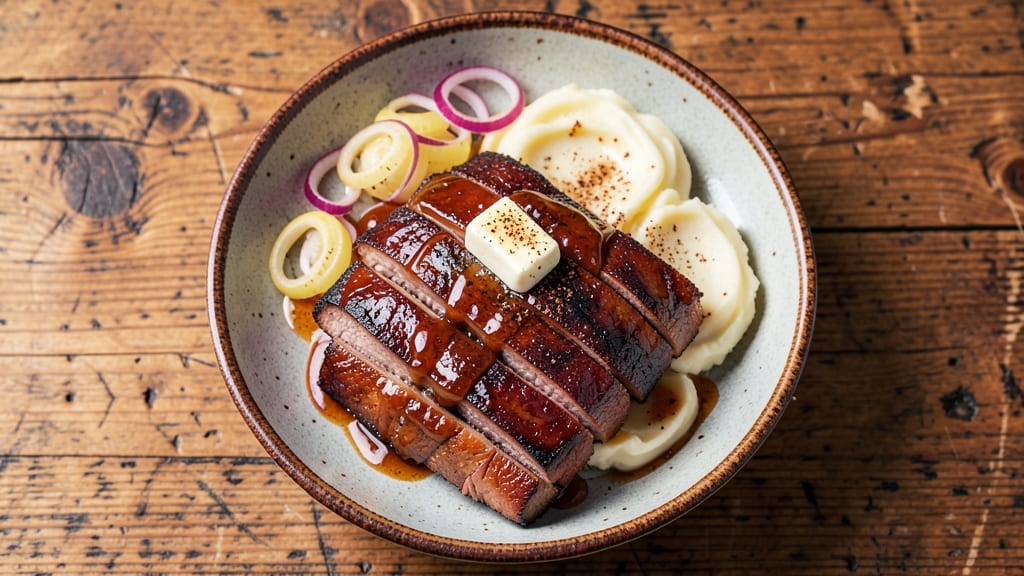
This brisket recipe with apple juice transforms tough meat into melt-in-your-mouth perfection with just one pan and minimal effort. The apple juice isn't just a sweetener—it tenderizes the brisket while balancing the deep smokiness, creating a texture that falls apart at the touch.
What makes this approach special is how the apple juice's natural acidity breaks down collagen, while its sweetness caramelizes into a glossy, flavorful crust during cooking.
The secret lies in the slow cooking process, which develops rich, layered flavors without requiring a smoker. You'll start with a simple dry rub to create that essential bark, then let the apple juice work its magic in the oven or slow cooker.
This method ensures even moisture distribution, so every slice stays juicy and packed with flavor—no dry spots here. The result is a brisket that's both restaurant-quality and surprisingly simple to achieve at home.
By the time you're ready to serve, you'll have brisket that's fork-tender with a caramelized exterior and a sauce so rich it clings to every bite.
The apple juice's subtle sweetness complements the smoky depth, creating a perfect harmony of flavors that works beautifully for sandwiches, tacos, or served alongside classic sides. This isn't just brisket—it's a showstopping centerpiece that will have everyone asking for seconds.
Whether you're feeding a crowd or treating yourself to a special meal, this recipe delivers professional results with minimal fuss. The apple juice makes all the difference, transforming an ordinary brisket into something extraordinary. Let's get cooking—your taste buds will thank you.
Ingredients for brisket recipe with apple juice
Six ingredients transform tough brisket into restaurant-quality tenderness with apple juice magic.
| Ingredient | Amount | Notes |
|---|---|---|
| Packer Cut Brisket 🥩 | 4 lb | Whole packer cut, fat cap intact |
| Unsalted Butter 🧈 | ½ cup | Cold, cubed for rub |
| Yellow Onion 🧅 | 1 whole | Large, sliced into rings |
| Granulated Garlic 🧄 | 2 tbsp | Freshly minced preferred |
| Smoked Paprika 🌶️ | 2 tbsp | For deep smoky flavor |
| Ground Black Pepper 🌶️ | 1 tbsp | Freshly cracked preferred |
| Kosher Salt 🧂 | 2 tbsp | Diamond Crystal preferred |
| Unsweetened Apple Juice 🍎 | 1 ½ cups | 100% pure, no sugar added |
| Beef Broth 💧 | 1 cup | Low-sodium preferred |
| Brown Sugar 🍚 | 2 tbsp | Light or dark works |
| Apple Cider Vinegar 🍶 | 1 tbsp | For tangy balance |
| Fresh Thyme 🌿 | ¼ cup | Leaves only, chopped |
| Fresh Rosemary 🌿 | ⅛ cup | Needles only, chopped |
| Olive Oil 🫒 | 2 tbsp | For pan searing |
The brisket cut matters—packer cut with the fat cap is ideal for slow cooking, giving you that perfect balance of flavor and moisture. Costco or local butchers usually have it pre-cut, but if you're buying whole, look for a piece that's at least 3-4 inches thick with good marbling. The fat cap isn't just for flavor; it helps create that beautiful bark during cooking. For the apple juice, grab 100% pure, no sugar added—the kind you'd find in the juice section, not the cocktail aisle. Brands like Mott's or Odwalla work well, but any unsweetened variety will do. Fresh herbs? Trader Joe's sells pre-chopped thyme and rosemary bundles that save time, but if you're using fresh, make sure they're vibrant and not wilted.
No smoked paprika? Regular paprika plus a pinch of liquid smoke gets you close. Running low on apple juice? Apple cider or even white grape juice works in a pinch, though the flavor will be slightly different. The beef broth can be swapped for water plus a bouillon cube if needed, but the low-sodium kind is best to avoid over-salting. For the brown sugar, light or dark both work, but dark adds a deeper molasses flavor. If you're short on time, the apple juice and broth can be pre-mixed in a pitcher—just make sure to whisk in the brown sugar until fully dissolved. The olive oil? Any good-quality extra-virgin will do, but avoid the cheap stuff that burns easily.
This brisket reheats beautifully—just warm it in its juices for 10-15 minutes on low heat. It actually tastes better the next day as the flavors meld. Store leftovers in an airtight container in the fridge for up to 5 days, or freeze for 3 months. For serving, I like to slice it against the grain and arrange it on a platter with the pan juices spooned over the top. The sauce thickens as it cools, so if you're making it ahead, just reheat gently to loosen it up. Portion into meal prep containers for easy lunches—trust me, you'll be thankful.
Why You'll Love This Recipe
- Sweet & Smoky Magic: The apple juice doesn’t just moisten—it transforms that tough brisket into something tender and ridiculously flavorful. That deep caramelized crust? Pure satisfaction from the butter and paprika working together.
- One-Pan Unfussiness: Honestly, this is the kind of recipe where you can chop onions while watching TV. No fancy techniques, no stress—just sear the brisket, toss in the garlic and onions, and let the slow cooker do the rest. (Yes, even on a Tuesday night.)
- Leftover Heaven: Between us, this brisket always makes more than we need. The leftovers? Shred it for tacos, sandwiches, or just reheat slices with a sprinkle of smoked paprika—it’s my secret weapon for lazy lunches.
- Budget-Friendly Feast: A packer cut brisket stretches across meals without breaking the bank. The apple juice adds depth for pennies, and the onions/garlic bulk it up. Feeds a crowd but won’t drain your wallet—win-win.
Step-by-step instructions for brisket recipe with apple juice
Here's how to transform tough brisket into melt-in-your-mouth perfection using apple juice's magic.
Prepare the Brisket Rub and Sear
In a small bowl, combine the 0.5 cup unsalted butter, 2 tbsp smoked paprika, 1 tbsp ground black pepper, 2 tbsp kosher salt, 2 tbsp granulated garlic, 0.25 cup fresh thyme, and 0.125 cup fresh rosemary. Rub this mixture all over the 4 lb packer cut brisket, pressing firmly so it adheres. Let it sit at room temperature for 30 minutes—this helps the rub penetrate and develop flavor.
Heat a large Dutch oven over medium-high heat and add the 2 tbsp olive oil. Once shimmering, place the brisket fat-side down and sear for 8-10 minutes until the fat renders and the exterior develops a deep golden crust. Flip and sear the other side for another 8-10 minutes. This step creates the foundation for rich flavor and tender texture.
Build the Apple Juice Braising Liquid
Remove the brisket from the Dutch oven and set it aside. In the same pot, add the 1 whole yellow onion (sliced into rings) and cook for 3-4 minutes until softened. Stir in the 2 tbsp brown sugar and cook for another 1 minute until caramelized slightly.
Deglaze the pot with the 1.5 cups unsweetened apple juice, scraping up all the browned bits from the bottom. Add the 1 cup beef broth and 1 tbsp apple cider vinegar, then return the brisket to the pot, fat-side up. The liquid should come about halfway up the brisket—if it's too shallow, add a splash of water to help braise properly.
Braise Until Fork-Tender
Cover the Dutch oven with a tight-fitting lid and transfer it to a 325°F oven. Braise for 3-4 hours until the brisket is fork-tender and the internal temperature reaches 195-203°F. You'll know it's ready when the probe slides in like butter with no resistance.
Here's the thing—don't peek or lift the lid during cooking. Every time you do, you lose heat and moisture, extending the cook time. Instead, trust the thermometer and let the apple juice work its magic, creating a sweet-tangy sauce that tenderizes the meat.
Rest and Slice for Maximum Juiciness
Once the brisket reaches the perfect temperature, remove it from the oven and let it rest in the braising liquid for 15-20 minutes. This resting period allows the juices to redistribute throughout the meat, ensuring every slice is moist and flavorful.
Transfer the brisket to a cutting board and let it rest uncovered for another 10 minutes before slicing. Locate the grain direction—you'll see lines running through the meat—and cut against the grain into ¼-inch thick slices. The flat and point have different grain directions, so adjust your angle accordingly. Serve immediately with the braising sauce spooned over the top.
Pro Tips For Making Brisket Recipe With Apple Juice
- CRANK THE HEAT FIRST: Start your brisket on the stovetop over medium-high heat—no simmering—until you hear that butter sizzle and see the onions turn golden. I used to low-and-slow this part, but the Maillard reaction from the initial sear actually deepens the apple juice’s sweetness when it reduces later. (Yes, even if you’re impatient like me.)
- GRATE THE GARLIC FINE: Skip the minced jarred garlic—it’s too coarse and burns before it flavors. Use a microplane or fine grater to get a paste-like texture that dissolves smoothly into the butter and apple juice. After burning three batches, I finally figured out this was the thing that matters most for even flavor distribution.
- DON’T SKIP THE FOIL REST: Let the brisket sit under foil for 5–10 minutes after removing it from the pan—this traps steam and keeps the meat tender while you finish the sauce. I was skeptical until I tried it: the sauce absorbs better, and the brisket stays juicy instead of drying out when you slice.
- USE APPLE CIDER, NOT JUICE: Swap store-bought apple juice for raw, unfiltered apple cider—it’s got natural pectin that thickens the sauce as it reduces. Plus, the cloudiness adds body without needing extra cornstarch. (Your future self will thank you for the extra 30 seconds of shopping.)
Pro cooking tips for brisket recipe with apple juice
Apple Juice Magic
The apple juice isn't just a sweetener—it's the secret weapon that tenderizes the brisket while creating a glossy, caramelized sauce. The natural acidity breaks down collagen, while the sweetness balances the smokiness.
I like using 100% pure, no sugar added apple juice like Mott's or Odwalla—it gives the best flavor without overpowering the meat. 🍎
Temperature Control
Maintaining a steady 325°F in your oven is key to even cooking. I use an oven thermometer to verify accuracy—some ovens run hot or cold. The slow braise allows the apple juice to infuse the meat while keeping it moist.
Don't rush it! The brisket needs 3-4 hours to reach that perfect 195-203°F internal temperature.
Bark Development
The initial sear creates a deep golden crust, but the apple juice helps lock in moisture while enhancing flavor. After searing, let the brisket rest at room temperature for 30 minutes before braising—this ensures even cooking and better rub adhesion.
The fat cap should render slowly, contributing to that rich, flavorful bark.
Resting Like a Pro
Resting is where the magic happens! After removing the brisket from the oven, let it rest in the braising liquid for 15-20 minutes. Then, transfer it to a cutting board and rest uncovered for another 10 minutes.
This step ensures juices redistribute, so every slice stays moist and delicious. 💡
Adjusting Sweetness
If you prefer less sweetness, reduce the 2 tbsp brown sugar to 1 tbsp or omit it entirely. For extra depth, add 1 tsp cinnamon to the rub—it pairs beautifully with apple juice.
Taste the braising liquid before serving and adjust with a pinch of salt or a splash of vinegar if needed.
Equipment Essentials
A Dutch oven is ideal for this recipe—it traps heat and moisture perfectly. If you don't have one, a heavy pot with a tight-fitting lid works too.
I also recommend a meat thermometer to avoid overcooking. For extra flavor, use Costco's packer cut brisket—it's consistently high-quality and perfect for this method.
Nutrition facts
Frequently asked questions
Why does apple juice make brisket more tender?
The natural acidity in apple juice breaks down collagen in the meat while cooking, creating a fork-tender texture. The sweetness also caramelizes into a glossy sauce that enhances flavor and keeps the brisket moist. This method works especially well in Dutch ovens where the steam helps tenderize the meat from within.
Can I substitute apple juice for another liquid?
Yes, but the flavor will change. For similar sweetness, try white grape juice or apple cider. For a tangier profile, use beef broth with a splash of balsamic vinegar. The apple juice's unique balance of sweetness and acidity is hard to replicate, though—it's what creates that special caramelized crust during cooking.
How do I know when the brisket is done?
Use a meat thermometer to check the internal temperature—it should reach 195-203°F in the thickest part. The probe should slide in like butter with no resistance. If you don't have a thermometer, look for these signs: the meat pulls away from the bone easily, and the juices run clear when pierced. The apple juice braising helps create these perfect conditions.
Can I make this brisket in a slow cooker?
Sear the brisket first, then transfer it to a slow cooker with the apple juice mixture. Cook on low for 8-10 hours or high for 5-6 hours until tender. The slow cooker's gentle heat allows the apple juice to infuse beautifully while keeping the meat moist. Just be sure to add a splash of apple juice if the liquid reduces too much during cooking.
What's the best way to use leftovers?
This brisket reheats beautifully! Store leftovers in an airtight container for up to 5 days in the fridge. For reheating, warm slices in the braising sauce on low heat for 10-15 minutes or microwave for 1-2 minutes with a splash of apple juice to keep them moist. It's perfect for sandwiches, tacos, or even brisket hash with potatoes and onions.