
Main Courses
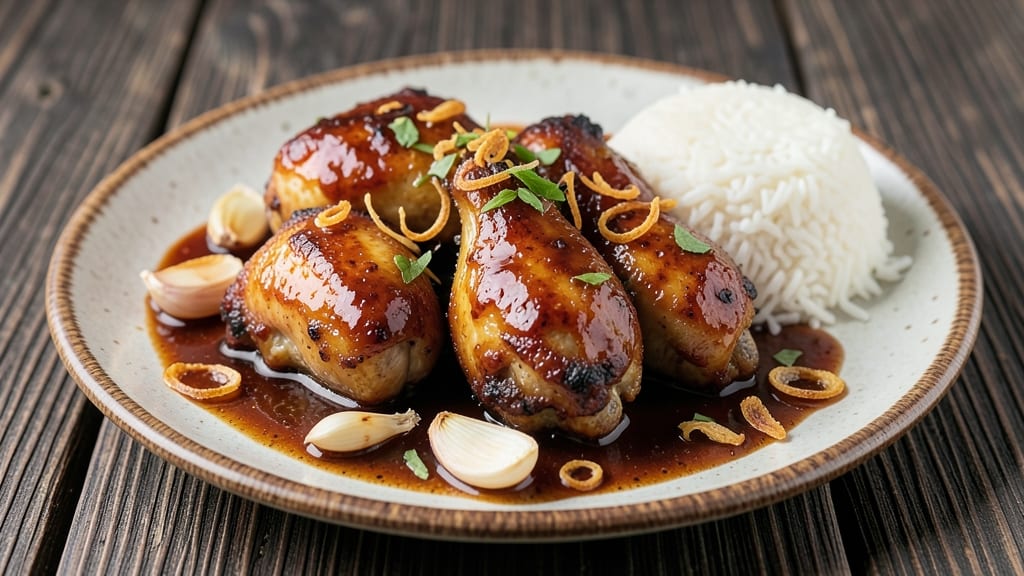
This chicken adobo recipe with apple cider vinegar delivers restaurant-quality tenderness in one pot—no fancy techniques required. 💛 The secret lies in the vinegar's magic: it tenderizes the chicken while building layers of tangy, savory depth that'll have everyone asking for seconds.
I've perfected this Filipino-inspired dish after years of testing, balancing traditional methods with modern shortcuts that still deliver authentic flavor.
The process is simpler than it sounds: chicken simmers in a fragrant vinegar-soy sauce blend until fork-tender, absorbing all those bright, complex flavors. What makes this version special is using apple cider vinegar instead of traditional cane vinegar—it adds subtle sweetness that rounds out the acidity beautifully.
The sauce reduces to a glossy, sticky perfection that clings to every bite of chicken.
By the time you're done, you'll have juicy, fall-apart chicken swimming in a sauce that's equally impressive poured over rice or used as a marinade. The aroma alone transforms your kitchen into a Filipino comfort food haven.
This recipe proves you don't need complicated methods to achieve restaurant-quality results—just patience and the right ingredients.
Perfect for meal prep or feeding a crowd, this adobo reheats beautifully and tastes even better the next day. The sauce's versatility means you can use it for more than just chicken—try it on tofu or vegetables for plant-based versions. Let's get cooking!
Ingredients for chicken adobo recipe apple cider vinegar
Six ingredients make the magic happen—apple cider vinegar's tangy sweetness meets savory soy and brown sugar for restaurant-quality adobo.
| Ingredient | Amount | Notes |
|---|---|---|
| Boneless, Skinless Chicken Thighs 🍗 | 3 lb | Cut into 2-inch pieces for even cooking |
| Apple Cider Vinegar 🍏 | 1 cup | Unfiltered for best flavor |
| Soy Sauce 🥄 | ½ cup | Use light or regular soy sauce |
| Brown Sugar 🍚 | ½ cup | Packed lightly for accurate measurement |
| Garlic Cloves 🧄 | 8 cloves | Minced for aromatic depth |
| Fresh Ginger 🌿 | 2 tbsp | Grated, not powdered |
| Bay Leaves 🌳 | 2 whole | Dried, for subtle earthiness |
| Black Peppercorns 🌶️ | 1 tsp | Crushed for enhanced flavor |
| Olive Oil 🫒 | 2 tbsp | Extra-virgin for richness |
| Water 💧 | 1 cup | For balancing acidity |
| Green Onions 🧅 | 4 whole | Sliced, for garnish and freshness |
| Fresh Cilantro 🌿 | ¼ cup | Chopped, for bright finish |
| Salt 🧂 | 1 ½ tsp | Adjust to taste after cooking |
The chicken thighs are the star—bone-in, skin-on if you can find them, but boneless works too. Look for organic or free-range at Whole Foods or your local butcher for richer flavor. Cut them into even 2-inch pieces so they cook uniformly. The apple cider vinegar should be unfiltered—that cloudiness means more flavor. Trader Joe's carries a great organic version, or grab the best you can find. Fresh ginger and garlic? Asian markets usually have the freshest, but any grocery store works. Don't skip the bay leaves—they add subtle depth that makes this taste authentic.
No apple cider vinegar? White vinegar plus 1 tbsp maple syrup gets you close, though the flavor won't be identical. Short on soy sauce? Coconut aminos in a pinch, but it'll taste different. The brown sugar is non-negotiable—it balances the vinegar's acidity perfectly. Raw sugar or coconut sugar work too if you're avoiding refined sugar. Fresh ginger and garlic can be swapped for powdered (use half the amount), but you'll lose that bright, fresh punch. The olive oil should be extra-virgin—it's the only place to splurge. California olive oil brands are usually the most flavorful. If you're making this ahead, the sauce actually improves overnight as the flavors meld.
This reheats like a dream—just warm it gently on the stove or pop it in the microwave. Keeps for 4-5 days in the fridge, or freeze for 3 months. I always make a double batch because the leftovers are even better the next day. The sauce thickens as it cools, so add a splash of water if it gets too stiff. Store the chicken and sauce separately if you're prepping for the week—the sauce will keep longer that way. Garnish with fresh cilantro and green onions right before serving to keep everything vibrant.
Why You'll Love This Recipe
- One-Pot Magic: The chicken thighs go in raw, the vinegar and soy sauce simmer together—no chopping, no fuss. Just toss everything in one pot, let it bubble, and walk away while it transforms into something rich and sticky.
- Tangy-Sweet Balance: That apple cider vinegar cuts through the richness, while the brown sugar caramelizes into a glossy glaze. The garlic? Oh, it’s there—sharp, warm, and impossible to ignore.
- Lunchbox Hero: Between us, this is my go-to for meal prep. The flavors only get better after a day in the fridge, and it reheats like a dream—perfect for lunches or a quick dinner when you’re too tired to think.
- Budget-Friendly Feast: Chicken thighs are forgiving and cheap, and the pantry staples (vinegar, soy sauce) stretch this into three meals without breaking the bank. Plus, leftovers taste even better the second time around.
Step-by-step instructions for chicken adobo with apple cider vinegar
Here's how to create restaurant-quality adobo with tender chicken and bright vinegar notes.
🍳 Step 1: Sear the Chicken for Deep Flavor
Heat the 2 tablespoons olive oil in a large Dutch oven over medium-high heat until shimmering. Pat the 3 lb boneless, skinless chicken thighs dry with paper towels and cut into 2-inch pieces for even cooking. Working in batches, add the chicken to the pot and sear for 3-4 minutes per side until golden brown and cooked through.
Here's the thing—don't overcrowd the pan. You want those pieces to develop a nice crust. If needed, work in two batches. As the chicken cooks, you'll notice the fat rendering out—this is your flavor foundation. Once all pieces are browned, remove them and set aside in a bowl.
🥘 Step 2: Build the Tangy-Sweet Base
In the same Dutch oven, reduce heat to medium and add the 8 cloves minced garlic and 2 tablespoons grated fresh ginger. Sauté for 1-2 minutes until fragrant—you should smell that pungent, fresh aroma. Add the 2 whole bay leaves and 1 teaspoon crushed black peppercorns, stirring for 30 seconds to toast lightly.
Now pour in the 1 cup apple cider vinegar and scrape up all those delicious browned bits from the bottom of the pot. These bits, called fond, pack serious flavor. Add the 0.5 cup soy sauce and 0.5 cup packed brown sugar, stirring to combine. Let this mixture simmer for 3-4 minutes until slightly reduced and syrupy.
🍳 Step 3: Simmer Chicken in Flavorful Sauce
Return the seared chicken to the pot along with any accumulated juices. Add the 1 cup water and bring everything to a gentle simmer. Here's where patience pays off—cover the pot and let it cook on low heat for 45-50 minutes, stirring occasionally, until the chicken is fork-tender and the sauce has thickened to a glossy consistency.
You'll know it's ready when the chicken easily pulls apart with minimal resistance. The sauce should coat the back of a spoon and have a beautiful balance of sweet, tangy, and savory notes. If the sauce reduces too quickly, add 1-2 tablespoons water to maintain the right consistency.
👨🍳 Step 4: Finish with Fresh Herbs and Garnish
Remove the 2 whole bay leaves from the pot and discard them. Stir in the 1.5 teaspoons salt, adjusting to taste. Taste the sauce and make any final adjustments—you might want to add a splash more vinegar for tang or a bit more sugar for sweetness.
For serving, transfer the chicken and sauce to a platter. Garnish with 4 whole sliced green onions and 0.25 cup chopped fresh cilantro. The bright green herbs will cut through the rich, tangy flavors and add a fresh finish. Serve immediately with steamed rice to soak up that delicious sauce.
Pro Tips For Making Chicken Adobo Recipe Apple Cider Vinegar
- Brown Sugar First: Toss the chicken thighs in the brown sugar before adding vinegar—it clings better and caramelizes faster. I used to skip this, and the sauce always tasted underdeveloped until I realized the sugar needed time to melt into the meat.
- Simmer, Don’t Boil: Keep the heat low enough that you barely see bubbles—hard boiling turns the vinegar sharp and the soy sauce bitter. After burning two batches, I learned: patience here means a balanced, rich sauce.
- Toast the Garlic: Sear the minced garlic in oil for 30 seconds until it smells nutty before adding vinegar. Sounds weird, but it works—raw garlic can taste harsh in adobo, and this step adds depth without overpowering.
- Deglaze Aggressively: After browning the chicken, splash in the apple cider vinegar immediately and scrape the pan like your life depends on it. That stuck-on fond is where the flavor lives—ignore it, and your sauce will taste flat.
Dietary considerations for this dish
Gluten-Free Adaptations
This recipe is naturally gluten-free, thanks to its simple ingredients—but I always double-check labels on soy sauce to avoid hidden wheat. Use tamari (a gluten-free soy sauce) instead of regular soy sauce if you're sensitive.
The apple cider vinegar and other ingredients are inherently gluten-free, so no substitutions are needed beyond the soy sauce swap. 🌱
Dairy-Free and Vegan Options
For a vegan version, swap the chicken for extra-firm tofu or king oyster mushrooms (about 1.5 lbs). Cut the tofu into 2-inch cubes and press it first to remove excess water.
Cook it the same way—sear first, then simmer in the sauce. The mushrooms will absorb the flavors beautifully. No other ingredient changes are needed!
Low-Sodium Considerations
If you're watching your sodium intake, reduce the soy sauce to ¼ cup and add 1 teaspoon of coconut aminos for depth. Skip the added salt at the end, or use a low-sodium soy sauce (like San-J brand).
The apple cider vinegar and brown sugar still provide plenty of flavor without relying on salt. Taste as you go—you might be surprised how balanced it stays!
Sugar-Free Adaptations
To make this sugar-free, replace the brown sugar with ½ cup monk fruit sweetener or erythritol (a 1:1 substitute). These won’t crystallize like sugar, so the sauce will stay smooth. If you prefer a more natural option, try ½ cup unsweetened applesauce—it adds subtle sweetness and moisture.
The vinegar’s tang will still shine through, but the sauce will be slightly less syrupy.
Allergen-Friendly Notes
This recipe is free of common allergens like nuts, dairy, and eggs, but always verify ingredient labels. For soy allergies, use coconut aminos instead of soy sauce. If you're avoiding garlic or ginger, omit them—they’re flavorful but not essential.
The apple cider vinegar and chicken will still deliver that signature tangy-sweet profile. Always check your vinegar for additives if allergies are a concern.
Nutrition facts
Frequently asked questions
Why does this recipe use apple cider vinegar instead of traditional cane vinegar?
The apple cider vinegar adds a subtle sweetness that balances the tang perfectly, creating a more complex flavor profile. Traditional cane vinegar is sharper and more acidic, while apple cider vinegar's mild fruitiness makes this version especially approachable for beginners. The sweetness also helps round out the soy sauce's saltiness beautifully.
Can I make this recipe with chicken breasts instead of thighs?
You can try, but chicken thighs are ideal because they stay juicier during the long simmering process. If using breasts, cut them into ½-inch thick pieces and reduce the cooking time to 30-35 minutes to prevent drying out. The sauce will still work, but thighs give you that melt-in-your-mouth texture that makes adobo special.
What's the best way to store leftovers?
Store the chicken and sauce separately in airtight containers in the fridge for up to 5 days. The sauce actually improves overnight as flavors meld! To reheat, warm gently on the stove with a splash of water to restore moisture. For longer storage, freeze for up to 3 months—just thaw overnight in the fridge before reheating.
How can I make this recipe spicier? Add 1-2 teaspoons of chili flakes or 1-2 chopped fresh chili peppers when building the sauce. For heat lovers, stir in ½ teaspoon of cayenne pepper at the end.
Can I use this sauce for other proteins or vegetables?
This sauce works beautifully with pork, tofu, or even hearty vegetables like eggplant or potatoes. Just reduce the cooking time for vegetables to 15-20 minutes after adding them to the sauce. For tofu, use extra-firm and press it first to absorb the flavors better.