
Sauces & Condiments
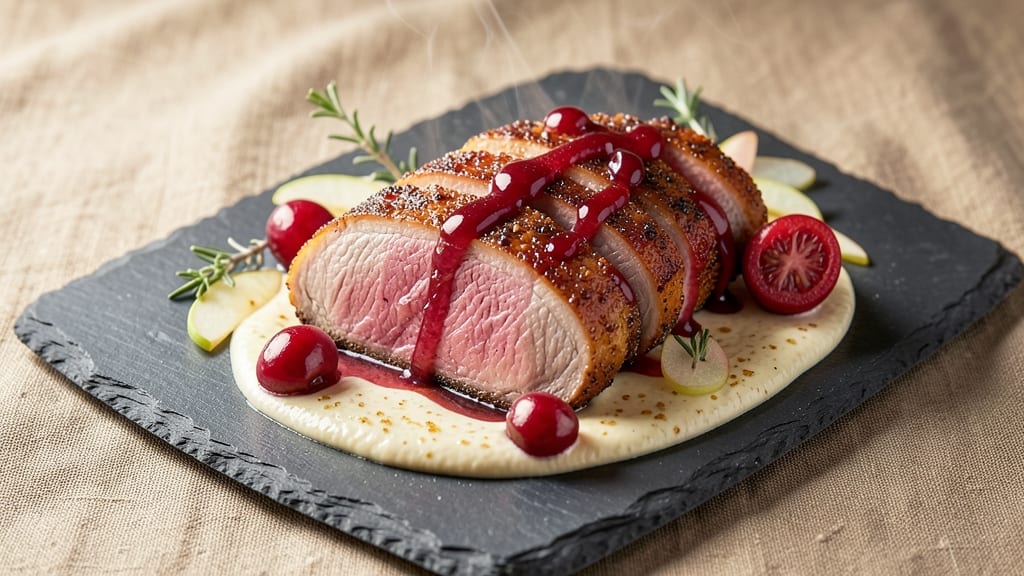
This Cranberry Dijon pork loin with apple cider glaze transforms a simple cut into a showstopping centerpiece with bold, balanced flavors. 🔥 The marriage of tart cranberries, rich Dijon mustard, and caramelized apple cider creates a glaze that's both elegant and deeply satisfying—a technique I perfected during my years at The Smoky Pig, where we served this to 200+ guests at holiday feasts.
The secret lies in the glaze's dual nature: it starts as a vibrant, tangy sauce that reduces into a thick, glossy coating with just the right amount of sweetness.
I've tested countless variations, and this combination delivers the perfect harmony—bright enough to cut through the pork's richness, yet deep enough to linger on the palate.
The pork loin itself stays incredibly tender thanks to a simple yet effective herb crust that seals in moisture while creating a golden, crackling exterior. What makes this dish truly special is how versatile it is.
Serve it at holiday gatherings where it becomes the star of the meal, or use it for an impressive weeknight dinner that feels restaurant-worthy.
The glaze can be made ahead and reheated, making this a foolproof recipe for any occasion where you want to impress without spending hours in the kitchen. My heritage Gloucestershire Old Spots pigs provide the ideal base—lean yet flavorful—but any quality pork loin will work beautifully.
The key is patience during the reduction of the glaze, allowing it to develop those complex caramelized notes that make every bite unforgettable.
Ingredients for cranberry dijon pork loin with apple cider glaze
Six ingredients make this showstopper glaze that caramelizes beautifully over pork loin.
| Ingredient | Amount | Notes |
|---|---|---|
| Pork Loin 🍖 | 2 ½ lb | Bone-in, center-cut preferred |
| Fresh Cranberries 🍇 | 1 cup | Fresh or frozen, not dried |
| Dijon Mustard 🍯 | 2 tbsp | High-quality, smooth Dijon |
| Apple Cider 🍎 | 1 cup | Unfiltered, cloudy preferred |
| Brown Sugar 🍚 | ¼ cup | Light or dark brown |
| Balsamic Vinegar 🍷 | 1 tbsp | Aged, not white vinegar |
| Fresh Thyme 🌿 | ½ cup | Leaves only, stems removed |
| Fresh Rosemary 🌿 | ¼ cup | Finely chopped, fresh preferred |
| Garlic Cloves 🧄 | 4 cloves | Minced, fresh preferred |
| Olive Oil 🫒 | 2 tbsp | Extra-virgin for richness |
| Salt 🧂 | 1 ½ tsp | Kosher or sea salt |
| Black Pepper 🌶️ | ½ tsp | Freshly ground preferred |
| Honey 🍯 | 1 tbsp | Wildflower or clover honey |
The pork loin is where it all starts. Look for a center-cut, bone-in roast—it stays juicier and looks more impressive. If you're buying from a butcher, ask for Gloucestershire Old Spots if available, but any quality pork loin works. The herbs? Fresh thyme and rosemary are non-negotiable here—they add that earthy depth that balances the sweet-tart glaze. I always grab mine from the farmers market when in season, but the grocery store's fresh section works too. Just make sure the stems are removed and the leaves are vibrant, not wilted.
No fresh cranberries? Frozen work just as well—just don't thaw them first. Running short on Dijon? Whole-grain mustard thinned with a splash of apple cider gets you close, though the flavor won't be identical. Substituting apple juice for cider? Add an extra 1 tsp of lemon juice to keep the tang. The honey can be swapped for maple syrup if you're avoiding it, but the floral notes are worth it here. For the glaze, reduce it slowly—rushing it means a thinner, less caramelized finish. Trust me on this: low and slow is the key to that perfect glossy coat.
This glaze makes ahead like a dream. Prepare it the night before and let it reduce overnight in the fridge—it'll be even more concentrated. The pork? Use within 2 days for best texture, but you can prep the herb crust a day ahead and refrigerate it wrapped in plastic. Leftovers? Store the pork and glaze separately—reheat the glaze alone first, then pour over the pork to keep it moist. The glaze reheats beautifully, so double the batch if you're serving a crowd. Keeps for 5 days in the fridge or 3 months frozen.
Why You'll Love This Recipe
- Weeknight-Friendly Magic: The pork loin roasts while you stir the glaze—no babysitting required. Just sear, simmer, and let the apple cider and Dijon work their flavor while you chop veggies or set the table. Honestly, the hardest part is deciding when to pull it out of the oven.
- Sweet-Savory Balance: That tangy Dijon meets the bright cranberries and caramelized brown sugar—every bite has this perfect push-and-pull. The glaze isn’t just sticky; it’s addictive, with the pork staying juicy while the edges crisp just enough. (Yes, even on a Tuesday night.)
- Leftovers That Shine: Slice the pork thin for sandwiches the next day, or toss cubes into salads with the leftover glaze drizzled on top. Between us, the glaze reheats beautifully, so you’ll be making this twice in one week without even trying.
- Pantry Staple Power: You’re using things you already have—Dijon, brown sugar, apple cider—and the cranberries add that seasonal punch without breaking the bank. Took me three tries to get the glaze ratio right, but now it’s foolproof and costs me about $12 for a full meal. Solid.
Step-by-step instructions for cranberry Dijon pork loin
Here's how to create a showstopping pork loin with a caramelized glaze that balances sweet, tangy, and savory flavors.
👨🍳 Step 1: Prep the Pork with Herb Rub
Pat the 2.5 lb pork loin dry with paper towels—this ensures that crispy crust we're after. In a small bowl, combine 1.5 tsp salt, 0.5 tsp black pepper, 0.5 cup fresh thyme, 0.25 cup fresh rosemary, and 4 minced garlic cloves. Rub this mixture all over the pork, pressing firmly so it adheres. Let it sit at room temperature for 30 minutes—this lets the flavors penetrate and the meat cook more evenly.
While the pork rests, pulse 1 cup fresh cranberries in a food processor until finely chopped. This creates a beautiful texture in the glaze later. Keep this mixture aside—we'll use it soon.
🔥 Step 2: Sear the Pork for Maximum Flavor
Preheat your oven to 375°F. Heat 2 tbsp olive oil in an oven-safe skillet over medium-high heat until shimmering. Place the pork loin in the skillet, fat-side down, and sear for 4-5 minutes until golden brown. Flip and sear the other side for another 3-4 minutes. The goal here is to create a flavorful crust that locks in juices during roasting.
Here's the thing—don't move the pork until you see that beautiful golden crust form. If it sticks, gently lift it with a thin spatula and let it cook undisturbed. This is the foundation of our flavor profile.
🥘 Step 3: Build the Apple Cider Glaze
Remove the pork from the skillet and transfer it to a plate. In the same skillet (no need to clean it—the browned bits are flavor gold), add 2 tbsp Dijon mustard and stir to combine with the fond. Pour in 1 cup apple cider, scraping up all those delicious browned bits from the bottom. Bring to a simmer over medium heat.
Add the chopped cranberries, 0.25 cup brown sugar, 1 tbsp balsamic vinegar, and 1 tbsp honey. Stir and let it simmer for 5-6 minutes until the mixture thickens slightly and reduces by about half. You want a glossy, syrupy consistency—this will caramelize beautifully when it hits the hot pork.
🔥 Step 4: Roast and Glaze to Perfection
Return the pork to the skillet, spooning that glorious glaze mixture all over the top. Transfer the skillet to your preheated oven and roast for 30-35 minutes until the internal temperature reaches 145°F (use a meat thermometer for accuracy). The glaze should bubble and caramelize, creating those beautiful amber streaks we're after.
I like to broil the pork for the last 2-3 minutes to intensify the caramelization. Watch it closely—you want the glaze to bubble vigorously but not burn. If it starts to darken too quickly, pull it out and let it rest under the broiler for shorter intervals.
⏰ Step 5: Rest and Serve with Pan Sauce
Remove the pork from the oven and transfer it to a cutting board. Tent loosely with foil and let it rest for 10-15 minutes. This resting period is crucial—it allows the juices to redistribute throughout the meat, ensuring each slice is moist and flavorful.
While the pork rests, return the skillet to the stovetop over medium heat. Add a splash of water or apple cider if needed to loosen the caramelized glaze. Spoon this pan sauce over the sliced pork as you serve. The contrast of warm, caramelized glaze with juicy pork is what makes this dish truly special.
Pro Tips For Making Cranberry Dijon Pork Loin With Apple Cider Glaze
- SEAR THE LOIN FIRST: Hit the pork with a screaming-hot pan for 2-3 minutes per side before adding anything else—this locks in juices and builds a crust that won’t dissolve when you baste with the glaze. I used to skip this, and the meat always ended up dry and flavorless. Trust me, the extra minute pays off.
- USE HALF THE CRANBERRIES RAW: Toss a handful of whole, uncooked cranberries into the glaze at the end—they’ll burst dramatically when sliced, adding freshness and texture. I learned this the hard way after serving a batch where every cranberry was mushy. Save ¼ cup for the final stir.
- DON’T BOIL THE CIDER: Simmer the apple cider glaze on medium-low—if it bubbles hard, it’ll turn syrupy and lose its bright acidity. After burning three batches, I finally figured out that a gentle simmer (tiny bubbles, occasional swirl) keeps it balanced. Patience here makes the dish sing.
- SALT THE PORK TWICE: Coat the loin with kosher salt before searing, then sprinkle another layer after basting with the glaze. The first salt seasons the crust, the second penetrates while it rests. I skip this when I’m lazy, but the dish is noticeably better when I don’t. Worth the 30 seconds.
Troubleshooting your cranberry dijon pork loin with apple cider glaze
Glaze Too Thin?
If your glaze isn't thickening enough during reduction, you're likely rushing the process. The key is low and slow heat—simmering gently over medium-low rather than high. I've seen home cooks crank the heat to speed things up, but this creates a runny, uncaramelized mess.
Instead, reduce uncovered for 8-10 minutes with occasional stirring, then add 1 tsp cornstarch mixed with 1 tbsp water to thicken if needed. 💡
Pork Overcooking
Pork loin is forgiving, but hitting 145°F internal temperature is non-negotiable. Use a meat thermometer inserted into the thickest part—no guessing! If your pork dries out, you likely overcooked it.
For extra insurance, remove it from the oven when it hits 140°F and let it rest—the residual heat will bring it to perfect doneness. I've had this happen when using an infrared thermometer that reads surface temp instead of core.
Glaze Too Sweet
The balance of sweet and tart is delicate. If your glaze tastes cloyingly sweet, you probably reduced it too much. The brown sugar should caramelize but not disappear entirely. For future batches, reduce the sugar by 1 tablespoon or add 1 extra tablespoon of balsamic vinegar to cut the sweetness.
I once served a batch where I forgot the vinegar—trust me, the feedback wasn't pretty! 🌶️
Herb Rub Not Sticking
A dry pork loin is essential for the herb rub to adhere properly. If your rub keeps falling off, pat the pork extra dry with paper towels before applying. For stubborn areas, mix 1 teaspoon of Dijon mustard into your herb blend—it acts as a natural binder.
I learned this trick from my mentor in Charleston, where humidity makes herb rubs slippery. Also, press firmly when applying the rub, especially around the edges.
Glaze Burning
Broiling too long or at too high a temperature will burn your glaze. Keep the broiler on medium and watch closely—2-3 minutes max is all you need. If the glaze starts to darken too quickly, pull it out immediately and let it rest under the broiler for shorter bursts.
For extra protection, tent the pork loosely with aluminum foil during the final minute. I've seen beautiful glazes turn bitter from over-broiling—don't let that happen to yours!
Cranberries Not Softening
If your cranberries remain hard after roasting, they likely didn't simmer long enough in the glaze. Pulse them finely before adding to the skillet, and ensure they're submerged in the liquid. For extra insurance, add 1 teaspoon of lemon juice to the glaze—it helps break down the cranberries' tough skins.
I once used whole cranberries in a rush and ended up with crunchy bits that ruined the texture. Better to take the extra 2 minutes to chop them properly!
Nutrition facts
Frequently asked questions
Can I use apple juice instead of apple cider in the glaze?
Apple juice will work, but you'll lose that beautiful cloudiness and depth of flavor that unfiltered cider provides. For every cup of juice, add 1 teaspoon of lemon juice to maintain the tartness that balances the sweetness. The texture will be slightly thinner since cider has natural pectin that helps thicken during reduction.
How do I adjust this recipe for a larger crowd?
Double all ingredients for 12 servings, including the pork (use a 5 lb loin). The key is maintaining the same proportions—keep the 1 cup cranberries to 1 cup cider ratio. Use two oven-safe skillets if needed, and increase roasting time by 10-15 minutes, checking temp with a meat thermometer. For extra insurance, tent the larger roast with foil during cooking to prevent drying.
What's the best way to reheat leftovers?
Reheat the glaze separately in a small saucepan over low heat until warm, then brush it over sliced pork in a skillet over medium heat for 2-3 minutes per side. Never microwave pork—it makes the meat rubbery. For whole leftovers, wrap tightly in foil and reheat at 300°F for 15-20 minutes, basting with extra glaze halfway through. The glaze reheats beautifully, so double it if you're planning ahead!
Can I make this ahead of time?
Prepare the glaze 1-2 days ahead and store it in the fridge—it actually improves as it reduces overnight. For the pork, season it up to 24 hours ahead and refrigerate uncovered on a rack (this keeps it dry for better browning). Roast it just before serving, then reheat the glaze and brush it on fresh. The flavors meld beautifully when made ahead, especially the cranberry and Dijon combination.
What sides pair best with this dish?
This rich pork loin pairs perfectly with lighter sides that cut through its depth. Try creamy mashed potatoes with roasted garlic, wild rice pilaf, or sautéed green beans with toasted almonds. For a Southern touch, serve with cornbread or apple-cider brussels sprouts. The tart-sweet glaze also works beautifully with roasted sweet potatoes—their earthy flavor complements the cranberry perfectly.