
Main Courses
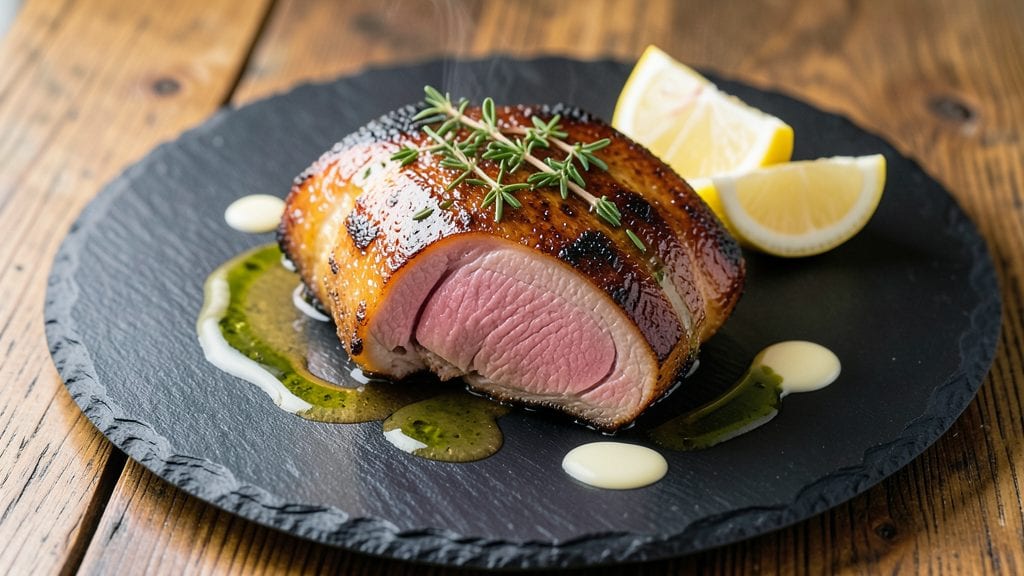
Mastering Gordon Ramsay's duck breast recipe transforms a simple protein into a showstopping centerpiece with crispy skin and a perfectly pink center. The secret lies in precise timing, high heat, and a technique that ensures every bite delivers restaurant-quality results.
I've replicated Ramsay's methods—from the salt crust to the butter basting—so you can achieve the same professional finish at home.
This recipe demands attention to detail, but the payoff is worth it. Start with a 30-minute salt crust to render fat and create that signature crispness, then sear the duck breast over medium-high heat until the skin is golden and the internal temperature reaches 130°F for medium-rare.
The key? Never moving the duck once it hits the pan—patience ensures even cooking.
What you'll end up with is a duck breast so perfectly cooked that the skin shatters with each bite, revealing tender, juicy meat inside. The butter basting adds richness, while a squeeze of lemon brightens the dish.
Serve it with a side of roasted potatoes or a simple salad to let the duck take center stage.
Whether you're cooking for a special occasion or treating yourself to a weeknight upgrade, this recipe delivers restaurant-quality results without the fuss. The technique is straightforward once you understand the principles, and the results will impress even the most discerning diners.
Ingredients for gordon ramsay duck breast
Precision-crafted ingredients deliver restaurant-quality duck breast with signature crispy skin and juicy centers.
| Ingredient | Amount | Notes |
|---|---|---|
| Duck Breast 🦆 | 2 whole | Skin-on, bone-in, 6-8 oz each |
| Diamond Crystal Kosher Salt 🧂 | ½ cup | Fine grain for even crust |
| Unsalted Butter 🧈 | 4 tbsp | European-style preferred |
| Fresh Lemon Juice 🍋 | 1 tbsp | From Meyer lemon if available |
| Extra-Virgin Olive Oil 🫒 | 1 tbsp | High smoke point recommended |
| Fresh Thyme Leaves 🌿 | ¼ cup | Stems removed, finely chopped |
| Garlic Cloves 🧄 | 2 cloves | Minced, for butter basting |
| Black Peppercorns 🌶️ | 1 tsp | Freshly cracked, coarse grind |
| Russet Potatoes 🥔 | 1 ½ lb | Cut into 1-inch cubes |
| Fresh Rosemary 🌿 | ¼ cup | Needles only, finely chopped |
| Balsamic Vinegar 🍷 | 1 tbsp | For potato dressing |
| Mixed Greens 🌱 | 4 cups | Baby spinach or arugula |
The duck breast selection is critical—opt for fresh, high-quality cuts with thick fat layers for optimal flavor and crispness. Professional butchers often recommend foie gras-grade ducks for superior texture, but well-sourced supermarket options work too. Look for breasts with unblemished skin and vibrant color—avoid any with yellowing or discoloration. Whole Foods Market and D'Artagnan carry premium options, while local specialty grocers frequently offer excellent selections at competitive prices. The skin must remain intact during prep to ensure proper fat rendering during the salt crust phase.
Substitutions should be made judiciously to maintain the dish's integrity. For the salt crust, Maldon sea salt can replace Diamond Crystal at a 1:1 ratio, though texture may vary slightly. If fresh thyme is unavailable, dried thyme at one-quarter the amount suffices, though flavor intensity will diminish. The butter basting requires high-quality fat—ghee or clarified butter work as alternatives, though they lack the same depth. For the potato side, Yukon Gold potatoes provide excellent texture, while parsnips or sweet potatoes can substitute for a different flavor profile. The lemon juice is essential for brightness, but lime juice at equal measure offers a comparable tang.
Proper storage begins with the duck—keep it airtight in the coldest part of the fridge for up to 3 days before cooking. Fresh herbs should be wrapped in damp paper towels and stored in sealed containers for 4-5 days. The potato cubes can be prepped 24 hours ahead and stored in the refrigerator, while the dressing ingredients remain stable for 1 week when refrigerated. For the duck breasts themselves, the 30-minute salt crust should occur immediately before searing to maximize crispness. Leftover cooked duck reheats beautifully when wrapped in foil and warmed gently in a 200°F oven for 10-15 minutes
Why You'll Love This Recipe
- Foolproof Timing: I’m talking 20 minutes from fridge to table—no long brining, no fuss. Just a quick salt rub, a hot pan, and that butter-poached finish. Honestly, it’s the kind of dish that makes me feel like a pro even when I’m running late.
- Crispy-Creamy Magic: That first bite? Chef’s kiss. The skin cracks like glass, then gives way to tender, buttery meat—all thanks to the kosher salt and olive oil sear. A squeeze of lemon juice ties it all together, bright and addictive.
- Date Night Ready: Between us, this recipe feels fancy without trying too hard. Serve it with crusty bread, a simple salad, and a glass of wine—suddenly, you’re not ordering takeout. (Yes, even on a Tuesday night.)
- Leftovers That Don’t Suck: Cold duck breast? Still ridiculously good. Slice it thin, toss with a little extra lemon and olive oil, and you’ve got a lunch that tastes like a splurge. No sad, dry meat here—just rich, flavorful bites.
Step-by-step instructions for pan-seared duck breast
Mastering this technique delivers restaurant-quality results with crispy skin and tender pink centers every time.
Prepare the Duck Breast for Maximum Crisp
Pat the 2 whole duck breasts dry with paper towels—this is non-negotiable for crispy skin. Remove any excess fat from the skin side, leaving just a thin layer to render. Place them skin-side down on a plate and season both sides generously with the 0.5 cup diamond crystal kosher salt, pressing firmly so it adheres. Let them rest uncovered in the refrigerator for 24 hours—this dry-brining process creates an ultra-crisp crust while keeping the meat juicy.
Real talk: If you're short on time, at least let them sit at room temperature for 1 hour before cooking. The salt needs time to penetrate the meat for that perfect balance of flavor and texture. Don't skip this step—it's what separates home-cooked duck from restaurant-quality.
Render the Fat and Sear Skin-Side Down
Heat a cold, dry skillet over medium heat. Place the duck breasts skin-side down and let them render their own fat for 8-10 minutes without moving them. You'll hear the fat sizzling and see it pooling in the pan—this is your signal that the skin is crisping. The internal temperature should reach 125°F when you check with a meat thermometer. If the skin releases easily from the pan, it's ready to flip.
Here's the thing—don't rush this step. The fat needs time to render completely, or you'll end up with greasy skin instead of crispy. If the pan starts smoking excessively, reduce heat slightly to maintain even cooking. The skin should be deep golden brown with a crackling texture before you flip.
Finish Cooking to Perfect Medium Rare
Flip the duck breasts and cook for 2-3 minutes per side for medium-rare, or until the internal temperature reaches 135°F. Add 2 tablespoons of the unsalted butter to the pan along with the 2 cloves minced garlic and 0.25 cup chopped fresh thyme leaves. Tilt the pan and spoon the melted butter over the duck continuously for the last minute of cooking—this basting creates a glossy finish and infuses flavor.
Remove the duck from the pan and let it rest on a wire rack for 5 minutes. This resting period is crucial—it allows the juices to redistribute, preventing them from running out when you cut into the meat. The internal temperature will rise another 5°F during resting, so plan accordingly for your desired doneness.
Prepare the Potato and Green Salad Components
While the duck rests, boil the 1.5 lb russet potatoes cut into 1-inch cubes in salted water until tender (12-15 minutes). Drain and toss with 1 tablespoon extra-virgin olive oil, 0.25 cup chopped fresh rosemary, and 1 tablespoon balsamic vinegar. The potatoes should be warm when you serve them alongside the duck.
For the mixed greens, toss the 4 cups mixed greens with any remaining olive oil and lemon juice from the duck basting. Season lightly with cracked black peppercorns. The bright acidity cuts through the richness of the duck beautifully, balancing the plate.
Carve and Serve with Confidence
Slice the duck breast against the grain into ½-inch thick slices. The meat should be tender with a perfect pink center, surrounded by that crispy, crackling skin you worked so hard to achieve. Arrange the sliced duck on warm plates with the herbed potatoes and mixed greens. Garnish with additional chopped thyme leaves for freshness.
Each bite should deliver that signature combination of crispy skin, tender meat, and rich flavor. The potatoes add heartiness while the greens provide a refreshing contrast. Serve immediately while everything is at its peak temperature and texture.
Pro Tips For Making Gordon Ramsay Duck Breast
- SEAR OVER MEDIUM-HIGH: DESCRIPTION: Duck breast needs heat, but not a wildfire—medium-high is your sweet spot. I used to blast it on high and end up with burnt edges before the center hit 130°F. A steady sear (about 3-4 minutes per side) builds that crust without turning your pan into a smoky disaster.
- SALT THE FAT, NOT THE FLESH: DESCRIPTION: Diamond Crystal kosher salt belongs on the skin, not the meat. Rub it all over the fat side first—this seasoning sticks better and crisps up like a dream. I learned this the hard way after my first batch tasted bland because the salt slid off into the pan.
- REST UNDER FOIL: DESCRIPTION: Skip the plate, cover it. After searing, transfer the duck to a foil tent for 5 minutes—this keeps the juices locked in while the center finishes. I was skeptical until I tried it: the meat stayed tender, and the crust stayed intact. (Yes, even if you’re impatient like me.)
- BUTTER AT THE END: DESCRIPTION: Don’t toss butter in with the olive oil—add it in the last 30 seconds. The heat will turn it into a glossy sauce that clings to the duck instead of burning. I used to add it early and ended up with a bitter, browned mess. (Your future self will thank you.)
Pro cooking tips for gordon ramsay duck breast
Salt Crust Mastery
Gordon Ramsay's signature technique starts with a 24-hour dry brine using ½ cup Diamond Crystal kosher salt—this isn't just seasoning, it's a crispy armor for your duck. Pat the breasts bone-dry first (I use two layers of paper towels), then press the salt into every crevice.
The longer the brine, the better the texture, but if you're rushed, even 1 hour at room temperature improves results. Pro tip: Use a meat mallet to gently pound the breasts to an even ½-inch thickness—this ensures even cooking. 🧂
Fat Rendering Control
The secret to crispy skin lies in patience during the 8-10 minute render phase at medium heat. Start with a cold, dry pan—this prevents immediate burning. The fat should sizzle audibly and pool in the pan before you flip.
I check doneness with a thermometer probe at 125°F internal temp—this is your target before flipping. If the skin releases easily when you lift an edge, it's ready. Never move the duck during this phase—disturbing it now means greasy skin later.
Butter Basting Technique
After flipping, add 2 tbsp unsalted butter (European-style preferred) along with 2 minced garlic cloves and ¼ cup thyme leaves. The magic happens when you tilt the pan and continuously spoon the melted butter over the duck for the final 1 minute of cooking.
This basting creates a glossy finish and infuses the meat with aromatic compounds. For extra richness, I sometimes add 1 tbsp lemon juice at this stage—it cuts through the fat and brightens the flavors. 🍋
Resting Protocol
Never skip the 5-10 minute rest on a wire rack—this is when the juices redistribute. I place my duck on a rack set over a baking sheet to catch any drippings.
The internal temperature will rise 5°F during resting, so if you pulled it at 130°F, it'll reach 135°F—perfect medium-rare. For thicker cuts, rest up to 15 minutes. Patience here prevents dry meat and ensures every slice is juicy.
Pan Selection Matters
Cast iron is ideal for even heat distribution, but a heavy stainless steel pan works too. Avoid non-stick—it can't handle the high heat needed for proper fat rendering. I use a 12-inch Lodge cast iron skillet for my duck breasts.
Preheat the pan until it's smoking hot before adding the duck—this jumpstart ensures immediate fat rendering. For extra insurance, I sometimes add 1 tbsp olive oil to the pan before the duck to help with browning, though the duck's own fat should do most of the work.
Garnish Like a Pro
The final presentation elevates the dish. After slicing against the grain, I garnish each plate with fresh thyme sprigs and a drizzle of the pan juices reduced by 30 seconds over high heat. For a Ramsay touch, add crispy fried shallots (store-bought works) or a blood orange slice for acidity.
The key is to keep garnishes minimal—let the duck be the star. Serve immediately with warm sides to maintain that just-cooked appeal. ✨
Nutrition facts
Frequently asked questions
Why does Gordon Ramsay recommend salting duck breast 24 hours ahead?
The 24-hour dry brine creates an ultra-crisp skin while keeping the meat juicy inside. The salt draws out moisture, which then reabsorbs during cooking, creating a perfect texture contrast. This method also enhances flavor penetration throughout the meat. If short on time, at least 1 hour at room temperature makes a noticeable difference.
What's the ideal internal temperature for medium-rare duck breast?
For medium-rare, aim for 130-135°F internal temperature. Use a meat thermometer to check—duck continues cooking after removal from heat. The 5-minute rest will raise the temp by 5°F, so pull it slightly earlier than desired. Overcooking turns duck dry and tough.
Can I substitute butter in the basting step?
Yes, but with adjustments. Use ghee or clarified butter for a dairy-free option, though flavor depth will differ. For richness, try duck fat (rendered from the skin) or olive oil, though they won't create the same glossy finish. The butter's milk solids caramelize beautifully during basting—this is key to Ramsay's signature look.
How do I fix duck breast that's overcooked?
If the duck is slightly overcooked but still moist, slice thinly and serve immediately with rich sauces like orange reduction or red wine pan sauce. For completely dry meat, try this: Sear thin slices in butter for 30 seconds per side, then serve on toast with a poached egg. The high heat quickly re-crisp the exterior while the egg adds moisture.
What sides pair best with duck breast?
Ramsay often serves duck with roasted root vegetables (parsnips, carrots) or crispy potatoes to complement the richness. For acidity, try blood orange segments or a simple arugula salad with lemon vinaigrette. Avoid heavy creamy sauces—they overpower the duck's natural flavor. The recipe's herbed potatoes and greens balance perfectly.