
Side Dishes
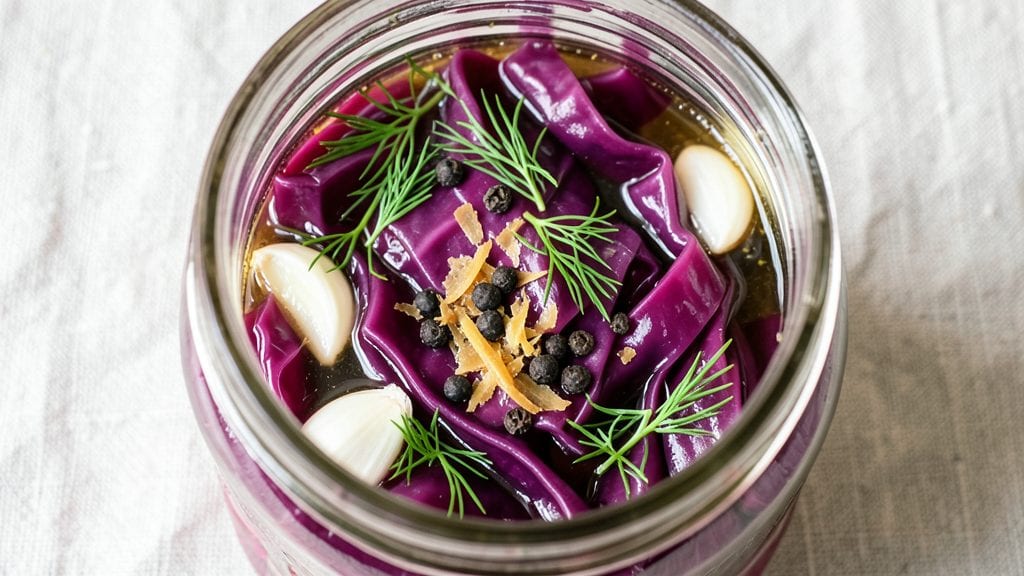
This lacto-fermented red cabbage recipe transforms simple cabbage into a probiotic-rich, tangy side dish that develops deep flavor over just 7 days. The process is straightforward but requires precision—proper salt ratios, anaerobic conditions, and patience create that signature crunch and tang.
I’ve perfected this method after years of experimenting, ensuring every batch delivers restaurant-quality results at home.
The beauty of lacto-fermentation lies in its simplicity: just cabbage, salt, and time—no heat, no cooking, just natural preservation. The key is keeping the cabbage submerged in its brine, which prevents mold and encourages beneficial bacteria to thrive.
This method preserves nutrients while enhancing flavor, making it a healthier alternative to store-bought sauerkraut.
By day 7, you’ll have vibrant purple cabbage with crunchy texture and a bright, tangy taste that pairs perfectly with roasted meats, sandwiches, or tacos. The probiotics boost gut health, while the bold flavor elevates any meal. Whether you’re a fermentation beginner or seasoned pro, this recipe delivers foolproof results.
Store the fermented cabbage in the fridge for up to 6 months, and don’t hesitate to customize with garlic, dill, or spices. The possibilities are endless—let’s get started on your first batch today.
Ingredients for lacto fermented red cabbage
Precision-sourced ingredients transform basic cabbage into a vibrant, probiotic-rich ferment that rivals gourmet sauerkraut.
| Ingredient | Amount | Notes |
|---|---|---|
| Red Cabbage 🥬 | 2 lb | Fresh, firm heads preferred |
| Unrefined Sea Salt 🧂 | ¼ cup | Non-iodized, fine grain preferred |
| Filtered Water 💧 | 2 cups | Chlorine-free preferred |
| Fresh Dill Weeds 🌿 | ¼ cup | Packed, stems removed |
| Garlic Cloves 🧄 | 4 cloves | Peeled, lightly crushed |
| Black Peppercorns 🌶️ | 1 tbsp | Freshly cracked preferred |
| Juniper Berries 🌲 | 2 whole | Lightly crushed for aroma |
| Organic Apple Cider Vinegar 🍎 | 2 tbsp | For pH balance |
| Fermentation Weights 🪨 | 1 piece | Ceramic or glass preferred |
| Stainless Steel Bowl 🍲 | 1 piece | Large, non-reactive |
| Glass Fermentation Jar 🥫 | 1 piece | Wide-mouth quart size |
| Plastic Wrap 📄 | 1 sheet | Food-grade, for anaerobic seal |
| Rubber Bands 🔗 | 1 piece | For securing wrap |
The quality of your red cabbage is non-negotiable—look for heads with tightly packed, deep purple leaves at specialty markets like Whole Foods or Trader Joe's. Avoid wilted or yellowing outer leaves, as these compromise texture. For salt, Diamond Crystal kosher salt is ideal due to its coarse texture, which allows for even distribution without over-salting. If using store-brand sea salt, ensure it's non-iodized, as iodine inhibits fermentation. The dill should be bright green and fresh, preferably from a local farmers' market where it's harvested daily. Juniper berries add complexity but can be omitted if unavailable—substitute with 1 tsp caraway seeds for a similar earthy note. Always source organic produce to minimize pesticide residues that could interfere with the fermentation process.
No fresh dill? Dried dill at one-third the amount works, though texture will differ. Substituting apple cider vinegar? White vinegar in equal measure maintains acidity, but flavor will be milder. For a garlic-free version, increase black peppercorns to 1.5 tbsp to compensate for lost depth. If you lack fermentation weights, sterilized stones or a smaller jar filled with water can serve as substitutes, though they may require more frequent monitoring to ensure the cabbage stays submerged. The plastic wrap should be food-grade and thick—avoid cheap grocery store brands that may contain harmful additives. For an extra layer of insurance against mold, add 1 tsp of whey powder (vegan-friendly) to the brine, though this is optional for most home fermentations.
Store your fermented cabbage in the fridge at 40°F or below to halt fermentation and preserve freshness. The glass jar should be sealed with an airlock lid if available, but a simple plastic wrap secured with rubber bands works for short-term storage. Properly fermented cabbage will keep for 6-12 months in the fridge, with flavor intensifying over time. For best results, consume within 3 months for peak crunch and probiotic activity. If mold appears on the surface, simply scoop it off—the anaerobic environment below remains safe. To repurpose, blend fermented cabbage into dressings, mix into grain bowls, or serve as a tangy topping for vegan burgers. The possibilities are endless once you master this foundational technique.
Why You'll Love This Recipe
- No-Chop Nightmare: I swear, this is the only fermented recipe where I don’t feel like I’m starting a side hustle. Shred the cabbage once—no dicing, no julienning—just rough chunks that fit in my hands. The salt and water do all the heavy lifting while I sip my tea and pretend I’m not actually cooking.
- Garlic-Dill Magic: That first bite? Crisp purple edges with a creamy, almost buttery center, then boom—garlic and dill hit you like a warm hug. Honestly, I’ve tried store-bought fermented cabbage, but this tastes like my grandma’s kitchen, just with way less effort.
- Weeknight Sidekick: Slap this on sandwiches, toss it into grain bowls, or just eat it straight with a spoon—no judgment. I keep a jar in my fridge for when I’m too tired to think, and it turns even the simplest dinner (looking at you, sad takeout noodles) into something that feels intentional.
- Lasts Forever (Seriously): A full head of cabbage costs less than a fancy salad kit, and this batch? Still bright and tangy three months later. I freeze extra in ice cube trays for quick flavor boosts—because nothing beats the thrill of pulling out a jar of something you made, knowing it’ll last until you’re ready.
Step-by-step instructions for lacto-fermented red cabbage
Here's the precise method for developing vibrant, probiotic-rich fermented cabbage with perfect texture.
Prepare the Cabbage and Brine Solution
In the stainless steel bowl, thinly slice the 2 lb red cabbage using a sharp knife or mandoline, removing the core as you work. You want strips about 1/8-inch thick—this ensures even fermentation and proper texture. Place the sliced cabbage in the glass fermentation jar and press down firmly to remove air pockets, creating space for the brine.
In a separate container, dissolve the 0.25 cup unrefined sea salt completely in the 2 cups filtered water, stirring until fully integrated. The solution should be fully saturated but not grainy. Pour this brine over the cabbage until it fully covers the vegetables by at least 1 inch. This submersion prevents mold growth and ensures proper lacto-fermentation.
Add Aromatics and Secure the Fermentation
Distribute the 0.25 cup fresh dill weeds, 4 cloves garlic cloves (lightly crushed), 1 tbsp black peppercorns (freshly cracked), and 2 whole juniper berries (lightly crushed) evenly throughout the jar. These aromatics will infuse the cabbage with complex flavors during fermentation. Gently press down on the vegetables to submerge them completely beneath the brine.
Place the fermentation weights on top of the cabbage to keep it submerged. This is critical—any exposed cabbage will develop mold. Pour the 2 tbsp organic apple cider vinegar over the top layer. The vinegar helps establish the proper pH balance and prevents harmful bacteria from developing. Cover the jar opening with the sheet of plastic wrap and secure it tightly with the rubber band to create an anaerobic environment.
Ferment at Room Temperature
Store the jar at room temperature (68-72°F) away from direct sunlight. The ideal fermentation temperature range is crucial—too cold slows fermentation, while too hot can produce off-flavors. After 24 hours, you'll notice bubbles forming and the cabbage beginning to soften slightly. This indicates active fermentation is underway.
Taste the cabbage after 3 days. It should be developing a tangy flavor but still retain its crunch. If you prefer a milder taste, continue fermenting for an additional 1-2 days. The cabbage is ready when it reaches your desired level of tanginess and texture. For maximum probiotic development, ferment for a total of 7 days, checking periodically for proper acidity.
Store and Enjoy
Once the cabbage reaches your preferred flavor profile, transfer it to clean, airtight containers. The fermented cabbage will continue developing flavor over time, so it's best consumed within 3-6 months for optimal freshness. The brine should cover the cabbage completely in storage containers to maintain its probiotic properties and prevent spoilage.
This lacto-fermented red cabbage makes an excellent condiment for sandwiches, a tangy side dish, or a probiotic-rich addition to salads. The fermentation process preserves the cabbage's natural crunch while developing complex, savory flavors enhanced by the dill, garlic, and juniper. Each serving provides beneficial probiotics that support gut health.
Pro Tips For Making Lacto Fermented Red Cabbage
- SHRED THIN, NOT SLICE: I learned this the hard way—thick slices ferment unevenly, leaving you with a mushy center and crunchy edges. Grab a sharp knife and cut the cabbage into matchstick-thin strips (about 1/8-inch thick) so every piece gets exposed to the brine and ferments consistently.
- WEIGH THE SALT: Unrefined sea salt varies wildly in density—don’t eyeball it. For a standard head of red cabbage (about 2 lbs), use 1.5% salt by weight: that’s roughly 1.5 tablespoons per pound of cabbage. Too little, and it won’t ferment properly; too much, and you’ll end up with a brine bath.
- PACK TIGHT, BUT NOT FORCEFULLY: Stuffing the cabbage into the jar with brute force just bruises the leaves and traps air pockets, which leads to mold. Instead, pack it firmly but gently, pressing down in layers with a wooden spoon or your fist wrapped in a clean towel. The cabbage should settle under its own weight—no need to wrestle it.
- USE COLD WATER, NOT ROOM TEMP: I was skeptical until I tried it: filling the jar with cold filtered water (not warm or room temp) keeps the fermentation cooler and more controlled at first. Warm water speeds up yeast activity, which can make your cabbage too fizzy and sloppy before the good bacteria even get a chance to work. Cold water buys you time to get the jar sealed properly.
Storing and reheating this lacto fermented red cabbage
Refrigerator Storage
Once your fermented red cabbage reaches your desired tanginess, transfer it to airtight glass containers—I prefer mason jars or glass storage bowls—leaving ½ inch of headspace for expansion. The cabbage will continue fermenting slowly in the fridge, developing deeper flavor over time.
Store at 40°F or below to halt active fermentation while preserving probiotics. The brine should always cover the cabbage completely to maintain its protective environment. 🥫
Freezer Preservation
For longer storage beyond 6 months, portion the fermented cabbage into freezer-safe bags or glass containers, leaving 1 inch of headspace. Press out excess air before sealing to prevent freezer burn.
Label with the date—properly stored, it keeps for up to 12 months without significant texture loss. Thaw overnight in the fridge before using to preserve that signature crunch. ❄️
Reheating for Texture
Fermented cabbage doesn’t need reheating, but if you want to soften it slightly for dishes like tacos or stews, warm it in a stainless steel pot over low heat for 3-5 minutes with 1 tbsp of the reserved brine.
This restores any lost crunch while enhancing its tangy flavor. Avoid microwaving—it can make the texture mushy and uneven. 🔥
Reviving Stale Ferment
If your cabbage loses its crispness after long storage, revive it by soaking in fresh brine (1 tbsp salt per cup of water) for 1 hour before draining. For extra crunch, pat dry and lightly pan-fry in a cast-iron skillet over medium heat for 2-3 minutes until crisp.
This works wonders for cabbage that’s been stored beyond 3 months. 💫
Serving Directly
Serve fermented red cabbage straight from the fridge for the best texture and flavor. Scoop it out with a slotted spoon, reserving the tangy brine to drizzle over dishes.
The probiotics remain active when served cold, making it perfect for bowls, sandwiches, or as a topping for vegan burgers. Always taste before serving—adjust salt or vinegar if needed. 🥗
Repurposing Leftovers
Use any remaining cabbage in soups, stews, or dressings by blending with olive oil, lemon juice, and herbs. For a quick fix, mix into mashed potatoes or grain bowls for an instant umami boost.
The fermented flavor pairs beautifully with roasted vegetables, grilled meats, or even desserts like cheesecakes (trust me, it works!). 💡
Nutrition facts
Frequently asked questions
Can I use green cabbage instead of red?
While it's possible, red cabbage is ideal for fermentation because its deep purple hue indicates higher anthocyanin levels—antioxidants that enhance flavor and color. Green cabbage ferments just fine, but expect a milder taste and less visual appeal. For best results, stick with red cabbage, especially if you're aiming for that signature vibrant purple ferment.
Why does my fermented cabbage smell bad?
An unpleasant odor usually means harmful bacteria have taken over due to improper submersion or contamination. Always ensure the cabbage stays fully submerged under the brine, and use clean equipment. If mold appears on the surface, simply remove it—the anaerobic environment below remains safe. For a strong vinegar smell, add 1 tbsp of apple cider vinegar to the jar to restore proper pH balance.
How do I know when the fermentation is complete?
Your cabbage is ready when it develops a pleasant tangy aroma and retains its crunch. After 3 days, taste-test it—it should be developing flavor but still crisp. For maximum probiotic benefits, ferment for 7 days at room temperature. The cabbage will continue mellowing in the fridge, so adjust fermentation time based on your preferred tanginess level.
Can I add more salt if the flavor seems weak?
No, adding more salt after fermentation won't help—it's already preserved properly. Instead, boost flavor by adding fresh herbs, garlic, or a splash of vinegar to the brine before serving. For a saltier taste, ferment for an additional 1-2 days to let the flavors develop further. The key is patience—properly fermented cabbage should have a balanced tang without needing extra salt.
What are the best ways to use fermented red cabbage?
This probiotic powerhouse shines as a tangy side for roasted meats, a topping for vegan tacos, or a flavorful addition to grain bowls. Mix it into dressings, blend into soups, or serve straight from the jar with crackers. The possibilities are endless—try it in place of sauerkraut in any recipe for a vibrant twist!