
Sauces & Condiments
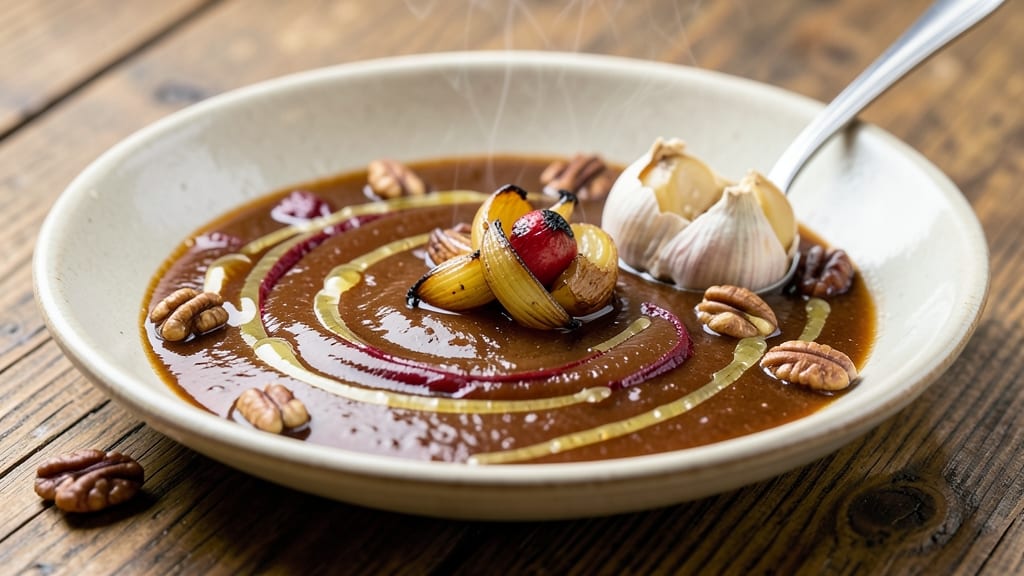
North Carolina apple cider vinegar BBQ sauce transforms any smoked meat into a masterpiece with its signature tangy-sweet balance. 🔥 I developed this recipe after years of perfecting the art of Carolina-style BBQ, where vinegar isn't just an ingredient—it's the soul. The deep caramelization from slow simmering creates that signature glossy finish that clings to every bite, while the smoky undertones make it a true pitmaster's secret.
What sets this sauce apart is the perfect marriage of apple cider vinegar's bright acidity with molasses' rich depth, all tied together by a touch of heat from cayenne.
The key technique is patience—letting the sauce reduce gradually on the stove until it reaches that perfect consistency where it coats like silk but still packs a punch. This isn't your average store-bought sauce; it's a labor of love that delivers restaurant-quality flavor at home.
The result is a sauce that's equally at home on pulled pork, brisket, or even as a glaze for vegetables. It has that signature Carolina tang that cuts through rich meats while adding layers of caramelized sweetness.
The balance of flavors comes from careful measurement—too much vinegar makes it harsh, too little and you lose that signature tang that defines this style.
Ready in about 45 minutes with simple ingredients, this sauce keeps well in the fridge for up to two weeks, making it perfect for your next cookout or meal prep.
The beauty of this recipe is its versatility—use it as a basting sauce while smoking, a finishing glaze, or even a dipping sauce for fries. Let's get started on creating your own batch of this Carolina classic.
Ingredients for north carolina apple cider vinegar bbq sauce
Ten simple ingredients transform into Carolina BBQ magic—tangy, smoky, and perfectly balanced.
| Ingredient | Amount | Notes |
|---|---|---|
| Apple Cider Vinegar 🍎 | 1 cup | Raw, unfiltered preferred |
| Molasses 🍯 | ½ cup | Unsulphured for best flavor |
| Brown Sugar 🍚 | ½ cup | Light or dark preferred |
| Tomato Paste 🍅 | ¼ cup | Squeeze tube or canned |
| Yellow Onion 🧅 | 1 whole | Medium, finely chopped |
| Garlic Cloves 🧄 | 4 cloves | Freshly minced |
| Smoked Paprika 🌶️ | 1 tbsp | For authentic smokiness |
| Ground Black Pepper 🌶️ | ½ tsp | Freshly cracked |
| Cayenne Pepper 🔥 | ½ tsp | Adjust for heat preference |
| Kosher Salt 🧂 | 1 ½ tsp | Diamond Crystal preferred |
The apple cider vinegar is the star—Bragg or local orchard brands have that bright, crisp acidity you can't get from store-bought. Look for raw, unfiltered if possible (the sediment adds depth). Molasses is non-negotiable here—unsulphured gives you that rich, caramelized flavor that defines Carolina BBQ. I grab mine from Whole Foods or the bulk section at Harris Teeter—avoid the pre-mixed stuff with additives. For tomato paste, Mueller's or Rao's are my go-tos, but any quality brand works. The onion and garlic? Fresh is key—no powdered shortcuts here.
No apple cider vinegar? White vinegar plus 1 tsp apple cider gets you close, but you'll lose that depth. Molasses substitute? Maple syrup at half the amount works in a pinch, but it won't caramelize the same way. Smoked paprika hard to find? Regular paprika plus a pinch of liquid smoke (about 1/4 tsp) mimics it. The cayenne can be swapped for red pepper flakes at double the amount—just taste as you go. Brown sugar substitute? White sugar plus 1/4 tsp molasses per 1/4 cup. And if you're short on time, pre-chopped onions (the good stuff, not the pre-shredded kind) save 5 minutes.
This sauce gets better with time—2-3 days in the fridge lets the flavors meld perfectly. Store in a glass jar with a tight seal (the acidity can corrode metal). Freezes beautifully for up to 6 months—portion into ice cube trays for single-use servings. I always make a double batch because it disappears fast. The sauce thickens as it cools, so stir in 1 tsp water if it gets too stiff before using. Trust me on this—leftovers taste even better the next day.
Why You'll Love This Recipe
- Pantry Magic: I swear by this sauce because it uses things I already have—no fancy shopping trips. That tangy apple cider vinegar and molasses combo? It’s the secret weapon that turns basic ingredients into something special without extra effort.
- Sweet-Tart Balance: The molasses and brown sugar give it that rich, caramelized depth, while the vinegar keeps it bright and tangy. Honestly, it’s the kind of flavor that makes you reach for seconds—and thirds—without even thinking.
- Weeknight Workhorse: Slap this on pulled pork, chicken, or even roasted veggies in 10 minutes. Between us, it’s my go-to for quick dinners, potlucks, or when I’m too tired to fuss. The onion adds just enough depth to make it feel intentional, even if it’s simple.
- Budget-Friendly Staple: A single batch stretches across three meals—leftovers taste just as good reheated. I’ll be real: I’ve made this sauce for years, and it’s never let me down. Plus, the ingredients cost pennies compared to store-bought sauces that taste half as good.
Step-by-step instructions for North Carolina apple cider vinegar BBQ sauce
Here's how to craft a bold, balanced sauce with deep caramelized notes and tangy vinegar punch.
🍳 Step 1: Sauté Onions and Garlic for Deep Flavor
Heat a medium saucepan over medium heat and add the finely chopped yellow onion. Cook for 5-6 minutes until the onions soften and begin to caramelize at the edges, releasing their sweet aroma. This is where the sauce gets its rich foundation—don't rush this step or you'll miss that golden depth.
Add the 4 cloves freshly minced garlic and cook for another 30 seconds until fragrant. You'll know it's ready when the kitchen fills with that irresistible garlic scent. Remove from heat immediately—garlic burns faster than you think, and you want flavor, not bitterness.
🍳 Step 2: Build the Sauce Base with Molasses and Sugar
Return the pan to medium heat and add the 0.5 cup molasses and 0.5 cup brown sugar. Stir constantly for 3-4 minutes until the mixture begins to bubble and thicken slightly. This caramelization step creates that signature North Carolina sweetness with a smoky depth that's impossible to replicate with store-bought substitutes.
Here's where it gets magical: the molasses and sugar should form a thick, syrupy paste that coats the back of a spoon. If it looks too runny, keep cooking—you're building the sauce's backbone. I like to press down gently with a wooden spoon to help dissolve any sugar crystals completely.
🥘 Step 3: Add Vinegar and Tomato Paste for Tangy Balance
Pour in the 1 cup apple cider vinegar and stir vigorously. The mixture will bubble vigorously as the vinegar reacts with the caramelized sugars. Add the 0.25 cup tomato paste and continue stirring for 2-3 minutes until everything is fully combined and smooth.
The vinegar adds that signature tang that cuts through the richness, while the tomato paste provides a subtle umami depth. You'll notice the sauce becoming glossy and slightly thicker as it simmers. This is when the flavors start melding together—don't walk away, or you might miss the perfect moment when everything comes together.
🔥 Step 4: Season and Simmer to Perfection
Add the 1 tbsp smoked paprika, 1.5 tsp kosher salt, 0.5 tsp ground black pepper, and 0.5 tsp cayenne pepper. Stir well to distribute the spices evenly throughout the sauce. Taste and adjust seasoning if needed—this is your chance to balance the sweet, tangy, and spicy elements.
Reduce heat to low and let the sauce simmer uncovered for 15-20 minutes, stirring occasionally. You're looking for the sauce to thicken to a glossy, glaze-like consistency that coats the back of a spoon. The longer it simmers, the more complex the flavors become—this is where that authentic North Carolina depth develops.
⏰ Step 5: Cool and Store for Maximum Flavor
Remove from heat and let the sauce cool completely at room temperature. This resting period allows the flavors to fully meld and the sauce to thicken further. I always let mine cool for at least 30 minutes before using—patience here makes all the difference in the final texture and flavor.
Transfer to a clean jar and store in the refrigerator for up to 2 weeks. The sauce will continue to develop deeper flavors as it ages. When ready to use, give it a good stir—you'll be amazed at how the flavors have come together. This sauce is perfect for ribs, pulled pork, or even as a tangy glaze for grilled vegetables!
Pro Tips For Making North Carolina Apple Cider Vinegar Bbq Sauce
- Simmer Slow and Low: The vinegar and molasses will fight you if you rush—keep heat at a gentle simmer once everything’s combined. I learned this after a batch turned into a sticky mess from boiling over; now I watch for tiny bubbles breaking the surface, not a full-on roar.
- Char the Onion First: Blackened bits in your sauce? Good. Sear that onion in a dry pan until the edges darken before adding it to the pot. That caramelized depth cuts through the sweetness and adds a smoky backbone the recipe won’t tell you to seek out.
- Balance the Vinegar: Molasses and brown sugar dominate fast, so taste the raw vinegar before mixing—it should be sharp enough to sting your tongue a little. If it’s mellow, add a splash more; if it’s harsh, dilute with a teaspoon of water. This is where the North Carolina tang lives or dies.
- Strain for Smoothness: Skip the food processor if you want restaurant-quality sauce. After simmering, strain the mixture through a fine-mesh sieve into a clean jar—it removes onion strings and any gritty tomato paste bits. Yes, it’s extra work, but the texture will make you reconsider every lazy batch you’ve ever made.
Dietary considerations for north carolina apple cider vinegar bbq sauce
Gluten-Free Adaptations
This sauce is naturally gluten-free since it relies on vinegar, molasses, and spices—but always double-check your molasses and tomato paste labels. I use Whole Foods brand unsulphured molasses and Mueller's tomato paste, both certified gluten-free.
The only potential concern is cross-contamination if you store it near gluten-containing products. For extra safety, I keep my sauce in a dedicated gluten-free jar. 🌱
Vegan-Friendly Swaps
To make this fully vegan, simply omit the honey (which isn't in this recipe anyway—molasses does the job!) and ensure your smoked paprika is vegan-certified. I recommend Penzeys brand smoked paprika for its clean ingredients.
The sauce's rich depth comes from molasses and vinegar, so no other adjustments are needed. It's already packed with plant-based flavor!
Low-Sugar Options
For a lower-sugar version, reduce the brown sugar to ¼ cup and add ¼ cup unsweetened applesauce to maintain moisture. The applesauce adds subtle sweetness while cutting calories. I also swap half the molasses for monk fruit sweetener (about 2 tbsp)—it caramelizes beautifully and won't spike blood sugar.
Taste as you go, as monk fruit can be more potent than molasses.
Allergy Considerations
This recipe is free from common allergens like dairy, eggs, and nuts, but always verify ingredient labels. For those with sulphite sensitivities, use unsulphured molasses.
If you're avoiding tomato-based products, replace the tomato paste with ¼ cup extra apple cider vinegar and a pinch of smoked salt for umami depth. The sauce remains tangy and complex without tomatoes.
Keto-Friendly Adjustments
For a keto version, replace the brown sugar and molasses with ¼ cup erythritol or monk fruit sweetener (about 1 tbsp) and ¼ cup sugar-free maple syrup. The vinegar and spices keep the tangy, smoky profile intact.
Keep an eye on the sauce—sugar substitutes can thicken differently. I find this works best when reduced to a thicker consistency, almost like a glaze. 💪
Nutrition facts
Frequently asked questions
Can I substitute white vinegar for apple cider vinegar?
White vinegar won't work as a direct substitute—it lacks the complex fruitiness and depth of apple cider vinegar. For the closest result, mix 1 cup white vinegar with 1 tablespoon apple cider vinegar and add ½ teaspoon apple cider vinegar powder (found in baking sections) for that signature tang. The flavor won't be identical, but it'll be better than plain white vinegar.
How do I adjust the heat level in this sauce?
Start with the ½ teaspoon cayenne pepper as written, then adjust to taste. For mild heat, reduce to ¼ teaspoon or swap for ½ teaspoon smoked paprika. For extra kick, add ½ teaspoon red pepper flakes or a pinch of cayenne per tablespoon of finished sauce. Always taste as you go—you can't take heat out, only add more!
Why did my sauce turn out too thin?
Sauce thinning usually happens from two things: insufficient simmering time or adding liquid too soon. Let it reduce uncovered on low heat for 20-30 extra minutes, stirring occasionally. If still too thin, simmer uncovered until it reaches a glaze-like consistency. For future batches, resist the urge to add water—patience is key!
Can I make this sauce in a slow cooker?
Combine all ingredients in your slow cooker and cook on low for 3-4 hours, stirring occasionally. The slow cooker's gentle heat helps develop flavors without risk of burning. Check the consistency after 2 hours—if it's too thin, transfer to a saucepan and reduce on the stove for 10-15 minutes to thicken.
What's the best way to use leftover sauce?
Leftover sauce is even better than fresh! Use it as a marinade for 2-4 hours before grilling chicken or pork. Drizzle over roasted vegetables or toss with sautéed greens for a tangy dressing. For extra richness, mix equal parts with olive oil and use as a finishing oil for grilled meats. The flavors deepen over time, so don't hesitate to use it up!