
Sauces & Condiments
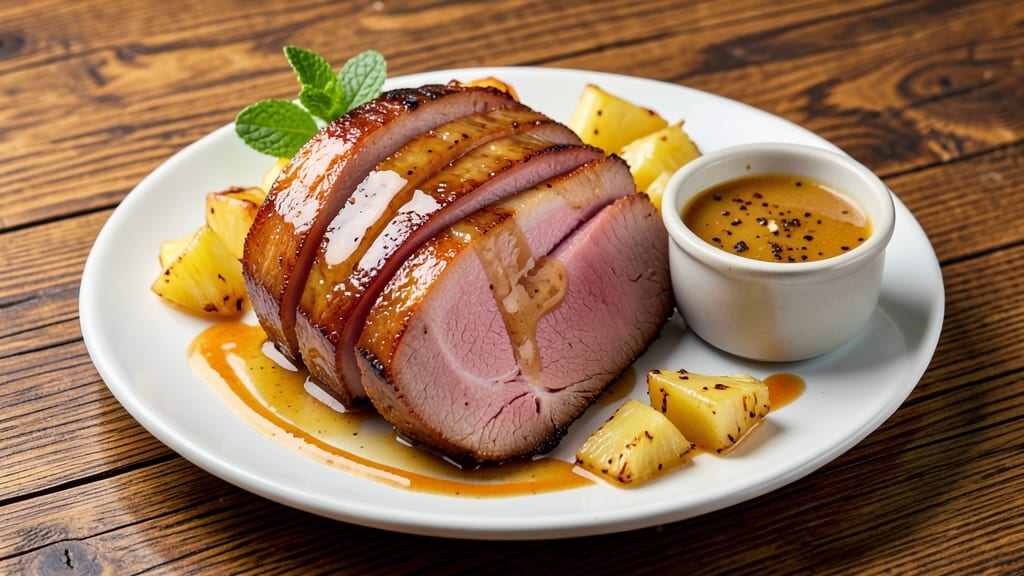
This pineapple sauce for baked ham recipe transforms ordinary holiday ham into a showstopper with its glossy, tangy-sweet glaze that clings to every slice. 🌟 The secret lies in simmering pineapple juice with brown sugar, vinegar, and warm spices until thick and syrupy—creating a balance of tropical brightness and rich depth that complements ham's natural flavors without overpowering them.
What makes this sauce exceptional is its versatility: it works equally well as a glaze during baking or as a post-roast drizzle for extra shine. The combination of mustard and cloves adds subtle complexity, while the caramelized sugar creates a glossy finish that makes every presentation feel special.
Unlike store-bought versions, this recipe delivers authentic flavor with just five simple ingredients. Perfect for holiday meals or special dinners, this sauce can be made ahead and reheated to maintain its perfect consistency. The result is a ham so moist and flavorful that every bite feels like a celebration.
Whether you're hosting a gathering or simply treating yourself, this glaze elevates your ham from good to unforgettable. Pair it with classic sides like scalloped potatoes or green bean casserole for a complete holiday spread.
The sauce's tangy-sweet profile also makes it a versatile condiment for sandwiches or charcuterie boards long after the holidays. Here's how to make it shine.
Ingredients for pineapple sauce for baked ham
Five ingredients create this showstopping tropical glaze that transforms ordinary ham into a holiday centerpiece.
| Ingredient | Amount | Notes |
|---|---|---|
| Pineapple Juice 🍍 | 1 ½ cups | Freshly squeezed preferred |
| Dark Brown Sugar 🍚 | 1 cup | Packed, light brown works too |
| Apple Cider Vinegar 🍶 | ½ cup | White vinegar substitute |
| Ground Cloves 🌿 | ½ tsp | Freshly ground preferred |
| Dijon Mustard 🍯 | 1 tbsp | High-quality brand recommended |
| Unsalted Butter 🧈 | 2 tbsp | Full-fat for richness |
| Salt 🧂 | ¼ tsp | Diamond Crystal preferred |
| Ground Black Pepper 🌶️ | ⅛ tsp | Freshly cracked preferred |
The pineapple juice is the star—opt for freshly squeezed for vibrant flavor, but canned works in a pinch (choose brands without added sugar). Brown sugar should be dark and packed for maximum caramelization; light brown sugar works but lacks depth. For vinegar, apple cider adds subtle complexity, though white vinegar delivers the same tang. Cloves are non-negotiable—they provide the warm spice backbone that makes this sauce special. I always grab McCormick ground cloves from the bulk section at Whole Foods for consistent quality, but fresh cloves toasted and ground work beautifully too.
No Dijon mustard? Whole-grain mustard thinned with water mimics the texture, though flavor will differ slightly. Butter adds richness—unsalted ensures you control the seasoning, but salted works if you adjust the recipe's salt accordingly. For a dairy-free version, substitute coconut oil (same amount), though texture will be slightly lighter. The sauce thickens as it cools, so if it's too thin after simmering, add 1 tsp cornstarch mixed with cold water. Mustard powder can replace Dijon at half the amount, but the texture will be powdery rather than smooth.
This sauce reheats beautifully—simply warm in a saucepan over medium heat, stirring constantly to prevent burning. Store in an airtight container in the fridge for up to 2 weeks (flavor intensifies overnight) or freeze for 3 months in ice cube trays for single-serving portions. For holiday prep, make it 2 days ahead—the flavors meld beautifully, and the glaze becomes even more concentrated. Brush onto ham 30 minutes before serving for maximum shine, or drizzle generously over slices for an elegant finish.
Why You'll Love This Recipe
- Five-Ingredient Magic: I swear by this sauce—just heat, stir, and let the pineapple juice and brown sugar caramelize. No peeling, chopping, or fancy techniques. That clove and vinegar combo does all the work while I sip my coffee.
- Sweet-Savory Balance: The Dijon mustard cuts through the sugar’s sweetness, and that tiny pinch of ground cloves? It’s like a warm hug for your taste buds. Honestly, I’ve tried store-bought sauces, but this one’s my secret weapon—rich, tangy, and never cloying.
- Holiday or Weeknight: Slather it on a holiday ham, or drizzle it over breakfast sandwiches. (Yes, even on a Tuesday night.) The leftovers? Perfect for glazing pork chops or even as a marinade. It’s that versatile.
- Zero Waste, Maximum Flavor: Use the leftover pineapple rind for broth or freeze the extra sauce for future hams. Between us, I’ve made this for $3 a batch—way cheaper than pre-made syrups, and it lasts. Budget-friendly doesn’t get better than this.
Step-by-step instructions for pineapple glaze that sticks to every slice
This tropical glaze delivers perfect balance—sweet, tangy, and rich with depth.
🍳 Step 1: Melt Butter and Deglaze the Pan
Place a medium saucepan over medium heat and add the 2 tablespoons unsalted butter. Let it melt completely, swirling occasionally until it foams and turns golden. This butter forms the rich foundation of your glaze, so don't rush this step.
Once the butter has melted and begins to bubble gently at the edges, pour in the 1.5 cups pineapple juice. Immediately add the 1 tablespoon Dijon mustard and stir to combine. The mustard will help emulsify the sauce later, preventing separation. Let the mixture simmer for 3-4 minutes until it reduces by about ¼ and becomes slightly syrupy.
🍳 Step 2: Build Flavor with Sugar and Spices
Reduce heat to low and add the 1 cup dark brown sugar and 0.5 cup apple cider vinegar all at once. Stir constantly for 5-6 minutes until the sugar dissolves completely and the mixture thickens slightly. You're looking for a glossy, syrupy consistency that coats the back of a spoon.
Here's where the spices come in: add the 0.5 teaspoon ground cloves, 0.25 teaspoon salt, and 0.125 teaspoon ground black pepper. The cloves add warm, aromatic depth while the salt and pepper balance the sweetness. Let the mixture simmer for another 3-4 minutes until it reaches a thick, glaze-like consistency that coats a spoon completely.
⏰ Step 3: Simmer to Perfect Thickness
Continue simmering on low heat for 8-10 minutes, stirring occasionally, until the glaze reduces to about 1½ cups and becomes syrupy enough to coat the back of a spoon without running off. This is your target consistency—thick enough to cling to the ham but still pourable.
To test, dip a spoon into the glaze and let it drip back into the pan. If it forms a slow, thick stream that doesn't immediately run off, it's ready. If it's too thin, simmer another 2-3 minutes. If it's too thick, you can thin it slightly with a splash of hot water or pineapple juice, but this glaze should be thick enough to stick to every slice.
🍽️ Step 4: Finish and Apply to Ham
Remove the pan from heat and let the glaze rest for 2 minutes to thicken slightly. This resting period allows the flavors to meld and the glaze to reach its ideal consistency. Taste and adjust seasoning if needed—you might want to add a pinch more salt or a splash of vinegar for balance.
For best results, apply the warm glaze to your fully cooked, carved ham while it's still slightly warm. The residual heat will help the glaze adhere perfectly to every slice. If you're not using it immediately, store in an airtight container in the refrigerator for up to 1 week or freeze for up to 3 months. Reheat gently before serving.
Pro Tips For Making Pineapple Sauce For Baked Ham
- Simmer Slow and Steady: I learned this the hard way—rushing the sauce on high heat turns it into syrup faster than you can say "overcooked." Keep it at a gentle boil (small bubbles, barely there) for 15-20 minutes, stirring occasionally. This lets the brown sugar caramelize properly and the flavors meld without burning the cloves or mustard.
- Strain the Cloves: Yes, even if you love that spice kick, whole cloves make the sauce gritty. After simmering, strain through a fine-mesh sieve to catch the seeds and any stray bits. Trust me, your guests will notice the smoother texture—no one wants to bite into a clove while eating ham.
- Balance the Sweet and Tang: The sauce needs both sweetness and acid to shine, but too much vinegar kills the flavor. Start with 2 tablespoons of apple cider vinegar, taste as you go, and add another teaspoon at a time. The mustard should tie it all together, not overpower it—aim for about 1 tablespoon, adjusted to taste.
- Use Fresh Pineapple Juice: Store-bought juice lacks depth, and the sauce suffers. If you’re using canned juice, opt for 100% pineapple with no additives. Better yet, blend fresh pineapple chunks, strain, and use the juice—it’s brighter, sweeter, and makes the sauce taste like it was made with love (not just convenience).
Flavor customization for these flavors
Tropical Heat Boost
Add ½ teaspoon cayenne pepper or 1 teaspoon minced fresh ginger to the simmering glaze for a spicy kick that pairs beautifully with ham. The ginger brightens the pineapple flavors while cayenne adds warmth—perfect for those who love a little heat.
I find 1 teaspoon grated ginger works best for a balanced zing. 🌶️
Citrus Zest Twist
Zest 1 lime or 1 orange and add it to the sauce during the final 5 minutes of simmering. The citrus oils infuse the glaze with vibrant freshness that cuts through the richness of the ham.
For extra brightness, add 1 tablespoon fresh lime juice right before serving. Trust me, this makes all the difference!
Creamy Yogurt Version
Swap the butter for 2 tablespoons plain Greek yogurt and reduce the pineapple juice to 1 cup for a tangy, creamy glaze. The yogurt adds a silky texture that contrasts nicely with the ham's saltiness.
Thin with 1 tablespoon water if needed to reach the right consistency. This variation works beautifully for sandwiches too!
Spiced Rum Infusion
Add 1 tablespoon spiced rum (like Captain Morgan) during the final 2 minutes of simmering for a boozy depth that enhances the cloves and mustard. The alcohol burns off, leaving behind warm, aromatic notes. This is my go-to for holiday gatherings—it feels festive and sophisticated without being overpowering.
Maple Syrup Substitution
Replace the brown sugar with ½ cup pure maple syrup for a deeper, earthier flavor profile. The maple syrup caramelizes beautifully, adding a rich complexity that pairs wonderfully with the pineapple's brightness.
Reduce the pineapple juice to 1 cup to maintain balance. This version feels especially cozy during fall and winter holidays.
Herb-Infused Glaze
Add 1 teaspoon fresh thyme leaves or ½ teaspoon dried rosemary during the final 5 minutes of simmering for an herbal twist. The thyme brings an earthy note that complements the cloves, while rosemary adds a piney aroma.
Remove the herbs before serving if you prefer a smoother texture. This variation feels especially elegant for special occasions. ✨
Nutrition facts
Frequently asked questions
Can I use canned pineapple juice instead of fresh? Yes, but choose a brand with no added sugar for best results. Canned pineapple juice works perfectly fine and saves time. Just
How do I prevent the sauce from crystallizing when it cools?
Stir the sauce constantly during the final 5 minutes of simmering to prevent sugar crystallization. If you notice small sugar crystals forming, gently reheat the sauce over low heat while stirring until they dissolve completely. For extra insurance, add ½ teaspoon cornstarch mixed with 1 tablespoon water during the last 2 minutes of cooking.
What's the best way to reheat leftover sauce?
Gently reheat in a small saucepan over low heat while stirring constantly to prevent burning. Add 1-2 tablespoons water if the sauce thickens too much. For microwave reheating, use 20-second intervals on medium power, stirring between each interval. Never boil the sauce when reheating, as this can cause separation.
Can I make this sauce without cloves?
If you dislike cloves, substitute with ½ teaspoon ground cinnamon or ¼ teaspoon ground allspice for warmth. For a different flavor profile, try ¼ teaspoon ground nutmeg. The sauce will still be delicious—just with a slightly different spice character. The mustard and vinegar will maintain the tangy-sweet balance.
How much sauce should I make for a 10-pound ham?
This recipe makes about 1½ cups of sauce, which is perfect for a 10-pound ham. For best results, brush about ¼ cup of warm sauce over the ham during the last 30 minutes of baking, then drizzle additional sauce over the carved slices. If you want extra sauce for serving, double the recipe—it keeps well in the refrigerator for up to 1 week.