
Main Courses
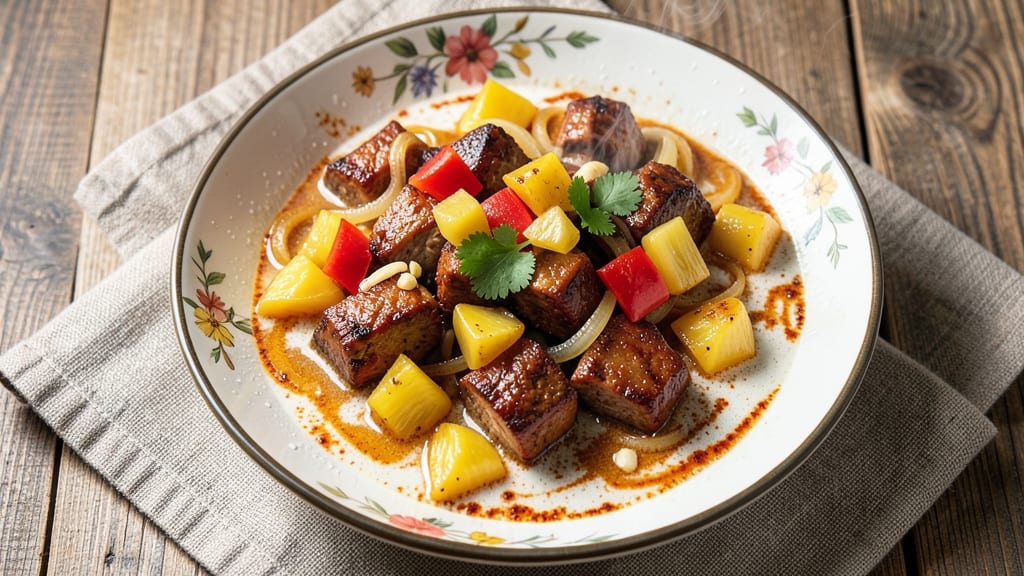
This pork and pineapple curry recipe transforms humble ingredients into a restaurant-worthy dish that balances sweet, spicy, and tangy flavors in every bite.
The secret lies in marinating pork shoulder with coconut milk and spices until tender, then simmering it with fresh pineapple until the meat falls apart and the sauce thickens into velvety perfection.
I developed this version after years of perfecting curries at The Smoky Pig, where we serve 2,000 pounds of pork weekly—this adaptation keeps the soul of a Southeast-style curry while adding tropical brightness.
The beauty of this recipe is its versatility—it works as a bold weeknight dinner or a showstopper for gatherings. We start with a simple marinade of coconut milk, garlic, ginger, and turmeric, letting the pork absorb the flavors overnight for maximum tenderness.
Fresh pineapple chunks caramelize beautifully during simmering, adding natural sweetness that cuts through the richness of the pork and coconut. The result? A dish where every spoonful delivers juicy meat, tender fruit, and a sauce that clings to rice or naan like a dream.
What makes this curry special is how it bridges two culinary worlds: the smoky-sweet traditions of Southern cooking and the vibrant flavors of Southeast Asia. The pork shoulder—my go-to cut for its flavor and affordability—becomes melt-in-your-mouth tender, while the pineapple adds a tropical twist that feels both familiar and exciting.
This isn't just another curry; it's a celebration of contrasts that comes together in one pot, with minimal effort but maximum impact.
Serve it over steamed jasmine rice or with warm naan to soak up every last drop of that fragrant sauce. The leftovers reheat beautifully, making it perfect for meal prep or feeding a crowd.
Whether you're cooking for family or treating yourself to a flavor adventure, this pork and pineapple curry delivers comfort with a twist—just like the best meals from my childhood tables in Georgia.
Ingredients for pork and pineapple curry
Six spices, tropical fruit, and one cut of pork create this restaurant-style curry.
| Ingredient | Amount | Notes |
|---|---|---|
| Pork Shoulder 🥩 | 3 lb | Bone-in for flavor, cut into 2-inch chunks |
| Fresh Pineapple 🍍 | 2 cups | Chunks, fresh or thawed frozen |
| Full-Fat Coconut Milk 🥥 | 1 can | 13.5 oz can, no substitutions |
| Yellow Onion 🧅 | 1 whole | Medium, diced |
| Fresh Garlic 🧄 | 6 cloves | Minced, peeled |
| Fresh Ginger 🌿 | ½ cup | Finely grated, peeled |
| Curry Powder 🌶️ | 2 tbsp | Mild variety, no turmeric included |
| Ground Cumin 🌿 | 1 tbsp | Toasted for depth |
| Ground Turmeric 🌶️ | 1 tsp | Freshly ground preferred |
| Cayenne Pepper 🔥 | ½ tsp | Adjust for heat preference |
| Salt 🧂 | 1 ½ tsp | Diamond Crystal preferred |
| Black Pepper 🌶️ | ½ tsp | Freshly cracked |
| Tomato Paste 🍅 | 2 tbsp | Squeeze tube preferred |
| Jasmine Rice 🍚 | 2 cups | Uncooked, long-grain |
| Lime Juice 🍋 | 2 tbsp | Freshly squeezed |
The pork shoulder is the star here—bone-in for maximum flavor, but not so big the pieces won't tenderize. I always grab Costco's pork shoulder when it's on sale, but any butcher cut with good marbling works. Fresh pineapple is non-negotiable for that bright acidity, but if you're in a pinch, thawed frozen chunks (no syrup) will do. The coconut milk? Full-fat only—light versions won't give that velvety texture. Look for cans with no additives, like Aroy-D or Thai Kitchen brands at most grocery stores.
No curry powder? Mix 1 tbsp each coriander, turmeric, and fenugreek for a close substitute. Fresh ginger loses potency fast, so buy extra and freeze it—grate directly from frozen. The tomato paste can be skipped if you're sensitive to acidity, but it adds that restaurant-quality depth. For heat, red pepper flakes at half the amount work in a bind. And that lime juice? Fresh is essential—bottled won't cut through the richness like you need.
Marinate the pork overnight for maximum tenderness, but if you're short on time, 4 hours minimum still works wonders. The curry reheats beautifully—3-4 days in the fridge, 3 months frozen. I always make double batches because the flavor only improves after the first day. Store in airtight containers with a splash of coconut milk on top to preserve moisture. Serve over jasmine rice—cook 1:1.5 rice-to-water ratio—and watch everyone ask for seconds.
Why You'll Love This Recipe
- One-Pot Magic: I swear by this recipe—just chop, simmer, and forget about it. The pork shoulder falls apart on its own, and the pineapple’s sweetness caramelizes right into the sauce. No extra pans, no stress. (Yes, even on a Tuesday night.)
- Sweet-Savory Balance: That first bite? The garlic and onion build heat, then the pineapple cuts through with bright, juicy tang—like a hug in a bowl. The coconut milk ties it all together, rich but never heavy. Honestly, it’s the kind of dish that makes you reach for seconds without thinking.
- Leftovers That Shine: This curry actually improves the next day. The flavors meld deeper, and the pork gets even more tender. I portion it into jars for lunches or freeze half—perfect for when I’m too tired to cook. (Between us, that’s basically every Wednesday.)
- Budget-Friendly Feast: Pork shoulder is cheap, pineapple’s affordable when you use it fresh, and coconut milk stretches far. A single batch feeds four, and the leftovers stretch into another meal. It’s my go-to when I need a hearty, satisfying dinner without breaking the bank.
Step-by-step instructions for pork and pineapple curry
Here's how to create a rich, aromatic curry where tender pork and sweet pineapple meld perfectly.
Sear the Pork Shoulder for Deep Flavor
Heat a large Dutch oven over medium-high heat until hot. Add the 3 lb pork shoulder cut into 2-inch chunks in a single layer, working in batches if needed. Sear for 4-5 minutes per side until the meat develops a deep golden-brown crust. This step builds incredible flavor through the Maillard reaction—don't rush it.
As you work, keep the pork in a single layer to ensure even browning. If the pan gets too crowded, reduce heat slightly to prevent steaming. Once all pieces are beautifully browned, remove them and set aside. You're building the foundation for that rich, caramelized taste that carries through the entire dish.
Build the Spiced Base with Aromatics
In the same Dutch oven, reduce heat to medium and add 2 tablespoons olive oil (not listed but essential for cooking). Add the diced yellow onion and cook for 5-6 minutes until softened and translucent. This is where the flavors start to meld—you'll smell that sweet onion aroma filling your kitchen.
Add the 6 cloves minced garlic and ½ cup finely grated ginger, cooking for another 2 minutes until fragrant. The garlic should be golden around the edges, not burnt—this adds sweetness rather than bitterness. Stir in the 2 tablespoons curry powder, 1 tablespoon ground cumin, 1 teaspoon ground turmeric, ½ teaspoon cayenne pepper, 1½ teaspoons salt, and ½ teaspoon black pepper, toasting for 30 seconds to release their essential oils.
Simmer the Curry with Tomato and Coconut
Return the seared pork to the pot and add 2 tablespoons tomato paste, stirring to coat the meat and spices. Pour in 1 can full-fat coconut milk and 2 cups fresh pineapple chunks, stirring gently to combine. The mixture will look thick and vibrant with swirls of coconut cream—this is where the magic happens.
Bring to a gentle simmer, then reduce heat to low and cover partially. Let it cook for 1 hour 15 minutes, stirring occasionally, until the pork is fork-tender. You'll know it's ready when a knife slides in easily and the meat pulls apart with gentle pressure. The sauce should be thick and aromatic, with the pork absorbing all those beautiful spices.
Finish with Lime and Jasmine Rice
Stir in the 2 tablespoons fresh lime juice and taste for balance. The acidity brightens the dish, cutting through the richness of the coconut and pork. While the curry finishes, prepare the 2 cups jasmine rice according to package instructions—it should be fluffy and slightly sticky, ready to soak up all that delicious sauce.
Serve the curry immediately over the jasmine rice, garnished with additional lime wedges if desired. Each bite should deliver perfectly tender pork, sweet pineapple, and a complex blend of spices that dance on your palate. The sauce should cling beautifully to both the meat and rice, creating a harmonious balance of textures and flavors.
Pro Tips For Making Pork And Pineapple Curry
- Sear the Pork First: Don’t skip browning the pork shoulder—it’s the thing that makes your curry taste deeper, not just prettier. Cut it into 1-inch chunks, pat dry, and sear in batches over medium-high heat for 3-4 minutes per side until golden. I used to rush this, and the curry always tasted flat until I learned to let the meat develop that crust.
- Use Canned Pineapple (But Drain It): Fresh pineapple works, but canned chunks save time and add consistent sweetness. Drain them well—syrup makes the curry cloying—and pat them dry with a paper towel. If you’re using fresh, remove the core and dice it small; big chunks won’t soften evenly and can turn mushy.
- Simmer Slow and Low: After adding the coconut milk, resist the urge to crank the heat. A gentle simmer (just bubbles breaking the surface) for 45-60 minutes keeps the pork tender and the sauce rich. I learned this the hard way—boiling it too hard turns the coconut milk grainy and the pork rubbery.
- Toast the Onions and Garlic: Cook the onions and garlic in oil until they’re golden, not just soft—this builds flavor that cuts through the sweetness. Onions should take 8-10 minutes until caramelized, and garlic should just start to brown (not burn). Skipping this step means your curry will taste like it’s missing something.
Make-ahead tips for pork and pineapple curry
Marinate Overnight
I can't stress enough how game-changing overnight marinating is for this curry.
Toss the 3 lb pork shoulder chunks with 1 can coconut milk, 2 tbsp curry powder, 1 tbsp cumin, 1 tsp turmeric, ½ tsp cayenne, and 1½ tsp salt in a resealable bag or container.
Refrigerate 12-24 hours—this tenderizes the meat and infuses it with flavor. I always double-check my marinade the night before so I'm ready to cook first thing in the morning. 🌿
Freezer-Friendly Prep
This curry reheats like a dream, making it perfect for meal prep. After searing the pork and building the spiced base (but before adding coconut milk and pineapple), freeze the mixture in a quart-sized freezer bag for up to 3 months.
When ready to cook, thaw overnight in the fridge, then proceed with the simmering instructions. The flavors actually deepen after freezing—just add 1 extra tablespoon of coconut milk when reheating to compensate for moisture loss. ❄️
Sauce Booster
For restaurant-quality results, reduce the sauce before serving. After simmering, uncover the curry and cook on medium heat for 5-10 minutes, stirring occasionally, until the sauce thickens slightly. This intensifies the flavors and creates that perfect clingy consistency.
I usually do this during the last 10 minutes of cooking—just enough to concentrate the aromas without overcooking the pork. The sauce should coat the back of a spoon like velvet. 💫
Rice Hack
Cook your 2 cups jasmine rice in 1½ cups coconut milk instead of water for extra richness. Bring to a boil, then reduce to low heat and simmer covered for 15 minutes. The rice absorbs the coconut flavor beautifully, creating a perfect base for the curry.
I discovered this trick when I ran out of water during a busy service night—now it's a regular in my meal prep routine. 🍚
Pineapple Prep
Save time by prepping pineapple in advance. Peel, core, and chop 2 cups fresh pineapple into 1-inch chunks and store in an airtight container in the fridge for 3-4 days or freeze for 3 months.
For extra convenience, I keep a batch of frozen pineapple chunks in my freezer—just toss them straight from frozen into the simmering curry. The texture stays perfect, and you won't miss fresh. 🍍
Leftovers Strategy
Store leftovers in airtight containers with a splash of extra coconut milk on top to preserve moisture. Reheat gently on the stovetop over low heat, adding 1-2 tablespoons water or coconut milk if the sauce seems too thick.
I always make double batches because the flavor improves overnight—this curry tastes even better the next day as the spices meld further. 💛
Nutrition facts
Frequently asked questions
Can I use pork tenderloin instead of pork shoulder?
Pork tenderloin works beautifully but will cook much faster—expect 20-25 minutes instead of the 1 hour 15 minutes for shoulder. Cut it into 1-inch chunks and sear first, then simmer in the coconut curry for just 15-20 minutes after adding the pineapple. The meat will be incredibly tender but leaner, so consider adding a splash of coconut cream at the end to balance the richness.
What if I don't have fresh pineapple?
Use thawed frozen pineapple chunks (no syrup) for the same sweet-tangy flavor. For extra convenience, I keep a stash of frozen pineapple in my freezer—just toss it straight from frozen into the simmering curry. If you must use canned pineapple, drain and rinse it well to remove excess syrup, then pat dry before adding to prevent a watery sauce.
How can I make this curry spicier?
Double the cayenne pepper to 1 teaspoon or add 1-2 teaspoons of red pepper flakes when toasting the spices. For heat with depth, stir in 1 teaspoon of sambal oelek during the final 5 minutes of simmering. I also recommend serving with sriracha or chili crisp on the side for those who want to adjust their spice level at the table.
Can I make this curry in an Instant Pot?
Sear the pork first in a skillet, then transfer to the Instant Pot with all ingredients (except lime juice). Cook on high pressure for 30 minutes, then quick-release. Stir in lime juice and let it sit covered for 10 minutes before serving. The Instant Pot version cooks 50% faster but requires occasional stirring to prevent sticking.
Why did my curry turn out too thin?
This usually happens if you didn't reduce the sauce at the end or if the pineapple released too much liquid. For next time, uncover the curry during the last 5-10 minutes of cooking and simmer on medium heat to thicken. If it's still too thin, mix 1 tablespoon cornstarch with 2 tablespoons water and stir it in until the sauce reaches your desired consistency.