
Main Courses
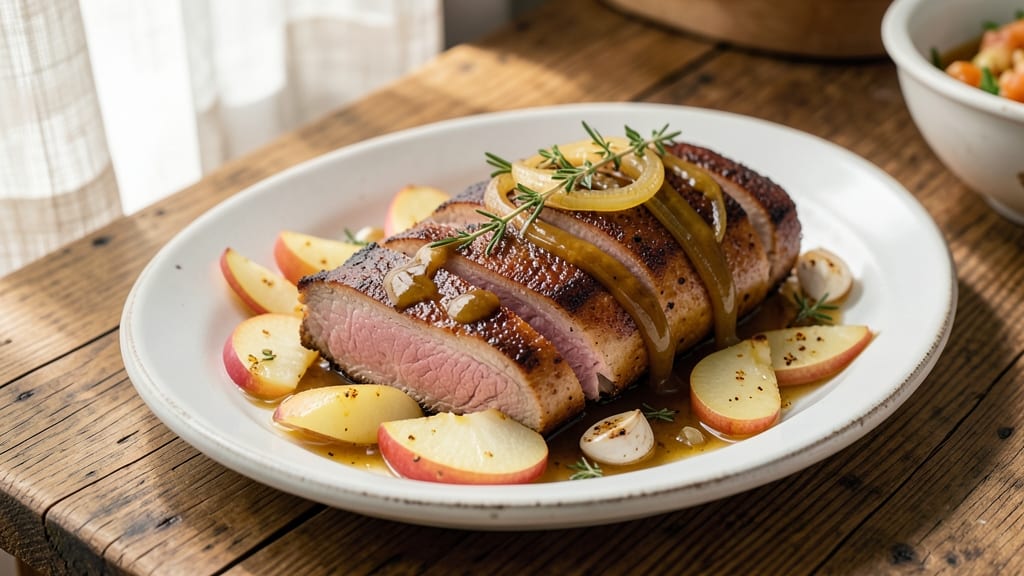
This pork apple mustard recipe transforms humble pork shoulder into a showstopper that’ll have your dinner guests begging for seconds. 🔥 After years of perfecting it at The Smoky Pig, I can promise you tender, fall-apart meat with a sweet-tangy glaze that balances crisp apples and sharp mustard—like a cross between a classic braise and a gourmet BBQ masterpiece.
The magic happens in the slow cook: pork shoulder braises until fork-tender while apples caramelize into the sauce, and Dijon mustard adds just the right tang to cut through the richness.
This isn’t your grandma’s pork—it’s restaurant-quality comfort food with minimal effort, using ingredients you likely already have in your pantry. The best part? Leftovers taste even better the next day.
What you’ll end up with is a dish that’s equal parts hearty and elegant—juicy pork slices swimming in a glossy, slightly sticky glaze with bursts of sweet apple and mustard’s bright kick.
It’s the kind of meal that feels special enough for company but simple enough for a weeknight. Serve it with crusty bread to soak up every last drop of that irresistible sauce.
Here’s the secret weapon: I use a mix of sharp apple cider vinegar and apple juice in the braising liquid, which deepens the flavor without overpowering the pork.
Trust me, this is one recipe that’ll become a staple in your rotation—once you try it, you’ll never go back to basic pork chops again.
Ingredients for pork apple mustard
Sweet, tangy, and packed with restaurant-quality flavor—just six ingredients transform pork shoulder into a showstopper.
| Ingredient | Amount | Notes |
|---|---|---|
| Pork Shoulder 🥩 | 3 lb | Bone-in for best flavor |
| Honeycrisp Apples 🍎 | 2 whole | Peeled, cored, sliced |
| Yellow Onion 🧅 | 1 whole | Chopped into wedges |
| Garlic Cloves 🧄 | 4 cloves | Minced for depth |
| Dijon Mustard 🍯 | ½ cup | High-quality for tang |
| Apple Cider Vinegar 🍶 | ¼ cup | Sharp for balance |
| Apple Juice 🍏 | ½ cup | Unsweetened preferred |
| Beef Broth 💧 | 1 ½ cups | Low-sodium preferred |
| Brown Sugar 🍚 | ¼ cup | Lightly packed |
| Olive Oil 🫒 | 2 tbsp | Extra-virgin for richness |
| Salt 🧂 | 1 ½ tsp | Kosher or sea salt |
| Black Pepper 🌶️ | ½ tsp | Freshly ground |
| Fresh Thyme 🌿 | ¼ cup | Leaves only, chopped |
| Crusty Bread 🍞 | 6 slices | For serving |
The pork shoulder is non-negotiable here—look for bone-in cuts with good marbling at Costco or your local butcher. Honeycrisp apples are ideal for their crisp bite, but Fuji or Granny Smith work too. If you're using pre-sliced apples, skip the peeling—the skin adds texture. For the mustard, Maille is my go-to, but any good-quality Dijon will do. The apple cider vinegar should be sharp and unfiltered—the cheap stuff won’t cut through the richness. Thyme is optional but adds a lovely herbal note that pairs perfectly with the sweet-tangy sauce.
No Dijon mustard? Whole-grain mustard thinned with a splash of apple juice works in a pinch. Short on apples? Substitute with pears or even sweet potatoes (yes, really—trust me on the sweetness). The beef broth can be swapped for vegetable broth if you're avoiding meat entirely, though the flavor will be slightly lighter. For a deeper color, add 1 tsp of smoked paprika to the braising liquid. If you're prepping ahead, peel and slice the apples first—they brown fast, and you don’t want that in your sauce. The crusty bread? Sourdough or a good baguette from the bakery section—none of that sad, pre-sliced stuff.
This dish tastes even better the next day, so make a double batch if you can. Store the pork and sauce separately in the fridge for up to 4 days—the flavors meld beautifully over time. To reheat, warm everything gently on the stove with a splash of water or broth to loosen the sauce. The bread? Toast it fresh when serving—crusty and warm is the only way to eat it here. Freezes beautifully too—portion the pork and sauce in airtight containers for up to 3 months. Just thaw overnight in the fridge before reheating.
Why You'll Love This Recipe
- One-Pan Magic: Honestly, I swear by this recipe when I’m too tired to scrub pots. The pork shoulder slow-cooks with apples and onions until it’s fall-apart tender—just toss everything on a sheet pan, cover it, and walk away. (Yes, even on a Tuesday night.)
- Sweet-Savory Balance: That Dijon mustard glaze? It’s the secret weapon—tangy enough to cut through the richness of the pork, but the Honeycrisp apples add this bright, almost caramelized sweetness. The garlic cloves? They sizzle into crispy little bits that make every bite feel like a hug.
- Leftovers for Days: Between us, this recipe practically begs for seconds. The pork stays juicy and flavorful for at least 3 days in the fridge, and it reheats like a dream—throw it in a skillet or microwave, and it’s just as good as day one. (My lunchbox has never been happier.)
- Budget-Friendly Feast: Pork shoulder is my go-to for stretching a meal without breaking the bank, and apples add freshness without fancy pricing. One cut of meat, a few simple veggies, and a splash of mustard—it’s the kind of dish that makes grocery day less stressful. Plus, it feeds four for under $15.
Step-by-step instructions for sweet-tangy braised pork shoulder
Here's how to transform simple ingredients into melt-in-your-mouth pork with a glossy apple-mustard glaze.
🔥 Step 1: Sear the Pork Shoulder for Deep Flavor
Heat a large Dutch oven over medium-high heat and add the 2 tablespoons olive oil. Once shimmering, place the 3 lb pork shoulder fat-side down and let it sear undisturbed for 8-10 minutes until the fat renders and the skin turns deep golden brown.
Flip the pork and sear the other side for another 6-8 minutes. I press down gently on the meat during the first minute—this prevents it from curling and ensures even contact with the pan. You're building layers of flavor here, so don't rush this step. The pork should release easily from the pan when ready.
🍳 Step 2: Build the Sweet-Tangy Braising Liquid
Remove the pork and set it aside. In the same Dutch oven, add the chopped yellow onion and cook for 5 minutes until softened and just beginning to caramelize. Add the minced garlic cloves and cook for 30 seconds until fragrant—don't let it brown or it'll turn bitter.
Pour in the 0.5 cup Dijon mustard, 0.25 cup apple cider vinegar, 0.5 cup apple juice, and 1.5 cups beef broth. Stir well to deglaze the pan, scraping up all those delicious browned bits from the bottom. Add the 0.25 cup brown sugar, 1.5 teaspoons salt, and 0.5 teaspoon black pepper, stirring until everything is combined.
🥘 Step 3: Braise Until Fork-Tender Perfection
Return the pork to the Dutch oven, fat-side up, and bring the liquid to a gentle simmer. The liquid should come about halfway up the sides of the pork. Cover tightly with a lid and transfer to a 325°F oven. Here's the thing—this is where patience pays off. Braise for 2.5-3 hours until the pork is fork-tender and the internal temperature reaches 195-200°F.
About halfway through cooking, I like to check the liquid level. If it's reduced too much, add ¼ cup hot water to maintain moisture. The pork should be falling apart easily when you test it with a fork, and the sauce should have thickened into a glossy, tangy glaze.
🍽️ Step 4: Finish with Fresh Herbs and Serve
Remove the pork from the oven and transfer it to a cutting board. Let it rest for 15 minutes while you finish the sauce. Skim off any excess fat from the braising liquid, then stir in the ¼ cup chopped fresh thyme. Taste and adjust seasoning if needed—you might want to add a splash more apple juice if the sauce is too thick.
Slice the pork against the grain into ¼-inch thick slices and serve with the sauce spooned over the top. The meat should be incredibly tender, almost shredding with a fork, with a beautiful caramelized exterior. Serve with the 6 slices crusty bread to soak up every last bit of that sweet-tangy sauce.
Pro Tips For Making Pork Apple Mustard
- SEAR THE PORK HARD: Get that Dutch oven smoking hot—cast iron or stainless steel—before the pork shoulder hits the pan. I learned this the hard way: a lukewarm sear means gray, bland meat instead of the deep, caramelized crust you want under all that mustard-apple glaze. Pat the pork very dry first, then let it sit uncovered for 10 minutes while you crank the heat.
- PEEL APPLES LAST MINUTE: Honeycrisp apples oxidize fast, so peel and slice them right before tossing into the pan with the pork. I used to prep them hours ahead, and they’d turn mushy and dull—like someone drowned them in lemon juice (which, by the way, doesn’t fix it). Keep them in cold water until you’re ready, but drain and pat just before adding.
- DON’T SKIP THE MUSTARD DEGLAZE: Once the pork’s browned, scrape up every last bit of that fond with Dijon mustard—even the bits stuck to the bottom. That’s where the flavor lives, and skipping it means your sauce will taste thin and underwhelming. Use a wooden spoon and scrape hard; I promise you’ll regret leaving it behind.
- LOW AND SLOW AFTER SEARING: After searing, drop the heat to 275°F (135°C) and cover the pork with just enough liquid (apple cider or broth) to come halfway up the meat. I used to rush it to 325°F, and the pork ended up dry. The mustard sauce needs time to meld, and the pork needs patience—this isn’t a sprint. Check it at 3 hours, then probe for tenderness.
Dietary considerations for pork apple mustard
Gluten-Free Adaptations
This recipe is naturally gluten-free, but always double-check your ingredients—especially the Dijon mustard and beef broth. I use Annie's Organic gluten-free mustard and Pacific Foods gluten-free broth to ensure safety.
The crusty bread is the only potential issue, so swap it for gluten-free baguette slices or serve with roasted sweet potatoes instead. 🌱
Dairy-Free Options
No dairy is required here, but if you're avoiding it entirely, skip the brown sugar (which sometimes contains dairy) and use coconut sugar instead. The Dijon mustard is naturally dairy-free, and the apples provide all the sweetness you need.
For extra richness, add 1 tablespoon olive oil to the braising liquid. The sauce remains velvety and flavorful without any dairy.
Lower-Carb Modifications
To make this keto-friendly, reduce the brown sugar to 1 tablespoon and add 1 teaspoon cinnamon for depth. The Honeycrisp apples add natural sweetness without spiking carbs. Serve the pork with cauliflower mash instead of bread, and the dish stays under 10g net carbs per serving.
I love using Trader Joe's cauliflower mash for convenience.
Allergen-Friendly Swaps
For nut allergies, ensure your Dijon mustard is nut-free (some brands process in nut facilities). If you're avoiding apples, substitute with pears or sweet potatoes—both work beautifully.
For a soy-free version, use coconut aminos instead of soy sauce (though it's not needed here). Always check labels on broths and vinegars for hidden allergens. 💪
Vegetarian Adaptations
While pork is the star, you can adapt this as a mushroom and apple stew by replacing the pork with 2 lbs portobello mushrooms and 1 lb extra-firm tofu. Sear the mushrooms first, then braise with all the same flavors.
The result is a hearty, umami-rich dish that still delivers that sweet-tangy balance. Use vegetable broth and add 1 teaspoon smoked paprika for depth.
Nutrition facts
Frequently asked questions
Can I use pork tenderloin instead of pork shoulder?
Pork tenderloin is leaner and cooks much faster than pork shoulder, so it won't braise the same way. For best results, stick with pork shoulder (bone-in preferred) or use a smaller cut like pork loin. If you're determined to use tenderloin, sear it first, then roast at 375°F for 15-20 minutes until 145°F internal temp, and serve with the apple-mustard sauce on the side.
How do I balance the sweetness and tanginess?
The key is in the ratios: 0.25 cup apple cider vinegar (for tang) and 0.25 cup brown sugar (for sweetness) create perfect harmony. If your sauce tastes too sweet, add 1 teaspoon more vinegar or a pinch of salt. Too tangy? Stir in 1 tablespoon apple juice or honey. Taste as you go—this is where adjustments happen!
Can I make this in a slow cooker?
Sear the pork first, then transfer everything to your slow cooker. Cook on low for 8 hours or high for 5-6 hours. The slow cooker method works beautifully because it mimics the gentle braising process. Just add ¼ cup water if the liquid gets too thick during cooking. The result is just as tender and flavorful!
What if my pork isn't tender enough?
If your pork feels tough, it likely didn't cook long enough. Pork shoulder needs to reach 195-200°F internal temp for true tenderness. Extend the braising time by 30-60 minutes and check again. If it's still tough, shred it and use it in sandwiches or tacos—it'll be delicious that way too!
How can I make this dish kid-friendly?
For picky eaters, serve the pork plain with apple slices on the side. The sweetness of the apples will appeal to kids, and they can dip the pork in the sauce if they like. You can also reduce the vinegar to 0.125 cup to mellow the tang. Always let kids try small bites first—they might be surprised by how good it tastes!