
Main Courses
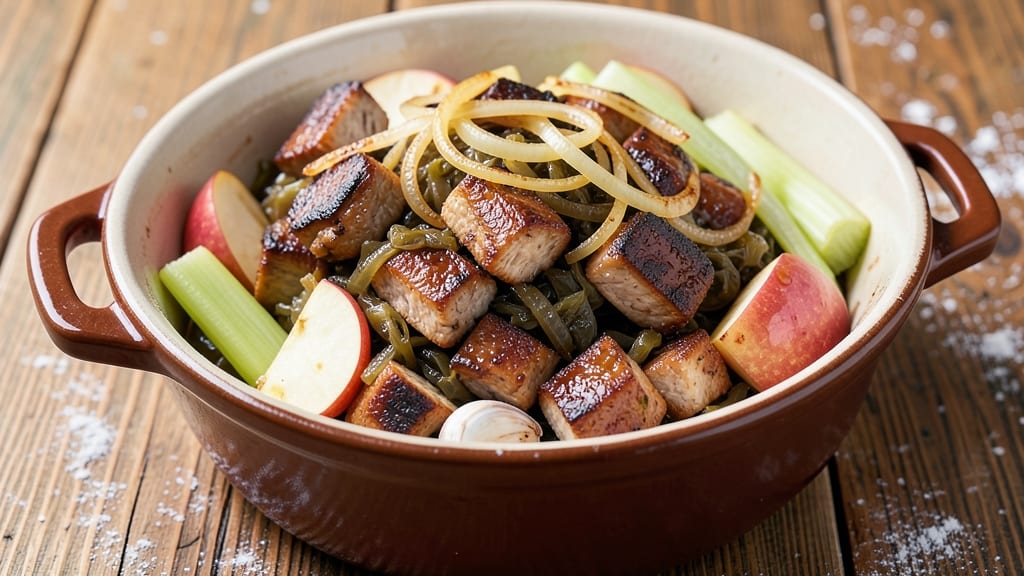
This pork apple sauerkraut crock pot recipe transforms humble ingredients into a hearty, sweet-tart masterpiece that tastes like a German tavern meets American comfort food.
The secret lies in balancing the natural tang of sauerkraut with caramelized apples and tender pork, all slow-cooked until the flavors meld into something deeply satisfying. My version keeps the traditional roots while adding modern twists—like crispy celery bites—that elevate this classic dish.
The beauty of this recipe is its simplicity: just toss everything into your crock pot and let it work its magic over 3-4 hours on low heat. No fancy techniques required—just quality ingredients and patience.
The pork becomes fork-tender, the apples develop a natural caramelized sweetness, and the sauerkraut softens just enough to release its signature tangy punch. This is the kind of meal that gets better with every bite and leaves your kitchen smelling like a cozy autumn gathering.
What makes this dish truly special is how it comes together—no chopping, no fuss, just one-pot convenience that delivers restaurant-quality results. The celery adds a satisfying crunch, while the apples and sauerkraut create a perfect sweet-savory balance.
Serve it with crusty bread or roasted potatoes to soak up every last bit of that rich, flavorful braising liquid. This is comfort food at its finest, and it’s impossible to resist.
Perfect for weeknight dinners or weekend feasts, this recipe scales easily to feed a crowd or serves as a hearty solo meal. The leftovers reheat beautifully, making it an ideal make-ahead option for busy families. Let’s get cooking—your taste buds will thank you.
Ingredients for pork apple sauerkraut crock pot
Quality cuts and simple pantry staples create this German-inspired crock pot masterpiece.
| Ingredient | Amount | Notes |
|---|---|---|
| Boneless Pork Shoulder 🥩 | 2 ½ lb | Cut into 1.5-inch cubes |
| Honeycrisp Apples 🍎 | 4 medium | Peeled, cored, sliced |
| Sauerkraut 🥬 | 2 cups | Drained, rinsed, chopped |
| Celery Sticks 🧅 | 2 cups | Cut into 1-inch pieces |
| Yellow Onion 🧅 | 1 whole | Quartered, skin on |
| Garlic Cloves 🧄 | 4 cloves | Minced, peeled |
| Apple Cider Vinegar 🍎 | ¼ cup | For tangy depth |
| Brown Sugar 🍯 | ¼ cup | Packed, light variety |
| Dijon Mustard 🍯 | 1 tbsp | For subtle tang |
| Dried Thyme 🌿 | 1 tsp | Or 1 tbsp fresh |
| Black Peppercorns 🌶️ | 1 tsp | Freshly cracked |
| Bay Leaves 🌿 | 2 whole | For aromatic depth |
| Beef Broth 💧 | 1 ½ cups | Low-sodium preferred |
| Olive Oil 🫒 | 1 tbsp | For searing pork |
The pork shoulder is the star—look for well-marbled cuts at Whole Foods or your local butcher shop. Honeycrisp apples are ideal for their crisp texture and mild sweetness, but Fuji or Gala work well too. Sauerkraut should be bright white with no slimy spots; drain and rinse thoroughly to remove excess brine. Celery adds a satisfying crunch, so choose firm stalks with vibrant green tops. For the apples, peeling removes bitterness while keeping the slices intact for even cooking. If using pre-shredded sauerkraut, skip the rinsing step—it’s already drained.
No Honeycrisp apples? Braeburn or Pink Lady hold up well during slow cooking. Substitute apple cider vinegar with white vinegar or lemon juice, though flavor will differ slightly. The celery can be swapped for carrots or fennel for a different texture profile. For a smokier depth, add 1 tsp smoked paprika with the spices. Brown sugar can be replaced with maple syrup or coconut sugar for a more complex flavor. Always use low-sodium beef broth—high-sodium versions can overpower the dish.
This braise tastes even better the next day as flavors meld. Store in an airtight container in the fridge for up to 5 days or freeze portions for 3 months. For crispy celery, blanch in boiling water for 2 minutes before adding to the crock pot. The pork will be fork-tender and pull apart easily. Reheat gently on the stove with a splash of broth to maintain moisture. Portion into individual containers for easy lunches—just add a side of crusty bread or roasted potatoes.
Why You'll Love This Recipe
- Hands-Off Magic: The crock pot does all the work—just chop the onion and celery once, toss in the pork shoulder and sauerkraut, then walk away. No stirring, no stress, just melt-in-your-mouth results by dinnertime.
- Sweet-Savory Balance: That crisp Honeycrisp apple tangles with the tangy sauerkraut and caramelized pork like a flavor party you weren’t invited to—until now. Honestly, the first bite makes you question why you ever ate plain pork chops.
- Leftovers That Don’t Suck: This dish actually improves the next day—juicier pork, softer apples, and the sauerkraut mellows into this rich, umami depth. Pack it for lunch or reheat it for breakfast (yes, really) with a fried egg on top.
- Budget-Friendly Crowd-Pleaser: Pork shoulder stretches for a week’s worth of meals, and the apples/sauerkraut add luxury without breaking the bank. I’ll be real: my husband’s coworkers keep asking for it, and I’m not even trying that hard.
Step-by-step instructions for sweet-tart pork braise
This method transforms tough pork shoulder into tender, flavor-packed bites with a perfect balance of sweet, tangy, and savory notes.
Sear the Pork for Maximum Flavor
Heat a large skillet over medium-high heat and add the 1 tablespoon olive oil. Once shimmering, add the 2.5 lb boneless pork shoulder cut into 1.5-inch cubes in a single layer. Let them sear undisturbed for 3-4 minutes until deeply golden brown on all sides—this creates the Maillard reaction that builds rich, caramelized flavors.
Work in batches if needed to avoid crowding the pan. As each batch sears, transfer the pork to your slow cooker, leaving all the browned bits behind—they'll form the flavor base for your braise. Don't skip this step; proper searing ensures your finished dish has depth and complexity that no amount of slow cooking can replicate.
Build the Aromatic Base
In the same skillet (no need to clean it), add the 1 whole yellow onion (quartered with skin on) and 2 cups celery sticks (cut into 1-inch pieces). Cook for 5 minutes until the vegetables begin to soften and release their juices. Add the 4 cloves garlic cloves (minced) and cook for another 30 seconds until fragrant.
Deglaze the pan with the 0.25 cup apple cider vinegar, scraping up all the browned bits from the bottom. This step captures all the concentrated flavors you worked so hard to develop. Transfer this aromatic mixture to the slow cooker with the pork, discarding any remaining solids from the skillet.
Layer in Sweet and Tangy Elements
Add the 2 cups sauerkraut (drained and chopped), 4 medium Honeycrisp apples (peeled, cored, and sliced), 0.25 cup brown sugar, 1 tablespoon Dijon mustard, 1 teaspoon dried thyme, 1 teaspoon black peppercorns, and 2 whole bay leaves to the slow cooker. Stir gently to combine, ensuring the pork is well-coated with all the ingredients.
The combination of sweet apples, tangy sauerkraut, and caramelized onions creates a perfect balance of flavors. The Honeycrisp apples will hold their shape while adding natural sweetness that complements the pork's richness. The sauerkraut brings that essential tang that cuts through the natural fat of the pork.
Slow Cook to Tender Perfection
Pour in the 1.5 cups beef broth and give everything one final stir. Cover the slow cooker and cook on LOW for 8 hours or HIGH for 5-6 hours, until the pork is fork-tender and easily pulls apart. The pork should reach an internal temperature of 203°F—this is the perfect point where connective tissue breaks down but the meat remains moist.
During the last 30 minutes of cooking, the apples will soften slightly but still retain some bite, while the celery will become tender-crisp. This is where the magic happens—the flavors meld together in the slow cooker's gentle heat, creating a harmonious balance that's greater than the sum of its parts.
Rest and Serve with Crisp Celery Bites
Allow the braised pork to rest for 10 minutes before serving. This resting period is crucial—it lets the juices redistribute throughout the meat, ensuring each bite is moist and flavorful. Remove and discard the bay leaves before serving, as they're meant for flavor infusion during cooking, not consumption.
Serve the pork with the apples and celery from the braising liquid, ensuring each portion gets a generous share of the flavorful sauce. The celery will have that perfect tender-crisp texture that contrasts beautifully with the tender pork and sweet apples. This dish pairs exceptionally well with crusty bread to soak up all the delicious juices.
Pro Tips For Making Pork Apple Sauerkraut Crock Pot
- SEAR THE PORK FIRST: I learned this the hard way—skipping the sear means your pork ends up swimming in a bland, pale broth instead of developing that deep, caramelized crust. Pat the pork shoulder dry, then hit it with a hot skillet for 3-4 minutes per side before tossing it in the crock pot. The extra 10 minutes now saves you from dry, flavorless meat later.
- CHOP APPLES IN EVEN PIECES: Uneven apple chunks mean some turn to mush while others stay rock-hard. Aim for ½-inch slices—thick enough to hold shape but small enough to soften in the slow cooker. Honeycrisp stays crisp longer than you’d think, so don’t overcook them. (Yes, even if you’re impatient like me.)
- DRAIN AND RINSE THE SAUERKRAUT: Sauerkraut’s tang is amazing, but its brine can turn your dish into a watery soup. Drain it well, then rinse under cold water to cut the excess salt—just don’t overdo it, or you’ll mute its flavor entirely. This keeps the texture crisp and the sauce rich, not diluted.
- ADD CELERY AND ONION LAST: Tossing them in at the start means they’ll dissolve into oblivion, leaving your dish with no texture or crunch. Instead, add the celery sticks and onion chunks during the last 30 minutes of cooking. They’ll soften just enough to sweeten the sauce without disappearing—trust the process.
Essential equipment for pork apple sauerkraut crock pot
Crock Pot Essentials
Your 6-quart slow cooker is the heart of this recipe—I recommend a Hamilton Beach 6-Quart Programmable for consistent heat distribution. The pot's size ensures enough room for the pork, apples, and celery without overcrowding. If using a smaller pot, reduce the recipe by half to maintain proper cooking efficiency. 🌡️
Searing Skillet
A 12-inch cast iron skillet like Lodge Pre-Seasoned is perfect for searing the pork—it retains heat exceptionally well and develops those critical caramelized flavors. If you don’t have cast iron, a heavy stainless steel skillet works too.
Just avoid nonstick—those browned bits are flavor gold! For extra convenience, I keep a Cuisinart MultiClad Pro stainless steel pan on hand as a backup.
Measuring Tools
Precision matters with this recipe, so grab a OXO Good Grips measuring cups and spoons set for accurate measurements. The 1/4 cup brown sugar and 1 tbsp Dijon mustard need to be measured precisely to balance sweetness and tang.
A digital kitchen scale (like Escali Primo) helps when measuring the pork shoulder for consistent results. For the celery and apples, a sharp chef’s knife (I love Wüsthof Classic) makes prep faster and safer.
Optional Upgrades
For flavor enthusiasts, a meat thermometer like ThermoWorks Smoke ensures the pork hits 203°F perfectly. If you love crispy celery, blanch the sticks in boiling water for 2 minutes before adding them to the crock pot—this keeps them from turning mushy.
For a smoky twist, add 1 tsp smoked paprika with the spices. A wooden spoon helps stir without scratching the pot’s interior.
Storage Containers
Leftovers are inevitable with this hearty dish, so keep glass Pyrex storage containers with snap-on lids on hand. They’re microwave-safe and keep flavors fresh for up to 5 days in the fridge. For freezing, use quart-sized freezer bags—leave 1 inch of headspace for expansion.
Label with the date to track freshness. I also recommend a vacuum sealer like FoodSaver to extend storage life to 3 months while preserving texture.
Nutrition facts
Frequently asked questions
Can I use regular cabbage instead of sauerkraut?
While you can substitute fresh cabbage, it won't provide the same tangy depth. For best results, ferment your own cabbage (salt + time) or use a high-quality store-bought sauerkraut. If using fresh cabbage, add 1 tablespoon apple cider vinegar and reduce cooking time by 30 minutes to prevent mushiness.
How do I make this recipe gluten-free?
This recipe is naturally gluten-free! Just ensure your sauerkraut is certified gluten-free (some brands add malt vinegar) and check the labels on your beef broth and Dijon mustard. The apples, celery, and pork are all gluten-free ingredients. Serve with gluten-free bread or roasted potatoes for a complete meal.
What's the best way to reheat leftovers?
Reheat gently on the stove over medium-low heat for 5-7 minutes, adding a splash of beef broth or water to maintain moisture. Avoid microwaving directly from cold—it can make the pork dry. For best results, portion into microwave-safe containers and cover with a damp paper towel before heating for 1-2 minutes on 50% power.
Can I prepare this dish ahead of time?
This makes an excellent make-ahead meal. Assemble everything in the crock pot the night before, but don't turn it on. Cook on LOW for 9 hours the next day for perfect tenderness. The flavors actually improve overnight as they meld together. Store leftovers in an airtight container for up to 5 days in the fridge.
Why does my pork turn out dry?
Overcooking or skipping the resting time are common culprits. Always cook until the pork reaches 203°F and let it rest for 10 minutes before serving. If using a smaller crock pot, reduce cooking time by 1 hour to prevent overcooking. The braising liquid should be reduced but still present—add 1/4 cup broth if needed during cooking.