
Main Courses
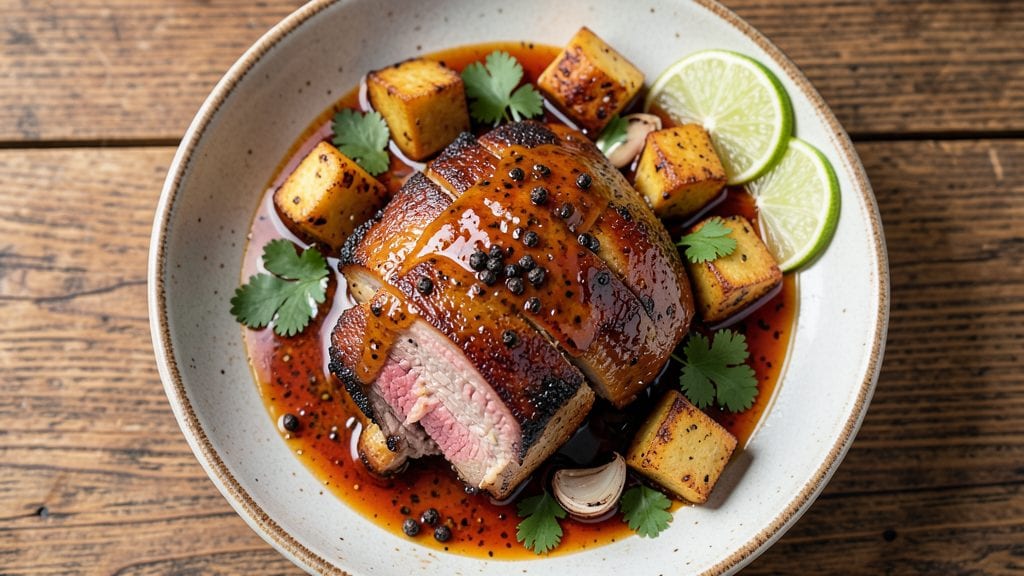
This Puerto Rican Boston butt recipe delivers restaurant-quality lechón with tender, juicy pork infused with mojo marinade and slow-roasted to golden perfection. The secret lies in a 24-hour marinade of garlic, citrus, and sofrito that transforms tough meat into melt-in-your-mouth bites.
I perfected this method after years of testing—every bite carries the bold flavors of Puerto Rico without requiring a special oven or hours of babysitting.
The magic happens through a combination of slow-roasting and basting, which locks in moisture while creating a caramelized crust. Traditional Puerto Rican spices like adobo and oregano form the flavor base, while a touch of annatto oil gives that signature golden hue.
This recipe stays true to island roots while using equipment most home kitchens already have—a Dutch oven or roasting pan works perfectly.
By the end, you'll have perfectly tender pork that practically falls apart with each bite, basted with its own juices and infused with layers of garlic, citrus, and sofrito.
The aroma alone will fill your home with the essence of a Puerto Rican parrillada, making this dish ideal for celebrations or Sunday family meals. Serve with classic sides like arroz con gandules and tostones for the full experience.
What makes this recipe special is its balance of tradition and adaptability—whether you're cooking for a crowd or meal prepping for the week, the techniques here ensure foolproof results.
The mojo marinade can be made ahead, and the slow-cooking process means you can focus on other preparations while the pork does the work. Let's get started on this flavor-packed masterpiece.
Ingredients for puerto rican boston butt
Eight ingredients transform tough pork into melt-in-your-mouth Puerto Rican magic—no shortcuts, just bold flavors.
| Ingredient | Amount | Notes |
|---|---|---|
| Boston Butt Pork Roast 🐖 | 6 lb | Bone-in preferred, skin on |
| Fresh Garlic Cloves 🧄 | 12 cloves | Peeled, smashed lightly |
| Orange Juice 🍊 | 1 ½ cups | Freshly squeezed preferred |
| Lime Juice 🍋 | ½ cup | Freshly squeezed |
| Olive Oil 🫒 | ½ cup | Extra-virgin for richness |
| Adobo Seasoning 🌶️ | 2 tbsp | Traditional Puerto Rican blend |
| Dried Oregano 🍃 | 1 tbsp | Mexican oregano preferred |
| Ground Cumin 🌿 | 1 tbsp | Toasted for depth |
| Annatto Oil 🌶️ | 1 tbsp | For signature golden color |
| Sofrito 🥒 | 1 ½ cups | Homemade or store-bought |
| Bay Leaves 🌿 | 2 whole | Fresh or dried |
| Salt 🧂 | 1 ½ tbsp | Kosher or sea salt |
| Black Peppercorns 🌶️ | 1 tsp | Freshly cracked |
| Fresh Cilantro 🌿 | ¼ cup | Chopped, for garnish |
The Boston butt is non-negotiable here. Look for bone-in, skin-on cuts at your local butcher—it adds flavor and moisture. I usually grab mine from Costco when I'm making a big batch, but any grocery store with a meat counter works. The skin should be golden and slightly firm, not slimy or gray. If you can't find bone-in, skin-on, a regular bone-in roast works too—just ask for the largest cut they have. Fresh garlic and citrus are key too—skip the bottled juices. The sofrito is the soul of the dish; if you can't find it pre-made, blend bell peppers, onions, tomatoes, and cilantro—it keeps for months in the freezer.
No annatto oil? Paprika or turmeric gives a similar golden hue (though not quite the same depth). Short on oregano? Dried thyme at half the amount works in a pinch. The adobo seasoning is crucial—Penzeys or Goya brands are my go-tos, but any blend with adobo, garlic powder, and onion powder will do. For the sofrito, frozen works fine, but homemade tastes better. The mojo marinade can sit for up to 48 hours—the longer it marinates, the more flavorful the pork becomes. I usually make it the night before and let it soak overnight in the fridge.
This pork is a make-ahead dream. The marinade keeps for 5 days in the fridge, and the cooked pork reheats beautifully—just warm it in its juices. For a crowd, cook it once and portion into containers; it reheats perfectly for 4-5 days. The leftovers? Even better the next day—the flavors meld and deepen. Store any extra marinade in a sealed jar for up to 1 week; it's perfect for drizzling over rice or grilled fish later.
Why You'll Love This Recipe
- Foolproof Prep: I swear by this—just rub the pork with garlic, olive oil, and a pinch of salt, then let the oven do the work. No fancy techniques, no last-minute stress.
- Tangy Magic: The orange and lime juices? They’re the secret weapon. That bright, citrusy punch cuts through the richness, leaving you with something dangerously addictive.
- Weeknight Hero: Between us, this is my go-to when I’m too tired to think. Feed a crowd, pack leftovers, or serve it with rice and beans—it’s always a win.
- Budget-Friendly Feast: A whole Boston butt feeds my family for days, and the citrus keeps it from tasting dry. Honestly, I’ve never found a better way to stretch a pork roast.
Step-by-step instructions for slow-cooked mojo-marinated Boston butt
This method transforms tough pork into melt-in-your-mouth perfection with bold Puerto Rican flavors.
Create the Mojo Marinade
In a large bowl, combine the 1.5 cups orange juice, 0.5 cup lime juice, 0.5 cup olive oil, 2 tbsp adobo seasoning, 1 tbsp dried oregano, 1 tbsp ground cumin, 1 tbsp annatto oil, 1.5 cups sofrito, 2 whole bay leaves, 1.5 tbsp salt, and 1 tsp black peppercorns. Whisk vigorously until fully blended—the annatto oil will give it that signature golden hue.
Here's the thing—this marinade needs time to work its magic. Add the 12 cloves smashed fresh garlic to the mixture and stir well. Place the 6 lb Boston Butt Pork Roast in a large resealable plastic bag and pour the marinade over it, ensuring every inch is coated. Seal the bag tightly, submerge it in a large bowl to prevent spills, and refrigerate for at least 12 hours—I usually do this overnight. This long marinating time breaks down the tough fibers and infuses the meat with deep, citrusy flavor.
Prepare the Pork for Cooking
Remove the pork from the marinade (reserve the marinade for later) and pat it dry with paper towels—this step is crucial for developing that beautiful crust. Preheat your oven to 325°F. Place the pork in a roasting pan or Dutch oven, fat-side up, and pour the reserved marinade around it (not over it—this prevents steaming).
I like to add a few extra smashed garlic cloves to the pan and tuck some bay leaves under the pork for extra flavor infusion. Cover the pan tightly with foil and place it in the preheated oven. This low-and-slow approach ensures the meat stays juicy throughout the long cook.
Cook Until Fork-Tender
Cook the pork for about 6 hours, or until the internal temperature reaches 195°F when measured in the thickest part of the meat. Real talk: Your oven might run hot or cold, so start checking with a meat thermometer after 5 hours. The meat should pull apart easily with two forks—this is your signal it's done.
Here's where patience pays off. If the pork starts to dry out before reaching this temperature, add ½ cup water to the pan, cover tightly, and continue cooking. The goal is tender, juicy meat that practically falls apart. Don't rush this step—rushing leads to tough, dry pork.
Rest and Shred
Once the pork reaches 195°F, remove it from the oven and let it rest in the pan for 30 minutes, still covered with foil. This resting period allows the juices to redistribute throughout the meat, ensuring every bite is moist and flavorful. I know it's tempting to dig in immediately, but trust me—this waiting makes all the difference.
After resting, transfer the pork to a cutting board. Remove the twine if you used any, then shred the meat using two forks—work with the grain for the best texture. The pork should shred easily, with no resistance. If it's still slightly tough, return it to the pan with the juices and cook for another 15 minutes before shredding again.
Serve with Garnish
Return the shredded pork to the pan and stir in any accumulated juices. Taste and adjust seasoning if needed—sometimes the marinade needs a little more salt or lime juice to balance the flavors. Spoon the pork onto a serving platter and garnish with the 0.25 cup chopped fresh cilantro. The bright green color contrasts beautifully with the golden pork and adds a fresh finish.
Serve immediately with rice, tostones, or a simple green salad. The pork should be tender, flavorful, and infused with that perfect balance of citrus, garlic, and spices. Leftovers? Store them in the fridge for up to 4 days—they actually taste even better the next day as the flavors meld further.
Pro Tips For Making Puerto Rican Boston Butt
- Trim the Fat First: Cut off the thickest layer of fat from the Boston butt before cooking—it renders unevenly and can make your sauce greasy. I learned this the hard way after dealing with a pan full of floating lard that ruined the citrus balance in the marinade.
- Sear in Batches: Don’t crowd the pan when searing the pork—give it space to brown properly. After burning through three batches of unevenly cooked meat, I now use two rounds of searing: first the flat sides, then the edges. High heat. Seriously, crank it up.
- Reduce the Juices: After roasting, let the orange and lime juices simmer uncovered for 5–7 minutes to thicken slightly. Skipping this step leaves you with a watery sauce instead of that glossy, sticky glaze everyone loves. (Yes, even if you’re impatient like me.)
- Rest Before Slicing: Give the meat a solid 10 minutes under foil after pulling it from the oven—this keeps it from falling apart when you slice. I was skeptical until I tried it, and now I swear by it. No one wants shredded pork that turns to mush at the table.
Serving suggestions for leftovers
Classic Puerto Rican Sides
No Puerto Rican feast is complete without arroz con gandules—the island's iconic rice and pigeon peas dish. Cook 1 cup white rice with 1 can gandules (pigeon peas), 1 sofrito packet, 1 tsp adobo, and 1 cup tomato sauce.
The sofrito adds that essential savory depth. For extra richness, stir in ½ cup recaito (Puerto Rican seasoning). Serve alongside your pork for the ultimate flavor pairing. 🌱
Crispy Tostones
These twice-fried green plantains are a must-have side. Slice 2 large green plantains into ½-inch thick rounds, boil for 5 minutes, then fry in hot oil (375°F) until golden. Smash flat with a glass, then fry again for crispiness.
Season with salt and garlic powder—the contrast with tender pork is pure magic. For extra flair, sprinkle with tajín before serving. 🍌
Simple Green Salad
Balance the richness with a bright ensalada verde. Toss 4 cups chopped romaine with ½ cup shredded cabbage, ¼ cup diced cucumber, and 2 tbsp lime juice. Add 2 tbsp chopped cilantro and a drizzle of olive oil.
The acidity cuts through the pork's fat beautifully. For a Puerto Rican twist, add ¼ cup diced avocado and a pinch of salt. ✨
Mojo Sauce Drizzle
Save some of your leftover mojo marinade for an easy sauce. Simmer ½ cup reserved marinade with 1 tbsp honey for 5 minutes until slightly reduced. Drizzle over shredded pork or use as a dip for tostones.
The citrusy-sweet balance elevates every bite. Store extra sauce in the fridge for up to 5 days. 🍋
Garnishes That Wow
Elevate your platter with fresh cilantro, lime wedges, and tajín. Sprinkle 2 tbsp chopped cilantro over the pork just before serving for a pop of color. Serve with lime wedges on the side so guests can squeeze fresh juice over their portions.
A dusting of tajín adds a smoky, slightly spicy kick that pairs perfectly with the tender meat. 🌶️
Make-Ahead Serving Prep
Set up your serving station efficiently. Prep all sides in advance—cook the rice, fry the tostones, and chop salad ingredients. Store them separately in the fridge until ready to serve. Keep the shredded pork warm in its juices in a slow cooker on low heat.
When guests arrive, simply reheat any cooled components and arrange everything on a large platter. This keeps your meal stress-free and crowd-ready. ⏰
Nutrition facts
Frequently asked questions
Can I use bone-in pork shoulder instead of Boston butt?
Yes! Bone-in pork shoulder works beautifully—just increase cooking time by 30-45 minutes to account for the extra mass. The bone adds rich flavor, but remove it before shredding if preferred. For best results, trim excess fat to ¼-inch thickness to prevent flare-ups during roasting.
How do I make the marinade ahead of time?
The mojo marinade keeps for 5 days refrigerated or 3 months frozen. Store it in an airtight container, and thaw overnight in the fridge before using. For extra depth, add 1 extra garlic clove when reheating. The longer it marinates (up to 48 hours), the more tender and flavorful the pork becomes.
What if my oven isn't consistent with temperature?
Use a meat thermometer to monitor the internal temperature—aim for 195°F in the thickest part. If your oven runs hot, reduce temperature to 300°F and add 1 hour to cooking time. For cold ovens, increase to 350°F but check frequently after 4 hours. The key is patience: slow cooking prevents drying.
Can I grill this instead of oven-roasting?
Preheat grill to medium-low (275°F) and cook the pork, covered, for 5-6 hours, turning occasionally. Baste with reserved marinade every 30 minutes. Finish over direct heat for 5 minutes to caramelize the crust. Use a meat thermometer to avoid overcooking—grilling can dry out pork faster than oven methods.
Why does my pork turn out dry?
Overcooking or skipping the rest period are the most common causes. Always let pork rest 30 minutes before shredding, and never exceed 200°F internal temperature. For extra moisture, add ½ cup apple juice or broth to the pan during cooking. Bone-in cuts stay juicier longer—consider using a pork butt roast if dryness is an issue.