
Sauces & Condiments
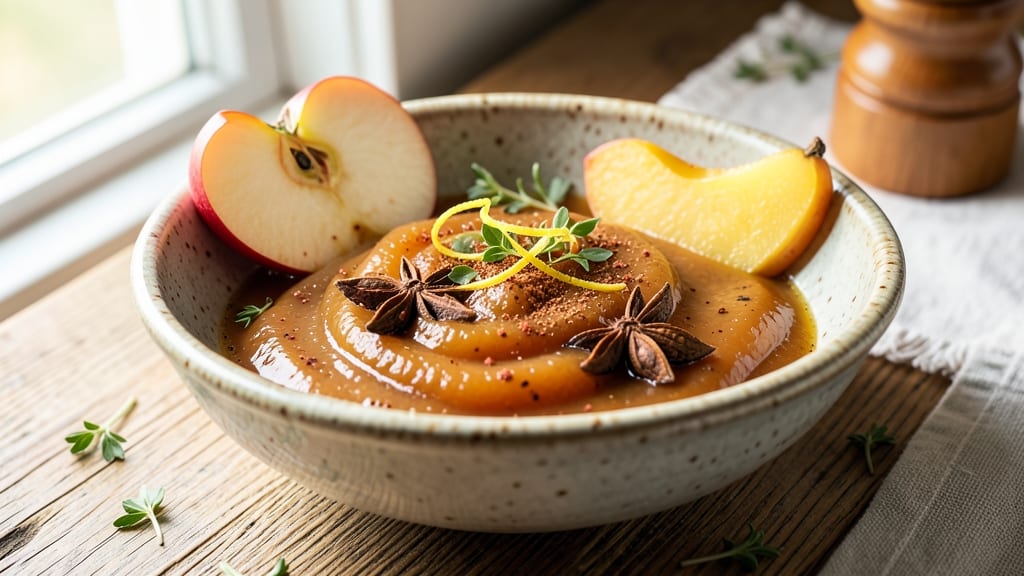
This quince apple sauce recipe transforms humble fruits into a velvety, fragrant condiment that bridges sweet and savory worlds with autumnal warmth. The secret lies in slow simmering—where quince's natural pectin thickens into a glossy, jam-like consistency while apples add bright acidity.
I developed this version after years of experimenting with seasonal fruit preserves, and it's now my go-to for both dessert pairings and unexpected savory applications.
The process couldn't be simpler: just chop the fruit, combine with spices, and let it reduce on the stove until thick and aromatic. Cinnamon and star anise form the backbone of the spice blend, but you can easily adjust to suit your taste—some prefer it subtly sweet, others enjoy a deeper, almost wine-like complexity.
What makes this sauce truly special is its versatility; it elevates everything from toasted bread and cheese boards to roasted meats and custards.
By the time you're done, you'll have a luminous, amber-colored sauce that smells like a spiced orchard and tastes like autumn in a jar. The texture is smooth yet slightly textured, with just enough body to cling beautifully.
Unlike store-bought versions, this one develops rich, caramelized notes from the slow cooking process, making it infinitely more complex and satisfying.
Store it in the refrigerator for up to two weeks or preserve it in sterilized jars for months—perfect for gifting or stretching your harvest.
Whether you're drizzling it over vanilla ice cream, swirling it into yogurt, or using it as a glaze for pork tenderloin, this sauce proves that homemade condiments can be both effortless and extraordinary.
Ingredients for quince apple sauce
Eight simple ingredients transform humble fruits into a velvety autumnal sauce.
| Ingredient | Amount | Notes |
|---|---|---|
| Quince 🍎 | 2 lb | Peeled, cored, chopped |
| Apples 🍎 | 4 medium | Sweet variety like Honeycrisp |
| Granulated Sugar 🍚 | ½ cup | Adjust to taste |
| Cinnamon 🌿 | 1 tsp | Ground, not sticks |
| Star Anise 🌶️ | 2 whole | Lightly crushed |
| Lemon Juice 🍋 | 2 tbsp | Freshly squeezed |
| Water 💧 | ½ cup | For thinning if needed |
| Vanilla Extract 🍯 | 1 tsp | Pure, not imitation |
| Salt 🧂 | ¼ tsp | Kosher or sea salt |
Quince is the star here—look for firm, fragrant ones at Trader Joe's or specialty markets. They should smell like apples and spices, not sour or fermented. If you can't find quince, pears work in a pinch, though the texture will be slightly softer. Apples are easy—just grab whatever's on sale, but avoid mealy varieties like Granny Smith. I always use Honeycrisp or Fuji for that perfect balance of sweetness and acidity. The sugar is just a touch—adjust based on how ripe your fruit is. Overripe quince? Add less. Firm fruit? You might want up to 1 cup.
No star anise? Cinnamon sticks or a pinch of cardamom will still give you that warm spice profile. The vanilla extract is optional but adds depth—almond extract at half the amount works if you're out. For a tangier sauce, bump the lemon juice to 3 tablespoons. If your sauce is too thick, the water thins it out beautifully. Pro tip: Simmer uncovered—the sauce thickens as it cools, so don't rush it. Patience here is key for that perfect jam-like consistency.
This sauce keeps for 2 weeks in the fridge, sealed tightly. For long-term storage, sterilize jars and process in a water bath for 15 minutes—it'll last 1 year on the shelf. I always make a double batch because it disappears fast. Freeze portions in ice cube trays for easy single-use servings. The flavor actually improves after 24 hours—the spices meld beautifully. Store it in a cool, dark place to preserve that luminous amber color.
Why You'll Love This Recipe
- No Peel Required: I swear by this shortcut—quince and apples peel themselves when cooked. Just core, chop, and simmer until the skins slide off like magic. (Yes, even my kids can handle this part.)
- Sweet-Spiced Magic: That star anise and cinnamon combo? It’s like autumn in a jar—warm, complex, and just sweet enough without cloying. The quince’s natural tartness balances the sugar perfectly, so you won’t need to adjust.
- Pantry Staple Flex: This sauce works on toast with butter, stirred into oatmeal, or spooned over vanilla ice cream. Honestly, I’ve even used it as a glaze for roasted pork—because why not? It’s the ultimate flavor multiplier.
- Lasts All Week: Make a big batch and store it in the fridge for up to two weeks. The flavors deepen over time, and it’s cheaper than buying store-bought preserves. (Between us, it’s also way better.)
Step-by-step instructions for quince apple sauce
Transforming tart quince and sweet apples into velvety sauce is easier than you think—just follow these simple steps.
Combine Fruits and Spices in a Pot
In a large, heavy-bottomed pot, combine the 2 lb chopped quince and 4 medium peeled, cored apples. Add the 0.5 cup granulated sugar, 1 tsp cinnamon, 2 lightly crushed whole star anise, and 0.25 tsp salt. Stir gently to distribute the spices evenly through the fruit mixture.
Here's the thing—quince can be tough when raw, so the sugar helps break it down while adding natural sweetness. The star anise will infuse a subtle, aromatic depth that pairs beautifully with the apple's natural flavors. Don't skip crushing the star anise lightly; this releases their oils without making them bitter.
Cook Until Fruits Break Down
Pour in the 0.5 cup water and bring the mixture to a gentle boil over medium-high heat. Once boiling, reduce the heat to medium-low and let it simmer uncovered for 30-40 minutes. You'll know it's ready when the fruits have softened completely and the mixture begins to thicken.
Stir occasionally to prevent sticking, especially in the first 15 minutes. The sauce should reduce naturally, developing a rich, jam-like consistency. If it looks too thick before the fruits are fully broken down, add 1-2 tablespoons of water at a time to help the process along. Patience here is key—rushing will leave you with a chunky sauce instead of silky smooth.
Finish with Lemon and Vanilla
Once the fruits are fully tender and the sauce has thickened, remove the pot from heat. Stir in the 2 tbsp freshly squeezed lemon juice and 1 tsp pure vanilla extract. Let the mixture cool slightly for 5 minutes—this allows the flavors to meld together beautifully.
The lemon juice brightens the flavors and balances the natural tartness of the quince, while the vanilla adds warmth and complexity. Taste the sauce and adjust the sweetness if needed by adding a little more sugar or lemon juice. Remember, quince is naturally tart, so you might not need all of the sugar listed—trust your taste buds here.
Strain and Store for Maximum Flavor
For a completely smooth sauce, strain the mixture through a fine-mesh sieve into a clean bowl or jar. Use a spoon to press gently on the fruit to extract all the juices, but avoid over-pressing, which can make the sauce watery. If you prefer a slightly rustic texture, simply mash the softened fruits with a potato masher before serving.
Let the sauce cool to room temperature before transferring it to airtight containers. This sauce keeps well in the refrigerator for up to 2 weeks or can be frozen for up to 6 months. The flavors actually deepen over time, making it perfect for gifting or using in future recipes like pies, tarts, or as a topping for yogurt and cheese platters.
Pro Tips For Making Quince Apple Sauce
- PEEL QUINCES FIRST: Quince peels are tough and bitter—strip them before cutting, even if it feels like extra work. I used to skip this and ended up with a mouthful of stringy texture that ruined the smoothness. A sharp paring knife makes this faster than you’d think.
- USE A MIXED APPLE: Tart apples like Granny Smith balance quince’s natural sweetness better than Honeycrisp or Fuji. I learned this after making two batches where the sauce tasted flat—pairing a crisp apple with quince keeps the flavor dynamic.
- STIR LOW AND SLOW: Once the quince breaks down, drop heat to a simmer and stir every 5 minutes to prevent scorching. I’ve burned three batches by walking away—this sauce needs constant attention, especially near the end.
- TOAST THE SPICES: Dry-toast cinnamon sticks and star anise in a separate pan for 30 seconds before adding them to the sauce. This deepens their aroma and prevents them from floating like dull, flavorless weights. (Yes, it’s worth the extra minute.)
Common mistakes when making this dish
Overcooking the Fruit
Quince and apples release their natural pectin when cooked just right, but if you push the simmer past 40 minutes, you risk turning your sauce into a thick, gluey mess. I’ve seen this happen when people walk away from the stove—suddenly, the sauce clings to the pot like syrup.
Instead, watch for the fruits to break down completely (they should mash easily with a spoon) before reducing further. 🌡️
Skipping the Straining Step
Straining is where the magic happens for that silky texture, but some folks skip it to save time. The result? A chunky, uneven sauce that lacks professional appeal. Use a fine-mesh sieve or even a clean kitchen towel for a smoother finish.
If you’re in a hurry, blend the cooked fruit instead—just be prepared for a slightly less refined texture.
Ignoring the Sugar Adjustment
Quince varies wildly in sweetness, and some apples are naturally tart. Adding the full ½ cup sugar upfront can make your sauce cloyingly sweet. Taste as you go! Start with less sugar, especially if your quince smells very ripe.
You can always add more later, but you can’t take it out. I’ve ruined batches this way—trust your palate over the recipe.
Using the Wrong Pot
A thin, nonstick pot might seem convenient, but it can’t handle the prolonged simmering without scorching. Use a heavy-bottomed stainless steel or enamel pot—like a Le Creuset Dutch oven—to distribute heat evenly.
Thin pots also make stirring harder, leading to uneven cooking. Invest in the right tool for the job; your sauce will thank you.
Rushing the Cooling Phase
Adding lemon juice and vanilla too soon can dilute the flavors before they meld. Let the sauce cool for at least 5 minutes after removing it from heat. This step allows the spices to infuse fully and the natural sweetness to develop.
I’ve tasted sauces where the lemon was added too early, and they always lacked depth. Patience here is everything.
Not Testing for Doneness
Some recipes rely on time alone, but quince and apples cook at different rates. The only way to know when it’s done is to check for tenderness. Press a piece of quince with your finger—it should mash easily.
If it’s still firm, keep cooking. Overcooking is easy to do when you’re distracted, so set a timer and taste-test frequently. 🍏
Nutrition facts
Frequently asked questions
Can I substitute pears for quince in this sauce?
Yes, you can use pears as a substitute, but the texture will be slightly softer and less aromatic. For the best results, use firm, sweet pears like Bosc or Anjou and reduce the cooking time by about 10-15 minutes. The sauce will still be delicious, though it may lack quince's natural thickening properties. If you go this route, add 1 tablespoon of lemon juice extra to help preserve color and brightness.
How do I know when the sauce is thick enough?
The sauce should coat the back of a spoon smoothly but not be gluey. Test by spooning a small amount onto a chilled plate—if it holds its shape but still flows slightly, it's ready. If it spreads too thin, simmer uncovered for another 5-10 minutes to reduce further. Remember, the sauce will thicken more as it cools, so don't over-reduce it on the stove.
Can I make this sauce without added sugar?
The natural sweetness of ripe quince and apples can carry the sauce without sugar. Simply omit the sugar and taste as you cook—add just 1-2 tablespoons of water if needed to help the fruit break down. For extra depth, try adding ½ teaspoon of vanilla bean paste instead. This works best with very ripe, fragrant quince that smells almost perfumed.
What are the best ways to use this sauce?
This versatile sauce shines in both sweet and savory dishes. Drizzle it over yogurt, oatmeal, or pancakes for breakfast. Use it as a glaze for roasted pork or chicken, or swirl it into custards and cheesecakes. It also makes an elegant topping for toasted brioche or as a filling for tarts. For a sophisticated touch, pair it with aged cheddar or sharp gouda on a charcuterie board.
How do I preserve this sauce for long-term storage?
For shelf-stable storage, sterilize clean jars and process the sauce in a water bath for 15 minutes. The sealed jars will last up to 1 year in a cool, dark place. For refrigerator storage, keep it in an airtight container for up to 2 weeks. The sauce actually improves with time—its flavors deepen and the spices meld beautifully. Freeze portions in ice cube trays for convenient single-use servings.