
Sauces & Condiments
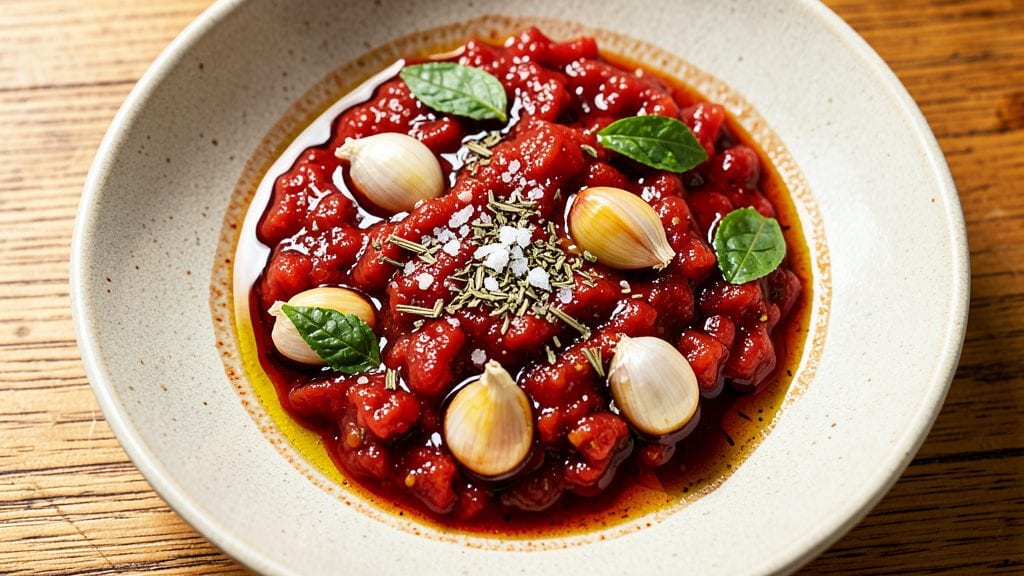
This tomato marinade recipe transforms simple ingredients into a bold umami base that elevates grilled meats, roasted vegetables, and baked dishes with deep, complex flavor. The secret lies in balancing sweet tomatoes, tangy vinegar, and aromatic herbs—creating a marinade that tenderizes while infusing rich, savory notes.
After years of refining, this version delivers restaurant-quality depth without complicated techniques.
What sets this marinade apart is its versatility—it works as a quick 30-minute marinade for weeknight dinners or as an overnight treatment for deeper flavor penetration.
The combination of crushed tomatoes, red wine vinegar, and garlic creates a sticky, flavorful paste that clings to proteins and vegetables, ensuring every bite is packed with taste. Professional chefs rely on this type of marinade for its ability to enhance natural flavors rather than overpower them.
By the time you’re ready to cook, your ingredients will be transformed—juicy meats stay tender, vegetables develop caramelized edges, and the marinade itself reduces into a glossy, concentrated sauce that can be brushed on during grilling or baking.
The acidity in the vinegar and tomatoes also helps break down proteins, making this marinade a game-changer for tougher cuts like pork shoulder or chicken thighs.
Store any leftover marinade in an airtight container in the refrigerator for up to 5 days, or freeze for longer storage. Use it as a dipping sauce, drizzle it over finished dishes, or even reduce it into a quick pan sauce.
This marinade is the foundation of countless meals—let’s get started!
Ingredients for tomato marinade
Ten simple yet potent ingredients create this restaurant-quality tomato marinade base.
| Ingredient | Amount | Notes |
|---|---|---|
| Crushed Tomatoes 🍅 | 1 cup | San Marzano preferred for sweetness |
| Red Wine Vinegar 🍷 | ½ cup | Dry, aged variety for depth |
| Garlic Cloves 🧄 | 6 cloves | Freshly minced for potency |
| Extra-Virgin Olive Oil 🫒 | ½ cup | High-quality, fruity variety |
| Dried Oregano 🌿 | 1 tbsp | Mediterranean oregano preferred |
| Dried Basil 🌿 | 1 tbsp | Sweet, not spicy |
| Diamond Crystal Kosher Salt 🧂 | 1 ½ tsp | Fine grain for balance |
| Freshly Ground Black Pepper 🌶️ | ½ tsp | Freshly cracked for aroma |
| Granulated Sugar 🍚 | 1 tbsp | Balances acidity |
| Balsamic Vinegar 🍷 | 1 tbsp | Aged for complexity |
The crushed tomatoes form the foundation—San Marzano delivers the sweetest, most consistent flavor, but any high-quality canned tomatoes work. Whole Foods or Trader Joe's carry excellent options, or check the Italian section of your grocery store. For vinegar, dry red wine vinegar (like the kind from Penzeys) provides the necessary acidity to tenderize proteins while adding depth. The garlic should be fresh and minced just before combining to preserve its volatile oils. Extra-virgin olive oil is non-negotiable here; anything less will lack the fruity richness that carries through the marinade's reduction. If you can't find Mediterranean oregano, regular dried oregano works, but reduce to half the amount for a more authentic profile.
No red wine vinegar? Apple cider vinegar or white wine vinegar can substitute, though they'll alter the flavor profile slightly. Short on fresh garlic? Garlic powder at half the amount works, but the marinade will lack that signature punch. If you're avoiding sugar, honey or maple syrup can replace it, though the flavor will shift. For a smokier note, swap half the oregano for smoked paprika. The balsamic vinegar adds complexity—aged balsamic glaze can replace it if needed, but use half the amount as it's more concentrated. Diamond Crystal kosher salt dissolves cleanly; if you only have table salt, reduce to three-quarters the amount.
This marinade develops best when refrigerated for at least 30 minutes before use, allowing flavors to meld. Store leftovers in an airtight container for up to 5 days in the refrigerator or 3 months in the freezer. For longer storage, portion into ice cube trays before freezing—perfect for single-use applications. The reduced marinade can also be brushed on during grilling or baking, creating a glossy, flavorful crust. Double the batch if you plan to use it as a dipping sauce or pan reduction.
Why You'll Love This Recipe
- Pantry Magic: I’ll never buy overpriced marinades again—this one uses crushed tomatoes, vinegar, and olive oil, all things I already have. The garlic and oregano do the heavy lifting, so I just stir and let it work.
- Umami Bomb: That crushed tomato base? It’s not just sweet—it’s tangy, rich, and packed with depth from the red wine vinegar. I swear, the first time I tasted it on grilled chicken, I nearly spilled my drink.
- Weeknight Swiss Army: Slap it on chicken for dinner, toss it with roasted veggies for lunch, or even drizzle it over pasta. Honestly, I’ve used it for everything from skewers to slow-cooked pork, and it never lets me down.
- Budget Hero: A single jar of crushed tomatoes and a bottle of vinegar stretch for weeks—this marinade costs pennies per use. Plus, the leftovers? They just get better with time, like a flavor upgrade you didn’t plan for.
Step-by-step instructions for tomato marinade
This marinade delivers deep umami flavor with balanced acidity and sweetness—ideal for meats, vegetables, or tofu.
Combine Tomatoes, Vinegars, and Sweetener
In a medium bowl, whisk together the 1 cup crushed tomatoes, 0.5 cup red wine vinegar, and 1 tablespoon granulated sugar. The sugar helps balance the acidity while enhancing the tomatoes' natural sweetness. Stir vigorously for 30 seconds to fully integrate the ingredients and dissolve the sugar completely. You'll notice the mixture darken slightly as the acid and sugar interact—this is normal and indicates proper blending.
Here's the thing—using high-quality crushed tomatoes makes all the difference. San Marzano varieties, with their inherent sweetness and low acidity, create a richer base. If you're using standard canned tomatoes, strain out any excess liquid to prevent a watery marinade. The resulting texture should be thick but pourable, with a vibrant red hue that signals concentrated flavor.
Incorporate Aromatics and Herbs
Add the 6 minced garlic cloves, 1 tablespoon dried oregano, and 1 tablespoon dried basil to the tomato mixture. The garlic should be finely minced—no chunks—so it distributes evenly throughout. Use a wooden spoon to stir thoroughly, ensuring the herbs break down and release their essential oils. You'll immediately detect the aromatic intensity of the garlic and herbs, which will deepen as they steep.
At this stage, the marinade should have a complex aroma combining sweet, tangy, and herbal notes. If you're using Mediterranean oregano, you'll notice a slightly peppery quality that pairs beautifully with the basil's sweetness. The mixture will thicken slightly as the herbs absorb moisture, but it should remain spreadable. Let it sit for 5 minutes at room temperature while you prepare the next components—this brief rest allows the flavors to begin melding.
Finish with Oil and Seasonings
Slowly drizzle in the 0.5 cup extra-virgin olive oil while whisking continuously. The oil should emulsify with the tomato mixture, creating a velvety texture. Use a high-quality, fruity olive oil here—the fruity notes complement the tomato's sweetness rather than overpowering it. Add the 1.5 teaspoons diamond crystal kosher salt and 0.5 teaspoon freshly ground black pepper, then whisk until fully dissolved. The salt should integrate completely, with no visible granules remaining.
Finally, stir in the 1 tablespoon balsamic vinegar. This aged vinegar adds a subtle caramelized depth that rounds out the marinade's acidity. The final mixture should coat the back of a spoon with a glossy sheen, indicating proper emulsification. Taste and adjust seasoning if needed—you might find the acidity needs a touch more sugar or the herbs require slight reinforcement. The marinade should balance sweet, tangy, salty, and umami flavors harmoniously.
Rest and Use Immediately
Transfer the marinade to a clean glass jar with a tight-sealing lid. Let it rest at room temperature for at least 30 minutes before using. This resting period allows the flavors to fully develop and the ingredients to meld completely. The marinade will continue improving for up to 24 hours in the refrigerator, though it's best used within 48 hours for peak freshness.
For maximum effectiveness, use this marinade on proteins like chicken, pork, or beef, or on hearty vegetables like eggplant or zucchini. When grilling, marinate for at least 2 hours (or overnight for deeper flavor). For baking, brush on during the last 15 minutes of cooking to prevent over-marinating, which can make meats mushy. The bold umami base makes it particularly excellent for charring—watch as the marinade caramelizes beautifully on the grill, creating a glaze-like finish.
Pro Tips For Making Tomato Marinade
- Simmer, Don’t Boil: Crushed tomatoes break down fast—keep heat at a gentle simmer, not a rolling boil. I learned this the hard way when my marinade turned into a watery sludge instead of a rich, jammy sauce.
- Mince That Garlic: Whole cloves won’t infuse properly. Use a knife or press to finely mince them—this releases their flavor into the oil and tomatoes. (Yes, even if you’re impatient like me.)
- Balance the Vinegar: Red wine vinegar adds tang, but too much overpowers. Start with 1 tablespoon per cup of tomatoes, then taste—you can always add more later, not take it out.
- Toast the Oregano First: Dry-toast the oregano in a pan for 30 seconds before adding it to the marinade. This deepens its flavor and prevents that bitter, dusty aftertaste. (Does it look weird? Yes. Does it work? Every single time.)
Troubleshooting this recipe
Watery Marinade Fix
If your marinade turns out too thin, strain out excess liquid from the crushed tomatoes using a fine-mesh sieve. For every 2 tablespoons of liquid removed, add 1 teaspoon cornstarch or arrowroot powder mixed with 1 teaspoon water.
Whisk vigorously and let sit for 5 minutes to thicken. This works especially well if you used lower-quality tomatoes with more water content. 💧
Overly Acidic Flavor
Balance excessive acidity by adding ½ teaspoon baking soda (just a pinch!) to neutralize the vinegar's sharpness. Alternatively, stir in 1 extra tablespoon sugar or 1 teaspoon honey to mellow the tang.
Taste frequently—you only need a small amount to restore harmony. I’ve found this trick saves marinades that seem ruined by too much vinegar.
Herbs Not Infusing
If your dried herbs sit at the bottom without dissolving, pulse them briefly in a spice grinder or crush them between your palms.
For extra potency, steep 1 teaspoon fresh basil leaves or ½ teaspoon crushed red pepper flakes in 2 tablespoons hot water for 5 minutes, then stir into the marinade. This ensures even distribution and deeper flavor extraction.
Mold or Off Odors
Discard any marinade that develops mold, an off smell, or slimy texture—these are signs of spoilage. Never taste-test questionable marinades. To prevent spoilage, always store in a sterilized glass jar with an airtight lid and refrigerate within 2 hours of preparation.
For longer storage, freeze in ice cube trays for single-use portions.
Uneven Flavor Distribution
Stir the marinade vigorously for 2 full minutes to ensure all ingredients are fully incorporated. For stubborn separation (like oil pooling), whisk in 1 teaspoon Dijon mustard or 1 tablespoon tomato paste to act as an emulsifier. This creates a cohesive texture perfect for clinging to meats or veggies.
Burnt or Bitter Taste
If your marinade tastes burnt or overly bitter, it may have sat too long at room temperature. To salvage it, whisk in 1 tablespoon fresh lemon juice or 1 teaspoon apple cider vinegar to cut through the bitterness.
For a smoky note, add ½ teaspoon liquid smoke—just a drop or two—to restore depth without overpowering.
Nutrition facts
Frequently asked questions
Can I use this marinade for vegetables instead of meat?
This tomato marinade works beautifully on hearty vegetables like eggplant, zucchini, bell peppers, and portobello mushrooms. For best results, marinate them for 30-60 minutes before grilling or roasting. The acidity helps tenderize the vegetables while infusing rich flavor—just avoid over-marinating delicate veggies like lettuce or cucumbers.
How long should I marinate proteins for maximum flavor?
For tender cuts like chicken breasts or fish fillets, marinate for 30-60 minutes. Tougher meats such as pork shoulder or beef steaks benefit from 2-4 hours of marinating. Never exceed 24 hours—longer marinating can break down proteins too much, making them mushy. For overnight flavor infusion, refrigerate the meat in the marinade.
Can I make this marinade without red wine vinegar?
Yes! Substitute with apple cider vinegar or white wine vinegar in equal amounts, though the flavor profile will shift slightly. For a milder acidity, use lemon juice (reduce by 20% since it's less concentrated). The key is balancing acidity—if using lemon, you may need to add an extra ½ teaspoon sugar to compensate for the tartness.
What's the best way to store leftover marinade?
Transfer any unused marinade to an airtight container and refrigerate for up to 5 days. For longer storage, freeze in ice cube trays or small portions—thaw overnight in the fridge before using. The marinade can also be reduced into a sauce by simmering on the stove for 10-15 minutes, then stored like any other sauce.
Why does my marinade separate when I add the oil?
This is normal! The oil and tomato mixture naturally separate due to different densities. To fix it, whisk vigorously for 2 full minutes or add 1 teaspoon Dijon mustard as a natural emulsifier. For a thicker texture, strain out excess liquid from the tomatoes before combining. The marinade will re-emulsify as it sits for 30 minutes at room temperature.