
Sauces & Condiments
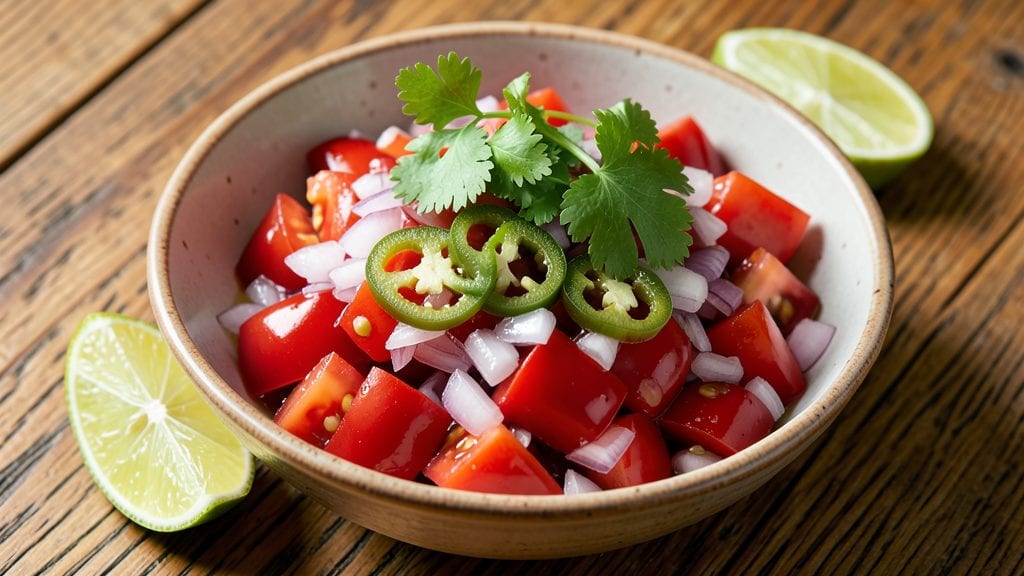
This traditional pico de gallo recipe captures the vibrant essence of Mexican street food with its perfect balance of bright tomatoes, crisp onions, and fresh cilantro.
Standing on a step stool in my grandmother’s kitchen in Sicily, I learned how fresh ingredients transform simple dishes into something extraordinary—this is that recipe. The key lies in using ripe, firm tomatoes and letting the flavors meld for at least 30 minutes before serving.
The traditional method calls for chopping ingredients by hand—no food processor here—to preserve texture and release natural juices. You’ll need about 3 cups of diced tomatoes, ½ cup finely chopped red onion, 1 jalapeño (seeds removed for mild heat), ½ cup chopped cilantro, and the juice of 2 limes.
A pinch of salt enhances the flavors without overpowering them, while a splash of vinegar adds tangy depth.
What you’ll end up with is a salsa that’s bright, zesty, and perfectly textured—crisp vegetables with just enough juice to coat your spoon.
This isn’t the watery salsa you might find elsewhere; it’s a restaurant-quality condiment that pairs beautifully with tacos, grilled meats, or even as a topping for avocado toast.
The lime juice keeps it fresh, and the cilantro adds an aromatic freshness that makes every bite feel like a taste of Mexico.
For best results, store in an airtight container in the refrigerator for up to 5 days, though it’s often gone in hours. If you prefer a smoky twist, try roasting the tomatoes and jalapeños before chopping—they’ll add a subtle depth that still honors the traditional method.
Let’s get started on this bright, zesty salsa that’s as versatile as it is delicious.
Ingredients for traditional pico de gallo
Fresh tomatoes, crisp onions, and zesty lime juice—this is your ticket to authentic Mexican street food flavor.
| Ingredient | Amount | Notes |
|---|---|---|
| Ripe Roma Tomatoes 🍅 | 3 cups | Diced, seeds removed |
| Red Onion 🧅 | ½ cup | Finely chopped, white part removed |
| Jalapeño Pepper 🌶️ | 1 whole | Seeds and ribs removed |
| Fresh Cilantro 🌿 | ½ cup | Chopped, stems removed |
| Lime Juice 🍋 | ¼ cup | Freshly squeezed, about 2 limes |
| White Vinegar 🍶 | 1 tbsp | Or apple cider vinegar |
| Kosher Salt 🧂 | ½ tsp | Adjust to taste |
| Extra-Virgin Olive Oil 🫒 | 1 tbsp | For drizzling, optional |
| Garlic Clove 🧄 | 1 whole | Minced, optional for depth |
The tomatoes are the star—Roma tomatoes are perfect because they’re meaty and less watery, but any ripe tomato works in a pinch. Hit your local Latin market for the best selection, but the regular grocery store variety is fine if it’s firm and vibrant. The jalapeño should be bright green, not shriveled. For extra heat, leave the seeds in, but for a milder salsa, remove them completely. Cilantro is non-negotiable here—fresh, not dried. If you’re using cilantro from a bunch, strip the leaves and discard the tough stems. Trader Joe’s and Whole Foods usually have the freshest bunches, but any grocery store should carry it.
No Roma tomatoes? Cherry tomatoes. Short on lime juice? Lemon juice at a 1:1 ratio gets you close, but lime’s the real MVP here. Vinegar can be swapped for lemon juice at half the amount if you’re out, but it won’t have the same tang. The garlic is optional but adds a subtle depth that ties everything together—don’t skip it if you’ve got it. For a smoky twist, char the tomatoes and jalapeño in a dry skillet before chopping. It’s a game-changer, trust me.
This salsa is best made fresh but keeps beautifully in the fridge for 5 days. Store it in an airtight container with a layer of olive oil on top to preserve the color and freshness. If you’re prepping ahead, make it a day in advance—the flavors meld even better. Serve it with tortilla chips, tacos, or grilled meats. It’s gone in hours, so double the batch if you’re hosting. Freezes for 3 months if you’re really planning ahead, but honestly, it’s better fresh.
Why You'll Love This Recipe
- No Knife Skills Needed: I swear, you don’t need to be a chef to make this. Those Roma tomatoes? They’re practically falling apart when you squeeze them—no dicing required. Same with the onion: rough chop it, and the acid from the lime does the rest.
- Taste That Stops You Mid-Bite: That bright lime juice cutting through the sweet tomatoes? Chef’s kiss. The jalapeño adds just enough heat to wake up your taste buds without overpowering, and the cilantro? It’s the fresh little hug this salsa deserves.
- Works Everywhere, Always: Slather it on tacos, mix it into grilled fish, or just eat it straight with chips. Honestly, I’ve used it as a marinade for chicken and in pasta salads—it’s that adaptable. Even my picky teenage nephew asks for it now.
- Lasts All Week (Seriously): Between us, this stuff tastes better the next day. The flavors meld, the tomatoes soften just enough, and it keeps in the fridge for five days. Plus, you’re using cheap, fresh ingredients that won’t break the bank. Win-win.
Step-by-step instructions for traditional pico de gallo
Here's how to make authentic pico de gallo with vibrant flavors and the perfect balance of freshness.
Prepare the Vegetable Base
Start by cutting the 3 cups of ripe Roma tomatoes into small, even dice—about ¼-inch pieces. Remove the seeds first to prevent excess moisture, which keeps your salsa from becoming watery. I like to use a sharp chef's knife for this step, working in batches if needed. The tomatoes should be juicy but not pulpy, giving your pico de gallo that classic chunky texture.
Next, finely chop the 0.5 cup of red onion, being careful to remove the white parts first—they can add bitterness. Aim for tiny dice so the onion flavor blends seamlessly without overpowering the other ingredients. For the 1 whole jalapeño pepper, cut it in half and remove both seeds and ribs to control the heat level. Finely mince the jalapeño so it distributes evenly throughout the mixture.
Combine and Season the Mixture
In a large mixing bowl, combine the diced tomatoes, chopped red onion, and minced jalapeño pepper. Add the 0.5 cup of chopped fresh cilantro, giving it a gentle stir to distribute evenly. This is where the magic happens—the cilantro's bright, citrusy notes will lift the flavors of the tomatoes and onion.
Now it's time to add the acidity. Pour in the 0.25 cup of freshly squeezed lime juice and the 1 tablespoon of white vinegar. The vinegar adds a subtle tang that brightens the entire dish. Sprinkle in the 0.5 teaspoon of kosher salt and gently fold everything together. Taste the mixture—it should be vibrant, tangy, and just slightly spicy. If you want more heat, add a pinch more salt or a tiny bit of minced jalapeño.
Finish with Garlic and Olive Oil
For depth of flavor, add the minced 1 whole garlic clove to the mixture. Let it sit for 5 minutes before mixing again—this allows the garlic to infuse its aromatic qualities without becoming overpowering. Then, drizzle in the 1 tablespoon of extra-virgin olive oil. This step is optional but adds a lovely richness that balances the bright acidity of the lime and vinegar.
Give the pico de gallo one final taste and adjust the seasoning if needed. The texture should be fresh and slightly chunky, with a perfect balance of sweetness from the tomatoes, crunch from the onion, and a bright, zesty finish. Let it sit at room temperature for 10 minutes before serving—this allows the flavors to meld beautifully. Serve immediately with warm tortilla chips or use it as a topping for tacos, grilled meats, or fish.
Pro Tips For Making Traditional Pico De Gallo
- Tear the Onion: DESCRIPTION: Use a sharp knife and cut the red onion into a fine, even dice—about 1/4-inch pieces—then let it sit for 5 minutes before mixing. That waiting time softens the bite and keeps it from overpowering the tomatoes later. (Yes, even if you're impatient like me.)
- Salt the Tomatoes First: DESCRIPTION: Toss the chopped Roma tomatoes with 1/2 teaspoon of salt immediately after dicing, then let them sit for 10 minutes. This draws out excess water, so your pico doesn’t turn into a soggy mess when you add the lime juice. I learned this the hard way—no one wants a watery salsa.
- Seed the Jalapeño Right: DESCRIPTION: Cut the jalapeño in half lengthwise, scrape out the seeds and membranes with a spoon, then chop it with the skin on. The skin adds texture and a subtle bitterness that balances the heat—skipping it makes the pepper taste one-note. (And no, don’t just slice it thin; chop it small.)
- Pulse the Cilantro: DESCRIPTION: Roughly chop the cilantro stems and leaves together, then give it a quick pulse in a food processor with the tomatoes, onion, and jalapeño—just 2-3 seconds. This distributes the flavor evenly without turning it into pesto. I was skeptical until I tried it; now I won’t go back.
Common mistakes when making perfect results
Over-Chopping Tomatoes
I’ve made this mistake more times than I’d admit—turning those juicy tomatoes into a mushy purée instead of chunky, fresh bites. The secret is to cut them into ¼-inch dice and leave the seeds out. If you’re using a knife, work quickly and avoid pressing down too hard.
A sharp chef’s knife makes this easier, but if you’re in a hurry, a mandoline slicer can help keep those pieces uniform. The goal is texture—too much chopping means you’ve lost the essence of traditional pico de gallo. 🌶️
Skipping the Rest Time
Fresh pico de gallo needs at least 10 minutes to let the flavors meld before serving. I’ve rushed it before, only to find the lime and vinegar flavors too sharp, or the onion too harsh. The resting time allows the acidity to soften slightly and the garlic to infuse properly.
If you’re short on time, make it a day ahead—the flavors will be even better. Trust me, the wait is worth it.
Using Unripe Tomatoes
Nothing kills pico de gallo faster than unripe tomatoes—they’re watery, bland, and lack the sweetness that balances the acidity. Always pick tomatoes that are firm but yield slightly to gentle pressure. Roma tomatoes are my go-to because they’re meaty and less watery, but any ripe tomato works.
If you’re unsure, cut one open—it should be vibrant red with no green spots. Using unripe tomatoes is a surefire way to end up with a sad, watery salsa.
Adding Too Much Lime Juice
Lime juice is the soul of pico de gallo, but too much can make it taste bitter or overly sour. Start with the 0.25 cup called for and adjust gradually. I like to taste as I go—if it’s too sharp, a pinch of salt can help balance it.
If you’re using key limes, they’re more acidic, so you might need slightly less. The goal is brightness, not astringency. A little goes a long way.
Ignoring the Vinegar
The 1 tablespoon of white vinegar might seem like an afterthought, but it’s what ties the whole dish together. It brightens the tomatoes and cuts through the richness of the olive oil. If you skip it, your pico de gallo will taste flat.
Apple cider vinegar works too, but white vinegar is the classic choice. Don’t underestimate its power—it’s the unsung hero of this recipe.
Not Adjusting Salt Properly
Salt is the final touch, but it’s easy to misjudge. Start with the 0.5 teaspoon of kosher salt and taste before adding more. The salt enhances all the flavors, but too much can make the salsa taste harsh.
If you’re using sea salt or table salt, use half the amount—kosher salt is less concentrated. Taste as you go, and remember, you can always add more, but you can’t take it out. 💡
Nutrition facts
Frequently asked questions
Can I make pico de gallo without tomatoes?
Traditional recipes rely on tomatoes, but you can substitute 1 cup of diced cucumber or cherry tomatoes for a milder version. For a smoky twist, try roasted bell peppers instead. Just balance the flavors with extra lime and salt since tomatoes carry natural sweetness and acidity.
How do I make pico de gallo less spicy?
Remove all seeds and ribs from the jalapeño before chopping to eliminate most of the heat. For extra mildness, swap it for a bell pepper or add only ½ of a jalapeño. Taste as you go—you can always add more lime or salt to balance, but you can't remove spiciness once it's mixed in.
Can I prepare pico de gallo ahead of time?
Make it 1-2 days ahead for even better flavor development. Store in an airtight container in the fridge, covered with a thin layer of olive oil to preserve freshness. The flavors meld beautifully over time, making it perfect for meal prep. Just give it a quick stir before serving to redistribute the juices.
What's the best way to store leftover pico de gallo?
Keep it fresh for 5 days in an airtight container with a layer of olive oil on top. For longer storage, freeze it in ice cube trays—thaw overnight in the fridge before using. Pro tip: Label with the date since homemade pico de gallo tastes best within 3 days of making it.
Can I use dried cilantro instead of fresh?
Fresh cilantro is essential for that bright, herby flavor—dried won't give the same vibrant taste. If you're out of fresh, try fresh parsley as a substitute, though it won't be identical. The stems should always be removed before chopping to avoid bitterness.