
Soups & Stews
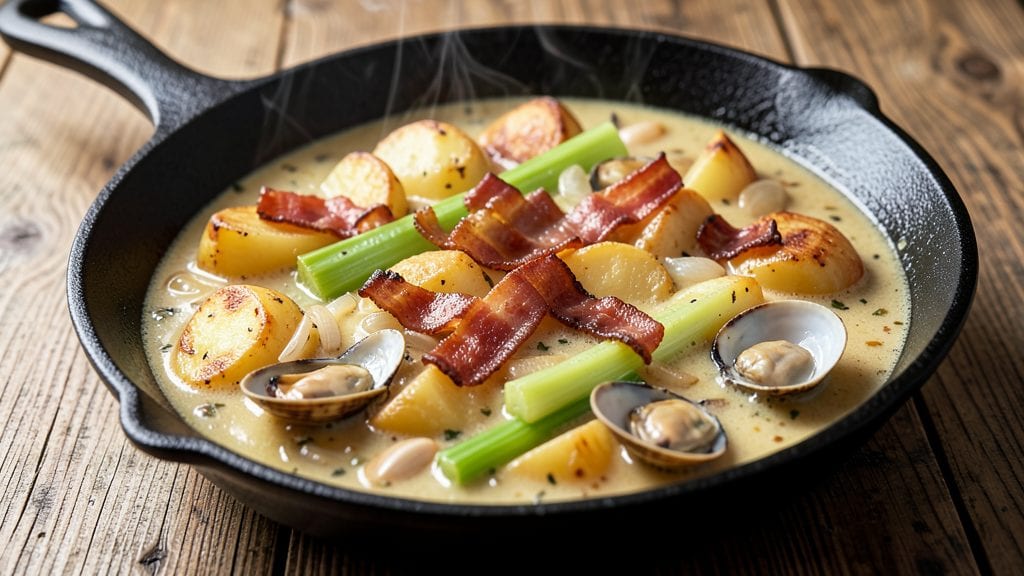
This woodman’s style clam chowder—a rustic, cook’s country recipe—brings smoky, briny, potato-layered richness to your table as a true New England classic. After years of perfecting the balance between creamy texture and bold flavors, I’ve developed a method that stays true to tradition while making it approachable for home cooks.
The secret lies in slow-cooked bacon, properly steamed clams, and a roux-thickened broth that creates that signature velvety consistency.
The foundation of great chowder begins with the broth—simmered with onions, celery, and garlic until deeply aromatic. Fresh clams are steamed just until they open, releasing their natural brininess into the pot, while thick-cut potatoes absorb the rich flavors.
A classic roux, cooked low and slow, prevents graininess and ensures a smooth, luxurious finish. Every spoonful should deliver that perfect harmony of smoky bacon, tender potatoes, and the ocean’s essence.
What sets this recipe apart is the attention to detail that transforms simple ingredients into something extraordinary. The bacon renders slowly to infuse the broth with deep, savory notes, while the clams add a fresh, briny punch that cuts through the creaminess.
The result is a chowder so rich and satisfying, it feels like a hug in a bowl—ideal for chilly evenings or special gatherings.
Serve it with crisp oyster crackers or crusty bread to soak up every last drop of that velvety broth. This isn’t just a recipe; it’s a taste of coastal New England that you can recreate in your own kitchen. Let’s get cooking—your taste buds will thank you.
Ingredients for woodman's style clam chowder cook's country
Sixteen ingredients, one unforgettable New England classic—where smoky bacon meets briny clams in creamy potato perfection.
| Ingredient | Amount | Notes |
|---|---|---|
| Fresh Clams 🦪 | 2 lb | Steamed until opened |
| Thick-Cut Potatoes 🥔 | 3 lb | Russet or Yukon Gold |
| Thick-Cut Bacon 🥓 | ½ lb | Smoked, not turkey bacon |
| Yellow Onion 🧅 | 1 whole | Diced, medium size |
| Celery Stalks 🧅 | 4 whole | Trimmed, cut into chunks |
| Garlic Cloves 🧄 | 4 cloves | Peeled, minced |
| All-Purpose Flour 🌾 | ½ cup | For roux, unsifted |
| Heavy Cream 🥛 | 2 cups | Full-fat for richness |
| Whole Milk 🥛 | 1 cup | Warmed before adding |
| Clam Broth or Fish Stock 💧 | 4 cups | Homemade preferred |
| Bay Leaves 🌿 | 2 whole | Fresh or dried |
| Thyme Sprigs 🌿 | 2 whole | Fresh, tied with twine |
| Salt 🧂 | 1 ½ tsp | Kosher or sea salt |
| Black Peppercorns 🌶️ | ½ tsp | Freshly cracked |
| Butter 🧈 | 4 tbsp | Unsalted, cold for roux |
The clams are non-negotiable for that signature briny depth. Local seafood markets or the fish counter at Whole Foods carry the freshest—look for clams that are tightly closed and smell clean, not fishy. If you can't find them fresh, canned clams in juice work in a pinch, but drain them well. Thick-cut potatoes are essential; they hold their shape better and absorb the broth beautifully. For bacon, thick-cut smoked bacon from the deli section delivers the best flavor—avoid turkey bacon or pre-cooked varieties. The butter matters too: unsalted European-style butter (like Plugrá) creates a richer roux than regular American brands.
No fresh clams? Canned clams in juice (drained) or even fresh mussels can substitute, though the flavor will differ slightly. Running short on thyme? Fresh parsley or dried thyme at half the amount works, but the aroma is key here. For the roux, if you don't have butter, olive oil or bacon fat will work, but the flavor profile shifts. The clam broth can be swapped for fish stock or even strong chicken broth, though clam broth adds that unmistakable oceanic touch. And if you're avoiding dairy, coconut milk can replace the cream, though the texture will be lighter.
This chowder tastes even better the next day—reheat gently on low heat to preserve the creamy texture. Store leftovers in the fridge for up to 4 days, covered tightly to prevent absorbing odors. For freezing, portion into airtight containers and freeze for up to 3 months. The roux can be made ahead and stored in the fridge for 3 days or frozen for 1 month, saving you time on cooking day. Serve with crisp oyster crackers or crusty bread—every last drop of that velvety broth deserves to be savored.
Why You'll Love This Recipe
- One-Pot Magic: I swear by this recipe because it’s basically hands-off after the initial chop. Toss everything—a few clams, thick potato chunks, crispy bacon, and that classic onion-celery combo—into one pot, and let it simmer. The bacon renders its fat, the potatoes soften, and the clams release their briny sweetness all while you stir maybe twice. Minimal effort, maximum reward.
- Smoky-Salty Crunch: That thick-cut bacon isn’t just for flavor—it’s the star. Crispy around the edges, salty, and rich, it melts into the chowder but still holds its texture. Honestly, I’ll often add an extra strip just because it makes the whole bowl sing. Pair that with the briny clams and the creamy potatoes, and you’ve got a taste explosion that feels like a hug in a bowl.
- Weeknight or Weekend: Here’s what sold me—this chowder works any night. Too tired for fancy dinner? Throw it together. Hosting a casual get-together? Serve it in a big pot with crusty bread. Even my picky teenage nephew asks for seconds, and that’s saying something. It’s the kind of dish that feels special without requiring a Pinterest-perfect presentation.
- Leftovers That Don’t Suck: Between us, most chowder leftovers taste like sad, watery soup. Not this one. The thick potatoes and clams hold up perfectly for lunch the next day, especially if you reheat it gently—just add a splash of water or milk to keep it creamy. And because it’s so filling, you’ll actually want to save portions. Budget-friendly? Absolutely. Reliable? Even more so.
Step-by-step instructions for woodman's style clam chowder
This hearty chowder delivers smoky depth and creamy richness through precise technique and layering.
Render the Bacon and Build the Roux
Cut the 0.5 lb thick-cut bacon into ½-inch pieces and cook in a 6-quart Dutch oven over medium heat for 8-10 minutes, stirring occasionally, until the fat renders and the bacon becomes deep golden brown. Remove the bacon with a slotted spoon and set aside, leaving the rendered fat in the pot.
Reduce the heat to medium-low and add the 4 tbsp cold butter to the bacon fat. Whisk constantly for 1-2 minutes until the butter melts and the mixture becomes foamy. Immediately add the 0.5 cup all-purpose flour and whisk vigorously for 2-3 minutes until the roux turns a deep golden brown—this creates the flavor foundation. If it darkens too quickly, reduce heat slightly but never let it burn. Here's the thing—this roux step is non-negotiable for that authentic smoky backbone.
Sauté Aromatics and Add Potatoes
Add the diced yellow onion and chopped celery stalks to the Dutch oven, stirring to coat in the roux. Cook for 5-6 minutes over medium heat until the vegetables soften and the onion becomes translucent. Add the minced garlic cloves and cook for 30 seconds until fragrant—don't let it brown or it'll become bitter.
Peel and cut the 3 lb thick-cut potatoes into 1-inch chunks and add them to the pot. Pour in the 4 cups clam broth or fish stock, then add the 2 whole bay leaves and 2 whole thyme sprigs. Bring to a gentle simmer over medium heat, then reduce to low heat and cover partially. Simmer for 15 minutes until the potatoes are tender but not falling apart—this ensures they hold their shape in the final chowder. The reason we simmer uncovered is to prevent a skin from forming on the broth.
Prepare the Clams and Incorporate Cream
While the potatoes cook, steam the 2 lb fresh clams in a separate pot with 1 cup water over high heat until they open—discard any that don't open within 5 minutes. Remove the clams from their shells and set aside, reserving the clam broth (about ½ cup) for later. Here's where it gets fun—those briny clams will infuse the chowder with unmatched depth.
Increase the heat under the chowder to medium and stir in the 2 cups heavy cream and 1 cup whole milk. Warm the milk separately in a saucepan over low heat until it's lukewarm—adding cold milk can cause the cream to separate. Simmer the chowder for 5 minutes to let the cream blend smoothly. Season with 1.5 tsp salt and 0.5 tsp freshly cracked black peppercorns, then add the reserved ½ cup clam broth to balance the richness.
Finish with Clams and Bacon
Gently fold the opened clams and the reserved bacon into the chowder. Simmer for 3-4 minutes just until the clams are heated through—don't overcook or they'll turn rubbery. Taste and adjust the seasoning, adding more salt or pepper if needed. The chowder should be creamy but not heavy, with a smoky-sweet balance from the bacon and clams.
Remove the bay leaves and thyme sprigs before serving. Ladle the chowder into bowls, garnishing each with a sprinkle of freshly cracked black pepper. This chowder shines when served immediately, with the clams still warm and the cream velvety. Real talk: the first bite should deliver that perfect marriage of smoky bacon, briny clams, and creamy potatoes—every spoonful tells the story.
Pro Tips For Making Woodman'S Style Clam Chowder Cook'S Country
- Render Bacon Slow: I used to crank the heat on thick-cut bacon, and it’d come out greasy but barely cooked through. For this chowder, cook the bacon on medium-low—just enough to render fat steadily without burning. The slow release of fat flavors the onions and celery better, and you’ll end up with crispy edges that actually crisp instead of turning to sludge.
- Prep Potatoes Evenly: Thick-cut potatoes take forever to cook if they’re not uniform. Grab a chef’s knife and slice them all the same thickness—about ½-inch—so they soften together. Uneven pieces mean some will turn to mush while others stay rock-hard. (Yes, even if you’re impatient like me.)
- Shock Clams First: Fresh clams need a quick dip in boiling water for 10 seconds to loosen grit before steaming. Skip this, and you’ll be picking debris out of your chowder for 20 minutes. Use a fine-mesh strainer to drain them immediately after—no one wants a mouthful of sand in their creamy soup.
- Save the Bacon Water: After cooking the bacon, don’t pour that fat down the drain—strain it into a measuring cup. Use 2-3 tablespoons of the rendered fat to sauté the onions and celery. It’s got all the bacon’s flavor concentrated, and it cuts down on extra oil. (Your future self will thank you.)
Serving suggestions for this dish
Crispy Oyster Crackers
No chowder is complete without oyster crackers to soak up every last drop of that velvety broth. I reach for Luxardo oyster crackers—they’re the gold standard for this dish, with their delicate, crisp texture that melts just enough to blend into the chowder.
Serve a small bowl of crackers on the table alongside the chowder so guests can add as many as they like. 🥟
Crusty Bread Pairing
A crusty baguette or sourdough loaf is essential for dipping into the rich chowder. I love toasting the bread lightly with a sprinkle of flaky sea salt before serving—it adds a satisfying crunch and balances the creamy texture.
For extra flair, brush the bread with garlic-infused olive oil before toasting. The contrast between the warm bread and chilled chowder is pure comfort food magic.
Fresh Herb Garnish
Brighten the dish with a sprinkle of fresh parsley or chives just before serving. The vibrant green color adds visual appeal, while the fresh herbs cut through the richness of the chowder. I also like adding a dash of smoked paprika for a subtle smoky note that echoes the bacon.
A few drops of hot sauce on the side lets guests adjust the heat to their preference. 🌿
Cheesy Bread Bites
For a fun, interactive touch, serve cheesy bread bites made with Pepperidge Farm Goldfish crackers and sharp cheddar cheese. Mix the crackers with shredded cheese, form into small clusters, and bake at 375°F for 5-7 minutes until golden.
These bite-sized treats are perfect for scooping up chowder and add a playful element to the meal. They’re especially popular with kids!
Pickled Vegetable Accent
Add a tangy contrast with pickled vegetables like radishes, red onions, or cucumbers. The acidity cuts through the richness of the chowder, cleansing the palate between bites.
I like using quick-pickled red onions—simmer ½ cup red onion slices in ½ cup apple cider vinegar, 1 tbsp sugar, and ½ tsp salt for 10 minutes, then cool before serving. A few slices on top add a pop of color and freshness.
Warm Cornbread
For a Southern-inspired twist, serve warm cornbread alongside the chowder. I prefer a savory cornbread with buttermilk, cornmeal, and a touch of honey for balance. The slightly sweet, crumbly texture pairs beautifully with the smoky, briny flavors of the chowder.
Cut into small squares for easy dipping, and serve with a side of honey butter for extra indulgence. 🍯
Nutrition facts
Frequently asked questions
What makes this a "woodman's style" clam chowder?
This rustic version stays true to New England traditions with key elements: a deep smoky bacon base, thick-cut potatoes that hold their shape, and a rich, creamy texture achieved through a proper roux. The chowder also incorporates fresh clams for that essential briny depth, all simmered in a flavorful broth infused with aromatic vegetables. It's hearty enough for a woodman's meal but refined enough for the table.
Can I substitute canned clams for fresh?
Yes, but with adjustments. Use canned clams in juice (drained well) and add 1-2 tablespoons of clam juice from the can to the chowder for authentic flavor. The texture will be slightly different since fresh clams release their briny essence as they cook. For best results, choose high-quality canned clams with minimal additives.
Why is the roux so important in this recipe?
The roux creates the chowder's signature velvety texture while adding deep flavor. Cooking the flour and butter to a golden brown before adding liquids prevents graininess and develops rich, nutty notes. A proper roux is non-negotiable for authentic chowder—it's what transforms simple ingredients into something extraordinary.
How do I know when the clams are done?
Clams are ready when their shells open completely. Discard any that remain closed after 5 minutes of steaming—they're unsafe to eat. Once opened, remove them from their shells immediately and set aside. The cooking time should be 3-4 minutes in the chowder to heat through without turning rubbery.
Can I make this chowder ahead of time?
This chowder tastes even better the next day. Store leftovers in an airtight container in the fridge for up to 4 days. Reheat gently on low heat, stirring frequently to prevent separation. For freezing, portion into containers and freeze for up to 3 months. The flavors meld beautifully overnight, making it perfect for meal prep.