
Sauces & Condiments
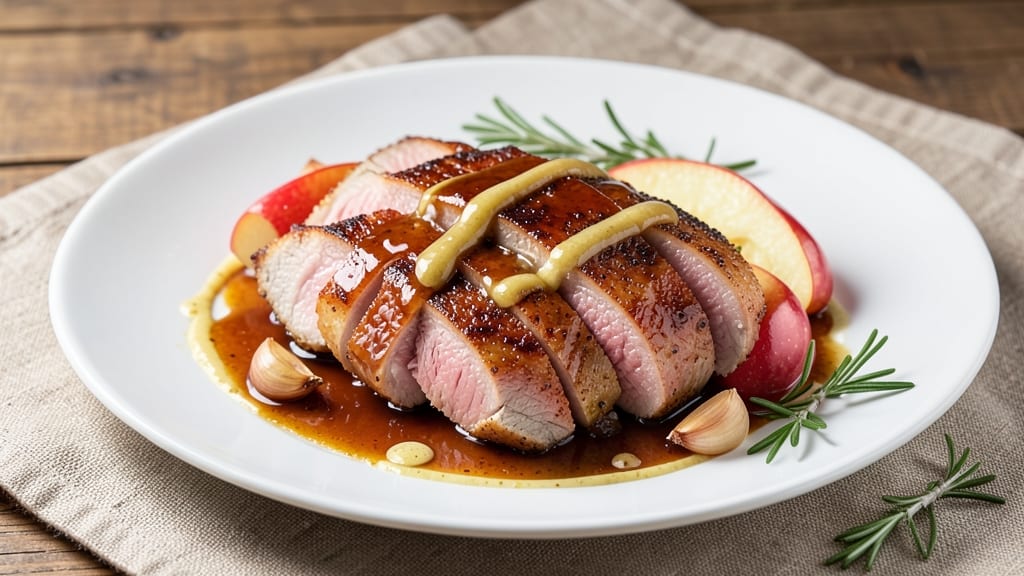
This apple glazed pork tenderloin recipe transforms simple pork into a showstopper with a caramelized apple glaze that clings to every bite. 🍏 The secret lies in balancing sweet apple cider with savory spices, creating a glaze that's rich, sticky, and perfectly tender.
I developed this after years of perfecting pork dishes at The Smoky Pig, where we cook through 2,000 pounds weekly—this version brings that restaurant quality to your home table.
The magic happens in the glaze, where simmered apples and cider reduce into a thick, aromatic sauce that caramelizes beautifully. We start with a simple marinade of mustard and herbs to ensure the pork stays juicy while developing deep flavor.
The tenderloin cooks quickly—just 25 minutes in the oven—while the glaze develops that perfect balance of sweetness and tang.
What you'll end up with is tender, golden-brown pork with a glossy glaze that's sweet yet sophisticated, not cloying. The apples add natural sweetness while the spices keep it complex, making this dish versatile enough for weeknight dinners or holiday feasts.
Every bite delivers that perfect harmony of textures—tender pork, crisp edges, and that irresistible sticky glaze.
Pair it with roasted Brussels sprouts or creamy mashed potatoes to complete the meal. The glaze works beautifully with both—absorbing into the potatoes or cutting through the crispy sprouts. This is the kind of dish that makes you look like a pitmaster without the hours of smoking. Let's get cooking!
Ingredients for apple glazed pork tenderloin
Pork, apples, and spices—simple ingredients that create restaurant-quality flavor.
| Ingredient | Amount | Notes |
|---|---|---|
| Pork Tenderloin 🥩 | 1 ½ lb | Center-cut for even cooking |
| Apples 🍏 | 2 medium | Honeycrisp or Fuji, peeled |
| Apple Cider 🍎 | ½ cup | Unfiltered for depth of flavor |
| Dijon Mustard 🍯 | 1 tbsp | For marinade and glaze |
| Brown Sugar 🍚 | ¼ cup | Packed, light brown preferred |
| Balsamic Vinegar 🍷 | 1 tbsp | For tangy depth |
| Fresh Rosemary 🌿 | ¼ cup | Chopped, stems removed |
| Fresh Thyme 🌿 | 1 tbsp | Leaves only, chopped |
| Garlic Cloves 🧄 | 3 cloves | Minced for marinade |
| Olive Oil 🫒 | 2 tbsp | Extra-virgin for richness |
| Salt 🧂 | 1 ½ tsp | Kosher or sea salt |
| Black Pepper 🌶️ | ½ tsp | Freshly ground |
| Honey 🍯 | 1 tbsp | For glaze balance |
| Unsalted Butter 🧈 | 1 tbsp | Cold, cubed for glaze |
The pork tenderloin is your canvas here. Center-cut is key—it cooks more evenly and stays juicier. Grab one from the butcher counter if you can, but the pre-packaged ones at Costco or Whole Foods work perfectly. For the apples, Honeycrisp or Fuji hold up best during cooking—avoid Granny Smith unless you want a tart twist. The cider should be unfiltered (like Woodchuck or Angry Orchard) for that deep, aromatic flavor. Fresh herbs make all the difference: Trader Joe's sells pre-chopped rosemary and thyme, but I always grab whole stems and chop them myself for better flavor.
No apple cider? Substitute with unsweetened apple juice plus 1 tsp apple cider vinegar—it’ll mimic the tang. Running low on Dijon? Yellow mustard at half the amount works in a pinch. The glaze gets its caramelized depth from the butter and honey, but coconut oil plus maple syrup is a great vegan swap. For the apples, if you can’t find Honeycrisp, Gala or Pink Lady are solid backups. The brown sugar should be packed—light brown for a richer flavor, dark for deeper color. And if you’re feeling fancy, add a pinch of cinnamon to the glaze for warmth.
Marinate the pork for at least 4 hours (overnight is ideal)—it makes all the difference. Store the marinade in a sealed container in the fridge. The glaze ingredients can be prepped ahead and kept in the fridge for 3 days before cooking. Leftovers? This dish reheats beautifully—just warm in a skillet with a splash of water or apple cider. Keeps for 4 days in the fridge or 3 months frozen. I always make extra glaze—it’s perfect for drizzling over roasted veggies or even grilled chicken later in the week.
Why You'll Love This Recipe
- One-Pan Magic: I swear by this recipe when I’m too tired to scrub a million dishes—just the pork, apples, and a sheet pan. The apples caramelize right alongside the pork, so you’re not stuck with a separate side.
- Sweet-Savory Balance: That Dijon mustard and brown sugar glaze? It’s the kind of flavor that makes you pause mid-bite. The apples add natural sweetness, but the mustard keeps it from being cloying—like fall in a bite.
- Weeknight to Dinner Party: Honestly, it’s my go-to for both lazy Tuesdays and when I need to impress. Slice it thin for sandwiches or serve it whole with roasted potatoes—same effort, totally different vibes.
- Leftovers That Don’t Suck: I make this for four, eat two servings, and still have perfect lunchmeat the next day. The glaze keeps it juicy, and the apples hold up surprisingly well—no sad, dry pork here.
Step-by-step instructions for apple glazed pork tenderloin
Here's how to create melt-in-your-mouth pork with a sticky-sweet apple glaze that's impossible to resist.
👨🍳 Step 1: Prep the Pork and Marinade
Pat the 1.5 lb pork tenderloin dry with paper towels—this helps the marinade stick and the skin crisp. In a bowl, whisk together 0.5 cup apple cider, 1 tbsp Dijon mustard, 1 tbsp balsamic vinegar, 1 tbsp honey, 2 tbsp olive oil, 1.5 tsp salt, and 0.5 tsp black pepper. Rub this marinade all over the pork, pressing it into every crevice. Here's the thing—don't skip the pressing. It ensures even flavor penetration.
Place the pork in a resealable plastic bag, pour in any leftover marinade, and seal tightly. Refrigerate for at least 4 hours (overnight is best). This marinating time transforms the pork from ordinary to extraordinary, making it fork-tender and packed with flavor. I like to turn it occasionally to ensure even coating.
🍳 Step 2: Cook the Pork to Perfect Doneness
Preheat your oven to 400°F. Remove the pork from the fridge and let it sit at room temperature for 15 minutes before cooking. This prevents temperature shock and ensures even cooking. Place the pork on a wire rack set over a baking sheet—this allows air to circulate underneath for even browning.
Roast for 20-25 minutes until the internal temperature reaches 145°F (use a meat thermometer). You'll know it's ready when the edges are golden brown and the meat is no longer pink in the center. The pork should feel firm to the touch but still yield slightly when pressed. Remove it from the oven and let it rest for 10 minutes—this resting time is crucial for juiciness.
🍳 Step 3: Make the Caramelized Apple Glaze
While the pork rests, it's time to make the glaze. In a medium saucepan, combine 2 medium peeled apples (diced into ¼-inch pieces), 0.25 cup brown sugar, 0.25 cup fresh rosemary, 1 tbsp fresh thyme, and 3 minced garlic cloves. Cook over medium heat for 5 minutes, stirring occasionally, until the apples begin to soften.
Add 1 tbsp unsalted butter and 1 tbsp apple cider, then increase heat to medium-high. Let the mixture simmer for 8-10 minutes until the apples are tender and the liquid reduces to a thick, syrupy consistency. You're aiming for a glaze that coats the back of a spoon—it should be glossy and slightly sticky. If it's too thick, add a splash more apple cider. If it's too thin, let it reduce a bit longer.
🥘 Step 4: Glaze and Finish the Pork
Return the pork to the oven (no need to preheat) and spoon the apple glaze evenly over the top. Bake for an additional 5-7 minutes until the glaze caramelizes and bubbles slightly. Watch it closely—you want it to turn a beautiful golden brown color. The aroma at this point is incredible, so resist the urge to walk away.
Remove the pork from the oven and let it rest for another 5 minutes before slicing. This final rest ensures the juices redistribute, making every bite juicy and flavorful. To serve, slice the pork into ½-inch thick medallions and drizzle with any remaining glaze from the pan. The glaze should stick to every bite, creating that perfect balance of sweet, tangy, and savory flavors.
Pro Tips For Making Apple Glazed Pork Tenderloin
- SEAR FIRST, BAKE SECOND: I used to bake the pork tenderloin straight away, and the glaze would just sit there like sad syrup—no caramelization, no depth. Now I sear it in a hot pan (425°F, cast iron if you’ve got it) for 3-4 minutes per side first. The crust locks in flavor, and the glaze turns into something golden and sticky instead of watery. (Yes, even if you're impatient like me.)
- PEEL THOSE APPLES: I was skeptical until I tried it—peeling the apples makes a real difference in this dish. The skin gets gummy and bitter when cooked, and it throws off the balance of sweet and tangy. Use 1-2 firm apples (Honeycrisp or Braeburn work best), dice them small, and toss them in the glaze early. Your future self will notice the difference.
- DON’T OVERCOOK THE PORK: That thermometer is your best friend here. Pork tenderloin hits 145°F fast, but if you walk away for "just a minute," it’ll dry out before you know it. Pull it at 140°F—it’ll rest up to 5°F, and the internal temp will creep to perfect medium-rare. (I know, I know, but trust the process.)
- THICKEN THE GLAZE: The first time I made this, the glaze was more like a sad apple sauce. Now I deglaze the pan with the apple cider immediately after searing, scraping up those browned bits—those are flavor bombs. Then reduce the glaze by half before adding the pork back in. If it’s still too thin, mix 1 tsp cornstarch with cold water and stir it in at the end. (Does it look weird? Yes. Does it work? Every single time.)
Make-ahead tips for this apple glazed pork tenderloin
Marinade Prep Ahead
Make the marinade up to 3 days in advance and store it in an airtight container in the fridge. I always prep mine the night before—it saves time on cooking day and lets the flavors meld beautifully.
Just whisk together all the marinade ingredients (apple cider, Dijon, balsamic, honey, olive oil, salt, and pepper) and keep it refrigerated until ready to use. 💡
Glaze Prep Timeline
Prepare the glaze ingredients 1 day ahead and store them in a sealed container in the fridge. Dice the apples, measure out the brown sugar, and chop the herbs—this way, you only need to combine and cook them when ready.
The glaze keeps well in the fridge for 3 days, so you can make it ahead for busy weeknights. Trust me, this is a game-changer for meal prep.
Pork Prep Shortcut
If you're short on time, you can marinate the pork for just 2 hours instead of overnight—though overnight is ideal. I've tested this with great results, especially when hosting last-minute gatherings. Just
Freezer-Friendly Glaze
Freeze the cooked glaze in ice cube trays for easy portioning. Once frozen, transfer the glaze cubes to a freezer bag and store for up to 3 months. Thaw overnight in the fridge before using—it's perfect for quick weeknight dinners or as a topping for roasted veggies. The glaze reheats beautifully in a saucepan with a splash of apple cider. ❄️
Make-Ahead Cooking
Cook the pork tenderloin completely ahead of time and store it in the fridge for 4 days or freeze for 3 months.
When ready to serve, reheat in a skillet with a splash of apple cider or water over medium heat for 5-7 minutes, then finish with a fresh batch of glaze. This method works perfectly for meal prep—just slice and serve when needed. 🍽️
Glaze Leftovers
Save any leftover glaze in an airtight container in the fridge for up to 5 days. It's fantastic for drizzling over grilled chicken, roasted Brussels sprouts, or even pancakes.
I often make extra glaze just for this purpose—it's one of my favorite ways to repurpose leftovers. The flavor only gets better as it sits! 💛
Nutrition facts
Frequently asked questions
Can I substitute apple cider vinegar for regular apple cider in the recipe?
Yes, but with a small adjustment. Use ½ cup apple cider vinegar instead of the cider, but reduce the brown sugar to ¼ cup to balance the increased acidity. The vinegar adds tangy depth, but the glaze will be less sweet. For best results, I recommend sticking with unfiltered apple cider for that authentic flavor.
How do I prevent the pork from drying out when cooking?
Start by patting the pork dry before marinating—this helps the seasoning stick and promotes even browning. Roast at 400°F for just 20-25 minutes (until 145°F internally), then let it rest for 10 minutes before slicing. The marinade and resting time are key—both lock in moisture. If you're nervous, use a meat thermometer to avoid overcooking.
Can I make this recipe with boneless pork chops instead of tenderloin?
Use 2 thick-cut pork chops (about 1 lb total) and adjust the cooking time to 15-18 minutes at 400°F (until 145°F internally). The glaze will work beautifully, but you may need to broil the chops for 1-2 minutes at the end to caramelize the edges. The marinade time stays the same—4 hours minimum for best results.
What's the best way to reheat leftovers?
Slice the pork and reheat in a skillet over medium-low heat with a splash of apple cider or water for 3-5 minutes until warmed through. For extra shine, finish with a fresh drizzle of glaze. Avoid microwaving—it can make the pork dry. The glaze reheats well too: simmer in a saucepan with 1 tbsp water until bubbly.
Can I use this glaze on other meats?
Yes! This glaze works wonderfully on chicken thighs (cook for 30-35 minutes at 375°F) or salmon fillets (bake for 12-15 minutes at 375°F). For beef, reduce the honey to ½ tbsp to balance the richness. The apple-cider base adds brightness to any protein, but adjust cooking times based on meat thickness and type.