
Sauces & Condiments
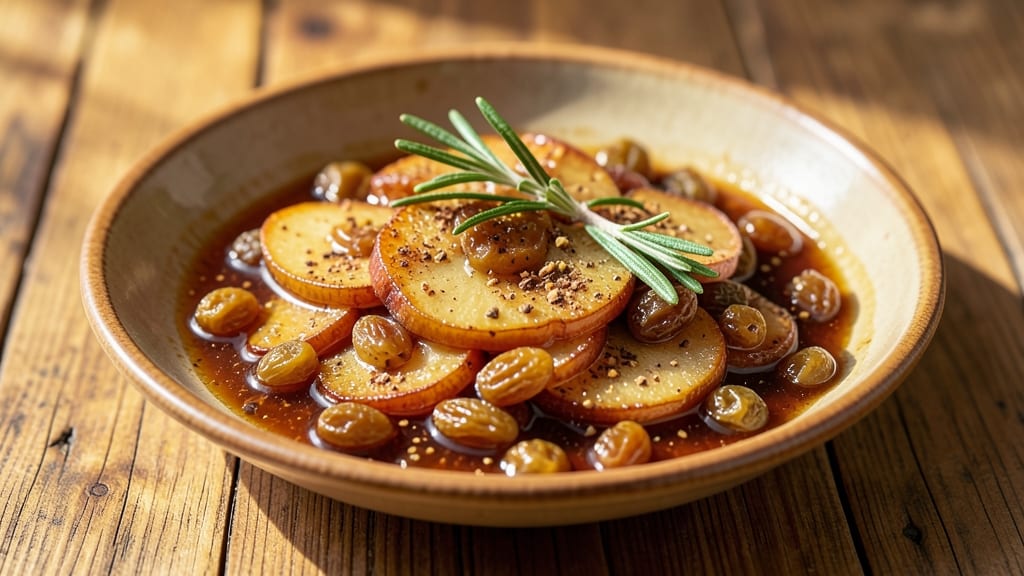
This apple raisin sauce for ham transforms ordinary holiday meals into something extraordinary with its slow-simmered depth and perfectly balanced sweetness. The combination of caramelized apples, plump raisins, and warm spices creates a sauce that clings to every bite of ham, elevating it from good to unforgettable.
What makes this recipe truly special is how the flavors develop over time—starting with bright apple acidity and ending with rich, molasses-like sweetness that coats your plate.
The secret lies in the slow simmer, which allows the apples to break down into a velvety consistency while the raisins plump and release their natural sweetness. A touch of vinegar brightens the sauce, cutting through the richness, while cinnamon and cloves add warmth that complements the ham beautifully.
This isn’t just a sauce—it’s a flavor experience that turns a simple ham into the centerpiece of your table.
What you’ll end up with is a glossy, aromatic sauce that’s thick enough to drizzle but light enough to spread, with pockets of tender apple and chewy raisins in every spoonful. The caramelized edges add texture, while the spices linger on your palate long after the last bite.
It’s the kind of sauce that makes you want to lick the plate clean—something even the most skeptical family members will appreciate.
Best of all, this sauce keeps beautifully in the refrigerator for up to a week, so you can make it ahead and let the flavors deepen even more.
Whether you’re hosting a holiday feast or just craving a cozy weeknight dinner, this apple raisin sauce is the perfect way to add restaurant-quality sweetness to your meal.
Ingredients for apple raisin sauce for ham
Nine simple ingredients create this restaurant-worthy sauce that turns ham into a showstopper.
| Ingredient | Amount | Notes |
|---|---|---|
| Granny Smith Apples 🍎 | 4 medium | Peeled, cored, sliced thin |
| Golden Raisins 🍇 | 1 cup | Plump, no need to soak |
| Brown Sugar 🍚 | ¾ cup | Light or dark variety |
| Apple Cider Vinegar 🍶 | ¼ cup | For brightness and tang |
| Ground Cinnamon 🌿 | 1 ½ tsp | Freshly ground preferred |
| Ground Cloves 🌶️ | ½ tsp | Whole cloves crushed works too |
| Unsalted Butter 🧈 | 2 tbsp | Cold, cubed for slow melt |
| Water 💧 | ½ cup | For simmering consistency |
| Salt 🧂 | ¼ tsp | Kosher or sea salt |
The apples are non-negotiable—Granny Smiths bring that bright acidity that balances the sweetness perfectly. Local farmers markets often have them in season, but the grocery store works too. Look for firm, shiny apples with no bruises. Raisins? Golden raisins have a milder sweetness than regular, but use what you’ve got. The brown sugar should be packed—Domino or C&H are reliable brands. For the vinegar, Mott's is my go-to, but any apple cider vinegar will do. The spices? Penzeys if you're feeling fancy, but honestly the stuff in the spice aisle works fine.
No Granny Smiths? Honeycrisp or Fuji apples work in a pinch—they’re sweeter but still hold up well. Swapping raisins? Dried cranberries add a tart twist, or chopped dates for extra richness. Running low on brown sugar? Maple syrup or honey at half the amount does the trick, but the sauce will be more liquid. No butter? Olive oil or coconut oil works, though butter gives that unmistakable richness. The cloves can be skipped if you’re sensitive to strong spices—just double the cinnamon. And if you’re making this ahead, freeze the sauce in ice cube trays for easy portioning later.
This sauce tastes even better the next day—make it ahead and let it mellow. Keeps in the fridge for up to 1 week in an airtight container. For leftovers, reheat gently on the stove with a splash of water to restore that glossy texture. If it thickens too much, stir in a teaspoon of water or apple cider. And if you’re serving it over ham, warm the ham first so the sauce clings beautifully. Trust me, the aroma alone will have everyone gathering at the table.
Why You'll Love This Recipe
- Five-Ingredient Magic: I swear by this combo—Granny Smiths for tartness, raisins for that sweet-chewy bite, and just a splash of vinegar to brighten everything up. You’re basically making a glaze with stuff you already have in your pantry.
- Hands-Off Simmer: Honestly, this sauce is one of those recipes where you can walk away. Toss everything in a pot, let it bubble for 15 minutes, and come back to something that smells like autumn in a jar. No stirring required.
- Holiday or Weeknight: Between us, this glaze works just as well on a spiral-cut ham for Thanksgiving as it does on a store-bought ham for a lazy Sunday brunch. The raisins add a little luxury without the fuss.
- Leftovers That Shine: The best part? This sauce keeps for days in the fridge and tastes even better the next time you reheat it. Drizzle it over toast, stir it into yogurt, or even toss it with roasted veggies—it’s that versatile.
Step-by-step instructions for apple raisin sauce for ham
This sauce transforms simple ingredients into a rich, caramelized masterpiece that pairs perfectly with holiday ham.
Prepare the Apples and Raisins
Peel, core, and slice the 4 medium Granny Smith Apples into thin, even pieces—about ¼-inch thick. The thinner the slices, the faster they'll soften and release their juices. Place them in a medium saucepan along with the 1 cup Golden Raisins. I like to give the raisins a quick pinch between my fingers first to break up any clumps, ensuring they plump evenly during cooking.
Here's the thing—Granny Smiths are tart, which balances the sweetness beautifully. If you're using pre-sliced apples, pat them dry with a paper towel to prevent excess moisture, which can dilute your sauce. This prep step sets the foundation for that perfect apple-raisin texture we're after.
Add Sweetness and Spices
To the saucepan, add the 0.75 cup Brown Sugar, 0.25 cup Apple Cider Vinegar, 1.5 tsp Ground Cinnamon, and 0.5 tsp Ground Cloves. Stir everything together until the sugar dissolves completely—this prevents grainy spots in your finished sauce. The vinegar might seem like an odd addition, but it's what gives this sauce that bright, tangy kick that cuts through the richness.
Don't worry if the mixture looks too thin right now. As we cook, the apples will release their juice and everything will thicken up beautifully. Give it a taste at this stage—you should notice the spices are aromatic but not overpowering. If your cloves are whole, crush them lightly with the back of a spoon to release their flavor.
Simmer Until Caramelized
Place the saucepan over medium heat and bring the mixture to a gentle boil. Once boiling, reduce the heat to low-medium and let it simmer uncovered for 20-25 minutes. You're looking for the apples to soften completely and the mixture to reduce by about one-third. Stir occasionally, especially toward the end when the sauce starts to thicken.
This is where the magic happens—the longer it simmers, the deeper the caramelized flavor becomes. You'll know it's ready when the sauce coats the back of a spoon and has a glossy, syrupy consistency. If it starts to stick to the bottom, add 1-2 tablespoons of water to keep it moving. The color should be a rich amber with little flecks of spice.
Finish with Butter and Salt
Remove the saucepan from heat and stir in the 2 tbsp Unsalted Butter, cubed, and the 0.5 cup Water. Let the butter melt completely, then return the pan to low heat for just 1-2 minutes to allow the flavors to meld. Finish with the 0.25 tsp Salt—this balances all the sweetness and enhances every flavor.
Here's a pro tip: For an extra-smooth texture, transfer the sauce to a blender or food processor and pulse briefly. This breaks up any apple chunks while keeping some texture. If you prefer rustic pieces, just stir vigorously with a whisk. Either way, the sauce should be thick enough to coat the back of a spoon but still pourable.
Rest and Serve Warm
Let the sauce rest for 5-10 minutes before serving—this allows the flavors to fully develop and the sauce to thicken slightly. The resting time is crucial; it gives the spices time to infuse completely and prevents the sauce from being too runny when you drizzle it over your ham.
Serve the sauce warm over sliced ham, spooning it generously over each portion. The contrast of the tart apples, sweet raisins, and warm spices creates a symphony of flavors that elevates even the simplest ham. For extra presentation, garnish with a few extra raisins or a sprinkle of cinnamon. This sauce keeps well in the refrigerator for up to 5 days, so make extra—it's worth every bite!
Pro Tips For Making Apple Raisin Sauce For Ham
- CHOP APPLES UNIFORMLY: I learned this the hard way—uneven apple pieces mean some turn to mush while others stay crunchy. Cut Granny Smiths into ¼-inch dice so they soften evenly and release flavor consistently. (Yes, even if you’re impatient like me, this step actually changes the texture.)
- SOAK RAISINS FIRST: Dry raisins plop like rocks and absorb sauce unevenly. Toss them in warm water for 10 minutes before adding to the pan—this plumps them up and lets them blend into the sauce instead of sinking to the bottom. (Your future self will thank you.)
- STIR CONSTANTLY LOW HEAT: This sauce burns faster than you’d think. Simmer on medium-low and keep it moving with a wooden spoon—especially around the edges. I used to walk away, and next thing you know, you’ve got charred bits. (No one wants that bitter tang.)
- ADD VINEGAR LAST: Vinegar brightens the sauce, but toss it in too early and you’ll kill the caramelization. Stir it in during the final 2 minutes of cooking—just enough to cut the sweetness and wake up the cinnamon. (Sounds weird, but it works: the flavor balance is night and day.)
Essential equipment for this recipe
Saucepan Essentials
Start with a medium-sized saucepan with a heavy bottom—I recommend a 3-quart stainless steel pan like the All-Clad Stainless or even a good-quality enamel Dutch oven. The heavy base prevents hot spots and ensures even heating, which is crucial for caramelizing the apples without burning.
Avoid non-stick pans for this recipe—they can't handle the sustained simmering heat needed for proper reduction. 🔥
Heat Control Tools
A kitchen thermometer (like the Thermoworks Thermapen) helps you monitor the simmering temperature—aim for 180-190°F to prevent scorching. I also keep a wooden spoon nearby to stir gently without scratching the pan.
For precise heat adjustment, a gas stove with multiple burners gives better control than electric, but if you're on electric, use the back burner for steady low heat.
Blender or Food Processor
If you prefer a smoother sauce, a high-powered blender (like the Ninja BN601) or immersion blender works best. For a rustic texture, a whisk is all you need. I like to blend just 2-3 quick pulses to break up apple chunks while keeping some texture.
Never blend hot liquids—let the sauce cool for 5 minutes first to avoid splattering.
Measuring Tools
Precision matters here! Use a liquid measuring cup for the vinegar and water, and a dry measuring cup for the sugar. A fine-mesh strainer helps remove any apple skins or raisin stems if you prefer an ultra-smooth finish.
For spices, a spice grinder ensures fresh, even measurements—Penzeys or McCormick are reliable brands for consistent quality.
Storage Containers
For leftovers, transfer the sauce to glass airtight containers (like Pyrex or Le Creuset) for up to 5 days in the fridge. For longer storage, freeze in silicone ice cube trays—just thaw overnight in the fridge before reheating.
The containers should be heat-safe if you plan to reheat directly from the fridge.
Optional Upgrades
Want to take it to the next level? A candy thermometer helps track the reduction process precisely. For presentation, a small squeeze bottle makes drizzling the sauce over ham effortless.
And if you're making this ahead, a slow cooker on low for 4-5 hours gives you hands-off caramelization—just add all ingredients except butter and salt, then stir in at the end. ✨
Nutrition facts
Frequently asked questions
Can I use dried cranberries instead of raisins in this sauce?
Yes, but expect a different flavor profile! Dried cranberries add a tart, slightly bitter note that contrasts beautifully with the sweet apples. Use the same 1 cup measurement, but reduce the brown sugar to 0.5 cup to balance the extra tartness. The cranberries will soften during simmering but retain more texture than raisins.
How do I prevent the sauce from getting too thick or burning?
Keep the heat at low-medium and stir frequently during the 20-25 minute simmer. If it starts to stick, add 1-2 tablespoons of water to loosen it. For extra insurance, use a 3-quart saucepan—this gives the sauce room to reduce without scorching. The key is patience: slow simmering builds depth, not speed.
Can I make this sauce in a slow cooker?
Combine all ingredients except butter and salt in your slow cooker on low for 4-5 hours. Stir in the butter and salt at the end. The slow cooker method actually enhances the caramelization, creating even deeper flavors. Just check occasionally after 3 hours to prevent over-reduction.
What's the best way to reheat leftover sauce?
Gently warm it on the stove over low heat with a splash of water or apple cider to restore its glossy texture. Avoid microwaving—it can make the sauce grainy. For extra richness, stir in a pat of butter while reheating. The sauce thickens as it cools, so you may need to thin it slightly with water if it becomes too stiff.
Can I use this sauce for anything other than ham?
This versatile sauce works beautifully with roast chicken, pork chops, or even as a glaze for baked apples. For vegetarian dishes, try drizzling it over grilled cheese sandwiches or using it as a dip for cheese boards. The apple-raisin-spice combo pairs surprisingly well with blue cheese and pecans too!