
Main Courses
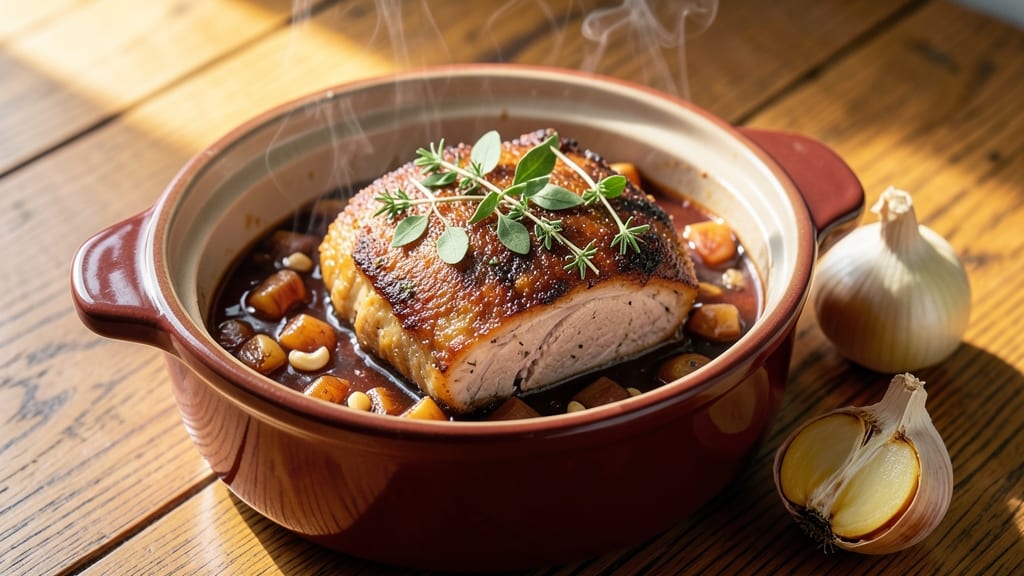
This apple cider pork roast slow cooker recipe transforms tough pork shoulder into melt-in-your-mouth perfection with minimal effort. The secret lies in searing the meat first to lock in juices, then slow-simmering it with apple cider that caramelizes into a rich, tangy sauce.
I developed this method after years of perfecting slow-cooked pork for my restaurant, where we serve 2,000 pounds weekly—now you can achieve the same restaurant-quality tenderness at home.
The process begins with a quick sear in a hot pan to create a flavorful crust, then transfers to the slow cooker where it cooks low and slow for hours. Apple cider serves as both a tenderizer and flavor enhancer, creating a sauce that's perfectly balanced between sweet and savory.
The aromatics—garlic, onions, and thyme—infuse the meat with deep, complex flavors that will have everyone asking for seconds.
What you'll end up with is a pork roast that's so tender it practically falls apart at the touch, coated in a glossy apple cider sauce that's rich and aromatic. Each bite delivers juicy, melt-in-your-mouth meat with layers of caramelized flavor from the slow cooking process.
This is the kind of dish that transforms a simple weeknight dinner into something special without requiring hours in the kitchen.
Serve with classic sides like mashed potatoes, roasted vegetables, or a drizzle of extra apple cider glaze for added depth. The leftovers reheat beautifully, making this an ideal meal-prep solution for busy weeks.
Trust me on this one—once you try this slow-cooker method, you'll never go back to your old pork roast routine.
Ingredients for apple cider pork roast slow cooker
Six ingredients transform tough pork into restaurant-quality melt-in-your-mouth perfection.
| Ingredient | Amount | Notes |
|---|---|---|
| Pork Shoulder (Bone-In) 🐷 | 4 lb | Cut into 2-inch chunks, skin removed |
| Apple Cider 🍎 | 2 cups | Unfiltered, preferably spiced |
| Yellow Onion 🧅 | 1 whole | Chopped into 1/2-inch pieces |
| Garlic Cloves 🧄 | 6 cloves | Smashed with side of knife |
| Fresh Thyme 🌿 | 2 sprigs | Stems removed, leaves only |
| Olive Oil 🫒 | 2 tbsp | Extra-virgin for searing |
| Brown Sugar 🍚 | 2 tbsp | Light or dark preferred |
| Salt 🧂 | 1 ½ tsp | Kosher or sea salt |
| Ground Black Pepper 🌶️ | 1 tsp | Freshly ground preferred |
| Apple Cider Vinegar 🍋 | 1 tbsp | For extra tang |
| Dijon Mustard 🍯 | 1 tbsp | For depth of flavor |
| Honey 🍯 | 1 tbsp | Wildflower preferred |
| Fresh Rosemary 🌿 | 1 sprig | Optional, for extra aroma |
The pork shoulder is the star—look for one with good marbling at Costco or your butcher counter. Bone-in cuts stay juicier, but boneless works too if you're in a hurry. I always grab the biggest piece I can find because it gives the most meat for the price. For apple cider, unfiltered brands like Woodchuck or Angry Orchard add extra depth, but any good-quality cider works. Fresh thyme and rosemary? Trader Joe's usually has them in the produce section, or grab them from the bulk bins if you're feeling fancy. The key is to use fresh herbs—they make all the difference in that final aroma.
No apple cider vinegar? White vinegar or lemon juice will work in a pinch, but you'll lose some of that classic cider tang. Short on honey? Maple syrup at half the amount does the trick. Dijon mustard can be swapped for whole-grain mustard, but it won't be as smooth. The brown sugar adds caramelization—don't skip it, but if you're watching sugar, reduce to 1 tbsp. For the pork, chuck roast works too, but it's leaner so you might want to add 1/2 cup extra cider. And if you can't find fresh thyme, dried thyme at one-third the amount is fine, but fresh is definitely better.
This keeps for 4-5 days in the fridge, but honestly, it tastes even better reheated the next day. Portion into containers for easy lunches—just add a drizzle of extra cider glaze when serving. Freezes beautifully for up to 3 months, though the texture might get a little drier after thawing. For leftovers, I like to shred it and toss it into tacos or sandwiches. The sauce thickens as it cools, so you can always thin it with a splash of warm water if it gets too stiff. Trust me, the extra effort is worth it for that restaurant-quality result.
Why You'll Love This Recipe
- Hands-Off Magic: I swear by this recipe when I’ve got better things to do than stand in the kitchen. Toss the pork shoulder, onion, and garlic into the slow cooker with a splash of apple cider and thyme, then walk away. By the time you’re done with your email or laundry, you’ve got tender, fall-off-the-bone meat with zero stress.
- Thyme for Sweetness: That apple cider isn’t just for flavor—it’s the secret weapon. The slow cooker turns it into a glossy, caramelized glaze that clings to every bite, while the thyme adds a bright, earthy kick. Honestly, the first time I tried it, I nearly licked the plate.
- Weeknight to Holiday: This roast works for everything—a tired Tuesday night, a last-minute dinner guest, or even Thanksgiving leftovers. I’ve served it with mashed potatoes, roasted carrots, or even just crusty bread. The pork’s rich flavor pairs with anything, so it’s my go-to when I’m not sure what else to make.
- Budget-Friendly Feast: A bone-in pork shoulder stretches across multiple meals without breaking the bank. Between us, I’ve made this roast twice in a week and still had leftovers for sandwiches. The apple cider and fresh thyme feel fancy, but they’re affordable staples that make the whole thing feel like a splurge.
Step-by-step instructions for apple cider pork roast slow cooker recipe
Here's how to transform tough pork shoulder into melt-in-your-mouth tender meat with rich apple cider flavors.
Sear the Pork Shoulder for Maximum Flavor
Heat a large skillet over medium-high heat and add the 2 tablespoons olive oil. Once the oil shimmers, add the 4 lb pork shoulder cut into 2-inch chunks (skin removed) and sear for 3-4 minutes per side until golden brown. This step creates a flavorful crust that locks in juices during slow cooking.
While the pork sears, sprinkle both sides with 1 teaspoon salt and ½ teaspoon black pepper (save the remaining ½ teaspoon salt and ½ teaspoon pepper for later). You'll know it's ready to flip when it releases easily from the pan—don't rush this, as a proper sear builds depth of flavor.
Build the Slow Cooker Sauce
Transfer the seared pork to your slow cooker. In the same skillet, add the chopped yellow onion and cook for 3-4 minutes until softened. Add the 6 smashed garlic cloves and cook for 30 seconds until fragrant.
Deglaze the pan with 2 cups apple cider, scraping up all the browned bits from the bottom. Transfer this mixture to the slow cooker along with the 2 tablespoons brown sugar, 1 tablespoon apple cider vinegar, 1 tablespoon Dijon mustard, 1 tablespoon honey, 2 sprigs fresh thyme, and 1 sprig fresh rosemary. Stir everything together gently to combine.
Slow Cook to Perfect Tenderness
Place the lid on the slow cooker and cook on low heat for 8-10 hours (or high heat for 5-6 hours). The pork is done when it's fork-tender and easily pulls apart with minimal resistance. This slow cooking method ensures the connective tissue breaks down completely, resulting in that signature melt-in-your-mouth texture.
About 30 minutes before serving, give the pork a gentle stir to help distribute the sauce evenly. The pork should be swimming in a rich, caramelized apple cider sauce with tenderized onions and garlic infused throughout. If the sauce looks too thin, you can reduce it slightly over the last 15 minutes on high heat.
Rest and Serve with Pan Sauce
Once the pork reaches the perfect tenderness, transfer it to a serving platter and let it rest for 10-15 minutes. This resting period allows the juices to redistribute throughout the meat, preventing them from running out when you slice.
Serve the pork with the apple cider sauce spooned over the top. The sauce should be slightly thickened with natural caramelization from the slow cooking process. Pair with crusty bread to soak up all that delicious sauce, or serve alongside roasted vegetables for a complete meal. The pork will be so tender you'll want to pull it apart with your hands—just make sure to use tongs to avoid burns from the hot sauce!
Pro Tips For Making Apple Cider Pork Roast Slow Cooker
- Brown the Pork First: I learned this the hard way—skipping the sear means your slow cooker sauce will taste flat. Pat the pork shoulder dry, then hit it with a hot pan for 3-4 minutes per side until deep golden. The crust locks in flavor and keeps the meat from turning soggy later.
- Use Raw Onion & Garlic: Peeling and chopping fresh onion and garlic before dumping them in raw? Bad move. Sauté them in the same pan you browned the pork until soft and fragrant—about 5 minutes. This builds layers of flavor the slow cooker won’t replicate, and you won’t end up with a watery, bland base.
- Don’t Overfill the Pot: Your slow cooker isn’t a soup kettle. Fill it only halfway with apple cider—any more and you’ll steam the pork instead of slow-roast it. The liquid should just barely cover the bottom, giving the meat room to breathe and develop that tender, caramelized crust.
- Add Thyme Late: Fresh thyme burns easily, and if you toss it in at the start, it’ll turn bitter before the pork is done. Instead, sprinkle the sprigs over the meat in the last 30 minutes of cooking. This keeps the aroma bright and the flavor clean—no sad, overcooked herb notes here.
Serving suggestions for apple cider pork roast slow cooker
Classic Comfort Sides
Nothing complements this apple cider pork roast like creamy mashed potatoes—their buttery richness balances the tangy sweetness of the sauce. I like to make them extra fluffy using 1/2 cup sour cream and 4 tablespoons melted butter per 4 cups potatoes.
For a rustic touch, add 2 tablespoons chopped chives right before serving. 🥔
Roasted Root Vegetables
Toss carrots, parsnips, and sweet potatoes in 2 tablespoons olive oil, 1 teaspoon brown sugar, and 1/2 teaspoon cinnamon, then roast at 400°F for 35-40 minutes.
The natural sweetness of these roots harmonizes beautifully with the apple cider flavors. I often finish them with a sprinkle of flaky sea salt for extra depth.
Crusty Bread Basket
A baguette or sourdough loaf is essential for soaking up that delicious apple cider sauce. Warm the bread in the oven at 350°F for 5-7 minutes before serving.
For a gourmet touch, I like to brush slices with garlic butter and toast them until golden. This turns a simple side into the star of the show.
Cider Glaze Drizzle
For an extra-special presentation, reduce 1/2 cup apple cider with 1 tablespoon brown sugar and 1 teaspoon apple cider vinegar over medium-high heat until syrupy. Drizzle this glaze over the pork just before serving—it adds a glossy finish and intensifies the apple flavors.
I also sprinkle toasted pecans on top for crunch. 🍂
Simple Green Salad
A bright arugula salad with 1 tablespoon apple cider vinaigrette (made from 2 tablespoons apple cider vinegar, 3 tablespoons olive oil, and 1 teaspoon honey) cuts through the richness. Toss with thinly sliced apples and crumbled blue cheese for a perfect contrast of textures and flavors.
Make-Ahead Gravy
Save the slow cooker drippings after removing the pork and strain them through a fine-mesh sieve. Use this to make a quick apple cider gravy by whisking in 1/4 cup all-purpose flour, then thinning with 1/2 cup apple cider.
Simmer for 5 minutes until thickened. This gravy keeps well in the fridge for 3 days and reheats beautifully with a splash of warm water. 💫
Nutrition facts
Frequently asked questions
Can I use boneless pork shoulder instead of bone-in?
Yes, but bone-in pork shoulder stays juicier during slow cooking. If using boneless, add 1/2 cup extra apple cider to compensate for lost moisture. The cooking time remains the same, but boneless cuts may shrink slightly more. For best results, choose a well-marbled cut from your local butcher.
What if I don't have fresh thyme or rosemary?
No problem! Use 1/2 teaspoon dried thyme and 1/4 teaspoon dried rosemary instead. For extra flavor, add 1/2 teaspoon smoked paprika or 1/4 teaspoon ground cloves—both pair beautifully with apple cider. The dish will still taste amazing, just with slightly different aromatic notes.
How do I know when the pork is fully tender?
Test for doneness by inserting a meat thermometer into the thickest part—it should read 195-203°F for perfect pull-apart tenderness. If you don't have a thermometer, use a fork: If it slides in easily and the meat separates into shreds, it's ready. Never overcook—this transforms tough pork into melt-in-your-mouth magic!
Can I make this in an Instant Pot?
Sear the pork first, then transfer to your Instant Pot with all ingredients. Cook on high pressure for 60 minutes, then let it naturally release for 15 minutes. The pressure cooking cuts time in half while keeping the meat incredibly tender. For extra caramelization, finish with 5 minutes on sauté mode.
What's the best way to reheat leftovers?
Reheat in a skillet over low heat with 2 tablespoons apple cider until warmed through (5-7 minutes). Avoid microwaving—it makes the pork dry. For extra flavor, add a splash of cider glaze while reheating. Leftovers taste even better the next day as flavors meld further!