
Sauces & Condiments
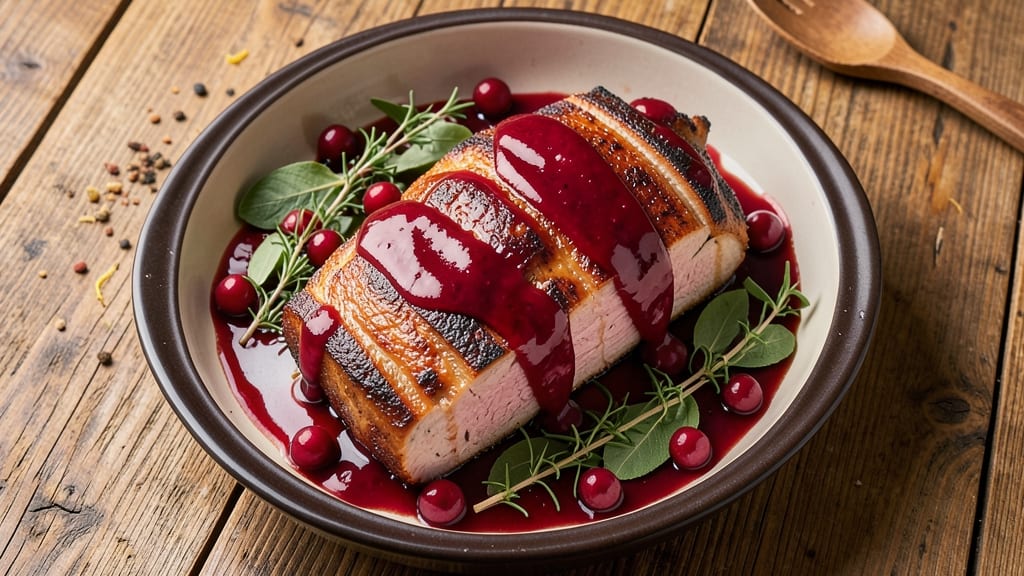
This cranberry Dijon pork roast with apple cider glaze delivers restaurant-quality results with a sweet-tangy balance that transforms simple pork into a showstopper. After years of perfecting this technique in my kitchen—and later on the pit at The Smoky Pig—I know exactly how to achieve juicy meat with a glaze that caramelizes into a sticky, flavorful crust. The secret lies in the slow roast combined with a glaze that's equal parts sweet, tart, and herby.
The apple cider glaze isn't just sweet—it's the star of the dish, cutting through the richness of the pork while locking in moisture. I use high-quality Dijon mustard for depth, cranberries for that signature tang, and fresh thyme to tie everything together.
This isn't a quick weeknight meal, but the results are worth every minute of hands-off roasting time. The pork stays tender and succulent, while the glaze develops into a glossy, caramelized finish that makes every bite irresistible.
What makes this dish truly special is how the flavors come together: the deep, savory notes of the pork, the bright acidity of the cranberries, and the warmth of the apple cider glaze.
Serve it with roasted root vegetables or creamy mashed potatoes to soak up every last drop of that sticky-sweet sauce. This is the kind of recipe that feels like a hug on a chilly autumn evening—or a celebration-worthy centerpiece for any gathering.
From my farm to your table, this pork roast is a testament to how simple ingredients can create something extraordinary. The technique is straightforward once you understand the balance of sweet, tangy, and savory, but the results are anything but basic.
Trust me, your guests will ask for seconds—and you'll be glad you made enough to share.
Ingredients for cranberry dijon pork roast with apple cider glaze
Pork, cranberries, and Dijon—three simple ingredients that create a showstopping roast with sticky-sweet glaze.
| Ingredient | Amount | Notes |
|---|---|---|
| Boneless Pork Loin Roast 🐖 | 3 lb | Center-cut for even cooking |
| Fresh Cranberries 🍇 | 1 cup | Fresh or frozen, unsweetened |
| Dijon Mustard 🍯 | ¼ cup | High-quality, smooth variety |
| Apple Cider 🍎 | ½ cup | Unfiltered, preferably local |
| Fresh Thyme Sprigs 🌿 | ¼ cup | Leaves only, stems removed |
| Granulated Sugar 🍚 | ¼ cup | Light brown sugar for depth |
| Balsamic Vinegar 🍷 | 2 tbsp | Aged, for tangy depth |
| Olive Oil 🫒 | 2 tbsp | Extra-virgin for richness |
| Garlic Cloves 🧄 | 4 cloves | Minced, for aromatic base |
| Salt 🧂 | 1 ½ tsp | Kosher or sea salt |
| Black Pepper 🌶️ | 1 tsp | Freshly ground preferred |
| Fresh Rosemary 🌿 | ⅛ cup | Chopped, for earthy aroma |
| Honey 🍯 | 1 tbsp | Wildflower for floral notes |
The pork loin is non-negotiable here—center-cut stays juicy while the outer edges caramelize. Costco or Whole Foods sell pre-trimmed roasts, but if you're buying whole, ask the butcher to remove the fat cap. Fresh cranberries are ideal, but frozen work too (no need to thaw). For the Dijon, Maille or Whole Foods brand add depth—avoid the cheap stuff. Thyme and rosemary? Grab fresh bundles at Trader Joe's or your local farmers market—they're cheaper per ounce than dried and way more flavorful. The apple cider should be unfiltered, preferably from a local orchard if you're feeling fancy.
No fresh cranberries? Cranberry sauce concentrate (the canned kind) works in a pinch—just thin it with a splash of apple cider. Short on Dijon? Yellow mustard plus a pinch of turmeric mimics the color and some of the depth. The honey can be swapped for maple syrup if you're avoiding it, but I prefer honey's floral notes. For the glaze, reduce it longer if you want a thicker consistency—just watch it like a hawk so it doesn't burn. The balsamic vinegar adds that tangy complexity, so don't skip it unless you've got something equally acidic on hand.
This roast tastes even better the next day—make extra for sandwiches or leftovers. Store the roast wrapped in foil for 3-4 days in the fridge, or freeze portions for up to 3 months. The glaze can be made ahead and reheated gently—just add a splash of water or apple cider to thin it out. I always roast a couple extra pounds because everyone asks for seconds. The glaze keeps in the fridge for 1 week if you want to make it separately. Trust me, you'll want to.
Why You'll Love This Recipe
- Foolproof Roast: I swear by this—no guesswork, no overcooked disappointment. Just sear the pork, toss in the cranberries and thyme, then let the oven do the work while you sip that same apple cider you’re using for the glaze. (Yes, I do that. No judgment.)
- Sweet-Savory Magic: That tangy Dijon meets the bright cranberries and caramelized cider—it’s like autumn in your mouth. The glaze isn’t just sticky; it’s addictive, cutting through the richness of the pork with every bite. My husband licks the plate. (Not exaggerating.)
- Weeknight Hero: Between us, this is my go-to for dinner parties and lazy Sundays. The leftovers reheat beautifully—slice it thin for sandwiches or toss with mashed potatoes. And honestly? It feels fancy without the fuss. (My in-laws think I’m a chef.)
- Budget-Friendly Feast: Pork loin stretches far, and cranberries in season are cheaper than you’d think. I buy them frozen when they’re on sale, and the glaze uses what’s already in my pantry. Feeds four, costs less than takeout, and still tastes like I slaved over it. (Best. Hack.)
Step-by-step instructions for cranberry Dijon pork roast
Here's how to create a perfectly juicy pork roast with a sweet-tangy glaze that'll impress everyone.
Prep the Pork and Seasoning
Take the 3 lb boneless pork loin roast out of the fridge and let it sit at room temperature for 30 minutes—this ensures even cooking. Pat it dry completely with paper towels, especially important for crispy skin later. In a small bowl, mix together the 1.5 tsp salt, 1 tsp black pepper, 0.125 cup chopped fresh rosemary, and 0.25 cup Dijon mustard. Rub this mixture all over the pork, pressing it into the meat so it sticks. The mustard adds depth while helping the glaze adhere later.
Place the seasoned pork in a roasting pan and let it rest uncovered in the fridge for at least 1 hour (or up to 4 hours). This step is crucial for juicy meat—it helps the seasoning penetrate while keeping the pork tender. Don't skip it, even if you're in a hurry.
Roast Until Nearly Done
Preheat your oven to 325°F—this lower temperature ensures the pork cooks through without drying out. Roast the pork for 1 hour and 15 minutes, or until the internal temperature reaches 150°F when measured with a meat thermometer. I like to check it at the 1-hour mark to account for oven variations. The pork should be pale pink in the center but not quite done yet—it'll finish cooking with the glaze.
While the pork roasts, prepare the glaze ingredients in a medium saucepan. Add 1 cup fresh cranberries, 0.5 cup apple cider, 0.25 cup granulated sugar, 2 tbsp balsamic vinegar, 1 tbsp honey, and 4 minced garlic cloves. Bring to a simmer over medium heat and cook for 10 minutes, stirring occasionally, until the cranberries burst and the mixture thickens slightly. Stir in the 0.25 cup fresh thyme sprigs and remove from heat.
Apply Glaze and Finish Cooking
Remove the pork from the oven and increase the heat to 425°F. Pour the cranberry mixture evenly over the roast, letting it pool in the bottom of the pan. Return the pork to the oven and roast for an additional 15-20 minutes, basting it with the pan juices every 5 minutes. The glaze should caramelize slightly, creating a sticky, flavorful crust. The pork is done when the internal temperature reaches 160°F—this final high-heat step ensures the glaze sets while keeping the meat juicy.
Here's the thing—don't overcook it. The pork will continue cooking slightly as it rests, so pull it out when it hits 160°F. The glaze should be thick enough to coat the back of a spoon but still glossy. If it's too thin, return it to the oven for 2-3 minutes to reduce it further.
Rest and Serve
Transfer the pork to a cutting board and tent loosely with foil. Let it rest for 10-15 minutes before slicing—this allows the juices to redistribute, ensuring every bite is moist and flavorful. The glaze will thicken as it cools, so don't be surprised if it looks slightly set. Use a sharp carving knife to slice the pork into ½-inch thick slices against the grain for tender, easy-to-cut pieces.
Serve the pork with the pan juices spooned over the top and any remaining glaze drizzled around. The combination of sweet cranberries, tangy Dijon, and rich pork creates a harmonious balance that's perfect for holiday dinners or special occasions. Pair it with roasted vegetables or mashed potatoes to complete the meal—every bite delivers that promised juiciness you're after.
Pro Tips For Making Cranberry Dijon Pork Roast With Apple Cider Glaze
- SEAR THE PORK FIRST: That mustard glaze won’t stick worth a damn if you skip the sear. Get your pan screaming hot—cast iron or stainless—and let the pork develop a deep brown crust before you even think about adding the cider. I used to rush this, and the roast always ended up tasting bland no matter how much thyme I packed in.
- TRIM CRANBERRIES LIKE A PRO: Fresh cranberries are stubborn little devils. Don’t just toss them in whole—they’ll turn to mush and make your glaze watery. Cut them in half, then snip off the tough white core with kitchen shears. A quick soak in cold water first helps them plump up, but drain them well or your glaze will turn into soup.
- DON’T BOIL THE CIDER DRY: Reducing apple cider for the glaze is where people mess up. Keep it moving—medium heat, not simmering—and stir often. If it gets too thick too fast, splash in a little water or even a splash of the roasting juices. The goal is a glossy, syrupy consistency, not burnt sugar. I learned this after one disastrous Thanksgiving where the glaze was basically caramelized regret.
- REST THE PORK UNDER FOIL: You’ll be tempted to slice that roast the second it hits 145°F, but resist. Tent it with foil and let it sit for 5-10 minutes—no peeking. This keeps the juices locked in instead of pooling on your cutting board. I was skeptical until I tried it; now I swear by it, especially for pork loin, which dries out faster than you’d think.
Storing and reheating this dish
Refrigerator Storage
Let your cranberry Dijon pork roast cool to room temperature before storing—this takes about 1-2 hours. Wrap the roast tightly in butcher paper (not plastic) to retain moisture, then place it in an airtight container.
Store in the fridge for up to 4 days. The glaze will thicken slightly, so add 1-2 tablespoons of apple cider or water when reheating to restore its glossy texture. 💫
Freezer Storage
For longer storage, slice the pork and freeze it in a single layer on a tray before transferring to a freezer bag—this prevents freezer burn. The roast stays excellent for 3 months. When ready to use, thaw overnight in the fridge, then reheat gently.
The glaze can also be frozen separately in an ice cube tray for up to 2 months—just pop out what you need and warm it in a saucepan.
Stovetop Reheating
My preferred method is stovetop reheating for even warmth. Place sliced pork in a skillet over medium-low heat with 2 tablespoons of apple cider or broth—this prevents drying. Cover and heat for 8-10 minutes, stirring occasionally.
For the glaze, warm it in a small saucepan with 1 tablespoon of water until smooth and bubbly. The combination of reheated pork and warmed glaze tastes almost as good as fresh! 🔥
Oven Reheating
For whole roasts, reheat at 300°F for 20-25 minutes, covered with foil. Add 2 tablespoons of apple cider to the pan to keep it moist. The glaze will caramelize slightly, adding extra depth.
Check the internal temperature—it should reach 165°F before serving. This method works best for large gatherings where you want to keep everything warm simultaneously.
Microwave Safety
If you're short on time, microwave reheating works in a pinch. Place pork slices on a microwave-safe plate with 1 tablespoon of apple cider, cover with a damp paper towel, and heat for 1-2 minutes on high.
The glaze can be reheated in 30-second bursts, stirring between each. While not as perfect as stovetop, it's a quick solution when you're in a hurry. Just avoid overcooking—pork dries out fast in the microwave.
Glaze Refresh Tips
The glaze is the star of this dish, so don't neglect it when reheating. If it thickens too much, thin it with apple cider vinegar or water. For extra shine, add 1 teaspoon of honey and warm it for 2 minutes** on low heat.
I often reheat the glaze separately and drizzle it over the pork table-side—it makes the dish look (and taste) restaurant-worthy. The secret is keeping it warm but not boiling. ✨
Nutrition facts
Frequently asked questions
Can I substitute regular mustard for Dijon in this recipe?
While you can use regular yellow mustard in a pinch, Dijon adds depth and a subtle complexity that regular mustard lacks. For the closest substitute, mix 2 tablespoons of yellow mustard with ½ teaspoon of turmeric for color and flavor. However, I recommend using high-quality Dijon—it makes a noticeable difference in the final dish.
How do I adjust this recipe for a larger crowd?
For every additional 2 people, add 1 lb of pork loin and increase the glaze ingredients by ⅓ cup. Keep the roasting time the same, but check the internal temperature with a meat thermometer. For example, a 6 lb roast would need 1.5 cups of cranberries and ¾ cup of apple cider for the glaze.
Why did my glaze turn out too thin or too thick?
A thin glaze means it didn't reduce enough—simmer it longer (up to 5 extra minutes) or add 1 tablespoon of cornstarch mixed with water. If it's too thick, thin it with 1-2 tablespoons of apple cider or water while warming. The glaze should coat the back of a spoon but still be pourable.
Can I make the glaze ahead of time?
The glaze can be made 1-2 days ahead and stored in the fridge. Reheat it gently in a saucepan with 1 tablespoon of apple cider to restore its shine. For best results, reheat the glaze separately and drizzle it over the pork just before serving.
What are the best sides to serve with this pork roast?
This dish pairs beautifully with creamy mashed potatoes, roasted Brussels sprouts, or wild rice pilaf. For a lighter option, try a fresh apple and arugula salad with a honey-Dijon vinaigrette—it complements the sweet-tangy flavors perfectly.