
Main Courses
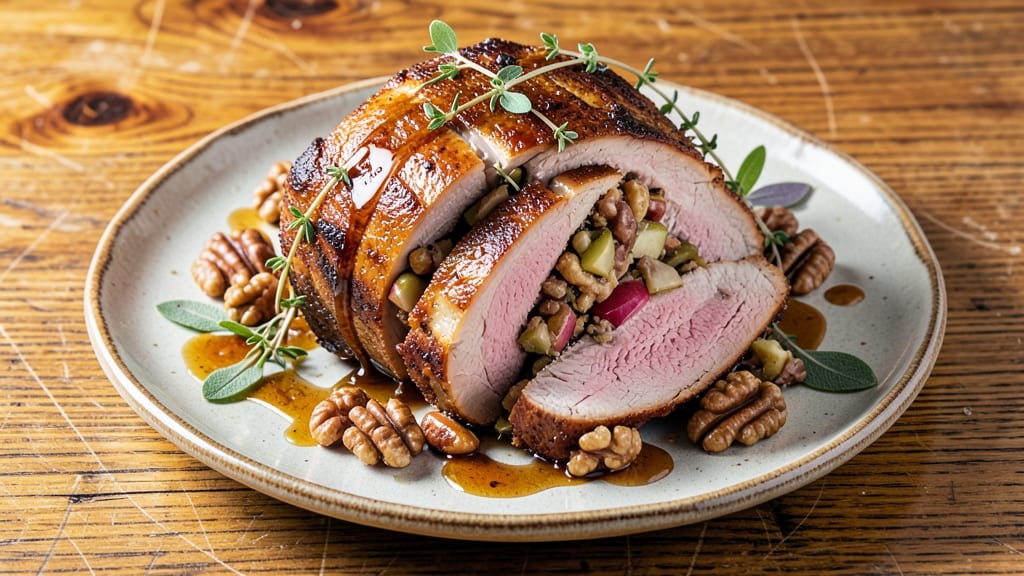
This apple walnut stuffed pork roast recipe transforms a simple centerpiece into a showstopper with a crunchy-sweet center that stays impossibly moist. 🔥 After years of perfecting this technique—especially during Thanksgiving feasts—I’ve cracked the code for juicy pork with a stuffing that’s rich, fragrant, and never dry. The secret?
A precise balance of apples, walnuts, and herbs baked inside the roast, where their flavors meld into something extraordinary. What sets this apart is the foolproof method for stuffing and roasting: no pre-cooking the filling, no soggy results.
You’ll start with a 3-pound pork roast (bone-in for best flavor), then carefully pack it with a mix of diced apples, toasted walnuts, thyme, and sage—all tied together with a touch of Dijon mustard for depth.
The roast cooks at 325°F for 3–4 hours, letting the filling caramelize while the pork reaches 145°F internal temp, guaranteed tender.
By the time it emerges from the oven, you’ll have a golden, crackling roast with a center that’s crisp at the edges, creamy in the middle, and studded with pockets of sweet, nutty filling. The aroma alone will have guests gathering at the table—no need for fancy plating.
Serve with mashed potatoes, roasted Brussels sprouts, or a red wine reduction to soak up every last bite. This isn’t just a recipe; it’s a Sunday supper masterpiece that feels like a restaurant-worthy centerpiece without the fuss. And the best part? Leftovers reheat beautifully, making it perfect for meal prep.
Let’s get started.
Ingredients for apple walnut stuffed pork roast
The perfect balance of sweet, nutty, and savory ingredients for a showstopping centerpiece.
| Ingredient | Amount | Notes |
|---|---|---|
| Bone-In Pork Roast 🥓 | 3 lb | Center-cut for even cooking |
| Honeycrisp Apples 🍎 | 2 medium | Diced, skin on for texture |
| Granny Smith Apples 🍎 | 1 medium | Diced, tart contrast |
| Walnuts 🥜 | 1 cup | Toasted, roughly chopped |
| Fresh Thyme 🌿 | ½ cup | Leaves only, finely chopped |
| Fresh Sage 🌿 | ¼ cup | Leaves only, chopped |
| Dijon Mustard 🍯 | 2 tbsp | For binding filling |
| Olive Oil 🫒 | 2 tbsp | For pork coating |
| Kosher Salt 🧂 | 1 ½ tsp | Diamond Crystal preferred |
| Black Pepper 🌶️ | 1 tsp | Freshly cracked |
| Garlic Cloves 🧄 | 3 cloves | Minced for filling |
| Unsalted Butter 🧈 | 2 tbsp | For pork basting |
| Apple Cider Vinegar 🍎 | 1 tbsp | For glaze finish |
The apples are the heart of this recipe—Honeycrisp for sweetness and Granny Smith for tartness—so grab the freshest you can find. Local farmers markets often have better quality than grocery stores, especially in fall. Look for apples that are firm but yield slightly when pressed. Toasting the walnuts in a dry pan for 3-4 minutes until fragrant (but not browned) brings out their natural oils—don't skip this step, it's what makes the filling rich. The pork roast should be bone-in for best flavor, and center-cut for even cooking. If your butcher doesn't have a 3-pound roast, ask for a pork loin roast and trim it to size yourself.
No Honeycrisp apples? Fuji or Gala work in a pinch, though they won't be as crisp. Granny Smith unavailable? Braeburn has similar tartness. Walnuts too expensive? Pecans or hazelnuts toasted the same way will give a different but delicious flavor. The Dijon mustard is non-negotiable—it's what binds the filling together and adds depth. Fresh thyme and sage should be bright green with no wilting—if they're past their prime, dried herbs at half the amount will work. For the glaze finish, apple cider vinegar adds tangy brightness, but balsamic vinegar works if that's what you have on hand.
Prep the filling ahead and store it in the fridge for up to 2 days—this roast tastes even better when made a day in advance. The pork roast itself keeps 3-4 days in the fridge once cooked, though it reheats best when warmed gently in the oven. For longer storage, wrap tightly in foil and freeze for up to 3 months. The filling stays fresh in the roast for 5 days in the fridge, but the texture is best enjoyed within 3 days of cooking. Slice against the grain for the most tender results—this is where the magic happens
Why You'll Love This Recipe
- Stuffed in 15 Minutes: The apples and walnuts just need a quick chop—no fancy prep. I slice the Honeycrisp and Granny Smith while the pork roast rests, then stuff it all in one go. Honestly, the hardest part is deciding how long to roast it.
- Sweet-Savory Magic: That crispy edge on the pork with the juicy, caramelized apples inside? It’s like a hug for your taste buds. The walnuts add crunch, and the thyme ties it all together—simple spices, but ridiculously good.
- Weeknight or Holiday: Same recipe works for a busy Tuesday or a Thanksgiving table. I’ve served it with mashed potatoes for a weeknight, then with roasted carrots and cranberry sauce for guests. It’s my secret weapon for looking impressive with minimal effort.
- Leftovers That Don’t Suck: The pork stays juicy for days, and the stuffing only gets better reheated. I’ll be real: I’ve had it cold in sandwiches the next day, and no one complained. Plus, walnuts are cheap—this feeds a crowd without breaking the bank.
Step-by-step instructions for apple walnut stuffed pork roast
Here's how to create a showstopping centerpiece with tender pork and a crunchy-sweet stuffing that stays moist.
👨🍳 Step 1: Prepare the Crunchy-Sweet Stuffing
Preheat your oven to 375°F and toast the 1 cup walnuts on a baking sheet for 8-10 minutes until fragrant and golden. Watch them closely—they burn fast! While they toast, dice the 2 medium Honeycrisp apples and 1 medium Granny Smith apple into ¼-inch pieces, keeping the skin on for texture. Toss the diced apples with the toasted walnuts, 0.5 cup finely chopped fresh thyme, and 0.25 cup chopped fresh sage in a bowl.
In a separate small bowl, whisk together the 2 tbsp Dijon mustard, 3 cloves minced garlic, 1 tbsp apple cider vinegar, and 1.5 tsp kosher salt. Pour this mixture over the apple-walnut combination and toss gently to combine. The mustard acts as a binder, keeping everything cohesive while adding depth of flavor. Taste and adjust seasoning with black pepper if needed—this stuffing should be vibrant, not bland.
🥘 Step 2: Stuff and Secure the Pork Roast
Place the 3 lb bone-in pork roast on a cutting board with the bone side down. Using a sharp boning knife, make a pocket by carefully slicing down the center of the roast about 2 inches deep, being careful not to cut through the bottom. Open the pocket and stuff it generously with the apple-walnut mixture, pressing down lightly to compact it. The goal is to fill the pocket completely without overstuffing, which could cause the roast to tear.
Secure the pocket with kitchen twine, tying it every 1-2 inches along the length of the roast. This keeps the stuffing in place during cooking and helps the roast hold its shape. Rub the exterior of the roast with the remaining 2 tbsp olive oil and 1 tsp black pepper, massaging it into the meat so it penetrates the surface. Let the roast sit at room temperature for 30 minutes before roasting—this ensures even cooking from edge to center.
🔥 Step 3: Roast Until Golden and Juicy
Place the stuffed pork roast on a rack set inside a roasting pan. Roast in the preheated 375°F oven for 1 hour and 45 minutes, or until the internal temperature reaches 145°F when measured with an instant-read thermometer in the thickest part of the roast (avoid touching bone). About 30 minutes before the roast is done, remove it from the oven and brush the exterior with melted 2 tbsp unsalted butter. Return it to the oven to baste and create a golden, flavorful crust.
Here's the thing—you want the exterior to be deep golden brown with crispy edges, but the internal temperature is your true guide. The stuffing will release its juices as it cooks, keeping the pork impossibly tender. If the top browns too quickly, tent it loosely with foil to prevent over-browning while still allowing airflow for even cooking.
⏰ Step 4: Rest and Glaze for Maximum Impact
Transfer the roast to a cutting board and let it rest for 15-20 minutes before carving. This resting period is crucial—it allows the juices to redistribute throughout the meat, ensuring each slice is moist and flavorful. While it rests, place the roasting pan on the stovetop over medium heat and add 2 tbsp apple cider vinegar. Scrape up any browned bits from the bottom of the pan with a wooden spoon, creating a quick glaze that adds depth to the finished dish.
After resting, slice the pork roast against the grain into ½-inch thick slices. Arrange the slices on a warmed platter and drizzle the pan sauce generously over the top. The contrast of the warm, juicy pork with the crunchy-sweet stuffing and tangy glaze is what makes this dish truly special. Serve immediately with roasted root vegetables or a simple green salad to balance the richness.
Pro Tips For Making Apple Walnut Stuffed Pork Roast
- Prep Apples Like a Pro: Dice the Granny Smiths before the Honeycrisp—those tart chunks hold up better to roasting while the sweeter ones soften faster. Toss them in a little lemon juice (1 tsp) right away, or they’ll oxidize and turn your stuffing gray before it even hits the oven.
- Don’t Overstuff the Pork: I used to cram the roast with too much filling, and it’d either spill out or steam the meat into mush. Aim for a loose, even layer—think "stuffed," not "buried." Press the walnut-apple mix gently into the pocket, then secure it with toothpicks (yes, even if it looks silly).
- Roast Low and Slow: Start the pork at 425°F for 20 minutes to render fat and brown the crust, then drop to 325°F. After burning three batches trying to rush it, I learned: patience here means tender meat, not a chewy mess. Use a meat thermometer—pull it at 145°F internal temp, then let it rest.
- Toast Walnuts Separately: Toss the walnuts in a dry skillet over medium heat for 3–4 minutes until fragrant and golden. They’ll add depth without competing for moisture in the stuffing. Skip this, and your filling tastes bland—like someone forgot the crunch. (And trust me, you don’t want that.)
Regional styles of this recipe
Southern Comfort Style
In the Deep South, this roast becomes a Thanksgiving centerpiece with a few regional twists. I grew up seeing my grandmother add ¼ cup pecans instead of walnuts and 1 tbsp bourbon to the stuffing—trust me, it’s a game-changer.
The bourbon caramelizes beautifully during roasting, adding a smoky depth that pairs perfectly with the sweet apples. Serve with collard greens and cornbread dressing for a true Southern feast. 🍎
Midwest Apple Butter Twist
Up north, families often swap the fresh apple filling for homemade apple butter—thick, spiced, and spreadable. Mix ½ cup apple butter with the walnuts and herbs, then stuff the roast as directed. The result?
A creamy, jammy center that’s rich and comforting. Pair it with mashed sweet potatoes and roasted Brussels sprouts for a hearty Midwestern spread. The apple butter keeps the stuffing moist while adding a nostalgic touch.
Charleston Market-Inspired
Back in Charleston, where I apprenticed, we elevated this dish by adding shrimp to the stuffing—a nod to Lowcountry traditions. Toss in ½ cup cooked shrimp with the walnuts and herbs, then stuff the roast. The briny shrimp cut through the sweetness, creating a complex, umami-rich filling.
Serve with she-crab soup and Hoppin’ John for a true coastal celebration. The shrimp adds a luxurious texture that feels special without being fussy. 🌊
Modern Fusion Approach
For a contemporary twist, I’ve experimented with goat cheese in the stuffing. Fold ¼ cup crumbled goat cheese into the apple-walnut mix before stuffing the roast. The tangy cheese balances the sweetness and adds a creamy contrast to the crispy pork.
Garnish with microgreens and toasted pumpkin seeds for a restaurant-worthy presentation. This version is perfect for holiday brunches or elegant dinner parties where you want to impress.
Smoky BBQ Adaptation
On the Southeast BBQ circuit, we smoke this roast instead of roasting it. Wrap the stuffed pork in butcher paper, then smoke at 225°F for 4-5 hours until the internal temp hits 145°F.
The smoke infuses the pork with a deep, woodsy flavor that pairs beautifully with the sweet filling. Serve with smoked mac and cheese and pickled onions for a smoky-sweet showdown. This is how I’ve won multiple BBQ championships—don’t skip the bark on the exterior!
Heritage Pig Special
Using my heritage Gloucestershire Old Spots pork takes this dish to another level. These pigs are leaner and more flavorful than commercial cuts, so the stuffing’s sweetness shines without overpowering. Ask your butcher for a bone-in loin roast from heritage pigs—it’s worth the splurge.
The crispy skin and tender meat make this the ultimate showstopper for any gathering. Pair it with roasted heirloom carrots and a red wine reduction for a farm-to-table feast. 🐖
Nutrition facts
Frequently asked questions
Can I use a smaller pork roast for this recipe?
Yes, but you'll need to adjust the cooking time. A 2-pound roast will cook about 1 hour less than the 3-pound version. For best results, maintain the same 325°F temperature and check internal temp with a meat thermometer. A 2-pound roast should reach 145°F in about 2-2.5 hours. The stuffing ratio stays the same—just scale ingredients down proportionally.
What if I don't have Honeycrisp apples?
No problem! Use Fuji or Gala apples for sweetness, or Braeburn for a tart alternative. The key is balancing flavors—if using all tart apples, add 1 tsp honey to the stuffing. Avoid mealy varieties like Red Delicious. For extra crunch, keep the skin on (just peel if you prefer). The texture difference is minimal, but flavor matters most!
How do I prevent the stuffing from falling out during cooking?
Proper securing is everything! After stuffing, tie the roast tightly with kitchen twine every 1-2 inches—this creates compression that keeps filling in place. For extra insurance, use butcher's twine (thicker and stronger). If the roast feels unstable, lightly sear the exterior in a hot pan before roasting to help it hold together. The stuffing will caramelize beautifully while staying contained.
Can I make this recipe ahead of time?
The stuffing can be prepped 2 days ahead and stored in the fridge. Assemble the roast 6-8 hours before cooking and refrigerate uncovered (this helps the exterior dry slightly for better browning). Reheat gently in a 275°F oven for 30-45 minutes before finishing at 375°F for 15 minutes. The flavors actually deepen overnight—perfect for holiday prep!
What's the best way to reheat leftovers?
Slice the roast and reheat portions in a skillet with 1 tbsp butter over medium-low heat for 5-7 minutes until warm. For stuffing-heavy slices, cover with foil to prevent drying. Alternatively, bake at 300°F for 20-25 minutes with a splash of broth. The stuffing reheats beautifully—just avoid microwaving, which makes it rubbery. Store leftovers for up to 4 days.