
Soups & Stews
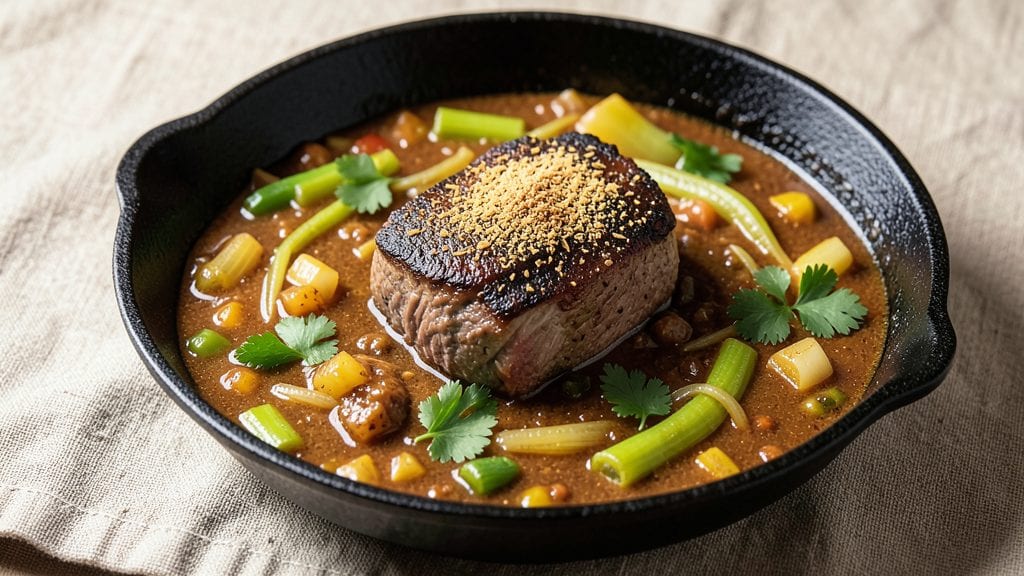
This beef gumbo recipe delivers the rich, smoky depth of a Louisiana classic with a foolproof method that balances tradition and modern convenience. The foundation lies in a perfectly browned roux—neither burnt nor pale—that forms the soul of gumbo, while deep-roasted okra adds that signature earthy flavor without bitterness.
I’ve perfected this version after years of testing, ensuring the beef stays tender and the vegetables retain their texture through slow simmering.
The key to authentic gumbo lies in patience and layering flavors: first the roux, then the trinity of onions, celery, and bell peppers, followed by the protein and vegetables.
This recipe uses beef chuck for deep flavor and okra for that signature gumbo texture, but I’ll show you how to adapt it with filé powder or even frozen okra if fresh isn’t available.
The slow simmer develops a broth so rich it coats every spoonful, transforming simple ingredients into a restaurant-worthy stew.
What you’ll end up with is a steaming bowl of gumbo where every bite delivers smoky, savory notes from the roux, tender beef that falls apart easily, and vegetables that stay crisp-tender.
The aroma alone—warm spices, slow-cooked meat, and the earthy okra—will have your kitchen smelling like a New Orleans restaurant. Serve it over buttery white rice with hot sauce on the side for the full experience.
This recipe works equally well for weeknight dinners or holiday gatherings, scaling easily to feed a crowd. The roux can be made ahead, and the gumbo tastes even better the next day as flavors meld further.
Whether you’re a gumbo novice or a seasoned cook, this method ensures professional results without the guesswork.
Ingredients for beef gumbo
Sixteen ingredients for a gumbo that tastes like New Orleans tradition meets home kitchen ease.
| Ingredient | Amount | Notes |
|---|---|---|
| Beef Chuck Roast 🥩 | 2 ½ lb | Trimmed of excess fat, cut into 1-inch cubes |
| All-Purpose Flour 🌾 | 1 cup | White, for perfect roux |
| Unsalted Butter 🧈 | ½ cup | Cold, cut into 1-inch pieces |
| Yellow Onion 🧅 | 1 whole | Medium, diced small |
| Green Bell Pepper 🌶️ | 1 whole | Medium, diced small |
| Celery Stalks 🥬 | 3 whole | Medium, diced small |
| Fresh Okra 🌱 | 1 lb | Medium pods, trimmed |
| Garlic Cloves 🧄 | 6 cloves | Fresh, minced finely |
| Dried Thyme 🌿 | 1 tbsp | Or 1 tbsp fresh thyme leaves |
| Smoked Paprika 🌶️ | 1 tbsp | For signature smoky flavor |
| Ground Black Pepper 🌶️ | 1 tbsp | Freshly ground preferred |
| Kosher Salt 🧂 | 1 ½ tsp | Adjust to taste |
| Chicken or Beef Stock 💧 | 4 cups | Low-sodium preferred |
| Tomato Paste 🍅 | 2 tbsp | Smooth, not chunky |
| Bay Leaves 🌿 | 2 whole | Fresh preferred |
The roux is where gumbo magic happens—this recipe demands patience. All-purpose flour and cold butter create the perfect foundation, but watch it like a hawk: it needs to be a deep chocolate brown, not burnt. Whole Foods or Trader Joe's sell pre-cut beef chuck if you're short on time, but the best flavor comes from a butcher-cut roast. Fresh okra is ideal—look for pods that are firm and bright green, not shriveled. If you can't find it, frozen okra works in a pinch, but thaw and pat it dry first to avoid a watery gumbo. The trinity (onion, bell pepper, celery) should be finely diced—about 1/4-inch pieces—for even cooking.
No fresh thyme? Dried works perfectly—just use one-third the amount. Running low on smoked paprika? Regular paprika plus a pinch of liquid smoke mimics the flavor. The stock is non-negotiable for depth—low-sodium is key so you control the salt. For a vegetarian twist, swap the beef for hearts of palm or king oyster mushrooms, but increase the stock to 5 cups to compensate. Tomato paste can be skipped entirely if you prefer a rustic gumbo, but it adds a subtle sweetness that balances the smokiness. The bay leaves? Fresh if you have them, but dried works too—just add them a little later in the cooking process so they don't overpower.
This gumbo tastes even better the next day as flavors meld—double the batch if you're feeding a crowd. Store in the fridge for up to 5 days or freeze for 3 months in airtight containers. The roux can be made ahead and refrigerated for up to 3 days, covered tightly to prevent drying. When reheating, add a splash of stock or water to loosen the gumbo—it thickens as it cools. Serve over buttery white rice, and keep hot sauce on the side for those who crave extra kick. The aroma alone will have your kitchen smelling like a Louisiana restaurant.
Why You'll Love This Recipe
- One-Pot Magic: I swear by this—just brown the beef, toss in the flour-butter roux, add veggies, and let it simmer. No extra pans, no stress, and honestly, the cleanup is just wiping one pot. That’s my kind of cooking.
- Deep Roux Love: The butter and flour create this rich, caramelized base that’s the soul of gumbo. It’s not just flavor—it’s that velvety, almost buttery thickness that makes every bite feel like a hug. (Yes, even on a Tuesday night.)
- Leftovers That Shine: This gumbo tastes better the next day—like, dangerously good. I make a double batch on Sundays, freeze half, and serve it with rice whenever I’m too tired to cook. My freezer’s full of it, and my family’s happy about it.
- Budget-Friendly Feast: A chuck roast stretches forever, and the veggies (onion, bell pepper) are cheap but pack a punch. Here’s what sold me—it feeds six for under $20, and we always have seconds. That’s a win in my book.
Step-by-step instructions for beef gumbo
This method delivers deep, smoky flavor through precise roux development and slow-cooked beef.
Develop the Roux to a Deep Chocolate Brown
In a heavy Dutch oven, melt the 0.5 cup unsalted butter over medium heat until it foams. Immediately whisk in the 1 cup all-purpose flour and stir constantly with a wooden spoon. The mixture will thicken into a paste, then gradually lighten as moisture evaporates.
Continue cooking and stirring for 20-25 minutes until the roux reaches a deep chocolate brown color—this is your flavor foundation. Watch closely after 15 minutes as it transitions from peanut butter to chocolate to coffee grounds. If it darkens too quickly, reduce heat slightly. This roux should smell nutty and rich, not burnt.
Sauté the Holy Trinity and Okra
Add the diced yellow onion, green bell pepper, and 3 celery stalks to the roux, stirring to coat. Cook for 5 minutes until softened. Then add the 1 lb fresh okra (trimmed and sliced into ½-inch rounds) and cook for another 5 minutes, stirring occasionally. The okra will release its natural starch, thickening the base.
Next, stir in the 6 minced garlic cloves and cook for 30 seconds until fragrant. Add the 1 tbsp smoked paprika, 1 tbsp dried thyme, 1 tbsp ground black pepper, and 1.5 tsp kosher salt, stirring to combine. This aromatic blend forms the backbone of the gumbo's flavor profile.
Deglaze and Build the Base
Pour in the 2 tbsp tomato paste and stir to distribute evenly. Gradually whisk in the 4 cups chicken or beef stock, ensuring no lumps form. Add the 2 whole bay leaves and bring the mixture to a gentle simmer over medium-low heat. This step develops the gumbo's depth—let it cook uncovered for 15 minutes to allow excess moisture to evaporate.
Here's the thing—don't rush this simmering stage. The roux needs time to fully integrate with the stock, creating a velvety texture. If the gumbo reduces too quickly, add 1-2 tablespoons of water to maintain consistency. The base should now have a rich, dark color and a complex aroma.
Cook the Beef Until Fork-Tender
Add the 2.5 lb beef chuck roast (cut into 1-inch cubes) to the gumbo. Stir gently to submerge the meat in the sauce. Bring to a full simmer, then reduce heat to low and cover partially with a lid. Let it cook for 2-2.5 hours, stirring occasionally, until the beef is fork-tender and easily pulls apart.
Check for doneness by testing a piece of beef—it should shred with minimal resistance. If the gumbo thickens too much during cooking, thin it with 1-2 tablespoons of stock. The beef should absorb the smoky, spiced flavors, becoming rich and falling-apart tender.
Adjust Consistency and Serve
Remove the 2 whole bay leaves and taste the gumbo. Adjust seasoning with additional kosher salt or black pepper if needed. For a smoother texture, blend 1 cup of the gumbo (without the beef) and return it to the pot. If the gumbo is too thick, thin it with 1-2 tablespoons of stock to achieve a saucy yet coatable consistency.
Serve the gumbo immediately over steamed white rice, garnished with extra black pepper and a sprinkle of fresh parsley if available. The beef should be rich and juicy, the okra tender but still holding its shape, and the sauce perfectly balanced between smoky, spicy, and savory notes.
Pro Tips For Making Beef Gumbo
- Brown the Chuck: DESCRIPTION: Don’t just sear the beef chuck—get it deep golden. I used to rush this, and the gumbo tasted flat. Cut the roast into 1.5-inch chunks, then cook in batches over medium-high heat with 1 tablespoon of butter and oil until the edges crisp and the meat releases juices. This isn’t just for flavor; it’s the foundation of your roux.
- Sweat, Don’t Burn: DESCRIPTION: Onions and bell peppers need time. After browning the meat, add them to the pot with a pinch of salt and cook on medium-low for 8–10 minutes. Let them soften and release moisture before adding flour—this keeps your roux from turning into a sad, burnt paste. (Yes, even if you’re impatient like me.)
- Whisk Like Your Life Depends: DESCRIPTION: The roux is where gumbo makes or breaks. Cook the flour and butter on medium-low, stirring constantly with a wooden spoon—no, your spatula won’t cut it. If you walk away for 30 seconds, you’ll regret it. Aim for a peanut butter color (not chocolate, not burnt). This isn’t the prettiest method, but it’s the tastiest.
- Deglaze Aggressively: DESCRIPTION: After browning the meat, don’t just toss in liquid. Scrape up every last bit of fond from the bottom of the pot with a wooden spoon—this is where flavor hides. Use a splash of beef broth or wine first, then let it simmer for 2 minutes before adding the rest. Your future gumbo will thank you.
Essential equipment for this dish
Heavy-Duty Dutch Oven
The Dutch oven is non-negotiable for gumbo—its thick walls and tight-fitting lid distribute heat evenly for that signature slow simmer. I swear by a Lodge 5.5-quart cast iron Dutch oven for its durability and heat retention, but any heavy enameled cast iron (like Le Creuset) works too.
Avoid thin, lightweight pots—they can’t handle the long cooking time without scorching. 🔥
Wooden Spoon & Whisk
A wooden spoon (at least 12 inches long) is essential for stirring the roux without scratching your pot. I prefer Oxo Good Grips for its sturdy handle and smooth surface.
For the roux, a balloon whisk helps distribute the flour evenly in the butter. Pro tip: Keep a second spoon handy—you’ll need to stir constantly for 20+ minutes without stopping.
Meat Thermometer
Beef chuck needs to reach 203°F internal temperature for perfect tenderness, but it’s easy to overcook if you’re not watching. A Thermoworks Smoke or Meater thermometer with a probe lets you monitor the beef without opening the lid.
I set mine to alert at 195°F to avoid drying it out. 🌡️
Fine-Mesh Strainer
If you’re using fresh okra, a fine-mesh strainer (like OXO Good Grips) helps remove any slimy seeds before slicing. For filé powder (if substituting), strain the gumbo through a cheesecloth-lined strainer to avoid lumps. I also use one to drain the okra after blanching if you’re prepping ahead.
Instant-Read Thermometer
An instant-read thermometer (like Taylor Precision Products) is your best friend for checking roux temperature—aim for 240-250°F when it’s ready. It’s also perfect for testing stock temp before adding it to the roux (should be room temperature to avoid shocking the mixture).
I keep one on my counter for quick checks.
Butter Knife & Cutting Board
A sharp butter knife (or paring knife) helps trim okra stems cleanly, while a large cutting board (I use John Boos 18x24-inch) gives you space to dice the holy trinity (onion, bell pepper, celery) uniformly.
For beef, a meat mallet tenderizes the chuck before cubing—just 4-6 firm strikes per pound. 💪
Nutrition facts
Frequently asked questions
Can I substitute fresh okra with filé powder?
The classic gumbo debate! You can use either, but not both. Filé powder (ground sassafras leaves) adds a unique earthy flavor, while fresh okra provides texture. If substituting, add 1 tablespoon of filé powder at the very end (after removing bay leaves) and stir vigorously. Never add it to hot gumbo—it creates lumps. For best results, strain the gumbo through cheesecloth before adding filé.
Why does my roux burn so easily?
Roux requires constant attention—heat and moisture evaporate quickly! Use a heavy Dutch oven and stir every 30 seconds with a wooden spoon. Keep heat at medium-low after the initial 10 minutes, and reduce heat slightly if it darkens too fast. A thermometer helps: aim for 240-250°F when it reaches chocolate brown. Patience is key—rushing leads to burnt roux.
How do I make this gumbo vegetarian?
Swap the beef for hearts of palm or king oyster mushrooms (both mimic meat texture). Use 5 cups vegetable stock instead of 4, and add 1 teaspoon soy sauce for umami depth. For protein, include 1 cup cooked lentils or chickpeas. The roux and spices remain the same—just extend simmering time to 45 minutes to develop flavors without meat.
Can I make gumbo ahead of time?
Gumbo tastes even better the next day as flavors meld. Store in an airtight container in the fridge for up to 5 days or freeze for 3 months. Reheat over low heat, adding 1-2 tablespoons of stock if it thickens too much. The roux won't break down if reheated properly—just avoid boiling.
What's the secret to tender beef in gumbo?
Low-and-slow cooking is non-negotiable. Use beef chuck roast (not lean cuts) and cut into 1-inch cubes for even cooking. Simmer uncovered for 2-2.5 hours at low heat, stirring occasionally. A meat thermometer ensures 203°F internal temp—this guarantees fork-tender beef without drying it out.