
Side Dishes
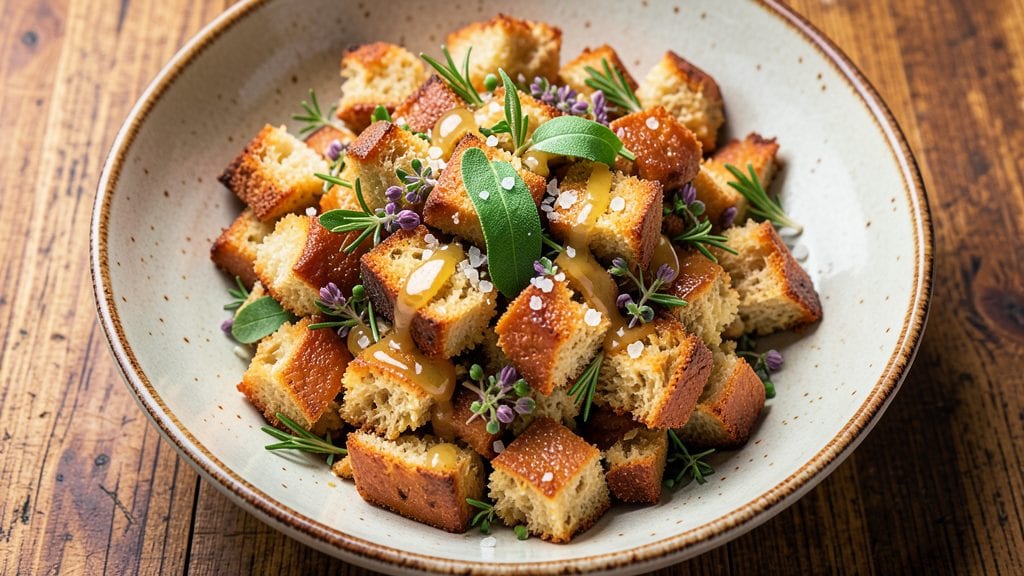
Bell's stuffing recipe transforms simple bread cubes into a fragrant, golden masterpiece that steals the show at any holiday table.
Standing on a step stool in my grandmother's Sicilian kitchen, I learned how fresh herbs and slow-roasted bread could create something magical—this is that recipe, perfected over years of family gatherings.
The secret lies in crisping the bread just right while keeping the centers tender, all bound together by a rich herbed broth that infuses every bite.
This isn't your basic stuffing—it's a savory symphony of sage, thyme, and rosemary that develops deeper flavor the longer it bakes. Using a mix of day-old Italian bread and sturdy sourdough gives it that perfect texture: crispy edges that give way to moist, aromatic centers.
The recipe comes together in under 30 minutes of prep, though the baking time lets those herb notes truly shine.
What you'll end up with is stuffing so good, guests will ask for seconds before dessert even arrives. The golden-brown crust crackles with each bite, while the herbed broth keeps everything juicy and packed with flavor.
It's the kind of dish that makes Sunday dinners feel like a celebration, no matter the occasion. Ready to make your table smell like holiday magic?
While this version uses chicken broth for classic flavor, swapping in vegetable broth makes it vegetarian-friendly. The same technique works for turkey stuffing—just adjust the baking time slightly. Let's get to work on creating this timeless side dish that always delivers.
Ingredients for bell's stuffing
Six ingredients make this stuffing shine—herbs, bread, and butter create holiday magic.
| Ingredient | Amount | Notes |
|---|---|---|
| Day-Old Italian Bread 🍞 | 6 cups | Cubed into 1-inch pieces |
| Sourdough Bread 🍞 | 2 cups | Cubed into 1-inch pieces |
| Unsalted Butter 🧈 | ½ cup | Cold, cubed for even browning |
| Fresh Sage Leaves 🌿 | ½ cup | Chopped, stems removed |
| Fresh Thyme Leaves 🌿 | ¼ cup | Chopped, stems removed |
| Fresh Rosemary 🌿 | ¼ cup | Chopped, finely minced |
| Garlic Cloves 🧄 | 4 cloves | Minced, fresh preferred |
| Chicken Broth 💧 | 1 ½ cups | Low-sodium preferred |
| Heavy Cream 🥛 | ½ cup | Full-fat for richness |
| Large Eggs 🥚 | 1 whole | Beaten for binding |
| Salt 🧂 | 1 ½ tsp | Kosher or sea salt |
| Black Pepper 🌶️ | 1 tsp | Freshly ground preferred |
| Vegetable Oil 🫒 | 2 tbsp | For greasing baking dish |
The bread is everything here. Day-old Italian loaves from the bakery section (like Schwartz's or Bimbo) give that perfect crunch, but sourdough adds chewiness. Tear the crusts off first—no one wants a mouthful of tough edges. If you're using a baguette, slice it into 1-inch cubes. For extra flavor, toast the cubes in the oven at 350°F for 10 minutes before mixing everything. That little step makes all the difference. Whole Foods or local bakeries often have great options, but the regular grocery store bread works too—just don't use anything too soft like brioche.
No fresh sage? Dried works at one-third the amount, but it won't have that same bright, piney aroma. Swap thyme for dried oregano at half the quantity if needed, but rosemary is a must—it's the backbone of the flavor. Short on chicken broth? Vegetable broth works perfectly for a vegetarian version. The heavy cream can be swapped for half-and-half if you're watching fat, but trust me on the full-fat version. For the garlic, if you're not a fan of raw cloves, garlic powder at half the amount gets you close. And if you're prepping ahead, make the stuffing up to a day in advance—the flavors meld even better after resting.
This stuffing reheats like a dream—just pop it back in the oven at 350°F for 15-20 minutes until golden. Keeps in the fridge for 3-4 days covered tightly, or freeze portions for up to 3 months. I always make extra because it disappears faster than you'd think. Store it in a glass baking dish for easy reheating—no need to transfer. And if you're baking a turkey, stuff the cavity with half the batch for maximum flavor infusion.
Why You'll Love This Recipe
- No-Waste Magic: I swear by using day-old Italian and sourdough—no crusts, no fuss. Toss in those stale loaves, and suddenly you’ve got texture gold without buying a single new ingredient.
- Herb-Packed Punch: That butter-sage-thyme combo? It’s like a warm hug for your taste buds. The sage gets toasty while the thyme brightens everything—simple herbs, maximum flavor.
- Holiday or Weeknight: Stuff a turkey? Done. Top a grilled cheese? Also done. I’ve even microwaved it for lazy nights—crispy edges, soft center, always a win.
- Budget Buster: Sourdough and Italian bread are cheap, and this recipe stretches them further than any store-bought stuffing. Leftovers? Freeze them—next week’s lunch is already solved.
Step-by-step instructions for savory sage and herbed bread cubes
Here's how to transform stale bread into rich, aromatic stuffing that steals the show.
Prepare the Bread Base
Preheat your oven to 375°F. Line a baking sheet with parchment paper and spread the 6 cups of day-old Italian bread and 2 cups of sourdough bread cubes evenly across it. This single layer ensures even toasting and prevents soggy spots.
Toast the bread cubes for 12-15 minutes, stirring once halfway through, until they're golden brown and completely dry. You'll know they're ready when they make a crisp sound between your fingers. This step is crucial—it removes excess moisture that would make your stuffing gummy later. Let the toasted cubes cool completely before proceeding.
Build the Herb Butter Mixture
In a large mixing bowl, combine the 0.5 cup of cold cubed unsalted butter, 0.5 cup of chopped fresh sage leaves, 0.25 cup of chopped fresh thyme leaves, 0.25 cup of finely minced fresh rosemary, 4 cloves of minced garlic, 1.5 teaspoons of salt, and 1 teaspoon of black pepper. Use your fingers to work the butter into the herbs until you achieve a crumbly, pea-sized texture.
Here's the thing—don't overmix. You want the butter to coat the herbs evenly without turning into a paste. The mixture should look like coarse sand with visible herb flecks. This is where the flavor really develops, so take your time and make sure every herb gets its fair share of butter.
Combine Everything for Perfect Texture
Add the cooled toasted bread cubes to the herb butter mixture and gently toss until every cube is evenly coated. In a separate bowl, beat the 1 whole large egg until just combined, then pour it over the bread mixture. Stir gently but thoroughly to distribute the egg evenly—this will help bind everything together when we bake it.
Now add the 1.5 cups of chicken broth and 0.5 cup of heavy cream, mixing just until incorporated. You might think it looks dry, but trust me—this is exactly what you want. The liquid will distribute evenly as it bakes, creating moist stuffing without being soupy. If you add too much liquid now, you'll end up with sad, watery cubes.
Bake to Golden Perfection
Grease a 9x13-inch baking dish with 2 tablespoons of vegetable oil (or line with parchment paper for easy removal). Transfer the bread mixture to the prepared dish and spread it evenly, pressing down gently to compact the stuffing. This helps it hold its shape while baking and prevents it from crumbling when you serve it.
Bake at 375°F for 25-30 minutes, until the top is deep golden brown and the edges are crisp. The center should feel firm to the touch—if you press gently and it springs back, it's ready. If it looks underdone, bake for another 5 minutes. The stuffing will continue cooking slightly as it rests, so don't overbake it.
Rest and Serve Warm
Remove the stuffing from the oven and let it rest in the baking dish for 10 minutes. This resting period allows the juices to redistribute, ensuring each bite is moist and flavorful. If you serve it immediately, the juices will pool at the bottom, making some portions dry.
Gently fluff the stuffing with a fork before serving. The texture should be crisp around the edges with tender, herby cubes throughout. The aroma of sage and rosemary should be intoxicating—this is the moment you've been waiting for. Serve warm alongside your main dish, and watch it disappear faster than you can say "seconds, please."
Pro Tips For Making Bell'S Stuffing
- CRACK THE BREAD RIGHT: Mix the Italian and sourdough cubes together—don’t layer them. The Italian’s crumb will absorb moisture differently, and you’ll end up with uneven texture. Toss them in a big bowl first, then add the butter and herbs so everything gets evenly coated.
- USE COLD BUTTER: Cut the unsalted butter into small cubes and toss it with the bread while it’s still cold. Warm butter melts too fast and turns the stuffing greasy before it even hits the oven. You want it to bloom slowly, creating pockets of flavor—not a soggy mess.
- SKIP THE OVERMIXING: After adding the herbs, stir just until the butter is distributed. Overworking the bread compresses it, and you’ll lose that light, airy texture Bell’s stuffing is known for. Think "gentle fold," not "knead it like dough."
- BROWN THE HERBS FIRST: Lightly toast the fresh sage and thyme leaves in a dry pan for 30 seconds before mixing them in. It intensifies their flavor and prevents them from turning bitter in the oven. (Yes, even if you’re impatient like me—just don’t let them burn.)
Wine and beer pairings for these flavors
Classic White Wine
For this herbed stuffing, a crisp Italian Pinot Grigio from Alto Adige is my go-to choice. The bright acidity and citrus notes cut through the richness of the butter and sage, cleansing your palate with each bite.
I always reach for a bottle from Santa Margherita—their 100% Pinot Grigio has that perfect balance of minerality and freshness that complements the stuffing's herbal complexity. 🍷
Rich Red Options
If you prefer red wine, a Chianti Classico with its cherry and earthy undertones pairs beautifully. The tannins in the wine stand up to the stuffing's buttery texture, creating a harmonious contrast.
Look for a Sangiovese-based Chianti like Castello di Volpaia—their 2019 Chianti Classico has just enough acidity to keep things balanced. For a bolder option, try a Cabernet Franc from the Loire Valley in France.
Beer Pairings
A Belgian witbier like Hoegaarden brings a refreshing twist with its coriander and citrus notes. The effervescence helps cut through the richness, making each bite feel lighter. For a more robust option, a German Helles Lager from Bavaria provides a malty backbone that stands up to the stuffing's herbed depth.
I often serve this with a Weihenstephaner Original—it's crisp and clean without overpowering the dish. 🍺
Cider Alternative
If you're serving stuffing at a casual gathering, a dry hard cider like Strongbow Original adds a fruity contrast that works surprisingly well. The slight bitterness in the cider enhances the sage and rosemary flavors, creating a unique pairing that's perfect for holiday meals.
For something more premium, try a French cider like Domaine Dupont—their Brut Nature has complex apple and pear notes that elevate the dish.
Non-Alcoholic Options
Don't overlook sparkling water with a splash of lemon juice and a few drops of herbal syrup for a refreshing non-alcoholic option. The effervescence mimics the crispness of wine, while the lemon brightens the herbal notes.
For something more substantial, try a ginger beer like Feather's—the spicy kick complements the stuffing's savory depth without competing for attention.
Nutrition facts
Frequently asked questions
Can I use any type of bread for this recipe?
While you can experiment, day-old Italian bread and sourdough are ideal—their sturdy texture holds up during baking. Avoid soft breads like brioche or rolls, as they'll turn mushy. For extra flavor, lightly toast the cubes before mixing. If you only have fresh bread, dry it in the oven at 300°F for 10-15 minutes first.
How do I prevent my stuffing from getting soggy?
The key is thoroughly toasting the bread first and using just enough liquid. Toast cubes until crispy and golden, then let them cool completely. When baking, if the stuffing looks dry, add 1-2 tablespoons of broth before serving—don't overmix after baking. The egg helps bind it, but don't skip the 10-minute rest before serving.
Can I make this stuffing ahead of time?
This recipe actually tastes better the next day. Assemble it completely, then refrigerate in an airtight container for up to 24 hours before baking. For longer storage, freeze the unbaked mixture for 3 months. Thaw overnight in the fridge, then bake as directed. The flavors meld beautifully overnight—just add 1-2 tablespoons of broth if it seems dry after reheating.
What's the secret to getting crispy edges?
Three things: butter, high heat, and time. Use cold cubed butter mixed into the herbs for even browning. Bake at 375°F until the edges are deep golden brown. For extra crispiness, broil for 1-2 minutes at the end, watching closely to avoid burning. The butter releases flavor as it melts, creating that perfect crust.
Can I make this vegetarian?
Yes! Simply replace the chicken broth with vegetable broth and use vegetable oil instead of butter if needed. The recipe remains identical otherwise. For extra richness, stir in 2 tablespoons of nutritional yeast after baking. The herbed flavor profile works beautifully without meat—just ensure your bread isn't egg-washed (some artisanal loaves contain egg).