
Soups & Stews
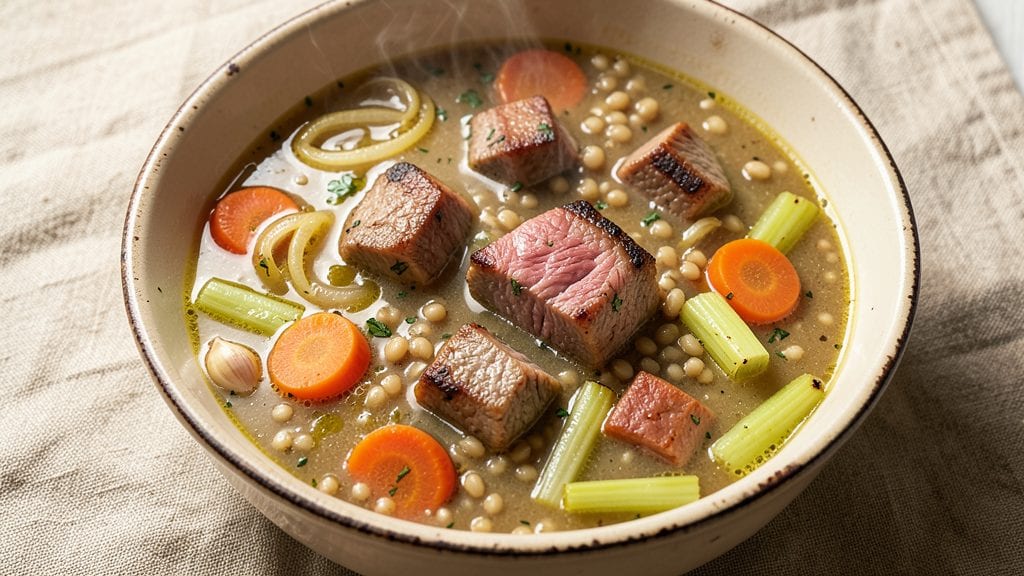
Betty Crocker's beef barley soup recipe delivers the comforting, hearty classic that's been warming kitchens for generations. This tried-and-tested method transforms simple ingredients into a rich, deeply flavorful soup with perfectly chewy barley and tender beef.
I've refined it over years to balance authenticity with home-cook convenience—no fancy techniques required, just reliable results.
The secret lies in slow simmering, which develops the beef's depth and allows the barley to absorb the broth's savory essence. A well-built broth forms the foundation, while the right cut of beef ensures tender chunks that practically melt in your mouth.
This version maintains Betty Crocker's signature approachability while delivering restaurant-quality satisfaction at home.
What you'll achieve is a steaming bowl of soup with a perfect balance of textures—tender beef, hearty barley, and silky broth that coats every spoonful. The aroma alone will have your kitchen feeling like a cozy country diner.
Ready in about 2 hours (or 1 hour in an Instant Pot), this soup is the ultimate comfort food for chilly evenings.
Serve with crusty bread to soak up every last drop of that flavorful broth. The recipe scales beautifully for gatherings, and leftovers taste even better the next day. Here's how to make it the classic way—with modern shortcuts included for busy weeknights.
Ingredients for betty crocker beef barley soup
Classic beef barley soup relies on quality ingredients for that restaurant-quality depth.
| Ingredient | Amount | Notes |
|---|---|---|
| Beef Chuck Roast 🥩 | 1 ½ lb | Cut into 1-inch cubes, trimmed of fat |
| Pearl Barley 🌾 | 1 cup | Uncooked, rinsed thoroughly |
| Yellow Onion 🧅 | 1 whole | Medium size, chopped |
| Carrots | 4 medium | Peeled, cut into 1/2-inch slices |
| Celery Stalks 🥬 | 3 whole | Trimmed, cut into 1/2-inch pieces |
| Garlic Cloves 🧄 | 4 cloves | Peeled, smashed |
| Tomato Paste 🍅 | 2 tbsp | Smooth, not chunky |
| Beef Broth 💧 | 6 cups | Low-sodium preferred |
| Water 💧 | 2 cups | For initial broth |
| Bay Leaves 🌿 | 2 whole | Fresh preferred |
| Dried Thyme 🌿 | 1 tsp | Or 1 tbsp fresh |
| Salt 🧂 | 1 ½ tsp | Diamond Crystal preferred |
| Black Peppercorns 🌶️ | ½ tsp | Freshly cracked |
| Worcestershire Sauce 🍯 | 1 tbsp | For depth of flavor |
| Parsley 🌿 | ¼ cup | Fresh, chopped for garnish |
The beef selection is critical—chuck roast delivers the perfect balance of tenderness and flavor. Most grocery stores carry it pre-cut, but if buying whole, look for well-marbled sections near the shoulder. Costco and Whole Foods consistently offer high-quality cuts. For the barley, pearl barley is standard, but pearled barley cooks faster. Rinse it thoroughly before adding to remove excess starch. The carrots should be firm with vibrant color—avoid any with soft spots or dried ends. Celery adds subtle sweetness, so choose fresh stalks with crisp white centers.
No beef broth on hand? Chicken broth with an extra tablespoon of soy sauce works in a pinch, though the flavor will be lighter. Fresh thyme is ideal, but dried thyme at one-third the amount suffices. Worcestershire sauce can be tricky—Lea & Perrins is the gold standard, but any quality brand will do. For the tomato paste, Trader Joe's makes excellent single-serve tubes that eliminate waste. The bay leaves should be fresh if possible, as dried leaves can impart a bitter note. If using dried, toast them lightly in a dry pan for 30 seconds to enhance their aroma.
This soup improves with time—taste and adjust seasoning after 1 hour of simmering. Store leftovers in airtight containers for up to 5 days in the refrigerator. For freezing, portion into individual servings and freeze for up to 3 months. The barley will soften further after reheating, so it's best to freeze it slightly undercooked. Garnish with fresh parsley just before serving to brighten the dish. The broth can be reduced and frozen separately for use in other recipes.
Why You'll Love This Recipe
- One-Pot Wonder: I swear by this recipe because it’s the rare soup that actually simplifies my life. Toss everything—a chunk of beef, barley, onions, carrots, celery—into one pot, cover it with broth, and let it simmer. No chopping like a fine-diner’s stew, no fussy layers. Honestly, the only prep is dicing the veggies (which I do while watching TV), and the meat practically falls apart on its own.
- Deep Umami Magic: That beef chuck roast? It’s the star. Slow-cooked until tender, it melts in your mouth while the barley soaks up all the rich, savory broth. Between us, the combo of caramelized onions and the earthy barley gives this soup a depth that canned or instant versions can’t touch. It’s the kind of flavor that makes you slow down mid-bite.
- Leftovers That Shine: I make this on Sundays because it begs to be reheated. The barley thickens just enough to feel hearty, and the beef stays juicy—no sad, dry scraps here. Pack it for lunches, freeze portions, or serve it again for dinner. My kids even ask for it, and that’s saying something (they usually refuse anything green).
- Budget-Friendly Feast: A whole roast and barley stretch across multiple meals without breaking the bank. You’re getting protein, fiber, and comfort in one bowl for less than takeout. Plus, the veggies—onions, carrots, celery—are pantry staples that won’t spoil. It’s the kind of recipe that makes grocery day feel like a win.
Step-by-step instructions for Betty Crocker's beef barley soup
This classic soup delivers deep, savory flavor with perfectly chewy barley every time.
Sear the Beef Chuck Roast for Rich Flavor
Pat the 1.5 lb beef chuck roast dry with paper towels and cut it into 1-inch cubes, trimming any excess fat. Heat a large Dutch oven over medium-high heat and add the beef in a single layer, leaving space between pieces. Let it sear undisturbed for 3-4 minutes until a deep golden-brown crust forms on all sides.
This initial searing creates the Maillard reaction that forms complex flavors—don't rush this step. Once browned, remove the beef with tongs and set it aside. The residual browned bits in the pot will form the foundation of your soup's depth. If needed, work in batches to avoid overcrowding the pan.
Sauté the Vegetable Base for Aromatic Depth
In the same Dutch oven, add 2 tablespoons tomato paste and cook for 1 minute until it darkens slightly. Add the 1 whole yellow onion (chopped), 4 medium carrots (½-inch slices), and 3 whole celery stalks (½-inch pieces). Cook for 5-6 minutes, stirring occasionally, until the vegetables soften and the onion becomes translucent.
Add the 4 smashed garlic cloves and cook for an additional 30 seconds until fragrant. The garlic should release its aroma but not burn. Here's the thing—this vegetable base forms the aromatic backbone of your soup. Don't skip this step, as it ensures your soup has that classic, comforting flavor profile.
Build the Broth with Barley and Seasonings
Pour in the 2 cups water and scrape up any browned bits from the bottom of the pot with a wooden spoon. Add the 6 cups beef broth, 2 whole bay leaves, 1 teaspoon dried thyme, 1.5 teaspoons salt, and 0.5 teaspoon black peppercorns. Bring the mixture to a gentle boil, then stir in the 1 cup uncooked pearl barley (rinsed thoroughly) and the seared beef cubes.
Real talk: Pearl barley needs time to develop its signature chewy texture. The rinsing step removes surface starch that can make the soup gummy. Once everything is combined, reduce the heat to low and let it simmer uncovered for 45 minutes, stirring occasionally. This initial simmer allows the barley to begin softening while preventing the broth from becoming too concentrated.
Simmer to Perfection for Maximum Flavor
After the initial 45 minutes, add the 1 tablespoon Worcestershire sauce and stir gently. Continue simmering for an additional 45-60 minutes, or until the barley is tender but still holds its shape and the beef is fork-tender. Your oven might run hot, so start checking at the 20-minute mark—the barley should be al dente, not mushy.
If the soup reduces too much and becomes too thick, add ½ cup water at a time until it reaches your desired consistency. The soup should coat the back of a spoon but still be easy to ladle. This final simmering time is critical—it allows all the flavors to meld together, creating that hearty, comforting taste that defines classic beef barley soup.
Finish and Serve with Fresh Parsley
Remove the 2 whole bay leaves and discard them. Taste the soup and adjust the seasoning if needed—add more salt or pepper if necessary. Ladle the soup into bowls and garnish each serving with 0.25 cup chopped parsley. The parsley adds a bright, fresh contrast to the rich, savory broth and barley.
Serve immediately while hot. The soup should have a deep, robust flavor with tender beef chunks and chewy barley. Each bite should deliver layers of savory, umami-rich broth balanced by the subtle sweetness of the carrots and the earthy notes of the barley. This is the moment that matters—when all your efforts result in a bowl of comforting, classic soup.
Pro Tips For Making Betty Crocker Beef Barley Soup
- Brown the Chuck First: DESCRIPTION:
- Rinse the Barley: DESCRIPTION:
- Don’t Skip the Sauté: DESCRIPTION:
- Strain the Barley: DESCRIPTION:
Troubleshooting great betty crocker beef barley soup
Mushy Barley Fix
Overcooked barley ruins the texture, but you can salvage it by adding ½ cup cold water and simmering for an extra 10-15 minutes—this rehydrates the grains slightly. For prevention, always use pearl barley (not quick-cooking varieties) and rinse it thoroughly before adding.
I've found that checking the barley at 45 minutes (not the full 1.5 hours) prevents overcooking while still developing that signature chew. 💡
Broth Too Thin?
If your soup is watery, simmer uncovered for 10-15 minutes longer to reduce the liquid. For a thicker base, mash ¼ cup of cooked barley with a fork and stir back in—this releases starch that naturally thickens the broth.
Avoid adding flour or cornstarch unless absolutely necessary, as it can make the soup taste artificial. A Dutch oven helps concentrate flavors faster than a regular pot. ⚡
Beef Not Tender Enough
If your beef remains tough, it likely didn't simmer long enough. The key is patience—beef should reach 203°F internal temperature (use a meat thermometer) or be fork-tender after 2-2.5 hours total cooking time.
For quicker results, use chuck roast cut into ½-inch cubes instead of 1-inch pieces, as smaller pieces cook faster. I also recommend adding the beef back to the pot after the initial sear and simmering uncovered the entire time. 🥩
Vegetables Too Soft
Carrots and celery should remain slightly crisp with a bite. If they're mushy, reduce the simmering time by 15-20 minutes next time. Add the vegetables to the pot just 10 minutes before the final simmering stage to preserve their texture.
For extra flavor without overcooking, try roasting the vegetables at 400°F for 20 minutes before adding them to the soup. 🥕
Sour or Off Flavors
This usually means the broth or ingredients were compromised. Always use fresh beef broth (homemade or high-quality store-bought) and check for any metallic or sour smells in ingredients. If your Worcestershire sauce tastes off, replace it—it's the secret to that classic umami depth.
I keep a bottle of Lea & Perrins on hand specifically for soups. For prevention, store broth in the freezer in 1-cup portions to avoid contamination. 🌿
Instant Pot Adaptation
For pressure cooking, sear the beef first, then add all ingredients (except Worcestershire sauce) to the Instant Pot. Cook on high pressure for 25 minutes, then quick-release. Stir in Worcestershire sauce and let sit for 5 minutes before serving.
The pressure method cuts cooking time by nearly half, but the barley may be slightly softer. For chewier texture, use 1 cup pearl barley and reduce pressure time to 20 minutes. 💛
Nutrition facts
Frequently asked questions
Why does pearl barley need rinsing before cooking?
Rinsing removes surface starch that can make the soup gummy or gluey. Pearl barley absorbs liquid as it cooks, and excess starch creates a thick, unpleasant texture. A quick rinse under cold water (about 30 seconds) ensures your soup stays smooth and properly chewy.
Can I substitute beef broth with something else?
Yes, but expect a lighter flavor. Use chicken broth plus 1 tbsp soy sauce for umami depth, or vegetable broth with 1 tsp beef bouillon powder. For a richer taste, combine half beef broth and half water with an extra 1 tbsp Worcestershire sauce. The beef will still infuse flavor, but the broth will be milder.
How do I know when the beef is fully cooked?
The beef should be fork-tender with no pink center—it should shred easily. Use a meat thermometer for precision: 203°F internal temperature guarantees safe, tender results. If testing without a thermometer, cut into the largest piece—the center should be soft but not mushy.
Can I make this soup ahead of time?
This soup tastes even better the next day. Store in an airtight container in the fridge for up to 5 days. Reheat gently on the stove over medium-low heat, stirring occasionally, until warmed through. The barley will soften further—add ¼ cup water if needed to restore consistency.
What if I don't have Worcestershire sauce?
Don't worry—try a mix of 1 tsp soy sauce + ½ tsp balsamic vinegar for umami and depth. For a simpler swap, use 1 tsp fish sauce (if you eat seafood) or an extra ½ tsp salt. The sauce enhances the beef's savory notes, but the soup will still be delicious without it.