
Soups & Stews
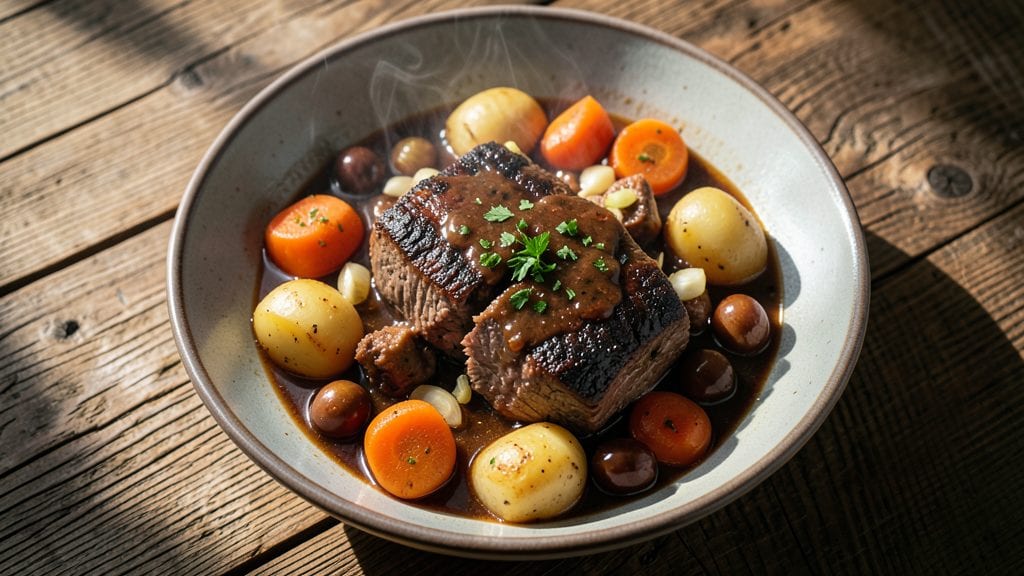
Betty Crocker’s Old Fashioned Beef Stew delivers that deep, rich flavor we all crave—without requiring an all-day simmer. This classic recipe transforms tough cuts of beef into tender, melt-in-your-mouth pieces with a velvety gravy that clings to every bite.
I’ve adapted the traditional method to fit modern kitchens, so you can achieve restaurant-quality results in under 3 hours—no patience required.
The secret lies in proper browning and layering flavors. You’ll start by searing the beef in batches to develop a deep, caramelized crust, then build the stew with onions, carrots, and potatoes that soften just enough to soak up the rich broth.
The slow cook transforms tough meat into something so tender, it practically falls apart at the touch. This isn’t just comfort food—it’s a foolproof technique that works every time, whether you’re using a Dutch oven or a slow cooker.
What you’ll end up with is a steaming bowl of beef stew that smells like home—golden-brown beef chunks, tender vegetables, and a gravy so rich it coats every spoonful. The flavors deepen as it sits, making leftovers even better the next day.
Perfect for chilly evenings or meal prep, this stew is the kind of dish that disappears faster than you can say "second helping." Let’s get cooking!
Whether you’re following Betty Crocker’s original approach or using a slow cooker for convenience, the result is the same: hearty, satisfying beef stew that tastes like it’s been simmering all day.
The best part? You’ll have time left to enjoy it instead of staring at a clock. Ready to make this classic your new go-to?
Ingredients for betty crocker old fashioned beef stew
Six ingredients make this hearty stew taste like a home-cooked classic.
| Ingredient | Amount | Notes |
|---|---|---|
| Chuck Roast 🥩 | 2 lb | Tough cut, trimmed of fat |
| Yellow Onions 🧅 | 2 whole | Medium size, peeled |
| Carrots 🥕 | 4 whole | Medium size, peeled |
| Russet Potatoes 🥔 | 4 whole | Medium size, peeled |
| Garlic Cloves 🧄 | 6 cloves | Fresh, peeled |
| Beef Broth 💧 | 4 cups | Low-sodium preferred |
| Tomato Paste 🍅 | 2 tbsp | Smooth consistency |
| All-Purpose Flour 🌾 | 2 tbsp | For thickening gravy |
| Worcestershire Sauce 🍶 | 1 tbsp | For depth of flavor |
| Dried Thyme 🌿 | 1 tsp | Or 1 tbsp fresh |
| Bay Leaves 🍃 | 2 whole | Remove before serving |
| Black Peppercorns 🌶️ | 1 tsp | Freshly cracked |
| Salt 🧂 | 1 ½ tsp | Adjust to taste |
| Extra-Virgin Olive Oil 🫒 | 2 tbsp | For searing beef |
The chuck roast is your secret weapon here—look for good marbling at the store, especially if buying a whole piece to trim yourself. Costco or Kroger usually have pre-trimmed chuck roast, which saves time. If you're buying whole, trim off any thick fat—you want flavor, not grease. The onions and carrots can be prepped ahead (I always do this the night before), but keep them dry so they don't turn to mush. For the potatoes, medium russets work best—they hold their shape without falling apart. Fresh thyme makes all the difference, but dried works in a pinch (just use less).
No Worcestershire sauce? Soy sauce at half the amount adds a similar umami punch. Short on tomato paste? Crushed tomatoes work, but you'll need about 1/2 cup. The beef broth should be low-sodium—most store brands are fine, but check the label. If you're using a slow cooker, you can skip the initial searing step, but trust me on this: browning the beef first builds so much more flavor. The bay leaves are non-negotiable—they add that classic old-fashioned depth. And if you're feeling fancy, add a splash of red wine (about 1/4 cup) when you deglaze the pan.
This stew gets better as it sits—3-4 days in the fridge is perfect. Freezes beautifully for up to 3 months, so make a double batch. I like to portion it into containers with a little extra broth on top to keep everything moist. The gravy will thicken as it cools, so you can thin it with a splash of broth or water when reheating. Leftovers taste even better the next day—trust the process!
Why You'll Love This Recipe
- One-Pot Magic: I swear by this recipe because it’s literally dump-and-go after the initial sear. Chuck roast browns in the pot, onions caramelize right alongside, and by the time you’re peeling potatoes, the house already smells like Sunday dinner.
- Garlic-Kissed Depth: That slow simmer with minced garlic cloves? It’s the secret weapon. The potatoes soak up the rich, savory broth while the carrots turn tender-crisp—no blandness here, just layers of flavor that make you reach for seconds.
- Lunchbox Hero: Between us, this stew is perfect for meal prep. The flavors deepen overnight, and I pack it in thermoses for work—hot, hearty, and way better than sad desk lunches. (My coworkers now expect it every Monday.)
- Budget Warmth: A pound of chuck roast and a few cheap veggies stretch into six satisfying bowls. Honestly, it’s my go-to when I’m broke but refuse to eat sad food. Plus, leftovers reheat like a dream—no dry, sad stew here.
Step-by-step instructions for Betty Crocker's old fashioned beef stew
Here's how to create rich, hearty beef stew with tender meat and vibrant vegetables—no long simmer required.
Sear the Chuck Roast for Deep Flavor
Pat the 2 lb chuck roast dry with paper towels—this ensures a proper sear. Heat the 2 tbsp extra-virgin olive oil in a heavy Dutch oven over medium-high heat until shimmering. Place the chuck roast in the pot and sear on all sides until deeply browned, about 5-6 minutes total. You'll see the meat develop a rich, caramelized crust.
Here's the thing—this searing step builds layers of flavor that can't be achieved by simply adding raw meat to the pot. Once browned, remove the roast and set it aside on a plate. Don't drain the oil; those browned bits will form the base of your stew's rich sauce.
Sauté Vegetables and Build the Stew Base
In the same Dutch oven, add the peeled 2 whole yellow onions and 4 whole carrots, cut into 1-inch chunks. Cook for 5 minutes until the onions soften and begin to caramelize slightly. Add the 6 peeled garlic cloves and cook for another 30 seconds until fragrant—this prevents them from burning later.
Stir in the 2 tbsp tomato paste and cook for 1 minute to deepen its flavor. Sprinkle the 2 tbsp all-purpose flour over the vegetables and stir vigorously for 2 minutes. This creates a roux that will thicken your stew beautifully. Pour in the 4 cups beef broth and scrape up any browned bits from the bottom of the pot—those contain concentrated flavor.
Simmer with Aromatics and Tenderize the Meat
Return the chuck roast to the pot. Add the 1 tbsp Worcestershire sauce, 1 tsp dried thyme, 2 whole bay leaves, 1 tsp black peppercorns, and 1.5 tsp salt. Bring the mixture to a gentle simmer over medium heat, then reduce heat to low. Cover partially and let it cook for 2 hours, stirring occasionally.
Real talk: The key here is patience. The meat should become fork-tender with no resistance when pierced. If you notice the liquid reduces too quickly, add ½ cup water to maintain the proper consistency. The vegetables should soften but still hold their shape slightly.
Add Potatoes and Finish Cooking
Peel and cut the 4 whole russet potatoes into 1-inch chunks. Add them to the stew and continue simmering uncovered for another 30-40 minutes, until the potatoes are tender and the stew has thickened to your desired consistency. You'll know it's ready when the potatoes pierce easily with a fork and the sauce coats the back of a spoon.
Taste and adjust seasoning if needed. Remove the bay leaves before serving, as they can be bitter. The stew should have a rich, savory depth with tender meat and vegetables in a velvety sauce. This method delivers all the comfort of a classic stew without requiring hours of simmering.
Pro Tips For Making Betty Crocker Old Fashioned Beef Stew
- Brown the Chuck Roast Properly: That recipe’s "sauté the meat" step isn’t optional—it’s where the flavor lives. After trimming excess fat, sear the chuck roast in batches over medium-high heat until it’s deep brown on all sides (about 5-6 minutes per side). I used to skip this and wondered why my stew tasted more like broth than beef. The crust locks in juices and builds depth.
- Cut Potatoes in Even Slices: Russet potatoes cook unevenly if they’re lumpy. For this recipe, slice them into ½-inch rounds before adding them to the pot—thicker pieces stay tough, thinner ones turn to mush. If you’re short on time, microwave them for 3 minutes first to speed up softening, but don’t skip the final simmer.
- Don’t Rush the Simmer: The recipe says "simmer 2-2.5 hours," but I’ve learned that’s the minimum. Let it bubble gently for at least 3 hours to break down the chuck fully—this is where the meat gets fork-tender. If you’re tempted to crank the heat, resist. A slow cooker on low for 6-8 hours works too, but watch the liquid levels.
- Sweat Onions and Garlic First: Diced onions and minced garlic should cook low and slow for 8-10 minutes before adding the beef. This softens them without burning, which keeps the stew from tasting bitter. I was skeptical until I tried it—now it’s non-negotiable for me. Skip the high heat, or you’ll regret it.
Flavor customization for this dish
Classic Comfort Heat
For a traditional touch, add ½ tsp smoked paprika to the flour mixture when building the base. This gives the stew a subtle, earthy warmth that pairs beautifully with the beef.
I also like to stir in 1 tsp onion powder when searing the vegetables—it deepens the savory notes without overpowering. 🌶️
Herb-Forward Variations
Swap the thyme for 1 tbsp fresh rosemary (finely chopped) when adding aromatics. The piney aroma cuts through the richness of the beef beautifully. For a French-inspired twist, add 1 sprig fresh tarragon along with the bay leaves—it adds a delicate anise-like note that elevates the dish.
Umami Boost Options
Add 1 tbsp soy sauce with the Worcestershire for extra umami depth. For a deeper flavor profile, stir in 1 tsp fish sauce (like Red Boat) when returning the beef to the pot. Both options enhance the savory richness without altering the classic taste.
Spicy Kick Additions
For heat lovers, add ½ tsp cayenne pepper with the black peppercorns. If you prefer a smoky heat, stir in ¼ tsp chipotle powder when adding the tomato paste. Both options deliver a slow-building warmth that lingers in every bite.
Sweet-Savory Balance
Add 1 tbsp brown sugar with the tomato paste to create a subtle caramelized sweetness that balances the stew's savory depth. For a fruitier note, stir in ½ cup diced pear with the potatoes—they soften beautifully and add a gentle sweetness that complements the beef.
Slow Cooker Adaptations
If using a slow cooker, add 1 tsp mustard powder with the flour to enhance the depth of flavor during the long cook. For extra richness, stir in ½ cup beef consommé with the broth—it intensifies the savory notes without altering the texture.
Both work beautifully in 6-8 hour low settings.
Nutrition facts
Frequently asked questions
Can I use a different cut of beef instead of chuck roast?
Yes, but chuck roast is ideal for its marbling and tenderness. For alternatives, try stew meat (similar texture) or chuck shoulder. Avoid lean cuts like sirloin—they won't become tender. If using a tougher cut, increase simmering time by 30 minutes to ensure fork-tenderness.
Why does my stew taste bland compared to classic recipes?
Most likely, you skipped the browning step or didn't deglaze the pan. The caramelized bits on the bottom contain concentrated flavor. Always sear the meat and scrape up those bits when adding broth. Also, use low-sodium broth and add salt gradually—too much too soon can mute flavors.
Can I make this in a slow cooker for hands-off cooking?
Brown the beef first, then transfer everything to the slow cooker. Cook on low for 8 hours or high for 4-5 hours. Add potatoes during the last 1 hour of cooking. The slow cooker method actually enhances tenderness—just don't skip the initial searing!
How do I thicken the gravy if it's too thin?
Mix 1 tbsp cornstarch with 1 tbsp cold water and stir into the simmering stew. Cook for 2-3 minutes until thickened. For a richer gravy, remove the beef and vegetables, then reduce the broth by simmering uncovered for 10 minutes—just be careful not to burn it.
What's the best way to reheat leftovers?
Gently reheat on the stove over low heat with a splash of broth or water to prevent drying. For microwave reheating, cover with a damp paper towel and heat in 30-second intervals, stirring between each. Never reheat to boiling—this turns the meat rubbery. Leftovers taste even better the next day!