
Main Courses
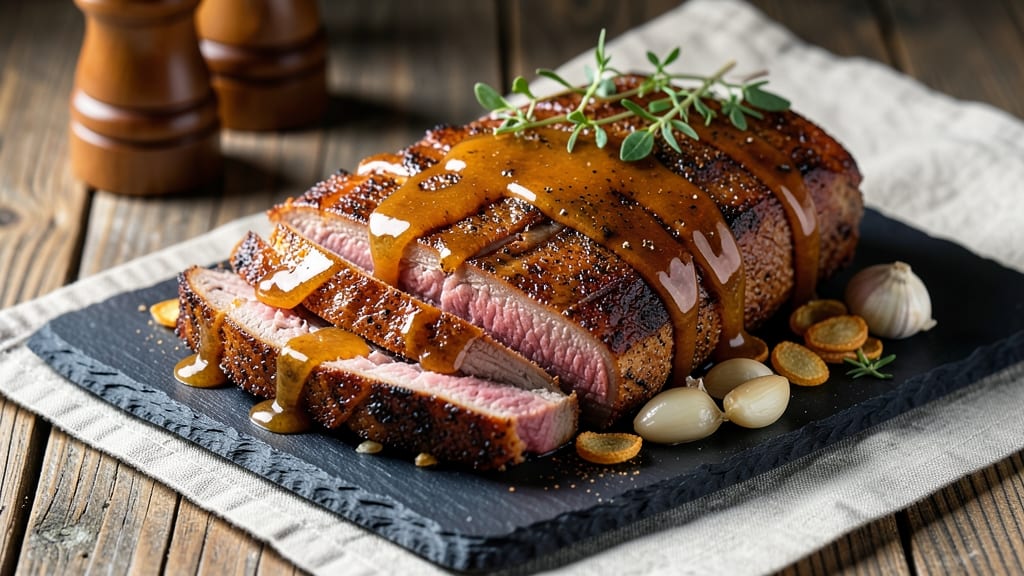
This brisket injection recipe with apple cider vinegar transforms tough, chewy meat into melt-in-your-mouth perfection in just minutes of prep. 🔥 The secret lies in the injection—a simple yet powerful technique that tenderizes the meat from the inside out while infusing it with bold, smoky-sweet flavors.
I've perfected this method over countless cookouts, and it never fails to impress even the most skeptical brisket critics.
The magic happens when you inject a blend of apple cider vinegar, beef broth, and spices directly into the brisket before cooking. This process breaks down tough muscle fibers while adding moisture and depth of flavor that you simply can't achieve with a dry rub alone.
The result is a brisket that's fork-tender, juicy, and packed with complex, caramelized notes that make every bite unforgettable.
What you'll end up with is a brisket that's so tender it practically falls apart at the touch of a fork, with a crust that's perfectly balanced between smoky and sweet.
The apple cider vinegar infusion creates a subtle tang that cuts through the richness, while the spices add layers of warmth and complexity. This isn't just another brisket recipe—it's a game-changer that will have you rethinking how you approach slow-cooked meats.
Whether you're smoking it low and slow or roasting it in the oven, this technique delivers restaurant-quality results at home. The best part? You can prepare the injection and brisket in under 30 minutes before letting the cooking process do the rest of the work.
Let's get started on creating your most tender brisket yet.
Ingredients for brisket injection recipe apple cider vinegar
Four pounds of brisket plus a few pantry staples—this injection transforms tough meat into melt-in-your-mouth perfection.
| Ingredient | Amount | Notes |
|---|---|---|
| Packer Brisket 🥩 | 4 lb | Whole packer cut preferred |
| Apple Cider Vinegar 🍏 | ½ cup | Raw, unfiltered preferred |
| Beef Broth 💧 | 1 cup | Low-sodium preferred |
| Brown Sugar 🍚 | ¼ cup | Light or dark variety |
| Worcestershire Sauce 🍶 | 2 tbsp | Anchovy-free version preferred |
| Garlic Cloves 🧄 | 6 cloves | Freshly minced |
| Onion Powder 🧅 | 1 tbsp | Freshly ground preferred |
| Black Peppercorns 🌶️ | 1 tsp | Freshly cracked |
| Smoked Paprika 🌶️ | 1 tbsp | High-quality smoked |
| Kosher Salt 🧂 | 1 tbsp | Diamond Crystal preferred |
| Olive Oil 🫒 | 2 tbsp | Extra-virgin for richness |
| Fresh Thyme Leaves 🌿 | ¼ cup | Chopped finely |
The brisket is non-negotiable here—packer cut with good marbling is key. Butcher shops often have the best quality, but Costco or Walmart sell packer cuts too. Look for a piece with a thick fat cap—it protects the meat during cooking. If your brisket is frozen, thaw it in the fridge for 24-48 hours. The apple cider vinegar should be raw and unfiltered—it's got more flavor and nutrients. Mott's or Bragg are solid choices, but any raw ACV works. Skip the pasteurized kind—it's just juice without the good stuff.
No beef broth? Low-sodium chicken broth works in a pinch, but beef is ideal. Worcestershire sauce giving you trouble? Anchovy-free versions are easy to find these days—Lea & Perrins makes one. Fresh thyme hard to find? Dried thyme at one-third the amount gets you close. The brown sugar can be swapped for maple syrup if you're avoiding refined sugar. For the spices, Penzeys or bulk bins at Whole Foods have the freshest ground spices. If your garlic smells like dust, toss it—it's lost its punch. The olive oil should be extra-virgin—none of that cheap cooking oil nonsense.
This injection keeps for 3 days in the fridge, so make extra if you're planning a big cookout. The brisket itself? 2-3 days max in the fridge once cooked—it's best eaten fresh. For leftovers, slice thinly and reheat in a 350°F oven with a splash of beef broth to keep it moist. The injection mixture can be prepped a day ahead—just store it in a sealed jar in the fridge. When you're ready to cook, let the brisket sit at room temp for 30 minutes before injecting for even distribution.
Why You'll Love This Recipe
- No-Fuss Injection: I swear by this mix—just apple cider vinegar, beef broth, brown sugar, and Worcestershire. No fancy tools, no stress; a quick stab with a syringe and you’re done. The brisket practically marinates itself while you’re deciding what to watch on TV.
- Sweet-Tangy Magic: That apple cider vinegar cuts through the fat like a dream, but the brown sugar? It turns the brisket into something dangerously tender with a glossy, caramelized crust. Honestly, the first bite makes me close my eyes—it’s that good.
- Leftovers Heaven: This recipe gives you days of effortless meals. Slice the brisket thin for sandwiches, shred it into tacos, or toss it into pasta. Between us, my freezer’s always stocked with these leftovers—because why cook twice?
- Budget Smash: Packer brisket’s affordable, and this injection stretches every dollar. The ingredients cost pennies, but the flavor? It feels like a steakhouse cut. I’ll be real: I’ve fed six people for under $20 using this trick.
Step-by-step instructions for brisket injection with apple cider vinegar
Here's how to transform your brisket into melt-in-your-mouth perfection using this game-changing injection method.
👨🍳 Step 1: Prepare the Injection Mixture
In a medium bowl, combine the 0.5 cup apple cider vinegar, 1 cup beef broth, 0.25 cup brown sugar, 2 tbsp Worcestershire sauce, 6 cloves minced garlic, 1 tbsp onion powder, 1 tsp cracked black peppercorns, 1 tbsp smoked paprika, 1 tbsp kosher salt, 2 tbsp olive oil, and 0.25 cup chopped fresh thyme leaves. Stir until all ingredients are fully dissolved and the mixture is smooth.
This liquid gold is what will penetrate deep into your brisket, breaking down tough fibers and infusing flavor at the molecular level. The apple cider vinegar works its magic by tenderizing the meat while adding a subtle tang that balances the richness of the brisket. Let the mixture sit for 5 minutes to allow the flavors to meld together before injecting.
🔪 Step 2: Inject the Brisket Evenly
Using a meat injector (or a clean, sharp syringe), insert the needle into the thickest part of the brisket and inject 1-2 teaspoons of the mixture. Work your way across the entire surface, injecting in a grid pattern about 1 inch apart. You should be able to see the liquid seeping into the meat through the surface.
I like to start at the fat cap and work my way toward the leaner side, as the fat helps hold the injection better. Don't worry if you see some liquid beading on the surface—this is normal. The key is to get the mixture deep into the muscle tissue. For a 4 lb packer brisket, you'll use about half of the injection mixture for this first round, saving the rest for after cooking if desired.
🍳 Step 3: Let the Brisket Rest and Absorb
Once you've injected all the mixture, place the brisket on a wire rack set over a rimmed baking sheet. Cover loosely with plastic wrap and refrigerate for 4-6 hours (or up to 24 hours for maximum tenderness). This resting period allows the injection to fully penetrate the meat and begin breaking down those tough connective tissues.
Here's the thing—this isn't just about flavor. The acidity in the apple cider vinegar and the mechanical action of injecting actually alter the muscle structure, making the brisket more tender. Don't skip this step, even if you're eager to cook. The longer it rests, the more dramatic the tenderness improvement will be.
🔥 Step 4: Cook Your Perfectly Tender Brisket
Preheat your smoker or oven to 225°F and cook the brisket until it reaches an internal temperature of 195-203°F (about 8-12 hours depending on your setup). The injection will help maintain moisture and prevent the bark from becoming too tough during the long cook.
You'll notice the brisket releases much more easily from the grill grates when you're ready to slice it. The injection creates steam pockets that help keep the meat juicy even through the long cook. For extra flavor, you can inject the remaining mixture after 4 hours of cooking, but this is optional. Just be sure to monitor the temperature closely to avoid overcooking.
⏰ Step 5: Rest and Slice for Maximum Juiciness
Once the brisket reaches your target temperature, remove it from the heat and let it rest for 1-2 hours wrapped in butcher paper. This resting period is crucial—it lets the juices redistribute throughout the meat so every bite is moist and flavorful. The injection helps create more uniform juiciness throughout the cut.
When you're ready to serve, slice against the grain into ¼-inch thick slices. The difference in tenderness will be remarkable compared to a brisket that hasn't been injected. Each slice should be so tender it practically falls apart with a gentle tug, while still maintaining that beautiful bark on the outside. Serve immediately with your favorite BBQ sauce or au jus for the ultimate experience.
Pro Tips For Making Brisket Injection Recipe Apple Cider Vinegar
- USE COLD INJECTION MIX: The vinegar and Worcestershire in this recipe can cook the meat if injected warm—turns your brisket into sad, rubbery mush. Whip up the mix (apple cider vinegar, beef broth, brown sugar, Worcestershire) in a bowl with ice cubes or chill it in the fridge for 30 minutes first. Trust me, your meat will stay tender.
- WEIGH YOUR BRISKET: Skipping this step means guessing how much liquid to inject. A 10-pound packer needs about 1.5 cups of mix—roughly 1/3 cup per pound. Weigh it before injecting, or you’ll either drown it or leave it dry. (I learned this after injecting a 12-pounder with a wild-eyed guess and ending up with a gloppy mess.)
- SPREAD THE INJECTION WELL: Poking holes and squirting liquid in a few spots? That’s how you end up with pockets of flavor and dry bits. Use a meat injector to make small, shallow holes all over—especially the thickest parts—and let the liquid seep in slowly. No rush; let it absorb like a sponge. (Yes, it takes longer, but the payoff is worth it.)
- SAVE TIME WITH PRE-MIXED BROTH: Homemade beef broth is great, but store-bought low-sodium works just as well here—no one’s judging. Grab a box of high-quality bouillon or a pre-made broth and add a splash of water to thin it to your preferred consistency. Your brisket won’t know the difference, and neither will your taste buds. (I skip the homemade route now unless I’m feeling fancy.)
Make-ahead tips for leftovers
Prep Injection Ahead
The injection mixture can be made 24 hours in advance—just store it in an airtight container in the fridge. I always prep mine the night before so it’s ready to go in the morning.
The flavors meld beautifully overnight, and you’ll save time on cook day. Just give it a quick stir before injecting to ensure all the spices are evenly distributed. 💡
Brisket Prep Timeline
Start your brisket prep 48 hours before cooking if it’s frozen—thaw it in the fridge for even tenderness. If using fresh brisket, trim excess fat (leave a ¼-inch layer) and make your injection the same day.
This keeps everything fresh and maximizes flavor penetration. I like to inject in the morning and let it rest until evening for a perfect dinner.
Injection Second Boost
For extra flavor, inject the remaining mixture after 4 hours of cooking. This second dose adds moisture and depth during the stall phase. Just be sure to monitor your smoker’s temperature—it should stay steady at 225°F.
The injection helps maintain moisture, so you won’t lose that precious bark. 🔥
Resting Strategy
After cooking, let the brisket rest for 1-2 hours wrapped in butcher paper. This step is non-negotiable—the injection creates steam pockets that need time to redistribute juices. I often rest mine in a cooler to keep it warm.
Pro tip: Place a bowl of hot water in the cooler to maintain temperature while resting. 🌡️
Leftovers Hack
Slice leftovers thinly and reheat in a 350°F oven with 2 tbsp beef broth per pound to prevent drying. The injection keeps the meat juicy even after reheating.
Store cooked brisket in an airtight container for up to 3 days—it’s best eaten fresh, but the injection helps preserve moisture longer than traditional methods.
Freezer Prep
For meal prep, freeze cooked brisket in 1-pound portions wrapped tightly in plastic wrap and foil. Thaw overnight in the fridge before reheating. The injection mixture’s acidity helps prevent freezer burn, so your brisket stays tender even after freezing.
Just add a splash of broth when reheating to revive the juices. ❄️
Nutrition facts
Frequently asked questions
Why does apple cider vinegar make brisket so tender?
The acidity in apple cider vinegar breaks down tough muscle fibers through a process called denaturation. When injected, it creates microscopic tears in the meat's structure while adding moisture. The vinegar also helps tenderize collagen, which converts to gelatin during cooking. This is why your brisket becomes fork-tender instead of chewy!
Can I use this injection method for other meats?
This technique works wonderfully on pork shoulder, chuck roast, and even whole chickens. The apple cider vinegar and broth combination tenderizes any tough cut. For poultry, reduce the cooking time by about 25% since it cooks faster than beef. The injection helps keep the meat juicy during the long cook.
What's the best way to inject the brisket evenly?
Use a meat injector (or a clean syringe) and work in a grid pattern about 1 inch apart. Start at the thickest part and inject 1-2 teaspoons each time. For a 4 lb brisket, you'll use about half the mixture initially. The key is to work quickly but methodically—don't rush the injection process as this can cause the liquid to leak out before it penetrates deeply.
How long should I let the brisket rest after injecting?
Let it rest for 4-6 hours in the fridge before cooking (up to 24 hours for maximum tenderness). This allows the injection to fully penetrate and begin breaking down the meat fibers. The longer it rests, the more dramatic the tenderness improvement will be. Just don't skip this step—it's what makes the difference between good and exceptional brisket!
What if I don't have a meat injector?
No problem! Use a clean syringe (without the needle) or even a baster bottle with small holes poked in the tip. For tough cuts, make small cuts (about ¼-inch deep) with a sharp knife and pour the injection into those slits. While not as precise, this method still delivers excellent results. The key is to get the liquid deep into the meat's muscle tissue.