
Salads
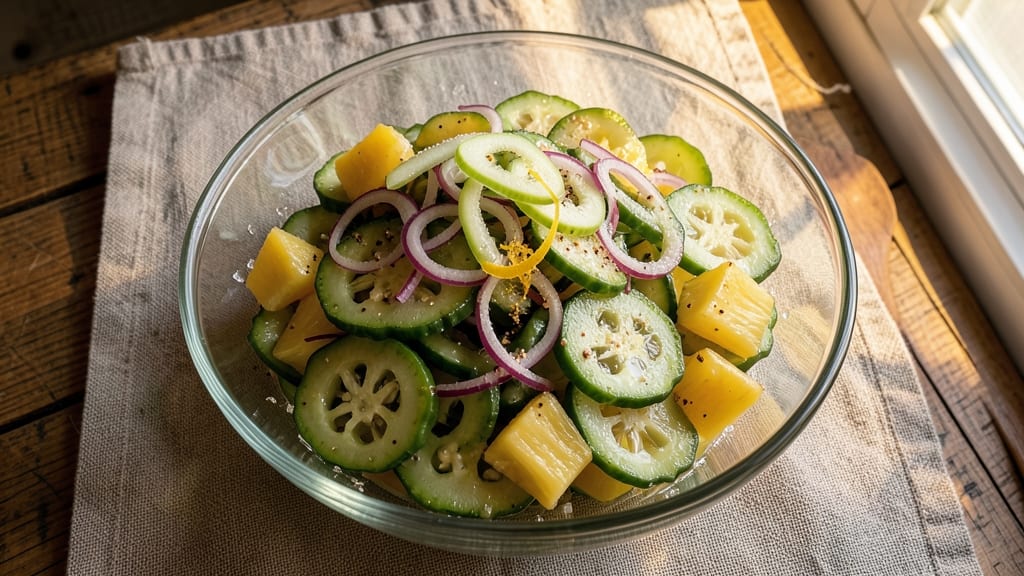
This ensaladang ampalaya salad with pineapple brings the bold flavors of Filipino cuisine to your table with a perfect balance of sweet, tangy, and crunchy textures. 🌟 The star ingredient, ampalaya (bitter melon), transforms from bitter to delightfully crisp when properly prepared, while fresh pineapple adds a tropical sweetness that makes every bite irresistible.
What sets this salad apart is the traditional Filipino technique of cooking the bitter melon just enough to soften its edges while preserving its signature crunch.
The recipe starts with thinly sliced ampalaya that's quickly blanched to remove bitterness, then tossed with a zesty dressing made from vinegar, sugar, and a touch of soy sauce.
Fresh pineapple chunks are added for that signature sweet contrast, while crisp vegetables like cucumber and red onion round out the texture. The result is a vibrant, refreshing salad that's as visually stunning as it is delicious—perfect for hot days or as a light main dish.
What makes this salad truly special is its versatility. You can serve it as a refreshing appetizer, a light lunch, or even a side dish for grilled meats.
The dressing can be adjusted to suit your taste—more vinegar for tang, more sugar for sweetness, or a splash of calamansi for extra zing. For added protein, sprinkle with crushed peanuts or top with a poached egg if you're not keeping it strictly vegetarian.
Filipino households often prepare this salad for gatherings, and it's a favorite at family reunions or summer fiestas. The combination of flavors is uniquely Filipino yet universally appealing, making it a crowd-pleaser.
Ready to experience the tropical bite of ensaladang ampalaya? Let's get started with this vibrant, crunchy, and satisfying recipe.
Ingredients for ensaladang ampalaya salad with pineapple
Here's what you'll need to create this vibrant Filipino-inspired salad bursting with tropical sweetness and crunchy bitter melon.
| Ingredient | Amount | Notes |
|---|---|---|
| Ampalaya (Bitter Melon) 🍈 | 1 lb | Thinly sliced, seeds removed |
| Fresh Pineapple 🍍 | 1 cup | Diced, fresh or canned in juice |
| Red Onion 🧅 | 1 whole | Thinly sliced, white and light purple parts |
| English Cucumber 🥒 | 1 whole | Thinly sliced, peeled if preferred |
| White Vinegar 💧 | ¼ cup | Distilled or cane vinegar |
| Granulated Sugar 🍚 | ¼ cup | Adjust to taste |
| Soy Sauce 🥄 | 2 tbsp | Light or regular soy sauce |
| Calamansi or Lemon Juice 🍋 | 2 tbsp | Calamansi preferred, lemon substitute |
| Salt 🧂 | ½ tsp | Diamond Crystal preferred |
| Black Pepper 🌶️ | ¼ tsp | Freshly ground |
| Crushed Peanuts 🥜 | ¼ cup | Optional for protein topping |
| Fresh Cilantro Leaves 🌿 | ¼ cup | Chopped, for garnish |
The ampalaya is the heart of this salad, and freshness is key. Look for firm, green bitter melons at Asian markets—they should feel heavy for their size and have smooth skin. If you can't find fresh ampalaya, Filipino grocery stores often carry it in the refrigerated section. Thinly slice it, remove the seeds, and blanch it for just 30 seconds to soften without losing its signature crunch. The pineapple should be ripe but firm—Costco or Trader Joe's usually carry perfect pre-cut pineapple for convenience. For the dressing, calamansi is the traditional choice, but fresh lemon juice works beautifully if you can't find it.
No calamansi? Lime juice at half the amount gives a similar tang. The soy sauce can be swapped for tamari if gluten-free, and if you're avoiding sugar, agave nectar or coconut sugar works just as well. For the peanuts, unsalted roasted peanuts from the bulk section add extra flavor, but store-bought crushed peanuts are fine in a pinch. The cucumber can be swapped for radishes or jicama if you want a different texture. If you're feeling adventurous, add a splash of shrimp paste (bagoong) for an authentic Filipino umami kick—just a teaspoon goes a long way.
This salad keeps beautifully for 3-4 days in an airtight container in the fridge, though the ampalaya will soften over time. For best texture, assemble it right before serving. The dressing can be made a day ahead and stored separately. If you're prepping for a crowd, double the dressing—it's hard to have too much of this zesty mix. To serve, mound the salad on a platter and drizzle the dressing generously. The peanuts and cilantro can be sprinkled on top just before eating to keep everything fresh.
Why You'll Love This Recipe
- Here’s what sold me: the pineapple’s bright tang cuts through the ampalaya’s bitterness like a knife through butter. That first bite—juicy, slightly sharp, with a crisp crunch from the cucumber—is ridiculously addictive. Honestly, I’ve never met a salad that balances flavors this well without dressing up like a fancy dish.
- No-Fuss Assembly: I swear, this salad takes less effort than ordering takeout. Just slice the pineapple into chunks (no peeling needed if you’re lazy), halve the cucumber, and chop the onion—then toss everything with the ampalaya strips and vinegar. The bitter melon’s texture softens instantly in the acid, so no long marinating or fancy prep.
- Sweet-Bitter Magic: Here’s what sold me: the pineapple’s bright tang cuts through the ampalaya’s bitterness like a knife through butter. That first bite—juicy, slightly sharp, with a crisp crunch from the cucumber—is ridiculously addictive. Honestly, I’ve never met a salad that balances flavors this well without dressing up like a fancy dish.
- Lunchbox Superstar: Between us, this is my secret weapon for packed lunches. It holds up for days in the fridge (the vinegar keeps it fresh), and the flavors actually improve after sitting overnight. My kids used to complain about bitter melon, but now they fight over who gets the pineapple pieces—(yes, even on a Tuesday).
Step-by-step instructions for ensaladang ampalaya salad
Let's create this vibrant Filipino salad where sweet pineapple and crunchy bitter melon play perfectly together.
👨🍳 Step 1: Prepare the Ampalaya and Vegetables
Start by washing the 1 lb Ampalaya (Bitter Melon) thoroughly under cold water, then slice it lengthwise into thin strips. Use a spoon to carefully remove all seeds from the center - this prevents the salad from becoming too bitter. Cut the slices into bite-sized pieces and set aside in a colander.
Next, peel and thinly slice the 1 whole English Cucumber into half-moon shapes, removing any seeds. For the 1 whole Red Onion, separate the white and light purple parts, then slice them into thin half-moons. Dice the 1 cup Fresh Pineapple into small, even cubes. Place all vegetables in a large mixing bowl.
🥘 Step 2: Create the Signature Dressing
In a small bowl, whisk together the 0.25 cup White Vinegar, 0.25 cup Granulated Sugar, 2 tbsp Soy Sauce, and 2 tbsp Calamansi or Lemon Juice until the sugar dissolves completely. This creates a sweet-tangy base that balances the salad's flavors perfectly.
Add the 0.5 tsp Salt and 0.25 tsp Black Pepper to the dressing mixture, then stir until fully combined. The dressing should be slightly syrupy - this helps coat the vegetables evenly. Taste and adjust the sweetness or tanginess by adding a pinch more sugar or vinegar if needed.
🍳 Step 3: Combine and Marinate the Salad
Pour the dressing over the prepared vegetables in the mixing bowl. Using clean hands or a large spoon, gently toss everything together until every piece is evenly coated. The Ampalaya will start to soften slightly from the acidity, while the other vegetables will absorb the flavorful dressing.
Let the salad marinate at room temperature for 15-20 minutes. This allows the flavors to meld together beautifully. You'll notice the Red Onion will become slightly translucent and the Pineapple will release its natural juices, creating a light syrup that enhances the overall taste.
🔪 Step 4: Add the Final Crunchy Elements
After marinating, transfer the salad to a serving platter. Sprinkle the 0.25 cup Crushed Peanuts evenly over the top for added texture and protein. The peanuts provide a satisfying crunch that contrasts with the soft Ampalaya and crisp vegetables.
Finally, scatter the 0.25 cup Fresh Cilantro Leaves over the salad just before serving. The bright green color adds visual appeal, while the fresh herb note complements the other flavors. Serve immediately while the vegetables are still crisp and the dressing is at its peak flavor.
Pro Tips For Making Ensaladang Ampalaya Salad With Pineapple
- Peel Ampalaya First: I learned this the hard way—peeling the bitter melon before slicing saves you from a mess. The skin’s sharp edges shred your knife and stick to the salad, so grab a vegetable peeler or sharp knife and strip it clean before cutting into cubes. Trust me, your fingers will thank you later.
- Soak Pineapple in Cold Water: Fresh pineapple adds brightness, but its enzymes can make the salad turn mushy fast. Toss the chunks in ice water for 10 minutes before mixing—it firms them up and keeps the texture crisp for longer. Skip this, and you’ll end up with a sad, watery pile instead of a refreshing bite.
- Thin-Slice the Onion: Red onion is the flavor anchor here, but thick slices mean you’ll taste nothing but sharpness. Cut them paper-thin (almost translucent) so they blend smoothly into the salad without overpowering. Use a mandoline if you’re impatient—it’s the only way to get consistent slices every time.
- Acidify the Vinegar: White vinegar alone can taste harsh, especially with pineapple’s sweetness. Mix it 50/50 with a little sugar or a splash of water first—just enough to mellow the bite. Your grandmother’s trick: a pinch of salt in the dressing too. It rounds out the flavors without you even noticing.
Best sauces and condiments for these flavors
Traditional Filipino Dressing
The heart of this salad lies in its signature dressing—a sweet, tangy, and slightly umami blend that transforms the bitter ampalaya into something irresistible. Start with white vinegar and granulated sugar in equal parts (¼ cup each) to create a syrupy base.
Add 2 tablespoons soy sauce for depth and 2 tablespoons calamansi juice (or lemon) for that bright, citrusy zing. A pinch of salt and black pepper rounds out the flavors. This dressing is the secret to balancing the salad’s bold components—trust me, it’s worth making from scratch! 💛
Sweet and Tangy Variations
If you love extra sweetness, increase the sugar to ⅓ cup and reduce the vinegar slightly. For a tangier kick, swap in rice vinegar or add 1 teaspoon shrimp paste (bagoong) for an authentic Filipino umami punch.
I’ve also seen versions with a splash of pandan juice for a fragrant twist—just 1 teaspoon adds a subtle floral note that pairs beautifully with pineapple.
Crunchy Toppings
While crushed peanuts are classic, other toppings elevate this salad further. Try toasted coconut flakes for a tropical crunch or crumbled feta cheese for a creamy contrast.
For extra protein, sprinkle with boiled eggs or crispy fried shallots. The key is adding toppings just before serving to keep everything fresh and crunchy. 🥜
Herb and Citrus Garnishes
Fresh cilantro is a must, but don’t stop there! Add thinly sliced Thai basil for an aromatic kick or lime zest for a citrusy pop. A few drops of chili oil or a sprinkle of red chili flakes add heat, while toasted sesame seeds bring nutty depth.
These garnishes aren’t just for looks—they brighten the flavors and make every bite feel special.
Dressing Substitutions
No calamansi? Use lime juice (double the amount) or orange juice for a sweeter profile. For a gluten-free option, swap soy sauce for tamari or coconut aminos.
If you’re avoiding sugar, date syrup or honey works beautifully—just reduce the vinegar slightly to balance the sweetness. The dressing is forgiving, so adjust to your taste!
Nutrition facts
Frequently asked questions
Why does ampalaya taste so bitter, and how do I reduce it?
Fresh ampalaya has natural bitterness that softens when cooked properly. The key is blanching it for just 30 seconds in boiling water, then immediately transferring to ice water. This removes some bitterness while keeping it crisp. For extra mild flavor, soak the sliced ampalaya in cold water for 10 minutes before cooking.
Can I use canned pineapple instead of fresh?
Yes, but choose canned pineapple packed in its own juice—not syrup—to keep the dressing balanced. Drain and rinse the pineapple well to remove excess liquid, then pat dry before adding to the salad. For best texture, use small, evenly sized chunks that match the other vegetables.
How do I store leftovers to keep the ampalaya crisp?
Store the salad in an airtight container for up to 3 days, but separate the dressing if possible. To revive crispness, drain excess liquid and toss with a fresh sprinkle of dressing before serving. For longer storage, freeze the dressing separately and add it just before eating.
What's the best way to adjust the dressing for different tastes?
Start with the basic ratio of 1:1 vinegar to sugar, then tweak to taste. For more sweetness, add 1 extra tablespoon sugar and reduce vinegar by ½ tablespoon. For tangier flavor, increase vinegar by 1 tablespoon and add ½ tablespoon lemon juice. Always taste as you go!
Can I make this salad spicier?
Add ½ teaspoon chili flakes or 1 teaspoon sriracha to the dressing for heat. For smoky depth, stir in ½ teaspoon smoked paprika. Garnish with sliced jalapeños or a drizzle of chili oil for extra kick right before serving.