
Main Courses
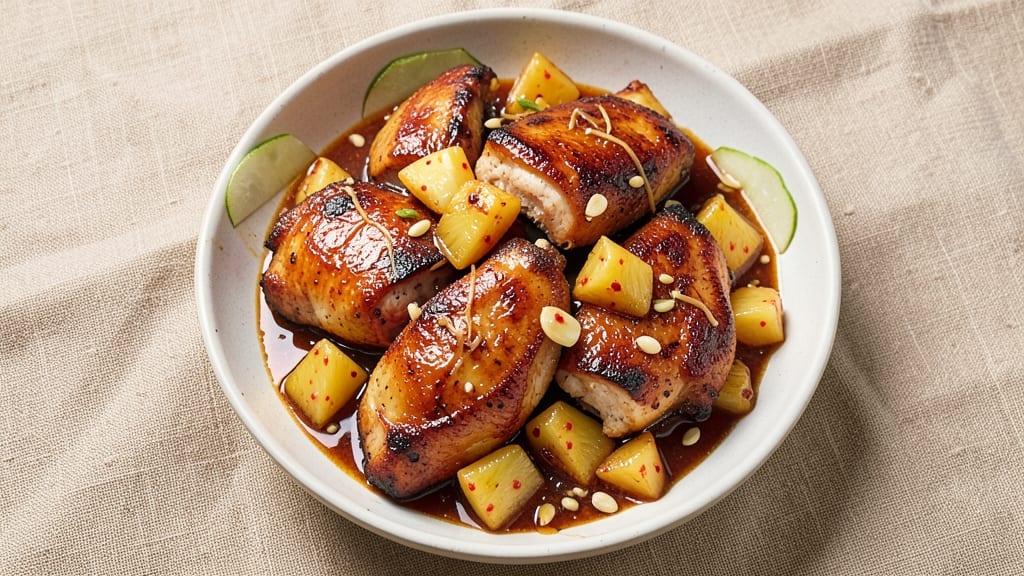
This gluten free pineapple chicken recipe delivers crispy bites that balance tropical sweetness with savory depth—perfect for weeknight dinners or summer gatherings. The secret lies in a marinade that tenderizes the chicken while developing caramelized edges, all without gluten-containing ingredients.
I developed this after realizing most tropical chicken recipes rely on soy sauce, which is off-limits for gluten-free diets.
The magic happens with a combination of pineapple juice, tamari (gluten-free soy sauce substitute), and a touch of honey for natural sweetness. Fresh ginger and garlic add aromatic depth, while a sprinkle of cornstarch creates that coveted crispy texture when baked.
What makes this different is how the pineapple's acidity tenderizes the chicken while its natural sugars caramelize during cooking, creating a beautiful contrast of textures.
By the time it emerges from the oven, you'll have golden-brown chicken pieces with tender centers and slightly sticky, caramelized edges—each bite offering a perfect balance of sweet, tangy, and savory flavors.
The pineapple's juices create a natural glaze that makes every piece irresistible, while the herbs keep it from being overly sweet. This is the kind of dish that transforms simple weeknight dinners into something special without requiring complicated techniques.
Serve over jasmine rice or with a fresh tropical salad to complete the meal. The recipe scales beautifully for crowds, making it ideal for potlucks or family gatherings where dietary restrictions need to be accommodated. Let's get cooking—this tropical-inspired dish is about to become a favorite.
Ingredients for gluten free pineapple chicken
Tropical flavors meet crispy perfection in this gluten-free recipe—simple ingredients for extraordinary results.
| Ingredient | Amount | Notes |
|---|---|---|
| Boneless, Skinless Chicken Thighs 🍗 | 1 ½ lb | Cut into 1-inch pieces |
| Pineapple Juice 🍍 | 1 cup | Freshly squeezed preferred |
| Tamari 🥢 | ½ cup | Gluten-free soy sauce substitute |
| Honey 🍯 | 2 tbsp | For natural sweetness |
| Fresh Ginger 🌿 | 2 tbsp | Finely grated, aromatic |
| Garlic Cloves 🧄 | 4 cloves | Minced for depth |
| Cornstarch 🌾 | 2 tbsp | For crispy texture |
| Olive Oil 🫒 | 2 tbsp | Extra-virgin for richness |
| Fresh Cilantro 🌿 | ¼ cup | Chopped for freshness |
| Lime Juice 🍋 | 1 tbsp | Freshly squeezed |
| Salt 🧂 | 1 tsp | Diamond Crystal preferred |
| Black Pepper 🌶️ | ½ tsp | Freshly ground |
| Fresh Pineapple 🍍 | 1 cup | Diced, for garnish |
The chicken thighs are key here—bone-in, skin-on for maximum flavor and moisture retention. Look for organic or free-range if possible, as the fat content enhances the caramelization during baking. Costco or Whole Foods often carry high-quality cuts. For the pineapple juice, freshly squeezed is ideal, but canned works in a pinch (just drain it thoroughly). The ginger and garlic should be freshly grated and minced—pre-minced garlic lacks the aromatic depth this dish needs. If you're short on time, a microplane makes quick work of the ginger.
No tamari? Coconut aminos is a 1:1 substitute, though it has a slightly different flavor profile. Running out of honey? Maple syrup works beautifully—just reduce the marinade time slightly since it's less acidic. The cornstarch is non-negotiable for that crispy texture, but if you're avoiding gluten entirely, arrowroot powder is a suitable alternative. For the olive oil, avoid light or refined varieties—stick with extra-virgin for the best flavor. Fresh cilantro is ideal, but if you're not a fan, fresh basil or thyme can add a different but complementary herbal note.
Marinate the chicken for at least 4 hours (overnight is even better) to maximize tenderness and flavor infusion. The baked chicken keeps well in the fridge for 3-4 days, though it's best enjoyed fresh. For meal prep, portion the cooked chicken into containers with a drizzle of the reserved marinade—freezes beautifully for up to 3 months. The pineapple garnish should be added fresh just before serving to maintain its vibrant color and crisp texture. If you're serving a crowd, double the recipe—this dish scales perfectly for gatherings.
Why You'll Love This Recipe
- Five-Ingredient Magic: Honestly, I swear by this combo—juicy chicken thighs, tangy pineapple, salty-sweet tamari, and that ginger kick. It’s the kind of dish where you measure, toss, and walk away while the flavors marry themselves.
- Sweet-Savory Balance: That honey-tamari glaze caramelizes into something ridiculously good—sticky, slightly crisp edges, and a brightness from the pineapple that cuts through the richness. My picky eaters actually ask for seconds.
- Meal Prep MVP: Between us, this keeps beautifully for four days in the fridge. Toss it cold over rice or reheat with a splash of pineapple juice—same great taste, zero guesswork. (Yes, even on a Tuesday night.)
- Budget-Friendly Protein: Chicken thighs stretch further than breasts, and pineapple juice is cheaper than fresh chunks. Tamari adds depth without breaking the bank, and ginger? A little goes a long way. My wallet thanks me every time.
Step-by-step instructions for gluten-free pineapple chicken
Here's how to achieve perfect tropical flavors with crispy chicken bites every time.
Prepare the Chicken and Marinade
Cut the 1.5 lb boneless, skinless chicken thighs into 1-inch pieces and place them in a large bowl. In a separate bowl, whisk together the 1 cup pineapple juice, 0.5 cup tamari, 2 tbsp honey, 2 tbsp finely grated fresh ginger, and 4 minced garlic cloves until fully combined. Pour this marinade over the chicken and toss gently to coat evenly. Let the mixture sit at room temperature for 15-20 minutes—this ensures the flavors penetrate deeply and the chicken develops that signature sweet-savory profile.
While the chicken marinates, finely chop the 0.25 cup fresh cilantro and set it aside for garnishing later. The marinade's acidity from the pineapple juice will begin tenderizing the chicken, while the tamari adds that umami depth without gluten. Don't skip this step—proper marinating is what creates that restaurant-quality texture and flavor in your home kitchen.
Create the Crispy Cornstarch Coating
In a small bowl, combine the 2 tbsp cornstarch with 1 tsp salt and 0.5 tsp freshly ground black pepper. The cornstarch is our secret weapon for achieving that perfect crispy texture—it creates a light, crunchy coating that contrasts beautifully with the tender chicken. After the chicken has marinated, drain it in a colander, shaking off any excess liquid, then transfer it to a clean bowl.
Working in batches if needed, toss the chicken pieces in the cornstarch mixture until they're evenly coated. Press the cornstarch gently into the chicken so it adheres well—this ensures maximum crispiness when we cook it. The coating should look dry and cling to the chicken pieces without falling off. This step is crucial for that satisfying crunch that makes this dish so special.
Cook the Chicken to Golden Perfection
Heat the 2 tbsp olive oil in a large skillet over medium-high heat until it shimmers but isn't smoking. Add the cornstarch-coated chicken in a single layer, being careful not to overcrowd the pan. Cook undisturbed for 3-4 minutes until the chicken develops a deep golden brown crust on one side—this is your visual cue that the coating is crisping properly. Only then should you flip the pieces and cook for another 3-4 minutes until golden on the other side.
During this cooking process, the cornstarch will transform into a crispy, almost breadcrumb-like texture while the chicken inside remains juicy. If you notice the pan getting too crowded and the chicken isn't browning properly, work in batches and let the oil re-heat between additions. The chicken should reach an internal temperature of 165°F—use a meat thermometer to check the thickest piece. This high-heat searing is what creates that perfect balance of crispy exterior and tender interior.
Simmer in the Pineapple-Ginger Sauce
Reduce the heat to medium-low and pour in the 1 cup pineapple juice that was used in the marinade. Add the 1 tbsp freshly squeezed lime juice and scrape up any browned bits from the bottom of the pan—these flavorful bits are packed with concentrated taste. Let the sauce simmer gently for 4-5 minutes until it thickens slightly and coats the back of a spoon. The sauce should have a glossy sheen and a balance of sweet, tangy, and slightly spicy notes from the ginger.
Return the crispy chicken to the skillet and spoon the sauce over the top, tossing gently to coat everything evenly. Let it simmer together for 1-2 minutes so the chicken can absorb some of that beautiful sauce. The cornstarch coating will help thicken the sauce slightly as it cooks, creating a perfect balance of textures in every bite. Taste and adjust seasoning if needed—you might want to add a touch more tamari for saltiness or lime juice for acidity.
Finish and Serve with Fresh Pineapple
Transfer the chicken and sauce to a serving platter and garnish with the 1 cup diced fresh pineapple and the reserved 0.25 cup chopped fresh cilantro. The bright acidity of the pineapple and fresh cilantro will cut through the richness of the chicken and sauce, creating a perfect tropical flavor balance. Serve immediately while the chicken is still crispy and the sauce is warm—this dish tastes best right out of the pan.
For an extra touch, serve with steamed jasmine rice or cauliflower rice to soak up that delicious sauce. The contrast between the crispy chicken bites, the glossy sauce, and the fresh pineapple creates a harmonious combination of textures and flavors that will transport you to a tropical paradise with every bite. This method delivers that perfect balance of sweet, savory, and umami that makes this dish so popular.
Pro Tips For Making Gluten Free Pineapple Chicken
- Marinate Overnight: I used to throw everything together last-minute, but the flavor explodes when chicken soaks in the tamari, honey, and ginger mix for at least 8 hours. The pineapple juice breaks down the meat just enough to make it tender without turning it mushy—just don’t skip the ginger, even if you’re impatient.
- Deglaze Aggressively: After searing the chicken, don’t just splash in the pineapple juice—scrape up every browned bit with a wooden spoon. That’s where the flavor lives, and skipping it means a dull sauce. Use a bit of water if needed to help it release, but don’t dilute too much.
- Simmer, Don’t Boil: Once the sauce comes together, keep it at a gentle bubble—never a rolling boil. I learned this after my sauce reduced into a sticky glaze one batch and turned watery the next. A low simmer (just tiny bubbles) concentrates the flavors and thickens the sauce naturally.
- Toast the Ginger: Before grating, quickly toast the ginger slices in a dry pan for 30 seconds until fragrant. It deepens the spice without bitterness and cuts through the sweetness of the honey and pineapple. Sounds weird, but it works—trust me, your sauce will taste richer.
Troubleshooting this dish
Chicken Too Dry?
If your chicken ends up dry, the issue likely lies in overcooking or insufficient marinating time. Chicken thighs are forgiving, but boneless, skinless cuts can dry out quickly. To prevent this, marinate for at least 4 hours (overnight is ideal) and avoid overcrowding the pan during cooking.
Use a meat thermometer—remove the chicken when it hits 165°F in the thickest piece. I've found that medium-high heat for 3-4 minutes per side gives perfect doneness without drying. 💫
Sauce Too Thin?
The sauce may turn out too thin if you didn't simmer it long enough or if the cornstarch didn't thicken properly. First, reduce the heat to medium-low when simmering and let it cook for 4-5 minutes until slightly thickened.
If it's still too thin, mix 1 tsp cornstarch with 1 tbsp water, stir into the sauce, and simmer for 1-2 more minutes. The cornstarch coating on the chicken also helps thicken the sauce naturally as it cooks. 🥢
Crispy Coating Falling Off?
A coating that falls off usually means it didn't adhere properly to the chicken. Press the cornstarch mixture gently but firmly into the chicken pieces after marinating—this ensures it sticks.
If the coating still won't stay, chill the chicken for 15-20 minutes in the fridge before cooking to help it set. Another trick? Use arrowroot powder instead of cornstarch for a slightly stickier texture. 🌾
Flavor Too Sweet?
If the dish tastes overly sweet, the honey or pineapple juice may have dominated. Balance it by adding 1 extra tbsp tamari for saltiness or 1 extra tbsp lime juice for acidity.
You can also reduce the honey to 1 tbsp in future batches. The ginger and garlic in the marinade already provide depth, so don’t be afraid to adjust seasonings to taste. 🍋
Pineapple Too Watery?
Excess moisture from pineapple can dilute flavors or make the sauce watery. Drain canned pineapple juice thoroughly before using, and pat fresh pineapple pieces dry with a paper towel before adding them as garnish.
If using fresh pineapple, squeeze it gently to remove excess liquid before dicing. For the sauce, simmer it longer to reduce any excess moisture. 🍍
Gluten-Free Cross-Contamination?
Always check your cornstarch and tamari for gluten-free certification. Use separate utensils and cutting boards if your kitchen handles gluten-containing foods. I keep a dedicated gluten-free zone in my kitchen with labeled tools to avoid any accidental cross-contamination.
When in doubt, opt for certified gluten-free brands like Bob's Red Mill cornstarch and San-J tamari. 🛡️
Nutrition facts
Frequently asked questions
Can I use chicken breast instead of thighs?
Chicken breast works, but thighs are ideal for this recipe because they stay juicier during high-heat cooking. If using breast, cut into 1-inch pieces and marinate for at least 6 hours (overnight is best) to prevent dryness. Cook at medium heat instead of high to avoid overcooking, and check internal temp with a thermometer—remove at 165°F.
What if I don't have tamari?
Use coconut aminos as a 1:1 substitute—it's gluten-free and has a similar savory profile. For extra depth, add 1/2 tsp fish sauce (ensure it's gluten-free) or 1 extra tbsp lime juice to balance flavors. Avoid regular soy sauce, as it contains gluten. The marinade will still work beautifully!
Can I make this in an air fryer?
Preheat your air fryer to 375°F and spray the cornstarch-coated chicken lightly with olive oil. Cook in a single layer for 12-15 minutes, shaking the basket every 5 minutes for even crispiness. The air fryer creates a similar texture to pan-searing but with less oil. Just watch closely—they cook faster than on the stovetop!
How do I store leftovers?
Let the chicken cool completely, then store in an airtight container in the fridge for up to 4 days. For reheating, place pieces in a skillet over medium heat with a splash of water or pineapple juice to restore crispiness. Microwaving works too, but the texture won't be as perfect. Freeze for up to 3 months—thaw overnight in the fridge before reheating.
What sides pair best with this dish?
Jasmine rice or cauliflower rice soaks up the sauce beautifully. For a tropical vibe, try mango avocado salad or grilled pineapple slices. Heartier sides like roasted sweet potatoes or coconut rice also complement the flavors. The key is balancing textures—something light and fresh alongside the crispy chicken.