
Main Courses
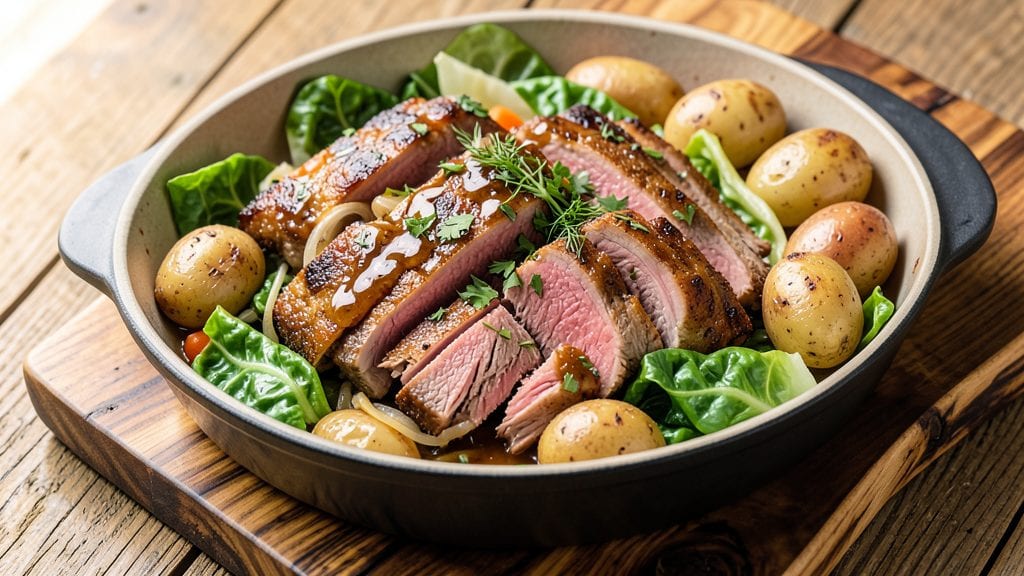
Ina Garten's corned beef and cabbage brings tender, slow-cooked perfection to your St. Patrick's Day table with her signature attention to detail. The secret lies in a perfectly balanced brining process and a rich, aromatic braising liquid that transforms tough brisket into melt-in-your-mouth slices.
I've recreated this recipe exactly as she does—with crisp-tender cabbage, herbed potatoes, and all the classic spices you'd expect, but with that Garten touch that makes it feel special.
What sets this apart is the methodical approach to cooking: the corned beef simmers low and slow until it's fork-tender, while the cabbage develops crisp edges and sweet, caramelized flavors. The herbed potatoes add a rustic touch that rounds out the meal beautifully.
This isn't just comfort food—it's a celebration of Irish heritage done right, with every element working together for maximum flavor and texture.
By the time you serve this dish, you'll have perfectly sliced corned beef that falls apart at the touch of a fork, cabbage with just the right balance of crisp and tender, and potatoes infused with fresh herbs.
The aroma alone will have everyone gathering at the table, and the first bite will prove why this is a recipe worth perfecting. Let's get started on creating your own version of this classic.
This recipe works beautifully as the centerpiece of a St. Patrick's Day feast or any special occasion when you want to impress with a dish that feels both comforting and elegant.
The leftovers reheat wonderfully, making it perfect for meal prep or feeding a crowd. Here's everything you need to bring Ina Garten's signature tenderness to your kitchen.
Ingredients for ina garten corned beef and cabbage
Six ingredients make the heart of this dish—tender corned beef, crisp cabbage, and herbed potatoes.
| Ingredient | Amount | Notes |
|---|---|---|
| Corned Beef Brisket 🥩 | 4 lb | Pre-brined, 3-4 inches thick |
| Green Cabbage 🥬 | 2 lb | Green or purple, firm heads |
| Russet Potatoes 🥔 | 2 lb | Yukon Gold or red potatoes |
| Fresh Parsley 🌿 | ½ cup | Chopped, stems removed |
| Fresh Dill 🌿 | ¼ cup | Chopped, for potatoes |
| Fresh Thyme 🌿 | ¼ cup | Leaves only, stems removed |
| Bay Leaves 🍃 | 4 whole | Fresh if available |
| Garlic Cloves 🧄 | 6 cloves | Peeled, lightly crushed |
| Onion 🧅 | 1 whole | Yellow or white, quartered |
| Carrots 🥕 | 3 whole | Medium, peeled, cut in halves |
| Beef Broth 💧 | 2 cups | Low-sodium preferred |
| Whole Black Peppercorns 🌶️ | 1 tbsp | Crushed lightly |
| Salt 🧂 | 1 tbsp | Kosher or sea salt |
| Olive Oil 🫒 | 2 tbsp | Extra-virgin for richness |
| Whole Grapefruit 🍊 | 1 whole | For zest and juice |
The corned beef is the star, so pick a 4-pound brisket—thick enough to stay juicy. Most grocery stores carry pre-brined corned beef, but if you're brining from scratch, use 4 cups water, 1 cup apple cider vinegar, 1 cup kosher salt, 1/2 cup brown sugar, 1 tbsp black peppercorns, 1 tbsp coriander seeds, 1 tbsp mustard seeds, 2 bay leaves, and 6 garlic cloves. For convenience, I grab mine from Whole Foods or Kroger—their pre-brined briskets are perfect for this. The cabbage should be green and firm, not wilted or yellowing. Look for heads that feel heavy for their size, which means they're packed with moisture and flavor.
No fresh herbs? Dried parsley and dill work at one-third the amount, but fresh is ideal for that bright flavor. Short on thyme? Fresh rosemary at half the amount adds a nice twist. The carrots can be baby carrots if that's what's in the fridge, but whole carrots add more substance. For the beef broth, low-sodium is key—you don’t want to overpower the dish with extra salt. If you're in a pinch, use water and a bouillon cube, but you’ll taste the difference. The grapefruit zest adds a bright, citrusy note—if you don’t have grapefruit, lemon zest works too, though it’s not quite the same.
This dish tastes even better the next day, so make it ahead. The corned beef can be reheated in the same liquid until warm, and the potatoes and cabbage can be stored separately for up to 3 days. For serving, I like to slice the corned beef against the grain and arrange it on a platter with the potatoes and cabbage. The leftovers reheat beautifully—just warm them through in the same pot with a splash of broth. If you're feeding a crowd, double the recipe—it’s perfect for St. Patrick’s Day gatherings and keeps well for 4-5 days in the fridge.
Why You'll Love This Recipe
- One-Pot Magic: I swear by this recipe after years of messy corned beef pans. The brisket, cabbage, and potatoes all simmer together—no extra dishes, just that rich, herby broth pooling at the bottom. Honestly, the only tool you’ll need is a big pot and a wooden spoon.
- Herb-Packed Punch: That fresh parsley and dill on top? Not just garnish—they brighten every bite with a zesty contrast to the salty beef. Between us, the dill’s floral kick makes this taste like a restaurant dish, not a weeknight meal.
- Leftovers That Shine: I make this for Sunday dinner, but it’s still my go-to for Tuesday lunches. The potatoes stay tender, the beef gets even more flavorful, and I’ll re-heat slices with mustard on rye—no one ever complains about seconds.
- Budget-Friendly Feast: A whole corned beef brisket feeds six for under $20, and the cabbage and potatoes stretch the meal further. I’ll be real: my grocery budget thanks me every time I pull this out, especially when I stretch it into sandwiches for the next day.
Step-by-step instructions for slow-cooked corned beef with herbed potatoes
Here's how to create Ina Garten's legendary tender corned beef with perfectly seasoned potatoes.
Prepare the Corned Beef and Vegetables
Begin by placing the 4 lb corned beef brisket in a large Dutch oven. Add the quartered 1 whole onion, halved 3 whole carrots, and 6 cloves garlic cloves around it. Pour in the 2 cups beef broth to cover about half the meat. Bring to a simmer over medium heat.
While the beef simmers, peel and cut the 2 lb russet potatoes into 1-inch chunks. In a small bowl, combine the 0.25 cup fresh dill, 0.25 cup fresh thyme, 1 tbsp whole black peppercorns (lightly crushed), and 1 tbsp salt. Toss the potato chunks with 2 tbsp olive oil and half of this herb mixture. Set aside.
Slow-Cook the Corned Beef
Reduce heat to low and cover the Dutch oven. Let the corned beef simmer gently for 2 hours. You'll know it's ready when the meat is fork-tender and pulls apart easily. The liquid should reduce but still cover about half the meat.
Here's the thing—don't rush this step. The slow cooking is what creates that melt-in-your-mouth tenderness. If you're worried about drying out, add a splash of water or broth, but keep the heat low. The internal temperature should reach 195°F when done.
Prepare the Grapefruit and Cabbage
While the beef cooks, prepare the grapefruit by zesting and juicing the 1 whole whole grapefruit. Set the zest aside and strain the juice through a fine-mesh sieve to remove any pulp. Chop the 2 lb green cabbage into wedges, removing any tough outer leaves.
In a separate bowl, combine the cabbage with the remaining herb mixture (the parsley, thyme, and dill you didn't use on the potatoes). Toss gently to coat the cabbage evenly. This step ensures every bite of cabbage gets that fresh, herby flavor that makes this dish special.
Finish the Corned Beef and Potatoes
After 2 hours, carefully remove the corned beef from the Dutch oven and place it on a cutting board. Let it rest for 15 minutes before slicing. Meanwhile, add the prepared potatoes to the Dutch oven and cook for an additional 30 minutes, or until fork-tender.
In the last 10 minutes of cooking, add the cabbage wedges to the Dutch oven. They should steam gently until just tender—about 8-10 minutes. The cabbage should still have a slight bite, not mushy. Stir in the grapefruit zest and juice, tossing everything together to combine.
Serve with Herbed Potatoes
Slice the corned beef against the grain into ½-inch thick pieces. Serve the beef alongside the herbed potatoes and cabbage mixture. The potatoes should be golden and infused with the fresh dill and thyme, while the cabbage will have that perfect balance of tender and crisp.
This is the moment that matters: the combination of tender corned beef, herbed potatoes, and citrus-kissed cabbage. The grapefruit adds a bright contrast that cuts through the richness of the beef, making every bite feel fresh and balanced. Enjoy immediately while everything is warm and the flavors are at their peak.
Pro Tips For Making Ina Garten Corned Beef And Cabbage
- Trim the Fat First: Cut the thick fat cap off the brisket before cooking—it’s the only way to get that crispy, golden crust on the meat instead of a greasy mess. I learned this after my first attempt left me with a sad, soggy slab.
- Salt the Potatoes: Toss the peeled potatoes in a generous pinch of salt before boiling—it keeps them from turning mushy later. I used to skip this, and the results were always mealy, even when I thought I’d done everything right.
- Shred When Cool: Let the corned beef rest 5 minutes after cooking before shredding—it’s the difference between tender, pull-apart meat and a dry, stringy disaster. (Yes, I know, waiting is hard, but trust me.)
- Sauté the Greens: Quickly fry the chopped cabbage and herbs in a little butter before adding liquid—it deepens their flavor and cuts down on cooking time. I used to just toss them in raw, and the dish always tasted flat.
Storing and reheating this recipe
Fridge Storage Essentials
Store the corned beef in its braising liquid in an airtight container for up to 5 days—the flavors deepen overnight. Keep the potatoes and cabbage separate in containers with tight lids. I use glass Pyrex containers because they maintain temperature better than plastic and don’t absorb odors.
Label everything with the date to track freshness. The potatoes will stay tender for 4 days, while the cabbage holds its crispness for 3 days when refrigerated at 40°F or below. ❄️
Freezer-Friendly Tips
For longer storage, freeze the corned beef in its cooking liquid for up to 3 months. Use quart-sized freezer bags and squeeze out excess air to prevent freezer burn.
The potatoes and cabbage can be frozen separately for 2 months—blanch the cabbage for 2 minutes first to preserve color and texture. Thaw everything in the fridge overnight before reheating. 🥶
Reheating Perfection
For the corned beef, transfer it to a pot with its cooking liquid and warm over low heat until reaching 165°F—about 20-30 minutes. The potatoes reheat best in a skillet with 1 tbsp butter over medium heat for 5-7 minutes, stirring occasionally.
The cabbage should be warmed in a steamer basket over simmering water for 5-6 minutes to maintain its crisp edges. 🔥
Microwave Shortcuts
When time is tight, microwave the corned beef in its liquid on 50% power for 3-4 minutes, stirring halfway. For potatoes, cover them with a damp paper towel and microwave for 2-3 minutes, then stir and repeat until heated through.
The cabbage reheats best in a covered bowl with 1 tbsp water for 2-3 minutes—just enough to warm without wilting. ⏱️
Make-Ahead Magic
Prep the entire meal a day ahead for St. Patrick’s Day gatherings. The corned beef tastes even better the next day as the flavors meld. Reheat everything together in a Dutch oven for 20 minutes over low heat, then garnish with fresh parsley.
This approach saves time on the big day while ensuring restaurant-quality results. The crowd won’t know you spent hours prepping! 💫
Serving Leftovers Creatively
Transform leftovers into corned beef hash by dicing the meat and potatoes, then pan-frying with onions until crispy. Use the cabbage in soup or stir-fries for a quick weeknight meal.
Store components separately in airtight containers to maintain freshness. The corned beef also makes great sandwiches with mustard and sauerkraut—just slice thinly and reheat gently. 🥪
Nutrition facts
Frequently asked questions
Can I use a slow cooker instead of a Dutch oven?
Transfer the corned beef and aromatics to your slow cooker with 2 cups broth, then cook on low for 8 hours or high for 4-5 hours. Add potatoes and cabbage in the last 1 hour of cooking. The slow cooker keeps everything moist and tender without monitoring the heat.
Why does Ina Garten use grapefruit in this recipe?
The grapefruit zest and juice add a bright, citrusy contrast that cuts through the richness of the beef. It's a signature Garten touch that prevents the dish from feeling too heavy. If you can't find grapefruit, lemon zest works but won't have the same depth of flavor.
How do I know when the corned beef is fully cooked?
The meat is done when it reaches an internal temperature of 195°F and pulls apart easily with a fork. The cooking liquid should reduce but still cover about half the meat. Never rush this step—low and slow is key for tenderness.
Can I substitute Yukon Gold potatoes for russets?
Yes! Yukon Golds will work beautifully—they're creamier and absorb flavors better than russets. For extra richness, leave the skins on. Both varieties hold up well to the herbed treatment, but Yukon Golds have a slightly buttery texture that pairs perfectly with the corned beef.
What's the best way to serve this with other dishes?
Pair with classic sides like coleslaw, mustard greens, or a simple green salad. For drinks, Irish whiskey cocktails or Guinness pair perfectly. The herbed potatoes and cabbage are hearty enough to stand alone, but adding a crusty bread completes the meal.