
Main Courses
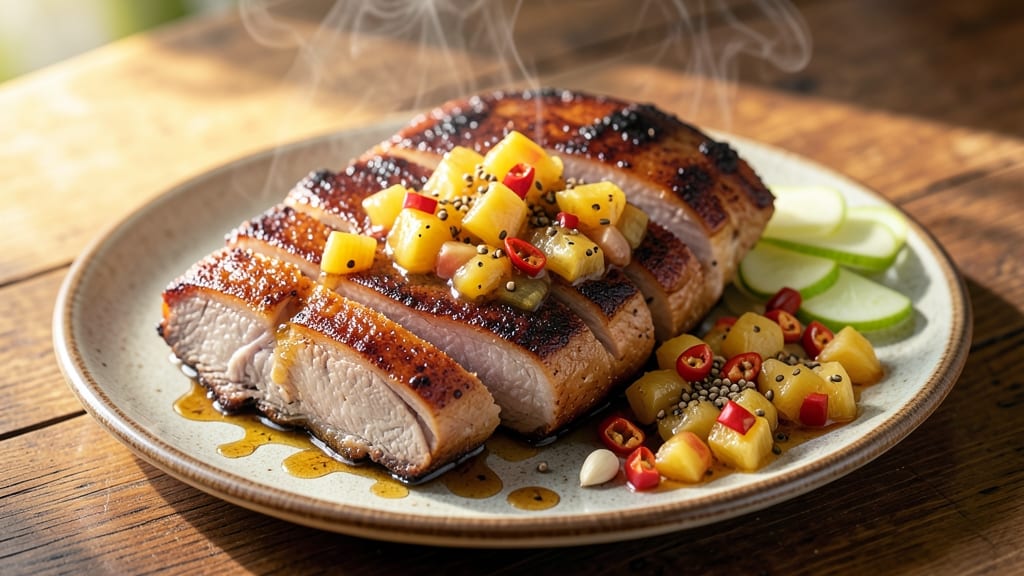
This pineapple chutney pork recipe transforms ordinary pork into something extraordinary—juicy, caramelized bites with a sweet-tangy glaze that cuts through rich meat. 🌟 I developed this after realizing how much better pork tasted when braised in the tropical flavors of pineapple, ginger, and chili.
The chutney isn’t just a topping; it’s the star, simmering down into a sticky, aromatic sauce that clings to every crispy edge and tender center.
The magic happens in layers: first, searing the pork to lock in juices, then slow-cooking it with the chutney until the sauce reduces to a glossy, caramelized perfection. No fancy techniques—just a Dutch oven, a few pantry staples, and patience.
The result? Pork so flavorful it disappears from the plate, leaving behind only sticky-sweet glaze and a hint of spice. This is the kind of dish that turns weeknight dinners into restaurant-worthy meals without the fuss.
What makes this recipe work is the balance—pineapple’s sweetness mellows the heat of the chili, while ginger and garlic add depth. The pork stays moist, the chutney caramelizes into a glossy finish, and the aroma alone will have everyone gathering around the table.
Serve it over rice for a complete meal, or pair it with roasted vegetables to let the pork shine. Let’s get cooking—this is pork done right.
Between you and me, this recipe became a family favorite after my husband Tom declared it “the best pork he’s ever eaten.” (He’s not wrong.) The chutney keeps well in the fridge, so you can make it ahead and reheat it for leftovers—proof that great flavor doesn’t require last-minute prep.
Here’s how to make it happen.
Ingredients for pineapple chutney recipe for pork
Pork shoulder, pineapple chunks, and ginger—just 14 ingredients for a dish that tastes like a restaurant favorite.
| Ingredient | Amount | Notes |
|---|---|---|
| Boneless Pork Shoulder 🐖 | 2 lb | Cut into 1.5-inch cubes |
| Fresh Pineapple 🍍 | 1 cup | Finely chopped, fresh or canned |
| Fresh Ginger 🌿 | ½ cup | Finely grated, aromatic |
| Garlic Cloves 🧄 | 6 cloves | Minced, fresh preferred |
| Red Chili Peppers 🌶️ | 2 whole | Seeds removed, finely chopped |
| Apple Cider Vinegar 🍊 | ¼ cup | For tangy depth |
| Brown Sugar 🍚 | ½ cup | Packed, for caramelization |
| Soy Sauce 🥢 | ¼ cup | For umami richness |
| Olive Oil 🫒 | ¼ cup | For searing pork |
| Coconut Milk 🥥 | ½ cup | Full-fat for creaminess |
| Salt 🧂 | 1 ½ tsp | Kosher or sea salt |
| Black Pepper 🌶️ | ½ tsp | Freshly ground |
| Fresh Cilantro 🌿 | ¼ cup | Chopped, for garnish |
| Lime Juice 🍋 | 2 tbsp | Freshly squeezed |
The pork shoulder is your secret weapon here—Costco or butcher shops have the best cuts, but any grocery store carries it. Look for good marbling; that’s what keeps the meat juicy. Fresh pineapple is ideal, but canned crushed pineapple works in a pinch—just drain it well. Ginger and garlic are non-negotiable for that tropical depth, so buy fresh ginger (it’s cheaper than you think) and don’t skimp on the garlic. Red chili peppers? Jalapeños or serranos work great—just remove the seeds for less heat. The apple cider vinegar adds that tangy kick, and Bragg’s is my go-to brand, but any organic vinegar will do.
No fresh pineapple? Canned crushed pineapple with juice is a lifesaver—just drain it thoroughly. Running low on ginger? Ginger paste from a tube works in a bind, but fresh is always better. Skip the chili peppers? A pinch of cayenne pepper or chili powder will add heat without the texture. The coconut milk should be full-fat—Thai Kitchen brand is my favorite for its rich flavor. Brown sugar is key for caramelization, but white sugar works too if that’s what you’ve got. Soy sauce? Low-sodium works if you’re watching salt intake, but regular adds more depth.
This dish tastes even better the next day—make extra if you can. The chutney glaze keeps in the fridge for 5-6 days and freezes beautifully for 3 months. Store it in an airtight container, and reheat gently on the stove with a splash of water to loosen the glaze. The pork stays moist for 4 days in the fridge, but it’s best served fresh. Garnish with cilantro right before serving—it adds a bright finish that makes the whole dish pop.
Why You'll Love This Recipe
- One-Pot Magic: I swear by this recipe when I’m too tired to clean a million dishes—just toss everything in one pot, let it simmer, and boom. The pork shoulder stays tender while the pineapple and ginger melt into that sticky, fragrant chutney right alongside it. No chopping boards to scrub, no separate pans to wash. Honestly? It’s the kind of meal that makes me feel like a lazy genius.
- Sweet Heat Balance: That first bite of crispy pork with the chutney’s tangy-sweet kick? It’s like a flavor explosion in your mouth. The fresh ginger and garlic give it a zesty punch, but the pineapple’s natural sweetness keeps it from being too spicy. I’ll be real: my kids pick out the chili peppers, but they still go back for seconds because of how perfectly everything comes together.
- Weeknight Workhorse: This dish is my go-to when I need something hearty but still feels special—no one suspects it’s this easy. It’s great for game nights (the chutney’s bold flavors hold up to beer), potlucks (it reheats beautifully), or even a lazy Sunday when you don’t want to slave over the stove. Between us, I’ve served it at BBQs, family dinners, and even a last-minute office party. It’s that reliable.
Step-by-step instructions for pineapple chutney pork
Here's how to create that perfect sweet-tangy glaze that'll make your pork shoulder melt in your mouth.
🔥 Step 1: Sear the Pork Shoulder for Maximum Flavor
Heat a large Dutch oven over medium-high heat and add the 2 lb boneless pork shoulder cut into 1.5-inch cubes. Don't crowd the pan—work in batches if needed. Let the pork sear undisturbed for 3-4 minutes per side until deep golden brown forms on all sides. This step builds that incredible crust that'll hold the chutney perfectly.
Once golden, transfer the seared pork to a plate and set aside. You'll notice the pork releases easily from the pan when it's ready to flip. The caramelized exterior is your first layer of flavor—don't skip this crucial step. I like to press down gently on the pork cubes during the first minute to prevent them from curling and ensure even contact with the pan.
🍳 Step 2: Build the Chutney Base
In the same Dutch oven (no need to clean it—the browned bits are flavor gold), add the 0.25 cup olive oil over medium heat. Toss in the 6 cloves minced garlic and 0.5 cup finely grated fresh ginger, cooking for 1-2 minutes until fragrant and just starting to turn golden. You'll smell that aromatic punch developing—this is where the magic begins.
Next, add the 2 whole red chili peppers (seeds removed and finely chopped) and cook for another 30 seconds until they soften slightly. Then stir in the 1 cup finely chopped fresh pineapple and cook for 2 minutes until the pineapple begins to soften and release its juices. The mixture should be sizzling gently—the heat helps develop those beautiful caramelized flavors we're after.
🥘 Step 3: Simmer the Sweet-Tangy Glaze
Pour in the 0.25 cup apple cider vinegar and 0.25 cup soy sauce, scraping up any browned bits from the bottom of the pan. Add the 0.5 cup packed brown sugar, 1.5 tsp salt, and 0.5 tsp black pepper, stirring to combine. Let the mixture bubble away for 3-4 minutes until it thickens slightly and the sugar begins to caramelize.
Here's where it gets good—reduce heat to medium-low and stir in the 0.5 cup coconut milk. The coconut milk adds that creamy richness that balances the sweet and tangy flavors. Let the chutney simmer for another 5 minutes until it coats the back of a spoon. You want it thick enough to cling to the pork but still pourable. If it's too thick, add 1-2 tablespoons water to loosen it.
⏰ Step 4: Braise the Pork to Perfection
Return the seared pork to the Dutch oven and spoon the chutney mixture over the top, making sure each piece is well-coated. Bring everything to a gentle simmer, then cover and transfer to a 325°F oven. Here's the key: braise for 1 hour and 15 minutes until the pork is fork-tender and the chutney has thickened into a glossy glaze.
I check for doneness by piercing a pork cube with a fork—it should slide in easily with just slight resistance. The chutney should be reduced enough to coat the back of a spoon and have that beautiful caramelized sheen. If it's not quite there, uncover and simmer on the stovetop for another 5-10 minutes to thicken further.
🍽️ Step 5: Finish and Serve
Remove the pork from the oven and let it rest for 10 minutes before serving. This resting time allows the juices to redistribute throughout the meat, ensuring each bite is moist and flavorful. While the pork rests, stir the 2 tbsp fresh lime juice and 0.25 cup chopped fresh cilantro into the chutney. The lime brightens the flavors while the cilantro adds that fresh herbal note that ties everything together.
Spoon the chutney over the pork cubes and serve immediately. The pork should be fork-tender with that perfect balance of sweet, tangy, and savory flavors from the chutney. Each bite should deliver juicy, tender pork with a glossy, caramelized glaze that clings beautifully. Serve with steamed jasmine rice or crusty bread to soak up all that delicious sauce.
Pro Tips For Making Pineapple Chutney Recipe For Pork
- BROWN THE PORK FIRST: Don’t skip searing the pork shoulder—get it deep golden in a hot pan with oil before adding anything else. I learned this the hard way: raw pork in a sweet chutney sauce turns mushy, and you lose that rich, caramelized depth that balances the pineapple’s brightness.
- PEEL AND GRATE THE GINGER: Skip the minced jarred ginger—fresh is non-negotiable here. Use a microplane to grate it directly into the chutney while it simmers; it dissolves faster and adds a sharper, more aromatic punch. (Yes, even if you’re impatient like me.)
- CONTROL THE CHILI HEAT: Taste the chili peppers before chopping—some are fiery, some are mild. If using fresh red chilies, remove seeds and membranes first, then finely dice. Overdoing it here means your pork gets drowned out by heat instead of shining through.
- SIMMER THE CHUTNEY LOW: Reduce the pineapple-ginger mixture on low heat—high heat turns it into syrup too fast, and you lose the complexity of the flavors. Stir occasionally and let it thicken naturally; rushing it makes the chutney taste one-note. (Your future self will thank you.)
Common mistakes when making perfect results
Overcooking the Pork
The biggest mistake I see is letting the pork dry out. Pork shoulder is forgiving, but if you overbraise it past 1 hour and 30 minutes at 325°F, the meat becomes stringy and loses its moisture.
I’ve learned the hard way—once, I left it in for 2 extra hours and ended up with tough, dry cubes. Use a meat thermometer to check for 203°F internal temperature—that’s the sweet spot for tender, juicy pork. 🌡️
Skipping the Sear
Some cooks rush the searing step, thinking it’s optional. But that golden crust is what locks in flavors and prevents the chutney from soaking into the pork too quickly. I’ve made this mistake when I’m in a hurry—skipping the sear leads to bland, soggy pork cubes.
Take your time here: 3-4 minutes per side until deep brown. The patience pays off with each bite.
Ignoring the Resting Time
This is a non-negotiable step, yet I’ve caught myself serving the pork immediately after pulling it from the oven. The 10-minute rest lets the juices redistribute, ensuring every forkful is moist and flavorful.
Without it, the first few bites are dry, and the chutney glaze pools at the bottom of your plate. Trust me, those 10 minutes make all the difference.
Using Low-Quality Ingredients
Not all pineapples or ginger are created equal. Canned pineapple with syrup or old, fibrous ginger will make your chutney taste flat. I always use fresh pineapple (or high-quality canned crushed pineapple with juice) and fresh ginger for that bright, aromatic punch.
The same goes for the pork—opt for well-marbled cuts from local butchers or trusted brands like Costco. Your taste buds will thank you.
Rushing the Chutney Reduction
Some cooks speed up the process by cranking the heat too high, but this leads to a thin, watery glaze instead of a rich, caramelized sauce. The chutney needs time to simmer gently and reduce naturally.
If you’re impatient, lower the heat to medium-low and let it work its magic. The result? A glossy, sticky glaze that clings to every bite of pork. 💫
Forgetting to Taste as You Go
Seasoning is cumulative, and I’ve learned that adding all the salt and spices at once can throw off the balance. Instead, taste the chutney mixture after adding the vinegar and soy sauce, then adjust with salt, sugar, or lime juice as needed.
The goal is a harmonious blend of sweet, tangy, and savory—don’t be afraid to tweak it along the way! This small habit saved my first batch when the chutney turned too sweet.
Nutrition facts
Frequently asked questions
Can I use pork chops instead of pork shoulder for this recipe?
For bone-in pork chops, sear them first (3-4 minutes per side) and then braise in the chutney for 20-25 minutes at 325°F until internal temp reaches 145°F. Thinner cuts like chops won't need the long braising time—just ensure they're fully coated in the glaze. The chutney works beautifully with any pork cut, though shoulder gives the most tender, fall-apart results.
How can I make this dish spicier?
Add 1-2 teaspoons of red pepper flakes or ½ teaspoon of cayenne pepper to the chutney base while simmering. For extra heat, include the seeds from the chili peppers (instead of removing them) or stir in 1 tablespoon of sriracha at the end. Start with small amounts—you can always add more, but you can't take it out!
Can I prepare the chutney sauce ahead of time?
Yes! The chutney keeps well in the fridge for 5-6 days in an airtight container. To reheat, warm it gently on the stove with 1-2 tablespoons of water to loosen the glaze. For longer storage, freeze the chutney for up to 3 months. Thaw overnight in the fridge before using—never microwave it directly from frozen.
What are the best sides to serve with this pork dish?
This tropical pork pairs perfectly with jasmine rice or coconut rice to soak up the glaze. For freshness, try a mango-avocado salad or steamed bok choy. Crusty baguette or naan bread also work wonderfully. The key is balancing the rich pork with something light and refreshing to cut through the sweetness.
Why does my chutney sometimes turn out too sweet?
This usually happens when the pineapple's natural sugars dominate. Balance it by adding 1 extra tablespoon of lime juice or ½ teaspoon of salt at the end. For future batches, reduce the brown sugar to ¼ cup and taste frequently while simmering. The chutney should have a perfect harmony of sweet, tangy, and savory—adjust gradually to avoid overpowering flavors.