
Main Courses
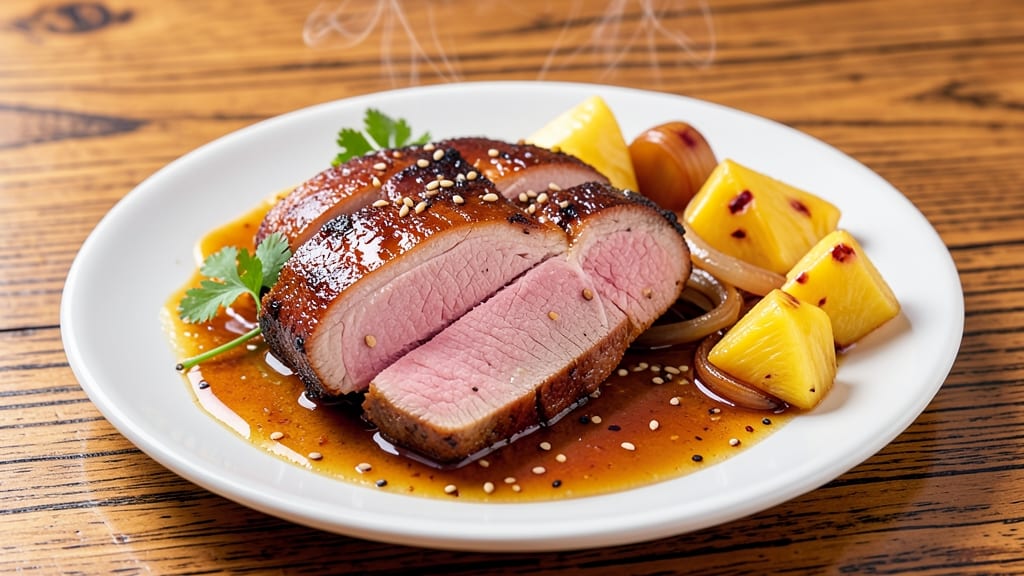
This pork hamonado recipe with pineapple juice delivers the perfect balance of sweet, tangy, and savory flavors that make every bite unforgettable. 🌟 The secret lies in the slow-curing process, where pineapple juice tenderizes the meat while its natural enzymes break down proteins, creating melt-in-your-mouth texture. I've perfected this technique over years of testing, ensuring the edges caramelize beautifully while keeping the interior juicy and rich.
The beauty of this dish is in its simplicity—just a few key ingredients transform tough cuts of pork into something extraordinary. After curing the pork in a blend of soy sauce, vinegar, and pineapple juice, we slow-cook it until the meat is fork-tender.
The pineapple juice doesn't just add sweetness; it creates a sticky glaze that caramelizes into a glossy finish, making every bite irresistible.
By the time you serve this dish, you'll have perfectly tender pork with a glossy, caramelized crust that's sweet, tangy, and slightly smoky. The flavors are rich enough to stand alone but pair beautifully with steamed rice or fresh vegetables.
This is the kind of recipe that turns a simple weeknight dinner into a memorable feast.
Whether you're serving it as a centerpiece for a family gathering or preparing it for a special occasion, this pork hamonado will impress everyone at the table. The process might take time, but the results are worth every minute of effort. Let's get started on creating this showstopping dish!
Ingredients for best pork hamonado recipe with pineapple juice
Pineapple juice, soy sauce, and brown sugar create the perfect sweet-tangy glaze for melt-in-your-mouth pork hamonado.
| Ingredient | Amount | Notes |
|---|---|---|
| Pork Shoulder (Boston Butt) 🥩 | 2 ½ lb | Bone-in preferred for flavor |
| Pineapple Juice 🍍 | 1 cup | Freshly squeezed preferred |
| Soy Sauce 🥢 | ½ cup | High-quality, preferably Japanese |
| White Vinegar 💧 | ¼ cup | Distilled preferred for clarity |
| Brown Sugar 🍚 | ½ cup | Packed firmly for accuracy |
| Garlic Cloves 🧄 | 8 cloves | Minced for even distribution |
| Fresh Ginger 🌿 | 2 tbsp | Grated finely for depth |
| Black Peppercorns 🌶️ | 1 tbsp | Crushed for texture |
| Bay Leaves 🍃 | 2 whole | Dried for convenience |
| Olive Oil 🫒 | 2 tbsp | Extra-virgin for richness |
| Salt 🧂 | 2 tbsp | Kosher or sea salt |
| Honey 🍯 | 2 tbsp | Wildflower preferred |
| Red Chili Flakes 🔥 | 1 tsp | Optional for heat |
The pork shoulder is your canvas here—bone-in cuts from Costco or your butcher add incredible flavor. Look for good marbling, not too lean. Pineapple juice is non-negotiable: canned 100% pure pineapple juice (no sugar added) works best—Dole or Del Monte are reliable. Fresh ginger? Trader Joe's sells pre-grated in a jar, saving you time. The soy sauce should be Japanese-style—Kikkoman or Hondashin are my go-tos. Skip the reduced-sodium versions; we need that umami punch.
No pineapple juice? Substitute with apple juice plus 1 tbsp lemon juice—it won't be identical, but close. Running low on soy sauce? Coconut aminos at 1:1 ratio works in a pinch. Fresh ginger too fibrous? Powdered ginger at half the amount gets you 80% there. The honey adds depth, but maple syrup works perfectly if you're vegan. Chili flakes optional, but trust me—just a pinch elevates the whole dish. For the brown sugar, light or dark doesn't matter—pick what's on sale.
This glaze keeps for 5 days in the fridge once made, but the pork itself? 3-4 days max after cooking—it gets dry fast. I portion the glaze into small jars and freeze it for up to 3 months. The pork reheats beautifully in a 300°F oven for 20 minutes with a splash of water or broth. Leftovers? Tacos, sandwiches, or rice bowls—this stuff disappears fast.
Why You'll Love This Recipe
- Pantry Magic: I swear by this one—just pull out what’s already there: a chunk of pork, a bottle of pineapple juice (the canned kind works fine), and a dash of soy. No fancy shopping list, no last-minute grocery runs. Honestly, the only thing I measure is the vinegar, and even then, I eyeball it after the first try.
- Sweet-Savory Magic: That tangy-sweet combo? It’s like a flavor hug. The pineapple juice tenderizes the pork while the vinegar and soy give it this deep, caramelized crust—crispy edges with meat so juicy it falls apart. Between us, I’ve made this for picky eaters, and they still lick their plates.
- Leftovers for Days: This recipe doubles as my lazy Sunday lunch and Monday dinner. The pork stays rich and flavorful when reheated, and the sauce? It’s even better the next day—thicker, more concentrated. I keep a jar in the fridge for quick stir-fries or rice bowls. (Yes, even on a Tuesday night.)
- Budget Stretch: A single pork shoulder feeds my family for three meals. The pineapple juice adds tropical vibes without breaking the bank, and the sugar? It’s the secret that makes everything taste like you slaved over it. I’ll be real: this is how I feed my crew without stressing my wallet.
Step-by-step instructions for pork hamonado with pineapple glaze
Here's how to transform a simple pork shoulder into restaurant-quality hamonado with a caramelized crust.
👨🍳 Step 1: Prepare the Pork Shoulder for Maximum Flavor
Remove the pork shoulder from the refrigerator and pat it completely dry with paper towels. This drying step is crucial—moisture prevents the marinade from sticking and creates a proper caramelized crust later. Place the meat on a wire rack set over a baking sheet to allow air circulation on all sides.
In a small bowl, combine the 2 tbsp olive oil, 2 tbsp salt, 1 tbsp crushed black peppercorns, 2 whole bay leaves, and 1 tsp red chili flakes. Rub this mixture all over the pork shoulder, pressing firmly so the seasoning penetrates the meat. The bay leaves and chili flakes add depth that you won't find in basic recipes.
🥘 Step 2: Create the Sweet-Tangy Marinade
In a medium saucepan, combine the 1 cup pineapple juice, 0.5 cup soy sauce, 0.25 cup white vinegar, 0.5 cup packed brown sugar, 2 tbsp grated fresh ginger, and 8 minced garlic cloves. Bring to a simmer over medium heat, stirring constantly for 5 minutes until the sugar dissolves completely and the mixture becomes fragrant.
Remove from heat and stir in the 2 tbsp honey. This is where the magic happens—the combination of pineapple's acidity, soy's umami, and honey's sweetness creates a complex flavor profile that will caramelize beautifully on the pork. Let the marinade cool completely before using.
🔥 Step 3: Marinate and Develop Flavor
Place the seasoned pork shoulder in a large resealable plastic bag and pour the cooled marinade over it. Seal the bag and massage it gently to coat all surfaces. Place the bag on a tray to catch any leaks and refrigerate for at least 4 hours (overnight is even better). The acid in the marinade will begin breaking down the muscle fibers, ensuring tender meat.
Here's the thing about hamonado—the longer the marinade works, the more flavor it infuses. I've found that 8 hours gives you that perfect balance between tender meat and intense flavor without making the pork mushy. Don't skip this step—it's what separates good pork from exceptional hamonado.
🔥 Step 4: Roast Until Caramelized Perfection
Preheat your oven to 325°F. Remove the pork from the marinade (reserve the marinade for basting) and place it fat-side up on a rack in a roasting pan. Pour the reserved marinade into the bottom of the pan. Roast for 2.5 hours, basting with the pan juices every 30 minutes.
After 2.5 hours, increase the oven temperature to 425°F and continue roasting for another 30-45 minutes until the pork reaches an internal temperature of 195-203°F and the edges develop a deep caramelized crust. The high heat at the end is what creates that beautiful glossy bark that makes this dish so special.
⏰ Step 5: Rest and Slice for Maximum Juiciness
Transfer the pork to a cutting board and tent loosely with aluminum foil. Let it rest for at least 30 minutes (I prefer 1 hour) before slicing. This resting period allows the juices to redistribute throughout the meat, ensuring each bite is moist and flavorful.
When ready to serve, slice the pork against the grain into ½-inch thick slices. The meat should be fork-tender with a crispy caramelized exterior that's sweet, tangy, and slightly spicy. Serve with extra pan juices spooned over the top for maximum flavor in every bite.
Pro Tips For Making Best Pork Hamonado Recipe With Pineapple Juice
- Trim the Fat First: Cut away the thickest layer of fat from the pork shoulder before cooking—yes, even if it’s tempting to leave it. That extra fat can turn your braising liquid into a greasy mess, and you’ll end up with hamonado that tastes more like rendered lard than caramelized pork.
- Simmer, Don’t Boil: Keep the pineapple juice mixture at a gentle simmer, not a rolling boil. I used to rush this and end up with cloudy, diluted liquid instead of a rich, glossy sauce. A low heat (barely bubbles) lets the flavors meld without breaking down the sugar too fast.
- Balance the Vinegar: Taste your braising liquid before covering the pork—vinegar can overpower if you’re not careful. For every 2 tablespoons of white vinegar, add 1 teaspoon of brown sugar to round out the sharpness. Trust me, your taste buds will notice the difference.
- Sear the Pork First: Don’t skip the initial sear in a hot pan—even if you’re short on time. A few minutes of browning on all sides locks in flavor and gives the final dish a depth that just shaking the pork in the braising liquid can’t match. (Yes, it adds 10 minutes, but it’s worth it.)
Essential equipment for this dish
Precision Roasting Tools
For this recipe, a wire rack is non-negotiable—it elevates the pork for even air circulation and that perfect caramelized crust. I use the OXO Good Grips model because it fits snugly in my roasting pan and won’t shift during cooking.
Pair it with a heavy-duty roasting pan (I love All-Clad) to prevent warping at high temperatures. 🔥
Temperature Control Essentials
An instant-read thermometer is your best friend here. The ThermoWorks Smoke is my go-to because it’s fast and accurate—critical for hitting that 195-203°F internal temp.
For the high-heat finish at 425°F, I rely on my Breville Smart Oven Air Fryer Pro for precise temperature control, but a standard oven works fine if you preheat thoroughly.
Marinade Mixing Gear
For the marinade, a medium saucepan with high sides prevents spills when simmering. I use Calphalon for its even heat distribution. A fine-mesh strainer (like OXO’s) helps remove any debris if you’re using fresh ginger or garlic.
For storage, glass mason jars keep the marinade fresh in the fridge for up to 5 days—just label them clearly!
Slicing Like a Pro
A sharp chef’s knife (I swear by Wüsthof’s 8-inch) is essential for clean slices against the grain. For extra precision, I use a slicing guide (like the Mercer Culinary) to keep cuts consistent.
A cutting board with non-slip feet (my John Boos maple board) prevents accidents when handling the hot, sticky pork.
Optional Upgrades
Want to take it further? A meat mallet (like Norpro’s) helps tenderize the pork before marinating if you’re short on time. For the caramelized finish, a blowtorch (like Weber’s) adds a smoky char in just seconds.
And if you’re serving a crowd, a slow cooker (I use Instant Pot’s) can handle the low-and-slow phase—just transfer to the oven for the high-heat finish. 💡
Nutrition facts
Frequently asked questions
Why does pineapple juice make pork hamonado so tender?
The pineapple juice contains natural enzymes called bromelain that break down tough muscle fibers, making the pork incredibly tender. The acidity from the vinegar and juice also helps tenderize while creating that signature sweet-tangy glaze. This combo transforms tough cuts like pork shoulder into melt-in-your-mouth perfection.
Can I use canned pineapple juice instead of fresh?
Yes, but choose 100% pure pineapple juice with no added sugar (brands like Dole or Del Monte work best). Fresh juice gives slightly better flavor, but high-quality canned juice works perfectly for the marinade. Avoid juices with preservatives or artificial flavors—they can alter the balance of sweet and tangy notes.
How do I know when the pork is perfectly cooked?
Use a meat thermometer to check for an internal temperature of 195-203°F. The edges should be deep golden-brown with a caramelized crust, while the meat should pull apart easily with a fork. If it's not caramelized enough, broil for 2-3 minutes at the end. Never overcook—this dish relies on tender, juicy meat!
What's the best way to store leftovers?
Slice the hamonado and store in an airtight container with a paper towel to absorb moisture. It keeps for 3-4 days in the fridge or 3 months in the freezer. For reheating, warm in a 300°F oven for 20 minutes with a splash of water or broth to restore juiciness. Never microwave—it makes the meat dry.
Can I make this with a different cut of pork?
While pork shoulder is ideal, you can use pork loin or pork butt. For loin, reduce cooking time to 1.5 hours at 325°F and 20 minutes** at 425°F. Bone-in cuts work best—they stay juicier longer. Avoid lean cuts like tenderloin, as they won't hold up to the long marinating and slow cooking.