
Main Courses
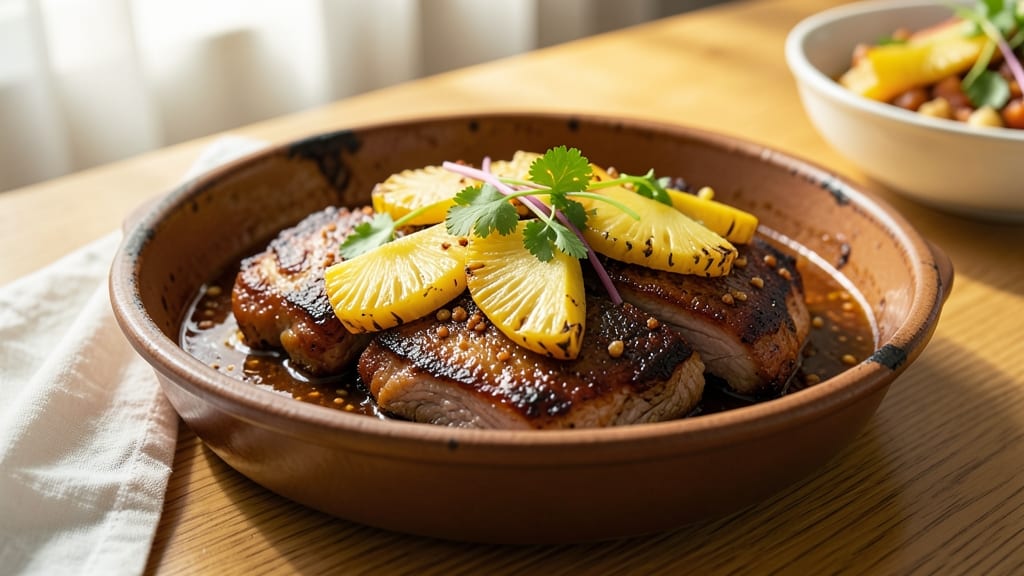
This pork belly pineapple adobo recipe delivers a perfect balance of caramelized sweetness and deep umami that'll transform your weeknight dinner into something extraordinary. 🌟 The secret lies in marinating thick-cut pork belly in a tangy adobo blend before slow-braising it with fresh pineapple until tender and sticky.
I developed this recipe after years of perfecting Filipino braising techniques—where the magic happens in the slow transformation of tough cuts into melt-in-your-mouth perfection.
The beauty of this dish is its versatility—it works equally well as a main course for a special occasion or a comforting weeknight meal.
The pork belly renders its own fat, creating a glossy, caramelized crust while staying juicy inside, while the pineapple adds a bright, tropical contrast that cuts through the richness.
What makes this recipe special is the balance: enough acidity from the vinegar to brighten the pork, but with just enough sweetness from the pineapple to create that irresistible caramelized finish.
By the time you're plating this dish, you'll have perfectly tender pork belly with crispy edges, chunks of caramelized pineapple scattered throughout, and a sauce that's rich yet tangy. The aroma alone will have everyone gathering around the table—this is the kind of meal that feels like a celebration.
Serve it with steamed jasmine rice to soak up every last bit of that delicious sauce, or pair it with a simple green salad for balance.
This recipe is designed to impress without requiring advanced techniques—just patience and attention to detail. The slow cooking process ensures the pork belly becomes fork-tender while developing layers of flavor, and the pineapple adds just the right amount of sweetness to complement the savory depth.
Whether you're cooking for family or hosting a dinner party, this dish will be the star of the meal.
Ingredients for pork belly pineapple adobo
Thick-cut pork belly and juicy pineapple chunks create this restaurant-worthy adobo with caramelized sweetness and deep umami.
| Ingredient | Amount | Notes |
|---|---|---|
| Thick-Cut Pork Belly 🥓 | 2 lb | Skin-on, thick-cut preferred |
| Fresh Pineapple 🍍 | 1 whole | Chopped into 1-inch chunks |
| Soy Sauce 🥢 | ½ cup | High-quality, preferably Japanese |
| Cane Vinegar 🍶 | ¼ cup | White vinegar works in a pinch |
| Brown Sugar 🍚 | ½ cup | Packed firmly, light brown preferred |
| Garlic Cloves 🧄 | 6 cloves | Minced finely for depth of flavor |
| Fresh Ginger 🌿 | 2 tbsp | Finely grated, peeled |
| Black Peppercorns 🌶️ | 1 tsp | Freshly cracked for best flavor |
| Bay Leaves 🍃 | 2 whole | Dried, for aromatic depth |
| Olive Oil 🫒 | 2 tbsp | Extra-virgin for richness |
| Jasmine Rice 🍚 | 2 cups | Uncooked, for serving |
| Diamond Crystal Kosher Salt 🧂 | 1 ½ tsp | For seasoning and brining |
| Water 💧 | 4 cups | For rice and braising liquid |
The pork belly is non-negotiable here—thick-cut, skin-on ensures that perfect crispy skin and melt-in-your-mouth tenderness. Costco or your local butcher are the best places to find it, and if it's not already cut into 1-inch slices, ask for it. The pineapple should be ripe but firm—Dole's fresh-cut pineapple works if you're short on time, but fresh is always better. Look for vibrant yellow flesh with no brown spots, and chop it into even 1-inch chunks so it cooks uniformly. The skin-on pork belly renders its own fat, creating that glossy caramelized crust we all love, so don't peel it off—it's part of the magic.
No cane vinegar? White vinegar or apple cider vinegar will work in a pinch, though cane vinegar adds a slightly deeper, more complex flavor. The brown sugar should be packed firmly—light brown sugar gives a better caramelization than dark. If you're feeling adventurous, swap half the soy sauce for coconut aminos for a slightly sweeter, less salty profile. The garlic and ginger are where the real depth comes from—toast the whole garlic cloves in a dry pan for 30 seconds before mincing to mellow their sharpness. Freshly cracked black peppercorns add a subtle heat that balances the sweetness, so don't skip them. For the bay leaves, if you can't find them, dried oregano at half the amount will give you a similar aromatic boost.
This dish tastes even better the next day, so plan ahead—the flavors meld beautifully overnight. Store leftovers in an airtight container in the fridge for up to 5 days, or freeze portions for 3 months. The rice should be cooked separately and kept warm in a rice cooker or covered pot—jasmine rice absorbs the sauce beautifully, so don't skimp on the portions. If you're prepping ahead, you can marinate the pork belly and pineapple in the adobo sauce up to 24 hours before cooking, which actually enhances the flavors. Just keep it refrigerated until you're ready to braise.
Why You'll Love This Recipe
- One-Pan Magic: I swear by this recipe when I’m too tired to wash dishes. The pork belly and pineapple simmer together, so you just toss everything in one pan—no chopping, no fuss, just boom, flavor.
- Sweet-Savory Balance: That caramelized brown sugar and cane vinegar? It’s like a party in your mouth. The pork belly gets tender and crispy at the edges, while the pineapple adds just the right tangy sweetness—no weird aftertaste, just pure satisfaction.
- Leftovers That Don’t Suck: Honestly, I make this on purpose for leftovers. The flavors get even better the next day, and it reheats like a dream. Pack it for lunch or freeze portions—it’s my go-to when I need something hearty without the effort.
- Budget-Friendly Luxury: Pork belly can feel fancy, but this recipe stretches it. A single slab feeds four, and the pineapple adds freshness without breaking the bank. Plus, the vinegar and soy sauce are pantry staples—minimal cost, maximum flavor.
Step-by-step instructions for pork belly pineapple adobo
This dish balances sweet, tangy, and savory perfectly—here's how to nail it every time.
🔥 Step 1: Render the Pork Belly Fat and Sear the Meat
Place the 2 lb thick-cut pork belly skin-side down in a heavy pot or Dutch oven over medium-low heat. Let it render its own fat for 10-12 minutes until the fat is bubbling and the skin begins to crisp. I press down gently on the pork belly during the first minute—this prevents it from curling and ensures even contact with the pan.
Once the fat is rendered (about ¼ cup should pool in the pan), flip the pork belly skin-side up and sear for 3-4 minutes until golden brown. You'll know it's ready when the skin releases easily from the pan. Remove the pork belly and set it aside on a plate—it'll continue cooking in the braising liquid later.
🍳 Step 2: Build the Adobo Braising Liquid
In the same pot, add the 2 tbsp olive oil and increase heat to medium-high. Add the 6 cloves minced garlic and 2 tbsp freshly grated ginger, cooking for 1-2 minutes until fragrant and just starting to color. Here's where it gets fun—toss in the 1 whole fresh pineapple chopped into 1-inch chunks and cook for 3-4 minutes until slightly caramelized.
Stir in the 0.5 cup soy sauce, 0.25 cup cane vinegar, 0.5 cup packed brown sugar, 1.5 tsp kosher salt, and 1 tsp freshly cracked black peppercorns. Add the 2 whole bay leaves and scrape up any browned bits from the bottom of the pot—this adds incredible depth of flavor. Let the mixture simmer for 5 minutes until slightly reduced and syrupy.
🥘 Step 3: Braise the Pork Belly Until Tender
Return the pork belly to the pot, skin-side up, and pour in enough water to come about halfway up the sides of the pork (about 2 cups). Bring to a gentle simmer, then reduce heat to low. Cover and let it cook for 2 hours, turning the pork belly occasionally to ensure even cooking and crispy skin.
After 2 hours, check the internal temperature using an instant-read thermometer. The pork belly should register 200-205°F and be fork-tender with no resistance. If it's not quite there, continue cooking for another 30 minutes to 1 hour. The braising liquid should be reduced and thickened, coating the pork belly in a glossy, caramelized glaze.
⏰ Step 4: Rest and Prepare the Jasmine Rice
Once the pork belly reaches the perfect tenderness, remove it from the pot and let it rest on a cutting board for 10 minutes. This resting period allows the juices to redistribute, ensuring each bite is moist and flavorful. While the pork belly rests, prepare the 2 cups jasmine rice according to package instructions using the remaining 2 cups water.
To serve, slice the pork belly into ½-inch thick slices, keeping the skin intact for presentation. Spoon the braising liquid and pineapple chunks over the rice, then top with the pork belly slices. The contrast of crispy skin, tender meat, and sweet-tangy sauce over fragrant rice is what makes this dish truly special.
Pro Tips For Making Pork Belly Pineapple Adobo
- Brown Sugar First: Toss the pork belly in half the brown sugar before adding the vinegar—it caramelizes faster and sticks better. I used to wait until the end, and the glaze always tasted thin and cloying. This step guarantees a sticky, glossy crust that clings to every bite.
- Score the Pineapple: Cut the pineapple into ½-inch chunks, then make a shallow crosshatch on the flesh side with a knife. It releases more juice into the sauce, balancing the acidity and making the dish taste brighter. (Yes, it looks weird—trust me, it works.)
- Simmer Slowly: Once the sauce starts reducing, drop the heat to a gentle simmer. I learned this the hard way—rushing it burns the sugar and turns the vinegar harsh. Let it bubble quietly for at least 20 minutes, stirring occasionally, or the flavors won’t meld right.
- Deglaze Aggressively: After searing the pork belly, don’t just splash in the vinegar—scrape the browned bits from the pan with a wooden spoon first. Those bits pack deep flavor, and skipping this step means your sauce will taste flat. (Your lazy self will regret it.)
Flavor customization for this recipe
Sweet Heat Balance
Adjust the sweetness to heat ratio by swapping 1 tbsp brown sugar for ½ tsp chili flakes—this adds smoky depth without overpowering. For extra heat, toss in 1 tbsp gochujang with the soy sauce during the braising step.
I love adding 1 tsp sriracha to the final sauce for a subtle kick that lets the pineapple shine. 🌶️
Tropical Twist
Swap half the pineapple for 1 cup mango chunks or ½ cup lychee segments for a fruitier profile. Add 1 tbsp lime zest to the braising liquid for a bright citrus note that cuts through the richness.
Fresh cilantro or Thai basil at the end adds aromatic freshness that elevates the dish. This works especially well with grilled pork belly variations.
Umami Boosters
Deepening the umami is key—add 1 tbsp fish sauce or 1 tsp oyster sauce to the braising liquid for complexity. For a smoky touch, char 1 whole garlic bulb in a dry pan before mincing.
I also love adding 1 tsp toasted sesame oil at the end for nutty richness that pairs perfectly with the caramelized pineapple.
Gluten-Free Adaptation
Replace the soy sauce with ½ cup coconut aminos for a gluten-free version that still delivers umami depth. Use ½ cup gluten-free tamari if you need to keep some traditional flavor.
The pineapple and vinegar provide enough acidity to balance the dish without soy. This adaptation works beautifully for guests with dietary restrictions while keeping the dish's signature tangy-sweet profile. 🌱
Slow-Cooker Version
For hands-off cooking, combine all ingredients in a 6-quart slow cooker and cook on low for 8 hours or high for 5 hours. The pork belly will become fork-tender, and the pineapple will caramelize beautifully.
Add ½ cup water if the mixture seems too thick during cooking. This method is perfect for busy weeknights while delivering the same restaurant-quality results.
Nutrition facts
Frequently asked questions
Can I use regular pork shoulder instead of pork belly?
The recipe is designed for pork belly because its fat content creates that signature caramelized crust and tender texture. Pork shoulder will work but won't develop the same crispy skin or rich flavor. If you must substitute, trim excess fat and increase braising time to 2.5-3 hours for tenderness.
How do I know when the pork belly is fully cooked?
Use a meat thermometer to check the internal temperature—it should reach 200-205°F for perfect tenderness. The pork will pull away from the bone easily and be fork-tender with no resistance. If it's not quite there after 2 hours, add 30 more minutes of braising time.
Can I make this recipe in a Dutch oven?
A Dutch oven is ideal for this recipe as it distributes heat evenly and helps create the perfect caramelized crust on the pork belly. Just ensure it's large enough to accommodate the pork belly comfortably—about 6-7 quarts works best for this quantity.
What if my pineapple turns mushy during cooking?
Fresh pineapple should stay firm but slightly caramelized. If it becomes too soft, it likely cooked too long in the braising liquid. To prevent this, add the pineapple chunks only after the pork belly has seared and remove them 15 minutes before the pork is fully cooked. This keeps them tender without turning mushy.
How can I reheat leftovers without drying out the pork?
Reheat leftovers in a skillet over low heat with a splash of water or the original braising sauce to keep everything moist. For oven reheating, cover with foil and warm at 300°F for 20-25 minutes. Avoid microwaving—it makes the pork belly rubbery.