
Main Courses
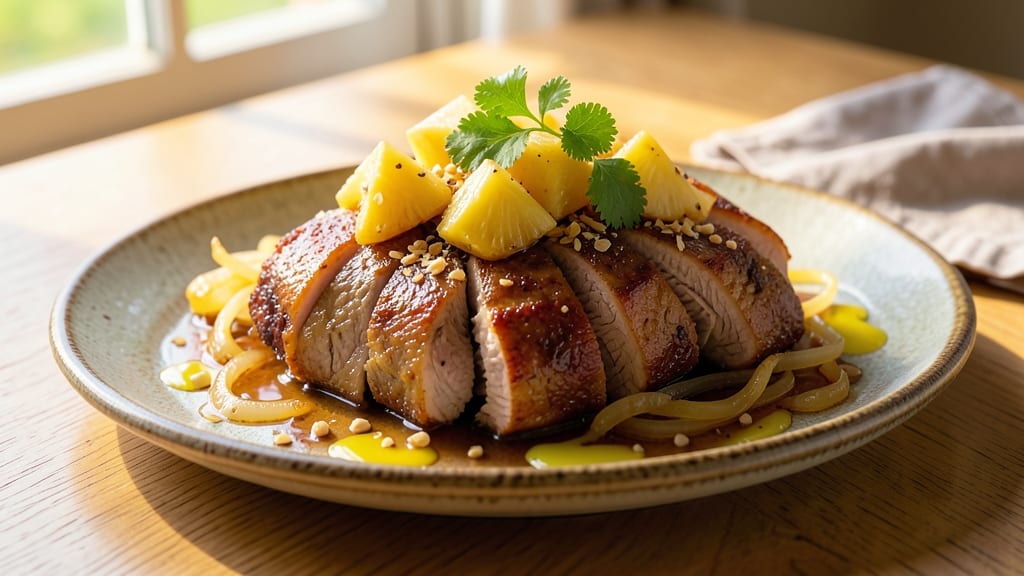
This Filipino pork pineapple recipe delivers the perfect balance of sweet, savory, and tangy flavors that make it a staple in Filipino households. The secret lies in caramelizing the pineapple until it's sticky and golden, then simmering it with tender pork and a rich tomato-based sauce.
I've perfected this dish over years of testing, ensuring every bite is packed with bold, comforting flavors that transport you straight to the Philippines.
The recipe begins with marinating pork in a blend of soy sauce, calamansi (or lemon), and garlic, which infuses deep umami flavor. As the pineapple caramelizes, it releases natural sugars that meld beautifully with the tangy tomato sauce, creating a sauce that's both sweet and slightly acidic.
This dish is hearty enough to stand alone but pairs perfectly with steamed rice or atchara for a complete meal.
What sets this recipe apart is the technique of cooking the pineapple first to develop its natural sweetness before adding the pork. This creates a sauce that's rich, glossy, and full of depth—far from the overly sweet versions you might find elsewhere.
The result is a dish that's restaurant-quality yet simple enough for a weeknight dinner, with layers of flavor that keep you reaching for seconds.
Serve this pork pineapple stir-fry with a side of steamed jasmine rice to soak up every last drop of that tangy, caramelized sauce. For an extra touch, garnish with fresh cilantro or chopped green onions. The combination of textures—tender pork, caramelized pineapple, and silky sauce—makes this dish unforgettable.
Ingredients for pork pineapple recipe filipino
Pineapple's natural sweetness meets savory pork in this Filipino stir-fry, balanced by tangy tomato and umami-rich soy sauce.
| Ingredient | Amount | Notes |
|---|---|---|
| Boneless Pork Shoulder 🥩 | 1 ½ lb | Cut into 1-inch cubes |
| Fresh Pineapple 🍍 | 2 cups | Cubed, fresh or canned in juice |
| Yellow Onion 🧅 | 1 whole | Thinly sliced |
| Garlic Cloves 🧄 | 6 cloves | Minced |
| Calamansi Juice 🍋 | ¼ cup | Or substitute lemon juice |
| Soy Sauce 🥄 | ½ cup | Use light soy sauce |
| Tomato Sauce 🍅 | ½ cup | Canned crushed tomatoes |
| Brown Sugar 🍚 | ¼ cup | Packed light |
| Olive Oil 🫒 | 2 tbsp | Extra-virgin preferred |
| Black Peppercorns 🌶️ | ½ tsp | Freshly ground |
| Bay Leaves 🌿 | 2 whole | Dried |
| Fresh Cilantro 🌿 | ¼ cup | Chopped, for garnish |
| Green Onions 🧅 | 3 whole | Sliced, for garnish |
The pork shoulder is key—look for well-marbled cuts at your local butcher or Filipino markets for authentic flavor. If you can't find calamansi, lemon juice works perfectly—just use a bit more since it's less tart. For pineapple, fresh is ideal but canned in juice (not syrup) saves time without sacrificing flavor. The brown sugar should be packed light—don't tamp it down or you'll end up with clumps. I always grab extra cilantro because half gets used in the sauce and half as garnish—fresh cilantro brightens everything.
No calamansi? Lime juice is a good backup, but it's more acidic. Substitute white vinegar at half the amount if you're in a pinch, but taste first—the sauce should be tangy, not sour. Running low on brown sugar? White sugar works fine, but the caramelization won't be as rich. For tomato sauce, San Marzano canned tomatoes make a noticeable difference in flavor. If you're using pre-minced garlic, toast it first in olive oil to deepen the flavor. The bay leaves add subtle earthiness—don't skip them, but remove before serving.
This dish tastes even better the next day as flavors meld. Store leftovers in an airtight container in the fridge for up to 4 days. The sauce thickens as it cools, so add a splash of water when reheating. Freezes beautifully for 3 months—portion into single servings before freezing. For meal prep, double the recipe and freeze half. The pork stays tender when reheated, but if it's dry, just add a splash of water or broth when warming.
Why You'll Love This Recipe
- One-Pan Magic: I swear by this for lazy nights—just brown the pork, toss in the pineapple chunks and onions, then let the garlic and calamansi juice do their thing. No extra pots, no fuss, just hands-off cooking while you sip a drink.
- Sweet-Savory Balance: That caramelized pork shoulder with fresh pineapple? It’s like a flavor party in your mouth—juicy, tangy, and just enough heat from the garlic to make it unforgettable. (Yes, even my picky husband asks for seconds.)
- Lunchbox Hero: Between us, this reheats like a dream. Pack the leftovers for work, and it’s still tender and delicious. Honestly, it’s my go-to when I need something hearty but easy to reheat—no sad, dry meat here.
- Budget-Friendly Feast: Pork shoulder stretches, pineapple adds freshness, and a few cloves of garlic make it taste gourmet. I’ll be real: it’s one of those recipes where you get restaurant-quality flavor without breaking the bank.
Step-by-Step instructions for pork pineapple Filipino stir-fry
This sweet-savory Filipino dish delivers bold flavors through precise technique and balanced ingredients.
🍳 Step 1: Sear the Pork Shoulder for Maximum Flavor
Heat the 2 tablespoons olive oil in a large skillet over medium-high heat until shimmering. Add the 1.5 lb boneless pork shoulder, cut into 1-inch cubes, in a single layer. Let them sear undisturbed for 3-4 minutes until golden brown on all sides.
Here's the thing—don't overcrowd the pan. If you need to work in batches, resist the urge to add more pork until the first batch develops a deep brown crust. This caramelization forms the flavor foundation. Once all pork is browned, transfer it to a plate and set aside.
👨🍳 Step 2: Build the Sweet-Savory Sauce Base
In the same skillet (no need to clean it—the browned bits add depth), add the 1 whole yellow onion and cook for 4-5 minutes until softened and golden. Stir in the 6 cloves minced garlic and cook for 30 seconds until fragrant—you'll smell that aromatic punch.
Pour in the 0.5 cup soy sauce, 0.5 cup tomato sauce, 0.25 cup brown sugar, and 0.25 cup calamansi juice. Add the 2 whole bay leaves and 0.5 teaspoon freshly ground black peppercorns. Bring to a gentle simmer and let it reduce for 3-4 minutes until slightly thickened.
🍳 Step 3: Stir-Fry the Pork and Pineapple Together
Return the seared pork to the skillet and add the 2 cups cubed fresh pineapple. Stir everything together and cook for 5-6 minutes over medium heat, stirring occasionally. The pineapple should soften slightly but still retain its shape—you're looking for tender pork and just-pliant fruit.
This is where the magic happens. The acidity from the calamansi juice brightens the sweetness of the pineapple while the soy sauce and brown sugar create that signature Filipino sweet-savory balance. Taste the sauce now—it should be tangy, slightly sweet, and umami-rich.
⏰ Step 4: Finish and Garnish for Restaurant-Quality Presentation
Reduce heat to low and let the mixture cook for another 2-3 minutes to allow all the flavors to meld. The sauce should coat the pork and pineapple evenly, with just enough liquid to keep everything moist but not soupy.
Remove from heat and stir in the 0.25 cup chopped fresh cilantro. Garnish with 3 sliced green onions just before serving. The cilantro adds freshness while the green onions provide a bright, crisp contrast to the rich, sweet-savory filling.
🍽️ Step 5: Serve Over Steamed Rice for the Ultimate Filipino Meal
Transfer the stir-fry to a serving platter and serve immediately over steamed white rice. Each bite should deliver tender pork, juicy pineapple, and a sauce that's perfectly balanced between sweet, savory, and tangy.
This dish makes 4 generous servings, perfect for sharing. The flavors develop even better when reheated, so it's ideal for meal prep. For extra authenticity, serve with a side of atchara (pickled papaya) or a simple cucumber salad to cut through the richness.
Pro Tips For Making Pork Pineapple Recipe Filipino
- SEAR THE PORK FIRST: Hit the pork shoulder with a quick sear in a hot pan—no oil needed, just the natural fats—before adding anything else. I used to skip this, and the dish always tasted flat; that crust locks in flavor and keeps the meat juicy when it braises later.
- USE COLD PINEAPPLE: Chill the pineapple chunks in ice water for 10 minutes before adding them to the pot. Warm pineapple releases too much juice too fast, turning your sauce into a watery mess. (Yes, it’s weird, but it works.)
- SALT THE ONIONS: Toss the sliced onions with a pinch of salt before cooking—let them sit for 5 minutes. This draws out moisture, so they caramelize faster and don’t turn mushy when the pork braises. I learned this the hard way after making onion soup that tasted like wet paper.
- STIR THE CALAMANSI LAST: Add the calamansi juice only in the final 5 minutes of cooking. Too early, and the acid curdles the sauce or makes the pork tough. Wait until the flavors meld, then splash it in for that bright, tangy finish—like a wake-up call for your taste buds.
Make-ahead tips for pork pineapple recipe filipino
Prep Ahead Strategy
Marinate the pork the night before for deeper flavor infusion. Combine 1.5 lb pork shoulder cubes with 0.5 cup soy sauce, 0.25 cup calamansi juice, and 6 minced garlic cloves in a resealable bag. Refrigerate for 12-24 hours—this transforms tough pork into tender, flavorful bites. 🥩
Pineapple Prep Shortcut
Save time by prepping pineapple in advance. Peel, core, and cube 2 cups fresh pineapple up to 2 days ahead, storing in an airtight container in the fridge.
For canned pineapple, drain and pat dry to prevent excess moisture in the sauce. I always keep a can of pineapple in juice on hand for quick prep days.
Sauce Assembly
Make the sauce base 1 day ahead for maximum flavor development. Combine 0.5 cup tomato sauce, 0.25 cup brown sugar, 0.5 cup soy sauce, and 2 bay leaves in a saucepan.
Simmer for 10 minutes until slightly thickened, then cool completely before storing in the fridge. This reduces cooking time by 15 minutes on the day you serve.
Freezer-Friendly Components
Freeze the pork and sauce separately for up to 3 months. Portion the marinated pork into single-serving bags and freeze flat. Store the sauce base in a separate container.
When ready to cook, thaw overnight in the fridge and proceed with Step 3. The pork will cook through perfectly when reheated from frozen.
Complete Meal Prep
Double the recipe and freeze half for future meals. Cook and cool the entire dish completely, then portion into airtight containers with steamed rice. Reheat in the microwave for 2-3 minutes or on the stovetop for 5 minutes.
The sauce thickens when reheated, so add 1-2 tablespoons water if needed to restore texture.
Reheating Secrets
For best results, reheat on the stovetop over medium-low heat with a splash of water or pineapple juice. This prevents the sauce from becoming grainy. I like to cover the pan with a lid for 3-4 minutes to restore moisture.
If using the microwave, stir halfway through to ensure even heating—90 seconds at 50% power works perfectly. 🔥
Nutrition facts
Frequently asked questions
Can I use canned pineapple instead of fresh?
Yes, canned pineapple works perfectly—just use cubed pineapple in juice (not syrup) and drain well before adding. For extra authenticity, rinse the drained pineapple with water to remove excess sweetness from the juice. The texture will be slightly softer than fresh, but the flavor remains delicious.
What's the best way to substitute calamansi?
If you can't find calamansi, use lemon juice (about 1/3 cup) for brightness or lime juice (about 1/4 cup) for a sharper tang. For a milder option, mix 1/4 cup white vinegar with 1/4 cup water. Always taste before adding the full amount—the sauce should be tangy, not sour.
Why does my pork turn out tough?
Tough pork usually means it wasn't cooked low enough or long enough to tenderize. Use pork shoulder (not lean cuts) and sear it properly first. For extra tenderness, marinate the pork for 12-24 hours before cooking. If the pork still seems tough after cooking, simmer it uncovered for 5-10 minutes to reduce moisture and concentrate flavors.
Can I make this dish in a slow cooker?
Brown the pork first, then transfer everything to a slow cooker with 1/4 cup water. Cook on low for 6-8 hours or high for 3-4 hours. The slow cooking enhances the sauce's depth. Stir occasionally and adjust seasoning at the end—you may need extra brown sugar or soy sauce to balance flavors.
What sides pair best with this dish?
This stir-fry pairs perfectly with steamed jasmine rice to soak up the sauce. For extra Filipino flair, serve with atchara (pickled papaya) or a simple cucumber salad. The acidity of atchara cuts through the richness, while cucumber adds a refreshing contrast. Garlic fried rice also works as a hearty side.