
Side Dishes
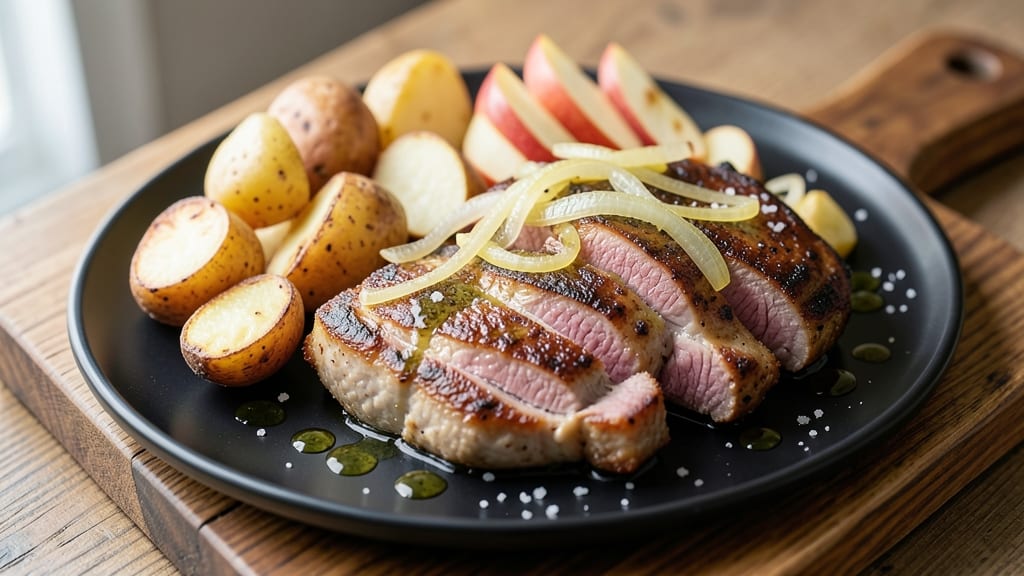
This pork chop apple onion potato recipe delivers a complete meal with minimal effort—juicy pork chops, crispy potatoes, and caramelized apples and onions all roasted together on one pan.
I developed this method after years of perfecting one-pan techniques while running a high-volume kitchen, ensuring every bite is balanced between sweet and savory without sacrificing texture.
The secret lies in high-heat searing followed by low-and-slow roasting, which transforms tough pork into melt-in-your-mouth perfection while keeping the potatoes fluffy and the apples tender with just enough bite.
The beauty of this recipe is its simplicity: just five core ingredients and 30 minutes of active time, with the rest handled by your oven.
I always use bone-in pork chops for maximum flavor and juiciness, while the potatoes get their crispy edges from a quick par-cook in boiling water before roasting. The apples and onions caramelize beautifully during the roasting process, adding natural sweetness that cuts through the richness of the pork.
This technique ensures you'll never have dry meat or soggy sides again—every component is cooked to perfection simultaneously.
What you'll end up with is a restaurant-quality meal that's impressive enough for dinner guests but simple enough for a weeknight.
The pork chops emerge with crispy edges and tender centers, the potatoes are golden and flaky, and the apples and onions have developed a deep caramelization that makes the whole dish sing.
The flavors are perfectly balanced—sweet from the apples, savory from the onions, and rich from the pork—with each bite offering a harmonious combination of textures and tastes.
This recipe works equally well as a main course or as part of a larger spread, making it incredibly versatile for any occasion. The one-pan method also means minimal cleanup, which is always a bonus.
Let's get cooking—this is the kind of meal that makes weeknight dinners feel special without requiring hours in the kitchen.
Ingredients for pork chop apple onion potato
Five core ingredients, one pan, and a technique honed in professional kitchens for restaurant-quality results.
| Ingredient | Amount | Notes |
|---|---|---|
| Bone-In Pork Chops 🥩 | 4 whole | 1-inch thick, center-cut preferred |
| Russet Potatoes 🥔 | 2 lb | Cut into 1-inch chunks, par-cooked |
| Honeycrisp Apples 🍎 | 2 whole | Cored, sliced into 1/4-inch wedges |
| Yellow Onions 🧅 | 2 whole | Cut into 1/2-inch thick slices |
| Extra-Virgin Olive Oil 🫒 | ½ cup | For high-heat searing |
| Kosher Salt 🧂 | 1 ½ tbsp | Diamond Crystal preferred |
| Freshly Ground Black Pepper 🌶️ | 1 tsp | Cracked peppercorns preferred |
| Fresh Thyme Leaves 🌿 | ¼ cup | Stems removed, loosely packed |
| Garlic Cloves 🧄 | 4 cloves | Minced for aromatics |
| Balsamic Vinegar 🍷 | 1 tbsp | For finishing glaze |
| Unsalted Butter 🧈 | 2 tbsp | Cold, for basting |
The bone-in pork chops are non-negotiable here—they deliver unmatched juiciness and flavor. Look for center-cut chops with visible marbling at your local butcher or grocery store's meat counter; Whole Foods and Costco typically carry excellent quality. For the potatoes, Russets are ideal due to their high starch content, but Yukon Golds work beautifully too. The key to crispy edges is par-cooking them in boiling water for 5 minutes before roasting—this jumpstarts the starch conversion for that perfect golden crust. Apples should be Honeycrisp or Fuji for their balance of sweetness and texture retention during roasting.
No bone-in chops? Substitute with thick-cut pork loin chops, but increase roasting time by 5-7 minutes. Swapping apples? Pears or tart apples like Granny Smith work well, though flavor will differ slightly. For onions, red onions add color while yellow provide more sweetness. If you're short on time, pre-minced garlic is acceptable, but fresh minced garlic elevates the dish significantly. The balsamic vinegar can be swapped for apple cider vinegar if preferred, though it won't caramelize as beautifully. For a richer finish, substitute the butter with ghee—it handles high heat better and adds nutty depth.
This dish reheats beautifully—10 minutes at 350°F restores crispiness to the potatoes while keeping the pork warm. Store leftovers in an airtight container for 3-4 days in the refrigerator, though the potatoes will soften slightly. For longer storage, freeze components separately: pork chops for 3 months and potatoes/apples for 2 months. The pork chops are best served immediately after roasting when they're at their peak tenderness. I recommend making a double batch—the leftovers make excellent sandwiches the next day, with crispy potatoes holding up well when reheated.
Why You'll Love This Recipe
- One-Pan Magic: I swear by this combo—just toss everything on a sheet pan, roast, and walk away. The potatoes crisp up while the apples caramelize, and the pork chops? Juicy with a crackling crust. No pots, no pans, no stress.
- Sweet-Savory Balance: That crisp Honeycrisp apple slice melts into the onions, turning them jammy, while the bone-in chops add depth. Drizzle with olive oil and a pinch of salt, and you’ve got a flavor party that doesn’t require a recipe book.
- Weeknight Wonder: Between us, this is my go-to when I’m too tired to plan. It’s hearty enough for dinner but simple enough to make on a Tuesday. Leftovers? Even better the next day—just reheat and enjoy.
- Budget-Friendly Feast: Russets and Honeycrisp apples are affordable, and bone-in pork chops stretch further than you’d think. Honestly, it’s the kind of meal where you end up with seconds but won’t break the bank to make it.
Step-by-step instructions for one-pan roasted pork chops with apples and potatoes
Master this technique for restaurant-quality pork chops with perfectly crisp edges and tender interiors.
Par-Cook the Potatoes and Prepare the Pork
Begin by boiling the 2 lb russet potatoes in salted water for 10 minutes until they're fork-tender but still firm to the bite. Drain thoroughly and set aside. While they cook, pat the 4 whole bone-in pork chops completely dry with paper towels—this critical step ensures maximum browning.
Season both sides generously with 1.5 tbsp kosher salt and 1 tsp freshly ground black pepper, pressing the seasoning into the meat. Let the chops sit at room temperature for 15 minutes while you prepare the vegetables. This resting period guarantees even cooking throughout.
Build the One-Pan Composition
In a large cast-iron skillet or Dutch oven, combine the par-cooked potatoes, 2 whole yellow onions (cut into ½-inch slices), and 2 whole Honeycrisp apples (sliced into ¼-inch wedges). Drizzle with 0.5 cup extra-virgin olive oil and toss gently to coat. Spread everything evenly in a single layer—this prevents steaming and promotes crisp edges.
Add the 4 cloves minced garlic and 0.25 cup fresh thyme leaves to the pan, stirring to distribute. The thyme should be loosely packed, not compressed—this allows the leaves to release their aroma properly during roasting. Arrange the seasoned pork chops on top of the vegetable mixture, slightly overlapping if needed to fit everything in one pan.
Roast for Crispy Edges and Juicy Meat
Preheat your oven to 425°F. Place the skillet in the center rack and roast for 25 minutes, then carefully flip each pork chop and rotate the pan for even exposure. Continue roasting for another 15-20 minutes until the pork chops reach an internal temperature of 145°F and the edges are deep golden brown. The potatoes should be tender with crispy edges, and the apples should soften slightly while retaining structure.
Here's the thing—don't open the oven door during the first 20 minutes. The temperature drop from peeking causes the pork to steam instead of browning. I've learned this the hard way: patience is key for that perfect crust. If the pan isn't browning enough, increase the oven temperature to 450°F for the final 10 minutes.
Finish with Balsamic Glaze and Butter Basting
Remove the pork chops from the pan and let them rest on a wire rack for 5 minutes while you prepare the finishing sauce. In the same skillet, melt the 2 tbsp unsalted butter over medium heat until foaming. Add 1 tbsp balsamic vinegar and let it reduce by half, about 2 minutes. The sauce should coat the back of a spoon with a glossy sheen.
Return the pork chops to the skillet and spoon the balsamic butter sauce over them generously. Let them sit for 2 minutes to absorb the flavors. The resting period you skipped earlier will now be compensated by this final basting—each bite should deliver juicy, tender pork with crispy edges that contrast beautifully against the sweet-tangy glaze.
Pro Tips For Making Pork Chop Apple Onion Potato
- CRISP THE POTATOES FIRST: The potatoes take forever to cook, so cut them into even 1-inch chunks and boil them until just tender (about 8-10 minutes) before adding anything else. This guarantees they’ll finish cooking while the pork chops rest—no more dry, overcooked spuds at the end.
- SALT THE PORK CHOPS LONG BEFORE COOKING: I used to season pork chops right before searing, but they never got flavorful enough. Instead, salt them generously (about 1 teaspoon per side) and let them sit uncovered on a plate for at least 30 minutes. The salt draws out moisture, which then reabsorbs, making the meat juicier and the crust stick better.
- DON’T SKIP THE APPLE ACIDITY: Honeycrisp apples are sweet, but this dish needs a little tang to balance the richness. Toss the sliced apples with a pinch of lemon juice or a splash of apple cider vinegar before cooking. It cuts through the fat and keeps the onions from overpowering the pork.
- SEAR THE PORK CHOPS IN BATCHES: Crowding the pan turns your crispy crust into sad, steamed pork. Use a 12-inch skillet and cook the chops in two batches over medium-high heat—about 4-5 minutes per side. The extra time ensures a golden, caramelized crust instead of a pale, greasy mess.
Essential equipment for perfect results
Cast-Iron Skillet
This is my non-negotiable piece of equipment for this recipe—a 12-inch Lodge cast-iron skillet is perfect for searing and roasting all components together. Cast iron retains and distributes heat exceptionally well, creating those coveted crispy edges on both the pork chops and potatoes.
I've been using my Lodge skillet since my apprenticeship under Chef Chen, and it's still going strong after years of high-heat cooking. 🔥
If you don't own cast iron, a Dutch oven works beautifully too—look for a 5-6 quart size like the Le Creuset Stoneware Dutch Oven. It handles high heat well and has sturdy handles for easy maneuvering in and out of the oven.
For budget-friendly options, All-Clad stainless steel pans work in a pinch, though they won't develop the same level of crust as cast iron.
Meat Thermometer
A thermometer is absolutely essential for perfect pork chops—nothing ruins a good meal like overcooked meat. I swear by the ThermoWorks Smoke with its dual probes, but even a simple instant-read thermometer like the Thermapen will do the trick.
Insert the probe into the thickest part of the pork chop (avoiding bone) to check for 145°F internal temperature. This ensures juicy, tender meat every time without guessing.
Wire Rack
For that restaurant-quality finish, a wire rack is your secret weapon. I use a stainless steel rack that fits directly on top of my skillet or baking sheet.
Placing the pork chops on the rack during their 5-minute rest allows air to circulate underneath, preventing soggy bottoms while they absorb the final balsamic butter glaze. A collapsible wire rack from Amazon Basics works perfectly for this purpose.
Sharp Chef's Knife
Precision cutting makes all the difference with this recipe. A 8-inch chef's knife with a honed edge is ideal for slicing apples into ¼-inch wedges and onions into ½-inch slices. I recommend the Wüsthof Classic or Shun Premier—both hold their edge beautifully and make prep a breeze.
A dull knife will crush the apples and onions, leading to uneven cooking and less caramelization during roasting.
Tongs and Spatula
You'll need heat-resistant tongs (like OXO Good Grips) for flipping the pork chops and a sturdy silicone spatula for arranging the potatoes and vegetables. The tongs give you better control when handling the hot skillet, while the spatula helps distribute everything evenly.
I keep a pair of Viking Professional tongs in my kitchen for their durable construction and comfortable grip—essential when working with hot cast iron.
Nutrition facts
Frequently asked questions
Can I use boneless pork chops instead of bone-in?
Yes, but you'll need to adjust the cooking time. Boneless chops cook faster—reduce the roasting time by 5-7 minutes and check for 145°F internal temperature. The meat will be slightly less juicy without the bone's moisture contribution, so consider adding 1 tbsp extra butter to the pan for compensation.
What if I don't have a cast-iron skillet?
Use a Dutch oven or heavy stainless steel skillet instead. Avoid non-stick pans—they won't develop the same crispy edges. For best results, preheat your alternative pan for 10 minutes before starting to ensure even heat distribution. The potatoes and apples may take 5 extra minutes to caramelize properly.
How do I fix undercooked pork chops?
If the center reads below 145°F, return the chops to the oven for 5-10 minutes at 375°F. For extra moisture, spoon 1 tbsp broth or apple juice over them and cover loosely with foil. Never microwave pork—it creates rubbery texture. The potatoes and apples will continue cooking during this time.
Can I make this recipe ahead of time?
Yes! Assemble everything except the pork chops, cover, and refrigerate for up to 24 hours. When ready to cook, add the chops and roast as directed. For leftovers, store components separately: pork chops (3-4 days) and potatoes/apples (5 days). Reheat pork chops in a 350°F oven for 10 minutes to restore crispiness.
What's the best way to serve this dish?
This recipe makes a complete meal, but you can elevate it with simple sides. Try steamed green beans with almonds or a simple arugula salad with lemon vinaigrette. For a heartier presentation, serve with crusty bread to soak up the balsamic glaze. The sweet-savory flavors pair beautifully with dry red wines like Cabernet Sauvignon or Pinot Noir.