
Main Courses
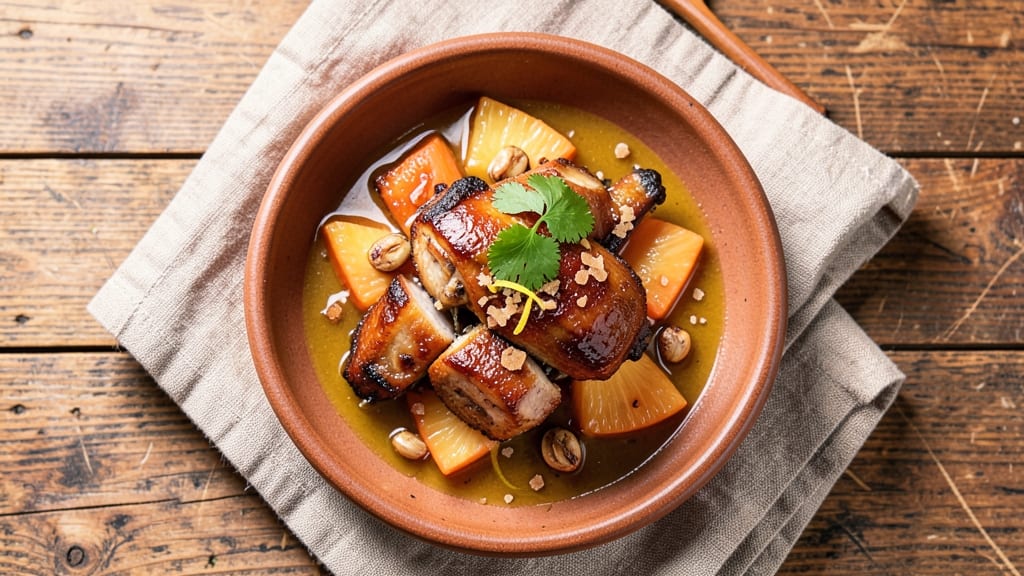
This Filipino-style pork hamonado transforms simple pork into a caramelized masterpiece using pineapple juice's natural sweetness and acidity. The secret lies in marinating the pork overnight, allowing the flavors to meld perfectly before slow-cooking until tender and glossy.
I first discovered this technique while working in Asheville's farm-to-table scene, where bold flavors and simple techniques create restaurant-quality results at home.
The magic happens when the pork's natural sugars caramelize under the pineapple glaze, creating a sticky, sweet-tangy crust that's impossible to resist. This dish requires just five key ingredients—pork shoulder, pineapple juice, soy sauce, brown sugar, and garlic—but delivers layers of flavor that feel indulgent yet balanced.
The slow cooking process ensures the meat stays juicy while developing that signature glossy sheen.
What you'll end up with is perfectly tender pork that's fall-apart juicy with a caramelized exterior, all coated in a glossy, sweet-tangy glaze. The aroma alone will have everyone gathering around your table, and each bite delivers that perfect harmony of sweet, salty, and savory.
This is comfort food at its finest—simple enough for weeknights but impressive enough for special occasions.
Serve with steamed rice and a side of atchara (Filipino pickled papaya) to balance the richness, or enjoy it as-is with fresh pineapple slices on top. The leftovers reheat beautifully, making this an excellent meal-prep option for busy weeks. Let's get cooking—this dish is worth every minute of the wait.
Ingredients for pork hamonado recipe filipino style with pineapple juice
Five simple ingredients transform basic pork into restaurant-quality hamonado with caramelized perfection.
| Ingredient | Amount | Notes |
|---|---|---|
| Pork Shoulder 🍖 | 2 lb | Bone-in for flavor, cut into 2-inch chunks |
| Fresh Pineapple Juice 🍍 | 1 ½ cups | From 1 large fresh pineapple, strained |
| Soy Sauce 🍶 | ½ cup | High-quality, preferably Japanese |
| Light Brown Sugar 🍚 | ½ cup | Packed, for caramelization |
| Garlic Cloves 🧄 | 6 cloves | Minced, for aromatic depth |
| Olive Oil 🫒 | 2 tbsp | Extra-virgin for richness |
| Black Peppercorns 🌶️ | 1 tsp | Freshly cracked for heat |
| Bay Leaves 🍃 | 2 whole | For subtle earthy notes |
| White Vinegar 💧 | 1 tbsp | Balances sweetness, optional |
| Salt 🧂 | 1 ½ tsp | Kosher salt for seasoning |
| Fresh Pineapple Slices 🍍 | ½ cup | For garnish, optional |
The pork shoulder is the star—bone-in for maximum flavor, but leaner cuts work too if you prefer. Look for well-marbled pieces at Whole Foods or your local butcher shop, where they can cut it to your preferred size. I always grab Filipino-style pork shoulder from Asian markets if available—it's leaner and more flavorful. The key is 2-inch chunks for even cooking and maximum surface area for that glorious caramelized crust. If you can't find bone-in, pork butt is a perfect substitute, just trim excess fat to avoid greasiness.
Pineapple juice is non-negotiable here—fresh is best, but canned pineapple juice in a pinch works too (just check for no added sugar). The soy sauce should be Japanese-style like Kikkoman—it's sweeter and adds depth. Brown sugar is crucial for caramelization, but white sugar works if that's what you have (though it won't brown as beautifully). Garlic can be pre-minced to save time, but freshly minced releases more aroma. The white vinegar balances the sweetness—skip it if you're sensitive to acidity, but trust me, it's worth it for that perfect harmony.
This dish tastes even better the next day as the flavors meld. Store leftovers in an airtight container for up to 5 days in the fridge, or freeze for 3 months. The glaze thickens as it cools, so reheat with a splash of water to restore its glossy consistency. For meal prep, double the batch—it reheats beautifully and makes an amazing sandwich filling. Garnish with fresh pineapple slices right before serving to keep it vibrant, but save some for topping your rice too.
Why You'll Love This Recipe
- One-Pan Magic: I swear by this—just slice the pork, toss it in a pan with pineapple juice, and let it simmer. No chopping, no fuss, and that caramelized garlic clinging to the meat? Pure reward.
- Sweet-Savory Balance: The pineapple juice tenderizes the pork while cutting through the richness with just the right tang. Brown sugar adds depth, and the soy sauce? It’s the glue that makes every bite ridiculously addictive.
- Leftover Hero: This dish actually improves the next day. Cold slices in rice bowls? Yes. Wrapped in tortillas for lunch? Absolutely. I’ve fed a crowd with leftovers, and no one ever complains.
- Budget-Friendly Feast: Pork shoulder stretches for miles, and pineapple juice (or even blended chunks) keeps costs low. Honestly, I’ve made this for under $10 for four servings—flavor that doesn’t break the bank? That’s the win.
Step-by-step instructions for pork hamonado with pineapple glaze
This Filipino classic delivers caramelized pork with a sweet-tangy glaze—here's how to nail it every time.
Prepare the Pork and Glaze Base
Cut the 2 lb pork shoulder into 2-inch chunks, leaving some bone-in for extra flavor. In a large bowl, combine the 1.5 cups fresh pineapple juice, 0.5 cup soy sauce, 0.5 cup light brown sugar, 6 cloves minced garlic, 2 tbsp olive oil, 1.5 tsp salt, 1 tsp black peppercorns, 2 whole bay leaves, and 1 tbsp white vinegar. Mix until the sugar dissolves completely—this ensures even caramelization later.
Here's the thing—don't skip the vinegar. It balances the sweetness and helps tenderize the pork. If you're using fresh pineapple juice, strain it well to avoid any pulp clogging your pan later. Let the marinade sit for 10 minutes at room temperature while you prep the pork.
Sear the Pork for Deep Flavor
Heat a large Dutch oven or deep skillet over medium-high heat. Add the pork chunks in a single layer, letting them sear undisturbed for 3-4 minutes per side until they develop a deep golden-brown crust. This step is critical—it locks in juices and builds the foundation for the glaze.
Once the first batch is browned, remove the pork and set it aside. Add another 1 tablespoon olive oil if needed, then repeat with the remaining pork. Don't overcrowd the pan or the pork will steam instead of sear. You want visible color—this is where the magic happens.
Simmer Until Caramelized Perfection
Return all the pork to the pan along with the marinade. Bring to a gentle boil over medium heat, then reduce to a simmer. Cover partially and cook for 45-50 minutes, stirring occasionally, until the pork is fork-tender and the liquid reduces to a thick, glossy glaze that coats the back of a spoon.
This is where patience pays off. The glaze should be syrupy but not dry—it should cling to the pork like honey. If it reduces too quickly, add 1-2 tablespoons water to maintain moisture. The pork is done when it pulls apart easily with two forks and the glaze has a deep caramel color.
Rest and Garnish for Presentation
Transfer the pork to a serving platter and tent loosely with foil. Let it rest for 10 minutes—this allows the juices to redistribute, ensuring every bite is moist. Meanwhile, skim any excess fat from the glaze in the pan, leaving behind a rich, flavorful sauce.
Garnish with the 0.5 cup fresh pineapple slices and drizzle generously with the reduced glaze. The contrast of the bright pineapple against the caramelized pork makes this dish visually stunning. Serve with steamed rice to soak up every last drop of that sweet-tangy sauce.
Pro Tips For Making Pork Hamonado Recipe Filipino Style With Pineapple Juice
- Simmer Slow and Low: The hamonado’s magic happens when the pork shoulder tenderizes in its own juices. Once the liquid starts bubbling, drop the heat to a bare simmer—just enough to keep tiny bubbles breaking the surface. I used to rush this, and the meat turned out chewy; patience here makes all the difference.
- Strain That Pineapple Juice: Fresh pineapple juice is non-negotiable, but don’t let pulp clog your sauce. After blending, strain it through a fine-mesh sieve or cheesecloth to remove fibers—this keeps the hamonado smooth and prevents a gritty texture. (Yes, even if you’re in a hurry to eat.)
- Balance the Sweet-Savory Ratio: Too much brown sugar? The dish turns cloying. Too little? The soy sauce fights for dominance. Start with 2 tablespoons per pound of pork, taste after 30 minutes, then adjust. My first batch was a sugar bomb—I learned to trust my palate over the recipe.
- Deglaze with Garlic First: After browning the pork, toss in minced garlic and let it sizzle for 30 seconds before adding pineapple juice. This builds flavor depth right from the start. Skipping this step means missing out on that nutty, toasty aroma that defines hamonado. (Your nose will thank you.)
Essential equipment for perfect results
Dutch Oven Essentials
Your Dutch oven is the star of this recipe—it distributes heat evenly and creates that signature caramelized crust. I swear by a Lodge 5.5-quart cast iron Dutch oven for its durability and heat retention.
If you don’t own one, a stainless steel Dutch oven like All-Clad works too, but preheat it longer to avoid cold spots. The deep sides prevent spills when the glaze reduces, and the heavy base maintains consistent medium heat throughout cooking. 🔥
Instant-Read Thermometer
A meat thermometer is non-negotiable for perfect pork—aim for 195°F internal temperature (it’ll rise to 203°F while resting). My go-to is the ThermoWorks Smoke for its fast response time and dual probes.
Insert the probe into the thickest part of a pork chunk to avoid hitting bone. Pro tip: Rest the pork for 10 minutes after reaching temperature—this ensures juicy, tender results every time.
Strainer for Pineapple Juice
Fresh pineapple juice makes all the difference, but you’ll need a fine-mesh strainer to remove pulp and seeds. I use a OXO Good Grips collapsible strainer—it’s sturdy and easy to clean. If you’re using canned juice, skip this step, but check labels for added sugar.
The smoother the juice, the glossier your final glaze will be. A wooden spoon works great for stirring the marinade without scratching your Dutch oven.
Tongs for Safe Handling
Long-handled tongs (like OXO Good Grips) are a game-changer for searing pork without burning your hands. They also help flip chunks evenly for that perfect golden-brown crust.
Avoid metal forks—they puncture the meat, causing juices to escape. For extra grip, I like silicon-coated tongs—they’re gentle on both your hands and the pork.
Mixing Bowl for Marinade
A large stainless steel mixing bowl (at least 8-quart capacity) keeps all ingredients contained while you whisk the marinade. I prefer Farberware for its durability and non-reactive surface. Avoid plastic—acidic ingredients like pineapple juice can degrade it over time.
A whisk helps dissolve the brown sugar completely, ensuring even caramelization later. If you’re short on time, a blender works too, but strain the mixture afterward.
Serving Tools
For plating, grab a tongs set (one for pork, one for garnishes) and a ladle to drizzle that glossy glaze. I love stainless steel serving spoons from Williams Sonoma—they’re lightweight and easy to clean.
Don’t forget a sharp knife for slicing pineapple garnishes. Presentation matters: the contrast of bright pineapple against caramelized pork makes this dish irresistible. 💫
Nutrition facts
Frequently asked questions
Can I substitute fresh pineapple juice with canned?
Yes, but check for no added sugar—it can make the glaze too sweet. Use 1 can (12 oz) crushed pineapple drained well, then add 0.5 cup water to replace the lost juice. Fresh juice gives a brighter flavor, but canned works in a pinch.
How do I make this dish less sweet?
Reduce the brown sugar to 0.25 cup and add 1 extra tablespoon vinegar to balance. For extra tang, squeeze 1 lime into the glaze at the end. The pineapple juice already provides natural sweetness, so cutting sugar slightly keeps it bright and savory.
What if my glaze isn't caramelized?
Simmer uncovered for 5-10 extra minutes on low heat, stirring occasionally. If it burns, reduce to lowest heat and add 1 tbsp water to loosen. The sugar needs time to break down—don't rush it! Patience gives that glossy, sticky perfection.
Can I use pork tenderloin instead of shoulder?
Not ideal—tenderloin is lean and dries out. If you must, use 1.5 lb pork shoulder (cut into smaller chunks) and reduce cooking time to 30-35 minutes. For best results, stick with shoulder—its fat keeps it juicy during long cooking.
How do I reheat leftovers?
Place pork in a skillet with 1 tbsp water or pineapple juice per serving. Cover and heat on low-medium for 5-7 minutes, stirring occasionally. The glaze will re-liquefy beautifully. Avoid microwaving—it makes the pork rubbery.