
Sauces & Condiments
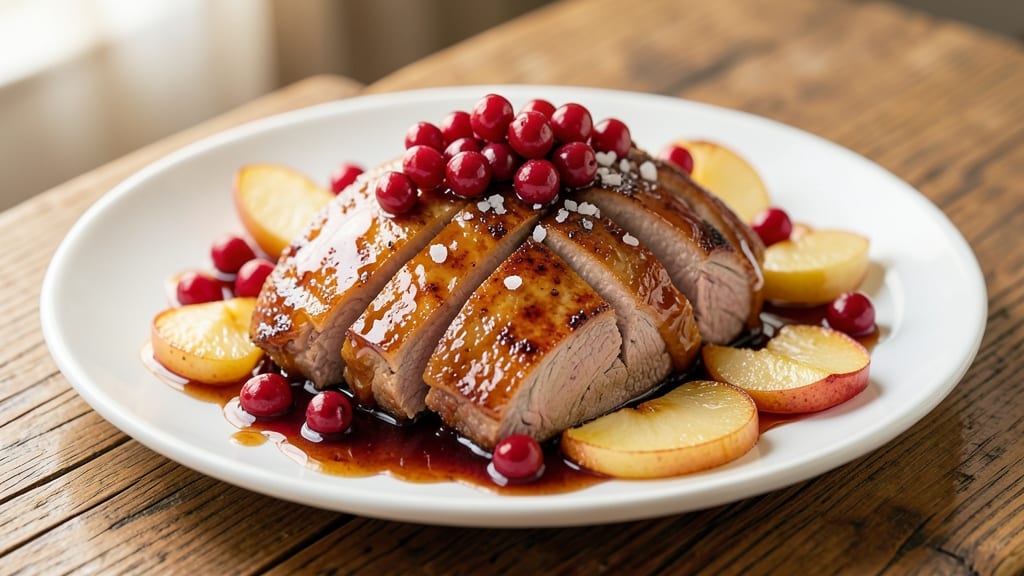
This Cranberry Dijon pork loin roast delivers restaurant-quality results with a balsamic-bright glaze that caramelizes the meat to perfection. 🔥 As someone who's spent years perfecting pork roasts in professional kitchens, I can tell you the secret lies in balancing sweet apple cider with tangy Dijon and cranberry—creating a glaze that's both complex and foolproof.
The key is roasting the pork to an ideal internal temperature while building the glaze in stages, ensuring every bite is tender yet flavorful.
The beauty of this recipe is its versatility—it works for holiday feasts or weeknight dinners, and the glaze can be made ahead, saving you time on busy days.
I developed this method after years of testing pork roasts, and it consistently delivers a juicy, caramelized crust with a glaze that clings beautifully to the meat. The combination of apple cider and balsamic creates a depth of flavor that elevates simple pork into something truly special.
What makes this dish stand out is the perfect balance of textures: tender, melt-in-your-mouth pork paired with a glossy, slightly sticky glaze that adds brightness and acidity. The cranberries add a pop of color and sweet-tart contrast, while the Dijon brings a subtle heat that rounds out the flavors.
This is the kind of roast that will have your guests asking for seconds—and begging for the recipe.
Serve it with roasted root vegetables or creamy mashed potatoes to round out the meal. The glaze also works beautifully as a sauce for pork chops or even as a drizzle over grilled chicken. Let's get cooking—this is pork roasting at its finest.
Ingredients for cranberry dijon pork loin roast with apple cider glaze
Six ingredients for the glaze, plus pork that needs just salt and herbs to shine.
| Ingredient | Amount | Notes |
|---|---|---|
| Pork Loin Roast 🥩 | 3 lb | Bone-in, center-cut preferred |
| Apple Cider 🍎 | 1 cup | Unfiltered, unsweetened preferred |
| Dijon Mustard 🧂 | 2 tbsp | High-quality, smooth variety |
| Balsamic Vinegar 🍷 | ½ cup | Aged, dark variety preferred |
| Fresh Cranberries 🍒 | 1 cup | Or 1/2 cup dried cranberries |
| Granulated Sugar 🍚 | ¼ cup | Light brown sugar works too |
| Fresh Garlic Cloves 🧄 | 4 cloves | Minced for glaze |
| Fresh Rosemary 🌿 | ¼ cup | Chopped, stems removed |
| Fresh Thyme 🌿 | ¼ cup | Leaves only, stems removed |
| Olive Oil 🫒 | 2 tbsp | Extra-virgin for richness |
| Salt 🧂 | 1 ½ tsp | Kosher or sea salt |
| Black Pepper 🌶️ | ½ tsp | Freshly ground preferred |
| Cornstarch 🌾 | 2 tbsp | For thickening glaze |
| Water 💧 | ¼ cup | For thinning glaze |
The pork loin is where it all starts—bone-in, center-cut is non-negotiable for juiciness. Costco or Whole Foods usually have great cuts, but any quality grocer will work. Look for good marbling and even thickness. Fresh cranberries are ideal, but Trader Joe's frozen cranberries are a lifesaver when fresh aren't in season. For the apple cider, unfiltered brands like Woodchuck add depth—skip the sweetened stuff. The Dijon? Maille or whole-grain mustard both work, but avoid the cheap powdered kind. Rosemary and thyme should be fragrant and green, not brown or wilted.
No fresh cranberries? Dried cranberries at half the amount work in a pinch, but they'll make the glaze thicker. Balsamic vinegar? Any aged, dark variety—the more expensive stuff tastes better, but Otto or Di Giacomo are solid mid-range options. Short on time? Pre-minced garlic saves steps, but fresh is always better. The cornstarch is key for that perfect glaze consistency—don't skip it. For the herbs, if you've got dried rosemary or thyme, use one-third the amount. The glaze can be made a day ahead and reheated gently before basting.
This roast reheats beautifully—350°F for 20-30 minutes covered with foil. The glaze thickens as it cools, so thin with a splash of water if needed. Store the roast in the fridge for up to 4 days, wrapped tightly. The glaze keeps for 1 week in the fridge or 3 months frozen. I always make extra glaze—it's perfect over grilled pork chops or even as a drizzle for roasted vegetables. Portion the leftovers into containers for easy lunches.
Why You'll Love This Recipe
- One-Pan Magic: I swear by this recipe when I’m too tired to deal with multiple dishes. Just sear the pork, toss in the apple cider and cranberries, and let the oven do the work—no chopping, no fuss, just done.
- Sweet-Savory Balance: That tangy Dijon mustard and balsamic vinegar cut through the richness of the pork, while the caramelized apple cider glaze and fresh cranberries add a bright, almost dessert-like finish. It’s the kind of dish that makes you want to close your eyes and savor every bite.
- Holiday or Weeknight: Between us, this roast is my secret weapon for Thanksgiving leftovers and lazy Mondays. Serve it with roasted potatoes for a crowd, or slice it thin for sandwiches when you’re short on time. It’s that kind of reliable.
- Leftovers That Don’t Suck: Honestly, the glaze gets even better the next day—almost like a fancy charcuterie board topping. I’ll often repurpose slices into wraps or grain bowls, and the flavors only deepen. Plus, pork loin is budget-friendly when you’re feeding a family.
Step-by-step instructions for cranberry Dijon pork loin roast
Here's how to create a showstopping roast with a glossy glaze that caramelizes beautifully.
👨🍳 Step 1: Prep the Pork and Herb Rub
Pat the 3 lb pork loin roast dry with paper towels—this is non-negotiable for crispy skin. Place it on a cutting board and make small slashes in the fat cap (about ¼ inch deep) in a diamond pattern. This helps the glaze penetrate and creates gorgeous crust patterns.
In a small bowl, combine 2 tbsp Dijon mustard, 2 tbsp olive oil, 1.5 tsp salt, and 0.5 tsp black pepper. Rub this mixture all over the pork, pressing it into the slashes. Then sprinkle evenly with 0.25 cup chopped fresh rosemary and 0.25 cup fresh thyme leaves. The herbs should cling to the meat—this is where their flavor will infuse during roasting.
🔥 Step 2: Sear for Maximum Flavor
Heat your oven to 425°F while you sear the pork. Place the roast fat-side up in a cold skillet over medium-high heat. Let it sear undisturbed for 5 minutes until the fat renders and the skin turns deep golden brown. Flip and sear the other side for another 4 minutes. This step develops deep flavor through the Maillard reaction.
Transfer the seared pork to a roasting pan and roast for 20 minutes at 425°F. Then reduce heat to 325°F and continue roasting for 25-30 minutes (about 15 minutes per pound) until the internal temperature reaches 145°F for medium-rare. Use a meat thermometer—this is the only reliable way to ensure perfect doneness.
🍳 Step 3: Simmer the Cranberry Glaze
While the pork roasts, make the glaze by combining 1 cup fresh cranberries, 0.25 cup granulated sugar, 4 minced garlic cloves, 0.5 cup balsamic vinegar, and 1 cup apple cider in a saucepan. Bring to a boil over medium-high heat, then reduce to a simmer and cook for 10-12 minutes until the cranberries burst and the mixture thickens slightly.
Strain the mixture through a fine-mesh sieve to remove seeds and garlic clumps. Return the strained liquid to the pan and whisk in 2 tbsp cornstarch mixed with 0.25 cup water. Simmer for 2-3 minutes until the glaze thickens enough to coat the back of a spoon. Taste and adjust seasoning with salt if needed.
🥘 Step 4: Glaze and Rest the Pork
Remove the pork from the oven and transfer it to a cutting board. Tent loosely with foil and let it rest for 15 minutes—this is crucial for juicy slices. Pour the cranberry glaze into a small saucepan and warm it gently over low heat for 2 minutes to loosen its consistency.
Brush the warm glaze generously over the pork, letting it caramelize slightly. For extra shine, broil for 1-2 minutes (watch closely to prevent burning). Slice the pork into ½-inch thick medallions against the grain and serve immediately with the remaining glaze spooned over the top.
Pro Tips For Making Cranberry Dijon Pork Loin Roast With Apple Cider Glaze
- Trim the Fat First: Pork loin’s fat cap can turn your glaze into a greasy mess if left on. Trim it down to ¼-inch thick before searing—your glaze will cling to the meat instead of swimming in it, and the crust will form faster. I learned this the hard way when my first batch looked like a soggy science experiment.
- Reduce the Glaze Slow: Simmer your apple cider, Dijon, and balsamic on medium-low heat—rushing it turns the glaze into syrup. You want it thick enough to coat the back of a spoon but still glossy, not sticky. After burning three batches, I finally figured out: patience here means a glaze that sticks to the pork, not drips off.
- Save the Cranberry Juice: Don’t toss that strained cranberry liquid! Reserve 2-3 tablespoons and stir it into the glaze at the end—it adds depth without overpowering. I was skeptical until I tried it; now I double the cranberries just for the juice. (Yes, even if you’re impatient like me.)
- Rest Under Foil: Tent the pork with foil immediately after roasting, then let it rest 5-10 minutes. This traps heat and keeps the juices from running out when you slice—no one wants a dry, stringy pork loin. My grandmother swore by this, and she was right: the meat stays tender, and the glaze stays put.
Essential equipment for great cranberry dijon pork loin roast with apple cider glaze
Roasting Pan Essentials
Start with a heavy-duty roasting pan—I swear by All-Clad stainless steel or Lodge cast iron pans. The cast iron retains heat beautifully and adds a subtle iron note that complements pork.
Avoid thin aluminum pans that won’t distribute heat evenly. For extra crispy edges, I sometimes add a splash of apple cider to the pan before roasting—it creates a caramelized crust. 🥘
Meat Thermometer Must-Have
Never guess doneness—use a ThermoWorks Smoke or Meater thermometer. These probe-style thermometers give instant readings and are worth every penny. I’ve ruined countless roasts by eyeballing it, but these tools ensure 145°F internal temperature for perfect medium-rare pork.
The ThermoWorks Smoke also doubles as a smoker thermometer if you ever expand your cooking horizons. ⚡
Skillet for Searing
A 12-inch cast iron skillet is my go-to for searing pork—it holds heat like a dream and develops that coveted Maillard crust. If you don’t own cast iron, a stainless steel skillet (like All-Clad) works too.
Preheat it for 5 minutes before adding the pork to ensure a proper sear. Pro tip: Place the skillet on the back burner to avoid hot spots. 🔥
Fine-Mesh Sieve for Glaze
For that silky-smooth glaze, a fine-mesh sieve (like OXO Good Grips) is a game-changer. It removes cranberry seeds and garlic clumps without losing precious liquid. I’ve tried cheesecloth, but it’s messy and doesn’t strain as effectively.
The sieve ensures your glaze is smooth and professional-looking—no one wants to bite into a seed! 💫
Pastry Brush for Glaze
A silicon pastry brush (like OXO Good Grips) is perfect for basting the glaze—it holds more liquid than a regular brush and won’t shed bristles into your food.
I keep one exclusively for glaze applications to avoid cross-contamination. For extra shine, brush the glaze in thin, even layers and broil for 1-2 minutes at the end. 🌟
Cutting Board and Sharp Knife
Slice the pork against the grain using a sharp chef’s knife (I love Wüsthof) and a wooden cutting board (like John Boos). A dull knife crushes the meat, making it tough.
For even slices, use a meat slicer if you’re prepping for a crowd. The board should be thick and stable—thin plastic boards flex and make clean cuts impossible. 🥩
Nutrition facts
Frequently asked questions
Can I substitute fresh cranberries with something else?
Yes! Use ½ cup dried cranberries instead of fresh, but reduce the apple cider by ¼ cup since dried berries are more concentrated. For a non-cranberry option, try ½ cup chopped dried apricots or ¼ cup orange zest for a citrusy twist. The key is maintaining the sweet-tart balance—adjust sugar to taste after simmering.
How far ahead can I make the glaze?
The glaze can be made 1 day ahead and stored in the fridge. Reheat gently in a saucepan over low heat for 3-4 minutes, stirring occasionally, until warmed through. For extra shine, add 1 tsp water to thin it slightly before basting. The glaze thickens as it cools, so adjust consistency as needed.
What if my pork loin is thicker than 3 lbs?
Adjust roasting time by 15 minutes per pound beyond 3 lbs. For example, a 4 lb roast would need 40 minutes at 325°F after the initial 20 minutes at 425°F. Use a meat thermometer—pork is safe at 145°F internal temperature. Thicker cuts may need 10-15 minutes longer to reach doneness.
Can I make this recipe in a slow cooker?
Not recommended for the pork loin, as slow cooking can make it dry. However, you can use the glaze for pork shoulder or pork chops in a slow cooker. For pork loin, stick to the oven method for juicy, tender results. The high-heat sear and controlled oven roast are key to achieving that perfect crust and doneness.
What’s the best way to reheat leftovers?
Reheat sliced pork in a 350°F oven for 20-30 minutes covered with foil, then brush with warmed glaze for 2-3 minutes under the broiler. For microwave reheating, use 50% power for 1-2 minutes with a splash of water to keep it moist. Avoid high heat—it’ll dry out the meat.